How to choose a hamster wheel: diameter, solid surface, no axle, and noise
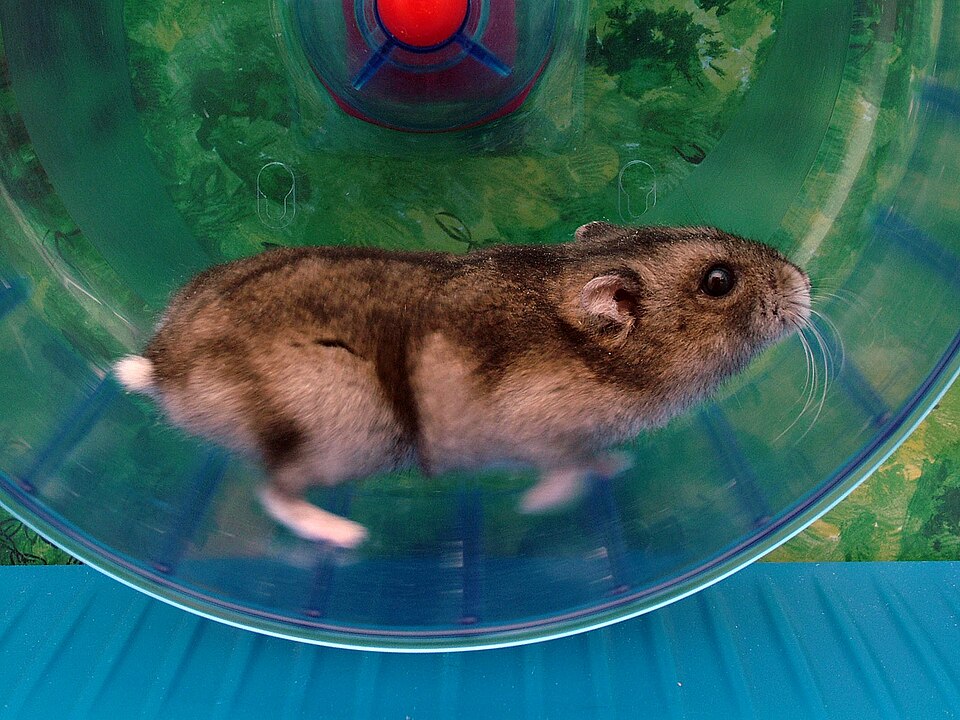
The whirring of a wheel in the middle of the night is a sound every hamster owner knows. According to the RSPCA, wild hamsters are usually active at dusk and at night and can run up to five miles a day; for a pet hamster, a wheel is the best-known way to fit some of that running into a cage. But PDSA says most wheels on sale are too small and make the hamster run with a bent back. This article covers PDSA's and the RSPCA's wheel advice and how to fit it into the rest of the setup. For the cage itself, see how a hamster cage should be.
- Big diameter: According to PDSA, at least 8 inches (20 cm) for dwarf hamsters and at least 12 inches (30 cm) for Syrian hamsters.
- Solid surface: PDSA says a solid running surface, not slats or bars where legs could get caught.
- No axle, non-slip: The RSPCA recommends a solid, axle-free wheel, ideally with a non-slip running surface.
- Not the only fun: The RSPCA says a wheel helps with exercise but shouldn't be the only enrichment.
- If there's a problem: If sore feet develop, remove the wheel temporarily and ask your vet (RSPCA).
Why the wheel matters
According to PDSA, wild hamsters burrow, climb and walk for miles every day, and most cages sold in shops aren't big enough to meet those basic needs. A wheel is one way to bring that movement home, but a small or badly designed one can do harm instead of good: PDSA says wheels that are too small force the hamster to run with a curve in its back, which can cause long-term pain.
Diameter: the back should stay straight
PDSA says the wheel should be as large and wide as possible. The minimums it gives:
| Hamster | PDSA's minimum wheel diameter |
|---|---|
| Dwarf hamsters | At least 20 cm (8 in) |
| Syrian hamster | At least 30 cm (12 in) |
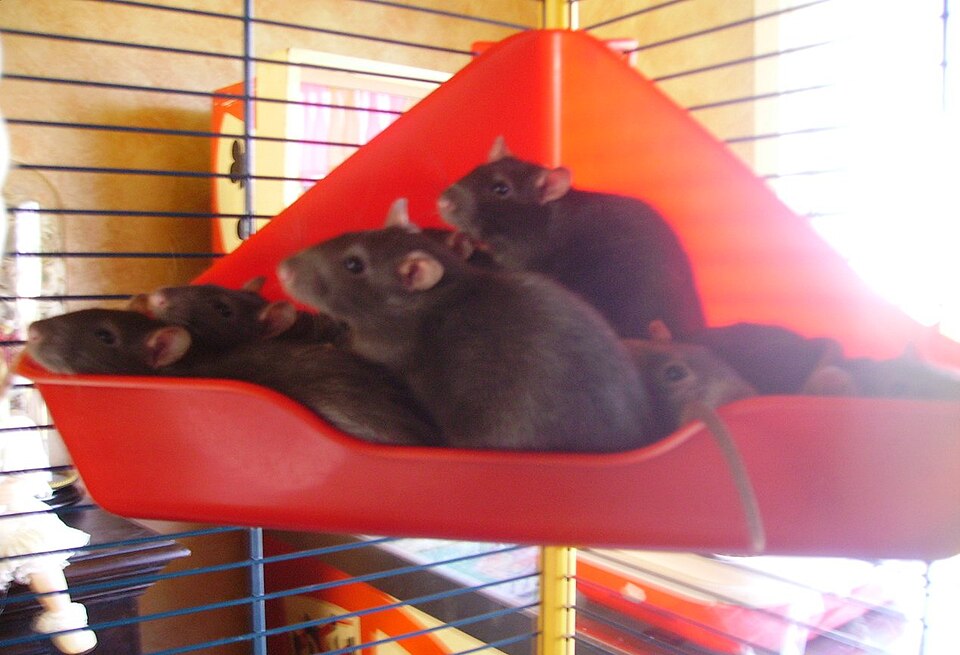
The RSPCA gives an example rather than a number: the wheel should be good quality with a large diameter, such as one intended for rats. When your hamster runs, check whether its back curves; that's exactly the problem PDSA describes.
Surface and build
According to PDSA, the running surface should be solid, with no bars or gaps where legs could get caught. The RSPCA also wants a solid, axle-free wheel with a non-slip running surface if possible. Together they make a short shopping list:
- Don't go below the minimum diameter: 20 cm for dwarfs, 30 cm for Syrians (PDSA).
- Solid, flat running surface: No slats or bars (PDSA).
- No axle: The RSPCA recommends an axle-free wheel.
- Non-slip surface: The RSPCA says ideally non-slip.
- Solid build: The RSPCA recommends a good-quality, solid wheel.
The wheel shouldn't be the only fun
According to the RSPCA, a wheel helps with exercise but shouldn't be the only enrichment you give. The rest of the cage matters too: the RSPCA recommends a deep layer of litter for digging and burrowing and plenty of space to play and exercise at night, and PDSA says at least 10 inches (25 cm) of bedding. For bedding choices, see how to choose rodent bedding.
Noise and where the cage goes
PDSA says hamsters sleep most of the day and should be kept somewhere quiet and calm, away from noisy things like the TV or washing machine, since noise and vibrations are stressful. The RSPCA also advises keeping hamsters away from items that make high-frequency sounds we can't hear, such as TVs, computer screens, vacuum cleaners and running water. The sources we read don't give a noise standard or a placement tip for the wheel itself, so we won't invent one. For the night routine, see why hamsters are up at night.
- Put the cage somewhere calm: Away from the TV, washing machine and noisy devices (PDSA, RSPCA).
- Light routine: The RSPCA says lights should go off at about the same time each night.
- Don't handle a sleeper: The RSPCA says not to handle a resting or sleeping hamster unless absolutely necessary, as it can be stressful.
If you notice sore feet
According to the RSPCA, if your hamster develops sore feet while using the wheel, remove it temporarily and ask your vet for advice.
If you see a wound on a foot, limping or any sign of discomfort when your hamster uses the wheel, remove the wheel temporarily and talk to your vet (RSPCA).
You can add cleaning the wheel and cage to the Today tab as your own task; everyone in your Household sees the same list. You can also log your hamster's weight in Weight tracking and follow the chart.
Frequently asked questions
Is the wheel that came with the cage enough?
PDSA says most wheels on sale are too small. If yours is under the minimum diameter above and your hamster's back curves while running, consider a bigger one.
What if my hamster never uses the wheel?
Our sources don't explain this. The RSPCA says a wheel shouldn't be the only enrichment, so review the space, bedding and hiding places. If behavior keeps changing, ask your vet.
Can the wheel be my hamster's only exercise?
No. The RSPCA says a wheel helps with exercise but shouldn't be the only form of enrichment.

Keep track of your pet's care in TüylümLog vet visits, vaccine and medication dates, and we'll remind you when it's time. Share it all with your family in Home.
Sources
- PDSA · Hamsters as pets
- RSPCA · Hamster behaviour
- RSPCA · Creating the right home for your hamster
- RSPCA · Keeping hamsters together
This article is for general information only; it is not a diagnosis or treatment advice and does not replace a visit to a veterinarian. Talk to your vet about decisions on your pet's health. By Tüylüm · Published and last checked: November 9, 2026. Spotted a mistake? Write to [email protected] and we'll fix it right away. Photos are from Wikimedia Commons, used under the license shown below each photo.