Keeping a hedgehog clean: the wheel, cage items, nails and the question "does it need a bath?"

If you look in the cage in the morning and see little marks on the wheel and food scattered across the bedding, you're not alone. According to the Royal Veterinary College, hedgehogs may be litter trained, but they're generally very messy animals, and the enclosure needs frequent cleaning to help prevent disease. We covered the daily, midweek and weekly cleaning routine for the cage in our article on hedgehog cage and wheel. In this article we get into the details: the wheel, where to wash things, fabrics, bathing and nails.
- The wheel every day: According to the Dumb Friends League, hedgehogs usually poop as they run; the wheel should be cleaned daily.
- Not in the kitchen: The CDC asks you to clean your hedgehog's cage, bowls and bathing items outside the house.
- A bath often isn't needed: According to the University of Florida, a hedgehog doesn't need a bath unless it gets really dirty; according to the Dumb Friends League, this varies from hedgehog to hedgehog.
- Nails: According to the Dumb Friends League, regular nail trims shouldn't be skipped; untrimmed nails can curl into the paws.
- Hygiene: According to Merck, anyone handling a hedgehog should assume it carries Salmonella. Wash your hands right after touching it.
Why does cleaning matter so much?
According to the Royal Veterinary College, frequent cleaning helps prevent disease. Merck also lists unsanitary bedding among the factors behind respiratory problems; dusty and scented bedding are on the same list. Then there's your own health: according to Merck, anyone handling hedgehogs should assume the hedgehog carries and transmits Salmonella. That's why Merck asks for cages to be kept clean and for hedgehogs and their things to be kept away from food preparation areas.
The wheel: dirty every night
According to a care sheet from two US animal welfare organizations, the Denver Dumb Friends League and the Humane Society of the United States, hedgehogs usually poop as they run and can soil the wheel's running surface quickly; that's why the wheel should be cleaned every day. So the marks you see on the wheel in the morning aren't a sign of a problem; they're a sign your hedgehog ran at night.
- A solid surface makes it easier: According to Merck, solid wheels are both safer and easier to clean. Wire or rung wheels can trap legs.
- Morning routine: When you pick up droppings in the cage, clean the wheel's running surface too.
- Size: The Dumb Friends League recommends a solid-surface wheel at least 28 cm (11 in) across.
Where should you wash things?
After an outbreak of Salmonella linked to hedgehogs, the CDC gave hedgehog owners this advice:
- Outside the house: Clean everything used to care for your hedgehog, such as the cage, food and water bowls or items used for bathing, outside the house.
- No sinks or tubs: To prevent cross-contamination, the CDC asks that hedgehogs not be bathed in the kitchen sink, bathroom sinks or bathtubs.
- Away from the kitchen: Don't let your hedgehog into places where food and drinks are prepared, served or stored, such as the kitchen.
Using a separate brush and sponge for your hedgehog's things makes this easier too; don't mix them up with the ones you use in the kitchen. Our sources don't recommend a specific cleaning product for hedgehog items. Ask your vet which cleaner to use, and rinse items well before putting them back in the cage.
Fabrics: fleece liners, sleeping bags, tents
According to the Dumb Friends League, fleece or other fabric liners are a good option for the cage floor, but they need to be washed regularly to stay clean. The same goes for sleeping bags, blankets and fabric tents.
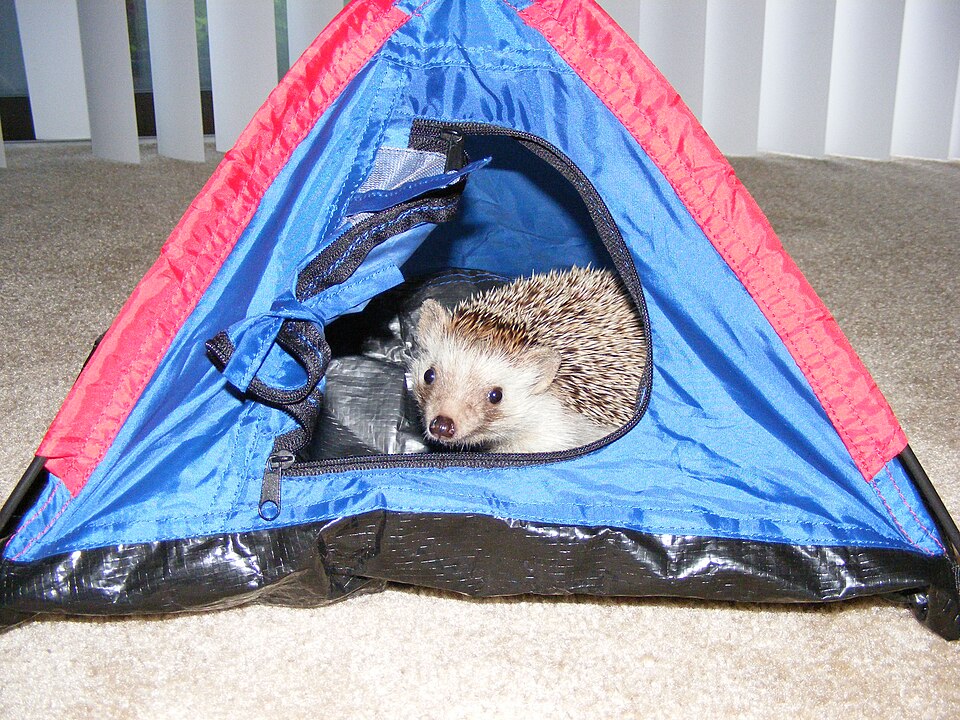
When you wash them, check what state the fabric is in. According to Merck, string and loose cloth fibers can wrap around toes and legs, and a foot or toe constricted by fibrous material is one of the causes of limping in hedgehogs. Replace fabric that's coming apart, losing threads or getting fuzzy.
Does it need a bath?
Short answer: usually not. According to the University of Florida, hedgehogs can keep themselves clean; you don't need to give your hedgehog a bath unless it gets really dirty. The Dumb Friends League, on the other hand, says some hedgehogs may need regular baths and that this varies from hedgehog to hedgehog. Talk to your vet about when your own hedgehog needs a bath.
If a bath is needed, here's what our sources say:
- Use a separate tub: According to the CDC, a hedgehog should be bathed in a small plastic tub used only for the hedgehog, not in the kitchen sink, bathroom sinks or bathtubs.
- Warm water up to the belly: According to the Dumb Friends League, a hedgehog can be placed in warm water that comes up to its belly.
- Only the dirty spots: According to the Dumb Friends League, the feet, spines and any soiled areas can be cleaned with a toothbrush and a mild shampoo. Ask your vet which shampoo to use.
- Don't use it to unroll a balled-up hedgehog: According to Merck, putting a balled-up hedgehog in shallow water to make it unroll is stressful and can affect its body temperature.
- Dry it and keep it warm: According to Merck, the ideal temperature is 24–29 °C (75–85 °F); an environment that's too cold or too hot can send a hedgehog into torpor. After a bath, dry your hedgehog well and don't let it get chilled.
- Clean up afterward: Clean the bathing tub outside the house and wash your hands (CDC).
According to Merck, slightly dry or flaky skin in the spiny areas is normal. But if you see a lot of scaling, redness, crusting or spine loss, don't try to fix it with baths or shampoo; talk to your vet without delay.
Nails
According to the University of Florida, hedgehogs may need help with nail trims. According to the Dumb Friends League, regular nail trims are important and shouldn't be skipped: untrimmed nails can curl into the paws and make walking painful and difficult. Merck also lists ingrown toenails among the causes of limping in hedgehogs.
- A few at a time: According to the Dumb Friends League, not every hedgehog tolerates nail trims easily; it may only be possible to trim a few nails at a time.
- Learn the first trim: Ask your vet to show you how much of the nail to trim the first time.
- Handling practice helps: It's easier to trim the nails of a hedgehog that's used to being handled. For that: getting your hedgehog used to handling.
Hygiene: protect yourself too
The CDC's advice for hedgehog owners:
- At least 20 seconds: Wash your hands with soap and water for at least 20 seconds right after touching your hedgehog. If soap and water aren't available, use hand sanitizer until you can wash your hands.
- No kissing or snuggling: Don't kiss or snuggle your hedgehog, touch your mouth, or eat or drink around it.
- Children: An adult should supervise young children when they wash their hands. According to the CDC, children younger than 5 shouldn't touch the hedgehog's food or treats and should be kept away from its feeding area.
- Guests: Make sure friends and family who touch your hedgehog wash their hands too.
According to Merck, some fungal skin infections in hedgehogs are also frequently passed to people. So think of handwashing not just as protection against Salmonella but as a general habit.
In Tüylüm, the Today tab comes with a ready-made weekly Cage cleaning task for hedgehogs. You can also add your own task for the daily wheel cleaning. You can see when the bedding will run out with Food & litter supplies; it reminds you before it does.
Frequently asked questions
How often should I bathe my hedgehog?
There's no set schedule. According to the University of Florida, a hedgehog doesn't need a bath unless it gets really dirty; according to the Dumb Friends League, some hedgehogs may need baths more often. Talk to your vet about your own hedgehog.
Why do I have to clean the wheel every day?
According to the Dumb Friends League, hedgehogs usually poop as they run and can soil the wheel's running surface quickly. According to Merck, solid wheels are easier to clean.
Can I wash my hedgehog's things in the bathroom?
The CDC recommends cleaning the cage, bowls and bathing items used to care for your hedgehog outside the house, and not bathing the hedgehog in the kitchen sink, bathroom sinks or bathtubs. Never use the kitchen.

Keep track of your pet's care in TüylümLog vet visits, vaccine and medication dates, and we'll remind you when it's time. Share it all with your family in Home.
Sources
- Potter League for Animals (Denver Dumb Friends League and HSUS) · Hedgehog Care (PDF)
- University of Florida College of Veterinary Medicine · How to care for your pet hedgehog
- CDC · Advice to Pet Owners: Salmonella Typhimurium Infections Linked to Hedgehogs (2013)
- Merck Veterinary Manual · Diseases of Four-Toed (African Pygmy) Hedgehogs
- Merck Veterinary Manual · Management of Four-Toed (African Pygmy) Hedgehogs
- Royal Veterinary College, Beaumont Sainsbury Animal Hospital · African pygmy hedgehog care (PDF)
By Tüylüm · Published and last checked: October 26, 2026. Spotted a mistake? Write to [email protected] and we'll fix it right away. Photos are from Wikimedia Commons, used under the license shown below each photo.