Getting your hedgehog used to handling: a step-by-step plan from day one to trust

On your new hedgehog's first evening at home, you'll want to scoop it up right away. But everything is strange to it: new smells, new sounds, enormous hands. According to Dr. Krista Keller, a veterinarian at the University of Illinois, hedgehogs are very solitary animals, which can make it hard for them to warm up to their owners; but with time and patience, you can earn their trust. This article is the detailed version of the short handling steps in our articles on African pygmy hedgehog care and why hedgehogs raise their spines.
- Hands off first: Keller recommends a few "hands-off" days at the start so your hedgehog can settle into its new enclosure.
- Scent first: According to Keller, early handling should focus on getting the hedgehog used to the scent of your hands.
- Short and often: According to the Dumb Friends League, frequent, short sessions work better than long, infrequent ones.
- Evening hours: Hedgehogs are nocturnal. According to Keller, they're getting up for their "day" while you're having dinner.
- Gloves or a towel are fine: In the early days, you can use leather gloves or a towel to protect your hands from the spines.
- Wash your hands: The CDC asks you to wash your hands with soap right after touching a hedgehog.
Why does it take time?
Your hedgehog gets to know you through its nose and ears before its eyes. According to an article by Elisabetta Mancinelli and Wendy Bament in Vet Times, a publication for the veterinary profession, hedgehogs have poor eyesight but a good sense of smell and hearing. They rely on smell and sound to find food, detect danger and find their way. That's why a hand with an unfamiliar scent coming at it suddenly can easily startle it.
Then there's the move itself. According to the University of Florida, a hedgehog that has just come home may seem grouchier than it did before: its world has just been turned upside down, and it needs time to get used to its new surroundings.
Age matters too. According to Merck, young hedgehogs handled every day from 3 weeks of age can become tame adults. Keller also says the best chance of training a hedgehog to accept handling is getting it from a breeder at a young age, though there are exceptions. So an adult hedgehog can get used to handling too.
A step-by-step plan
1. Hands off (the first days)
Keller recommends giving your hedgehog a few "hands-off" days at the start to settle into its enclosure. During these days, don't try to take it out of the cage. Do its food, water and cleaning with calm, slow movements. The University of Florida also recommends not surprising a hedgehog, approaching it slowly and quietly and speaking softly.
2. Scent introductions
According to Keller, once your hedgehog has settled in a bit, you can start handling it at night when it's awake. The first goal is for it to get used to the scent of your hands. Slowly place your hand in the enclosure and keep it still; if the hedgehog wants to come over and sniff, let it. According to a care sheet from the Denver Dumb Friends League and the Humane Society of the United States, two US animal welfare organizations, as a hedgehog becomes more comfortable with your scent, it will begin to explore.
3. The first lift: from underneath, with two hands
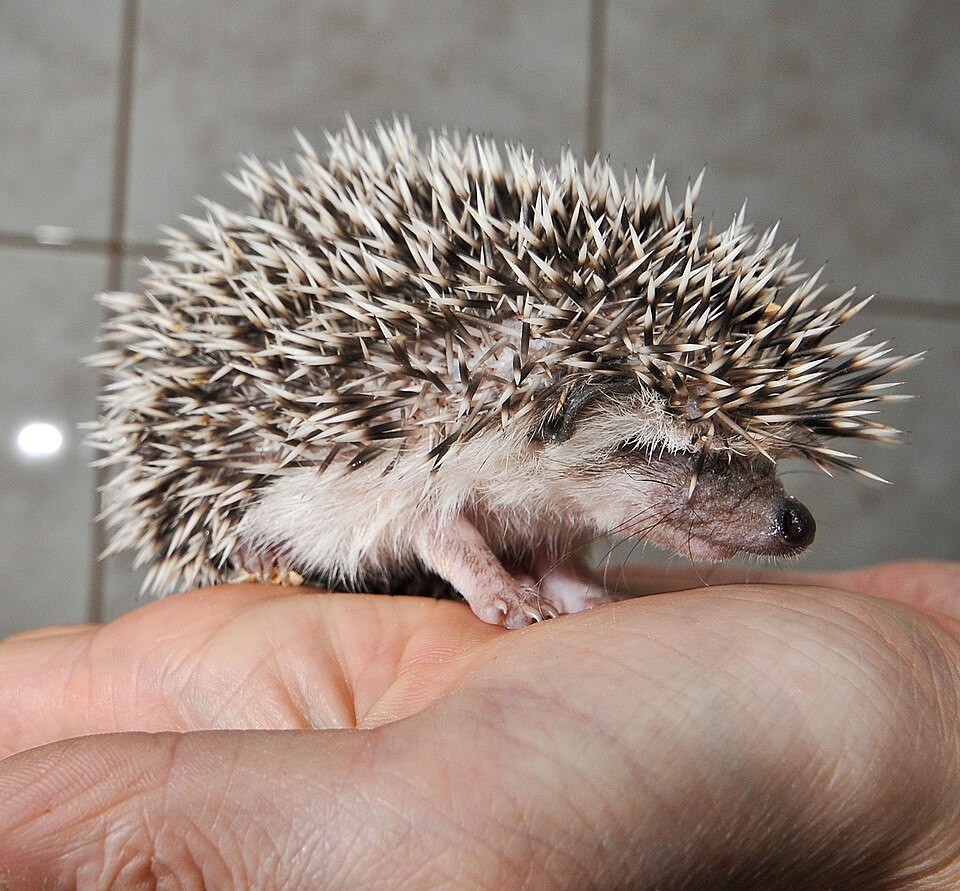
The University of Florida recommends gently picking up a hedgehog with two cupped hands from underneath, where its fur is soft. According to Mancinelli and Bament, tame hedgehogs may tolerate being cupped in the hands; a towel or gloves can also be useful.

The Dumb Friends League says leather gloves or a towel can be used at first to protect your hands from the spines. According to Mancinelli and Bament, light leather or gardening gloves may be used, though the spines cause only minor discomfort to the person holding the hedgehog. Keller, meanwhile, says handling should focus on getting the hedgehog used to the scent of your hands. So think of gloves or a towel as a starting tool; move to bare hands as your hedgehog calms down.
4. Wait for it to unroll
According to the University of Florida, a hedgehog sometimes rolls into a ball when picked up; if you keep holding it patiently, it will unroll and sniff around. According to Merck, healthy hedgehogs, even shy ones, eventually unroll and explore; stressed hedgehogs, however, may refuse to unroll for hours.
- Sit close to the floor: According to the Dumb Friends League, hedgehogs have poor vision and aren't always good at climbing down; falls are a risk. If your hedgehog slips out of your hands, it shouldn't fall from a height.
- Don't put it in water: Merck says putting a balled-up hedgehog in shallow water to make it unroll is stressful and can affect its body temperature.
- Try stroking: According to Mancinelli and Bament, lightly stroking along the spine may encourage a hedgehog to unroll.
5. Short and often
According to the Dumb Friends League, the best way to get a hedgehog used to handling is to spend time with it regularly; frequent, short sessions are better than long ones now and then. The University of Florida also recommends handling your hedgehog often so it's tame and used to playing with you. Aim for a short session at about the same time every evening.
6. Pair it with good things
According to the University of Florida, a hedgehog becomes less irritable as it learns that you're the source of delicious treats. Don't overdo the treats: the University of Florida asks you not to overfeed them, to avoid digestive upset. We covered which treats are suitable in our article on hedgehog diet.
7. The day you can stroke its spines
According to the Dumb Friends League, with time and trust, you may be able to stroke your hedgehog's spines and handle it with ease. Don't rush this day; every hedgehog goes at its own pace.
What if it bites?
According to Keller, hedgehogs bite when startled, so going slowly and socializing the animal step by step is very important. The Dumb Friends League also notes that hedgehogs can bite. We covered what balling up, hissing and huffing mean in our article on why hedgehogs raise their spines. If you see these signs, keep that evening's session short.
Children and hedgehogs
According to the Dumb Friends League, hedgehogs are covered in spines and can bite, so they may not be a suitable pet for young children without adult supervision. The CDC doesn't recommend hedgehogs for children younger than 5 and asks adults to make sure young children wash their hands properly.
Hygiene: protect yourself too
According to Mancinelli and Bament, Salmonella and some fungi have been reported to pass from hedgehogs to people. The CDC's advice:
- Wash your hands: Wash your hands thoroughly with soap and water right after touching or feeding your hedgehog, or cleaning the places where it lives and roams.
- No kissing or snuggling: The CDC asks you not to kiss or snuggle your hedgehog, and not to eat or drink around it.
- Keep it out of the kitchen: Keep your hedgehog away from the kitchen and other places where food is prepared, stored or eaten.
If your hedgehog was used to handling but has suddenly started avoiding it, seems to be in pain when you touch it, or isn't eating, don't assume it's a behavior problem; talk to your vet without delay.
The evening your hedgehog first unrolls in your hand and sniffs around is one to remember. You can add a photo of that moment to Tüylüm's Memory book. If more than one person cares for your hedgehog, everyone sees the same hedgehog's records with My home.
Frequently asked questions
When will my hedgehog get used to me?
Our sources don't give a specific timeline. According to Keller, you can earn its trust with time and patience; the best chance is getting a hedgehog at a young age, though there are exceptions. Keep going with frequent, short sessions, as the Dumb Friends League recommends.
Can I pick up my hedgehog during the day?
According to Keller, hedgehogs sleep during the day and are very active at night; she recommends handling them at night when they're awake. It's no surprise if a hedgehog woken from its daytime sleep rolls into a ball and hisses.
If I use gloves, will my hedgehog not get used to me?
The Dumb Friends League says leather gloves or a towel can be used at first. Keller, meanwhile, says handling should focus on getting the hedgehog used to the scent of your hands. Use gloves at the start, and move to bare hands as your hedgehog calms down.

Keep track of your pet's care in TüylümLog vet visits, vaccine and medication dates, and we'll remind you when it's time. Share it all with your family in Home.
Sources
- University of Illinois College of Veterinary Medicine · Hedgehogs Make Cute but Challenging Pets
- University of Florida College of Veterinary Medicine · How to care for your pet hedgehog
- Merck Veterinary Manual · Management of Four-Toed (African Pygmy) Hedgehogs
- Potter League for Animals (Denver Dumb Friends League and HSUS) · Hedgehog Care (PDF)
- Vet Times · Elisabetta Mancinelli and Wendy Bament, African pygmy hedgehogs: care and treatment advice (2014, PDF)
- CDC · 2020 Salmonella Outbreak Linked to Pet Hedgehogs (Final Update)
By Tüylüm · Published and last checked: October 26, 2026. Spotted a mistake? Write to [email protected] and we'll fix it right away. Photos are from Wikimedia Commons, used under the license shown below each photo.