Snails in the aquarium: nerites, apple snails and populations that get out of hand
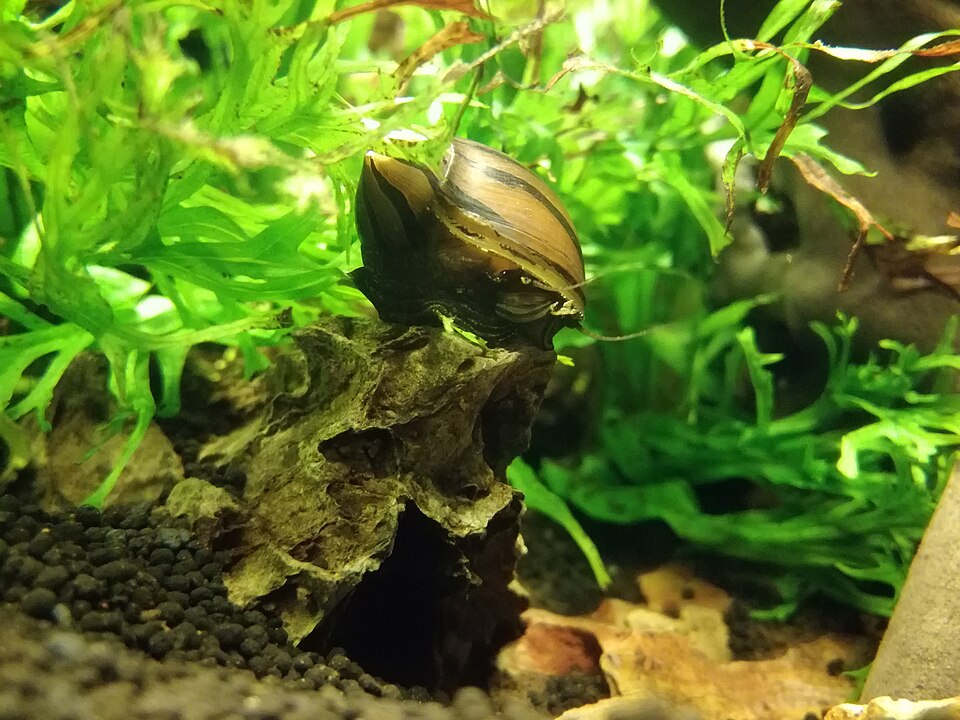
Snails get into an aquarium in one of two ways. Either you buy them on purpose: a striped nerite that wipes the glass clean, a yellow or purple apple snail. Or they arrive without you noticing: on the leaf of a new plant, in the material inside its pot, or in the water in the bag. The first kind genuinely helps your aquarium. The second kind may show up one day as little snails you never expected on the glass. In this article we cover how to recognize aquarium snails, keep them healthy, keep their numbers under control and, most important of all, why you should never release them into the wild.
- Water: OATA's general guidelines are 17–27 °C (63–81 °F) and a pH of 6.5–8.0, with zero ammonia and nitrite.
- Tank and lid: At least 10 liters (about 2.6 gallons) for a small group of snails, and about 20 liters (about 5 gallons) for large species such as apple snails. A lid so they can't escape.
- No copper: According to OATA, even very low levels of copper can kill snails. Make sure every treatment you add to the tank is safe for invertebrates.
- Know the eggs: Apple snails lay their eggs above the waterline, in pink or pale clusters.
- Never release them: Apple snails have become invasive in many parts of the world; in the EU, bringing these snails into the EU and spreading them within it has been banned since 2012.
Which snails live in aquariums?
According to OATA, most snails sold for aquariums originally come from Asia or Africa, but most of those on sale today are captive-bred. Snails feed by grazing algae and help keep nuisance algae down. They aren't social animals; most are hard to sex, and some are hermaphrodites (both male and female). In a well-established tank with clean water, they can live for a couple of years.
According to OATA, most aquarium snails are unlikely to grow beyond 5 cm (2 in). Apple snails are the exception: according to Defra, apple snails can reach a shell diameter of up to 15 cm (6 in), depending on the species and on the food and temperature they had as juveniles.
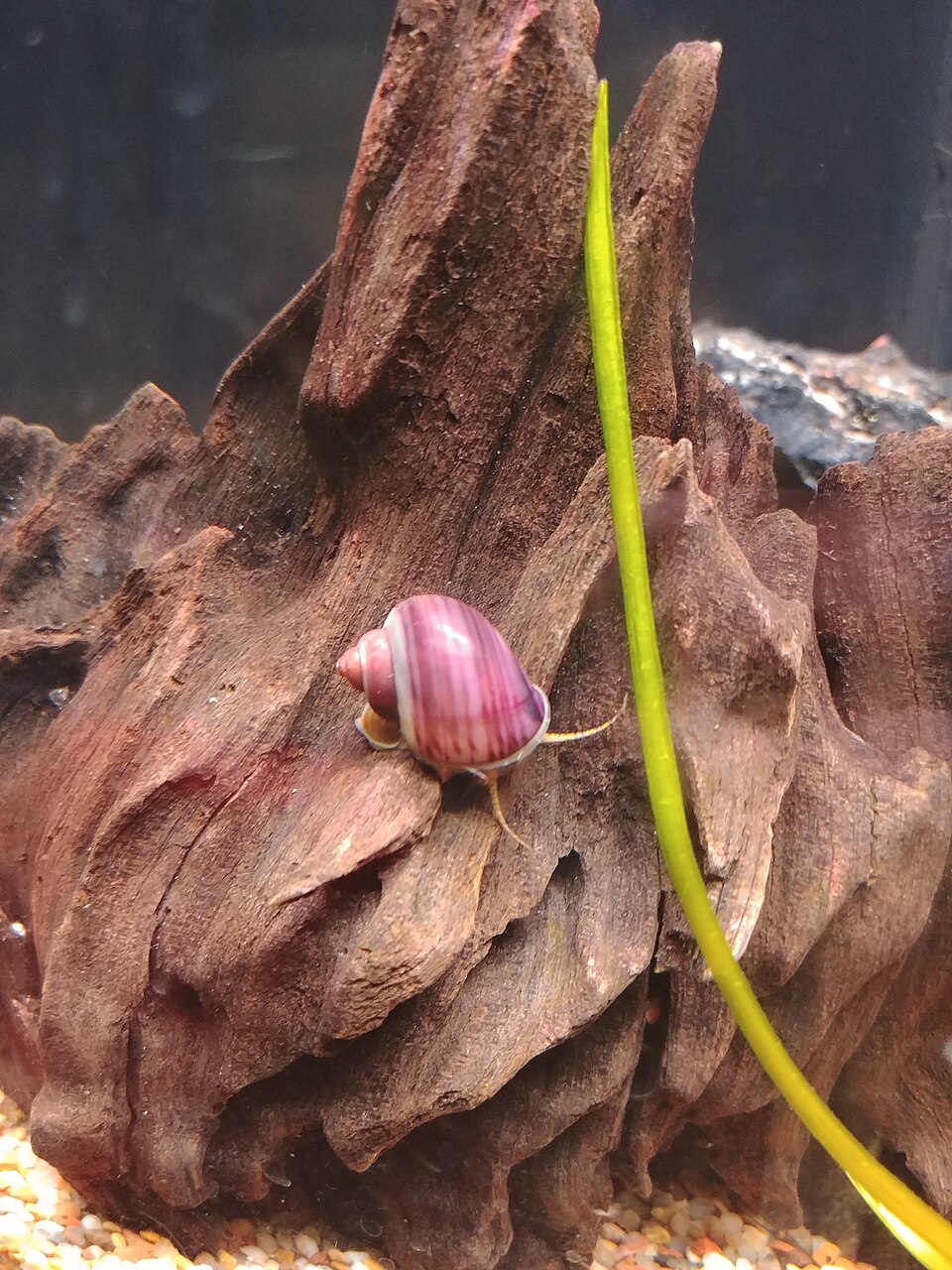
According to UF/IFAS, the species sold in aquariums as the "golden applesnail" is an apple snail (Pomacea diffusa); colorful varieties such as the "albino mystery snail" have been bred from it.
Nerites: little shells that scrape off algae
According to the Key to Australian Freshwater and Terrestrial Invertebrates, nerites (Neritidae) live attached to rocks and wood; they feed by scraping algae, diatoms and organic debris off surfaces with the file-like teeth in their mouths (the radula). That's why they clean the glass and the decor in an aquarium.
According to the same source, nerites lay pale eggs, either singly or in capsules, on rocks or shells. In many species the larvae spend a period drifting in the plankton in an estuary or at sea before returning to fresh water. Some freshwater species, on the other hand, hatch directly as tiny snails. So how a nerite reproduces depends on its species. OATA also recommends asking your retailer about each species' specific needs before you buy.
Apple snails: big, colorful and prolific egg layers
According to Defra, apple snails (Pomacea) are native to the Americas and are among the largest freshwater snails in the world; they get their name from being able to grow as big as an apple. They have a lid that can seal the shell closed (the operculum) and a long breathing tube (a siphon) that lets them take in air at the water's surface.
Their most striking feature is their eggs:
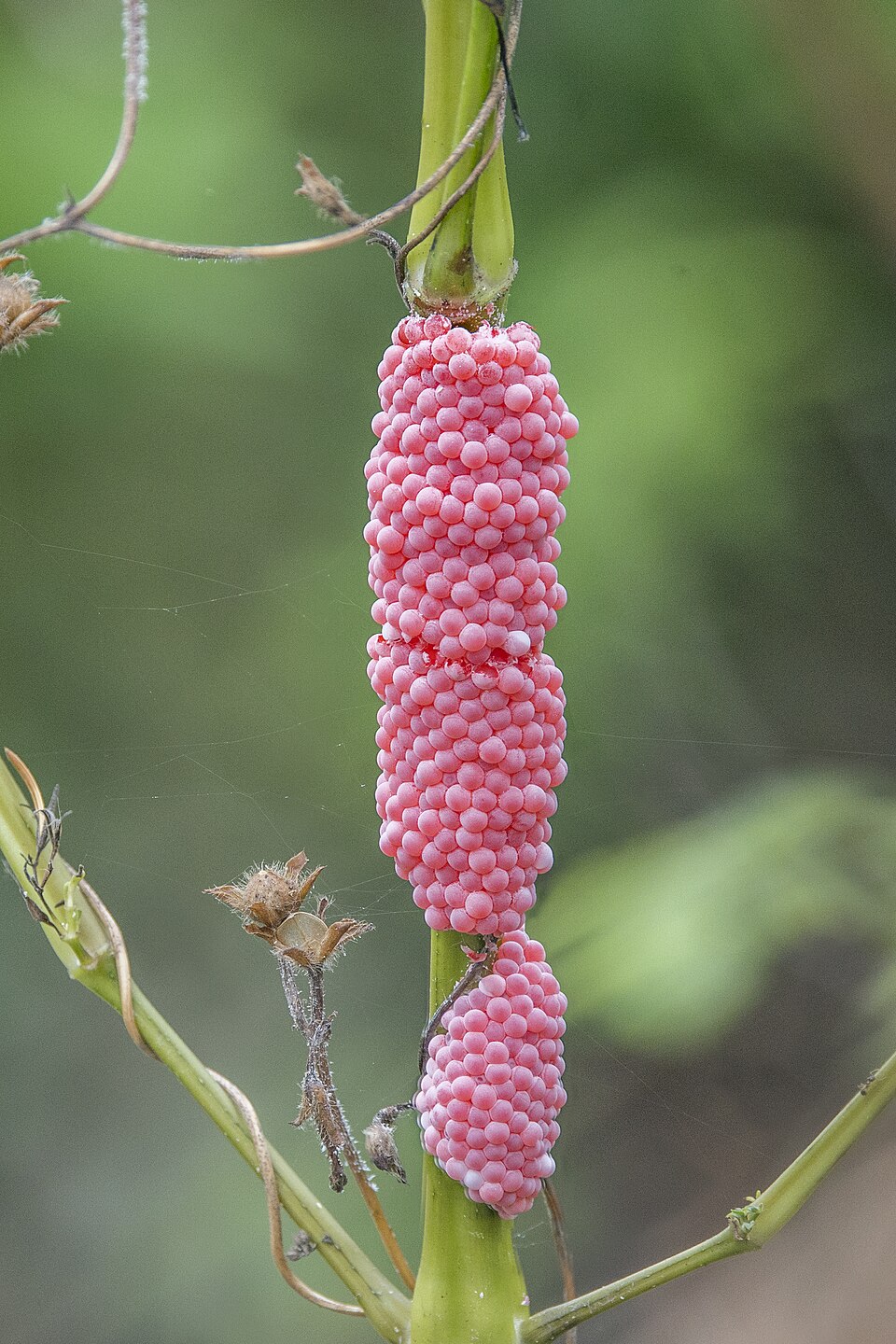
- Above the water: According to Defra, all Pomacea species lay their eggs above the water. According to UF/IFAS, females usually do this at night; the grape-like clusters are the quickest way to tell that apple snails are present.
- Color: Depending on the species, they can be bright pink, reddish, white or light green. According to Defra, a single egg is 2.2–3.5 mm across.
- Numbers: According to Defra, a single batch can contain more than 1,000 eggs in some species, and if conditions are right a female lays a batch about every two weeks. In laboratory trials, more than 80% of eggs have hatched.
- They need air: According to Defra, the eggs need a good supply of air; if they end up underwater, few of them hatch.
- Temperature: According to Defra, the species that have been studied need temperatures above 20 °C (68 °F) to breed successfully.
According to OATA, apple snails breed frequently under the right conditions and need a tank of about 20 liters (about 5 gallons).
- Look under the lid: If you have apple snails, check the glass and the edges between the water's surface and the lid regularly; that's usually where the clusters are laid.
- Spot them early: According to UF/IFAS, removing snails and egg masses by hand is the most effective method. If you don't want babies, noticing a cluster before it hatches makes things much easier.
- Ask if you're unsure: If you're not sure what to do with the eggs or with extra snails, ask your retailer or your vet. According to OATA, nothing from an aquarium should reach natural waters, so don't throw them down the sink or the toilet, or outside.
Uninvited guests that arrive with plants
The little snails that suddenly multiply in an aquarium often weren't bought on purpose. According to Penn State Extension, unwanted organisms can arrive in a plant's water, in its growing medium or in the packing material. Before you put a new plant in your aquarium:
- Use a light-colored bucket: Penn State Extension recommends rinsing each plant in a light-colored bucket of clear tap water until it looks clean, so you can see any small animals or plant fragments.
- Check the leaves and roots: Look carefully at the undersides of the leaves and at the roots, and pick out any snails or eggs you see.
- Dispose of the shipping water carefully: According to Penn State Extension, packing materials and shipping water can carry hitchhikers too; get rid of them in a way that keeps them from reaching natural waters.
- Trimmings: Don't let the bits you trim off reach streams, lakes or waterways.
According to OATA, assassin snails (Nassariidae) prey on other snails and help keep excess snail numbers down. But because they hunt other snails, take that into account if your tank also has snails you want to keep. OATA also advises against keeping snails with fish that eat them, such as pufferfish and loaches.
Care: water, copper and food
OATA's general guidelines for freshwater shrimp and snails:
| Topic | According to OATA |
|---|---|
| Temperature | 17–27 °C (63–81 °F) |
| pH | 6.5–8.0 |
| Ammonia and nitrite | 0 mg/L |
| Nitrate | No more than 20 mg/L above your tap water |
| Water change | 25% a week; siphon waste out of the gravel and dechlorinate the new water |
| Food | 2–3 times a week; algae wafers or shrimp pellets |
- Weekly testing: OATA recommends testing ammonia, nitrite, nitrate, pH and hardness every week, especially while setting up the tank and after adding new animals.
- Filter: A filter is essential. Rinse the sponge in water taken from the tank, not under the tap; that protects the beneficial bacteria.
- Go easy on food: OATA recommends leaving food in the tank for at least 30 minutes, but not overfeeding: uneaten food breaks down and releases toxic waste.
- Acclimate slowly: Float the bag to match the temperature, then add small amounts of tank water over at least 30 minutes; release the snail with as little bag water as possible.
According to OATA, snails are very sensitive to copper; even low levels can kill them. Check that every product you add to the tank is safe for invertebrates. More details: copper in a shrimp aquarium.
If you notice a change in your snail's movement, color, shell or eating, test the water first as OATA recommends, and talk to a vet experienced with aquatic animals without delay.
Never release them into the wild
According to UF/IFAS, the invasive island applesnail (Pomacea maculata) in Florida was probably released in the early 1980s by people in the tropical pet industry, and then spread rapidly. According to Defra, some apple snail species released into the wild have established themselves in new areas; at least two species have become serious pests of rice in Asia. They were first found in the wild in Europe in 2009, in a river in Spain. On November 8, 2012, the EU used emergency measures to ban bringing Pomacea into the EU and spreading it within the EU.
According to OATA, releasing aquarium animals or plants into the wild is illegal and can harm native habitats. Used substrate, water and decor also need to be disposed of in a way that keeps non-native organisms out of natural waterways.
If you can no longer care for your snails, here are the options Pennsylvania Sea Grant suggests:
- Ask the retailer: Contact the store where you bought them; they may take them back or tell you what to do.
- Find a new home: Give them to another aquarist, an aquarium society or a school. Remember to tell the new owner "don't release."
- Last resort: If there's no other way, ask a vet or a retailer for advice.
If you add your snail tank to Tüylüm as a fish, Food, Water change (weekly), Water test (weekly) and Filter cleaning (monthly) come ready-made as tasks on the Today tab. You can also track your food supply with Food & litter supplies and get a reminder before it runs out.
If you're setting up your first aquarium: your first aquarium setup. Our other invertebrate articles: Invertebrates.
Frequently asked questions
Lots of tiny snails suddenly appeared in my aquarium. Where did they come from?
According to Penn State Extension, unwanted organisms often arrive in a plant's water, in its growing medium or in the packing material. Rinsing new plants in a light-colored bucket of tap water and inspecting them carefully helps prevent this.
Why are my apple snail's eggs above the water?
According to Defra, all Pomacea species lay their eggs above the water; the eggs need air, and few of them hatch if they end up underwater. That's why you usually see the clusters between the water's surface and the lid.
Can I release my extra snails into a nearby lake?
No. According to OATA, releasing aquarium animals into the wild is illegal and can harm native habitats; according to Defra, some apple snail species have established themselves and become pests where they were released. Ask your retailer, another aquarist or an aquarium society.

Keep track of your pet's care in TüylümLog vet visits, vaccine and medication dates, and we'll remind you when it's time. Share it all with your family in Home.
Sources
- Ornamental Aquatic Trade Association (OATA) · How to look after freshwater shrimp and snails
- UF/IFAS EDIS (Featured Creatures) · Applesnails of Florida, Pomacea spp. (EENY323)
- Defra, UK Plant Health Portal · Plant Pest Factsheet: Apple Snails, Pomacea species (PDF, December 2023)
- Key to Australian Freshwater and Terrestrial Invertebrates (ABRS, CSIRO and partners) · Neritidae
- Pennsylvania Sea Grant (NOAA and Penn State) · Tips for Aquarium Owners (PDF, 2024)
- Penn State Extension · Facts About Aquatic Invasive Species and Water Gardens
By Tüylüm · Published and last checked: October 26, 2026. Spotted a mistake? Write to [email protected] and we'll fix it right away. Photos are from Wikimedia Commons, used under the license shown below each photo.