Live plants in the aquarium: what do they do, and how do you start?
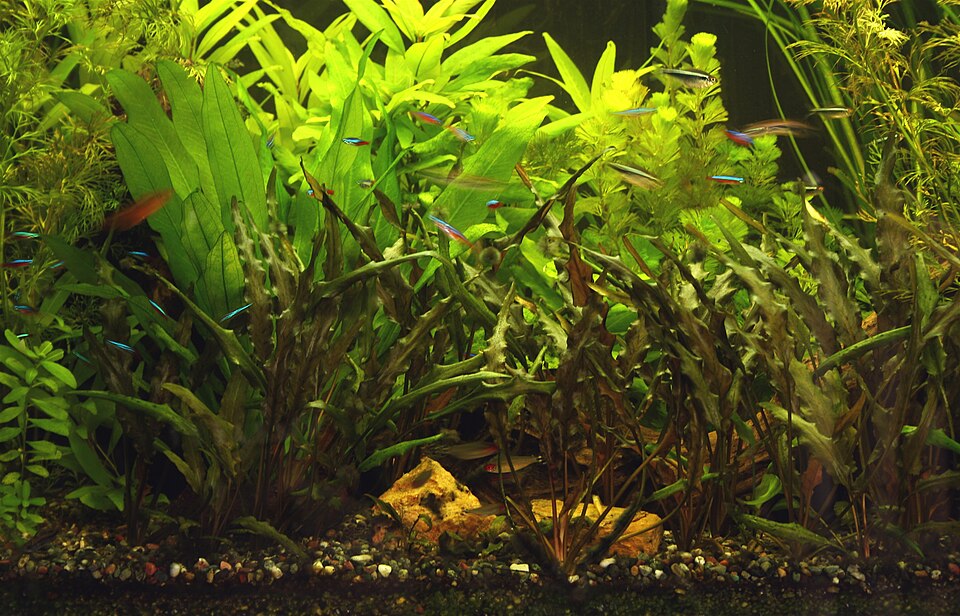
A small shoal of fish gliding between green leaves is the aquarium many of us picture. Live plants are more than decoration in that picture. According to OATA, plants use some of the waste fish produce as fertilizer and reduce the nitrate in the water. According to the RSPCA, aquatic plants also give fish shade and shelter. A planted tank may sound difficult; but according to OATA, plants can grow well even in simple setups with no carbon dioxide (CO2) system. In this article we explain, with sources, how to get started with live plants.
- The benefits: According to OATA, live plants reduce nitrate; according to the RSPCA, they release oxygen into the water and give fish shelter.
- No substitute for a filter: According to OATA, even with plants you still need a filter and water changes.
- Light: OATA recommends at least 6–8 hours of light a day on a timer; according to RSPCA Australia, aquarium lights should be on for no more than 10 hours a day, and fish need at least 8 hours of darkness.
- CO2 isn't required: According to OATA, plants can grow well in simple "no-carbon" setups; some species do struggle without it.
- A safe source: According to RSPCA Australia, buy plants only from an aquarium store; don't collect them from the wild.
- Don't dump them: According to OATA, some aquarium plants can become invasive if they get into rivers and lakes.
What do live plants do?
Thanks to the bacteria in the filter, some of the waste in the tank eventually turns into nitrate. According to OATA, live plants take up some of that nitrate and use fish waste as a kind of fertilizer. According to the RSPCA, real plants are a better choice than plastic ones because they release oxygen and nutrients into the water.
Plants have one more benefit for fish: somewhere to hide. According to RSPCA Australia, some tropical fish are prey species in the wild; they need enough plant cover to reduce stress and help them stay active. RSPCA Australia recommends about 50% of the tank be covered by plants: dense planting in some areas and open swimming space in others. The more cover there is, the more active the fish become. According to OATA, plants and ornaments give shy or less boisterous fish a safe retreat.
So are plastic plants useless? No. According to RSPCA Australia, artificial plants have been shown to be as effective as real plants at reducing stress; the added benefit of live plants is that they absorb waste from the water.
OATA's warning is clear: even though plants use some of the fish waste, that doesn't mean the tank doesn't need a filter or that you can skip water changes. In a new tank, mature the filter first: setting up your first aquarium.
Before you start: light, location and substrate
Plants need light to photosynthesize. OATA recommends putting the overhead lighting in a planted tank on a timer and giving at least 6–8 hours of light a day. According to OATA, the lighting period can go up to a maximum of 10–12 hours if the light is ramped up and down gradually in the morning and evening; dimmable LED lights make this easier. Don't forget what the fish need, too: according to RSPCA Australia, aquarium lights should be on for no more than 10 hours a day, and fish need at least 8 hours of darkness.
- Away from the sun: According to RSPCA Australia, keep the tank away from direct sunlight and windows to reduce algae outbreaks. OATA also wants the tank kept out of direct sunlight and away from heat sources and drafts.
- A bigger tank: According to OATA, water chemistry is more stable in a larger volume, and that helps keep algae under control.
- Substrate: According to OATA, a high-quality soil or gravel made for planted tanks delivers nutrients straight to the roots. Some substrates need rinsing before use, while others can go straight in; ask your retailer.
Planting, step by step
According to OATA's guide to planted aquariums:
- Lay the substrate. If you like, bank it up toward the back to create higher planting areas.
- Place the stones and wood. Leave space for plants, and move things around until you're happy. According to OATA, this is far easier to do before you plant.
- Add a little water. About 5 cm (2 in) of water above the substrate makes planting easier.
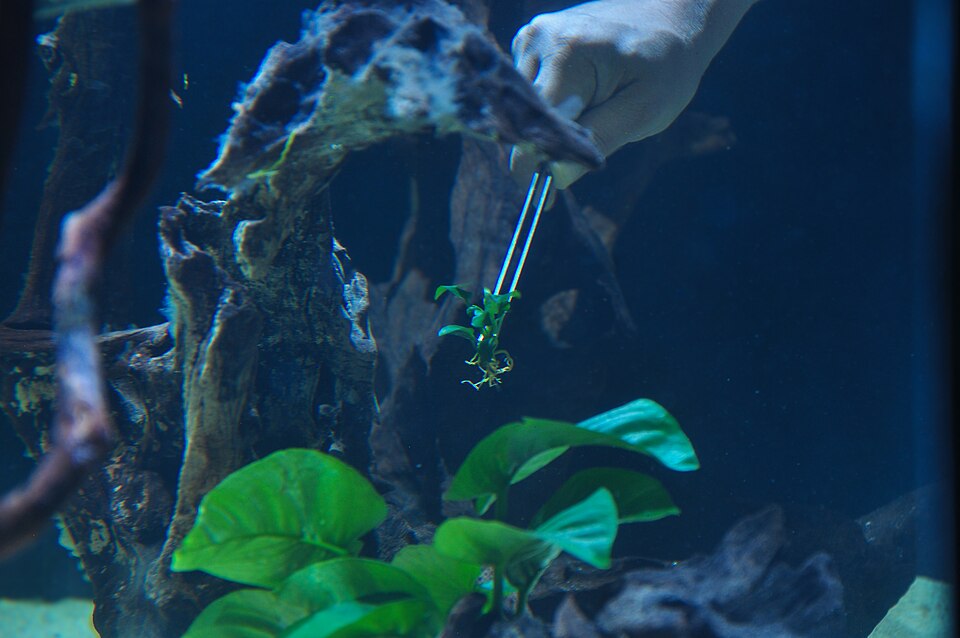
- Prepare the plants. Remove the mineral wool around the roots, gently tease the plants apart and plant them in the substrate. Planting tweezers make this easier.
- Short plants in front, tall ones at the back. This creates a sense of depth and leaves open swimming space at the front.
- Attach some plants. According to OATA, Anubias, Bucephalandra and mosses grow best when attached to stone or wood rather than buried; they can be tied on or glued in place.
- Plant heavily. According to OATA, planting densely at the first setup helps stop algae from getting established and outcompeting your plants.
- Fill slowly. To protect the plants, pour the water through a colander and treat it with a dechlorinator (water conditioner). According to OATA, some substrates cloud the water when it first touches them; in that case, draining and refilling the tank an hour later can help. Ask your retailer about this.
- Turn on the equipment. Install and switch on the filter, heater and lights. Then wait for the filter to mature.
CO2 and fertilizer: do you need them?
Stores sell carbon dioxide (CO2) systems for plants. According to OATA, they can speed up plant growth but are not required: many simple "no-carbon" setups still grow plants very well. Some species, though, struggle without CO2. According to OATA, more CO2 doesn't always mean more growth; the dose needs careful monitoring so that algae doesn't take over, the fish have enough oxygen and the pH doesn't swing suddenly. If you use CO2, follow the manufacturer's instructions.
OATA's advice on fertilizer:
- Some plants benefit: Regular fertilizer suits some plants; how often to dose depends on your setup and takes some trial and error.
- Never overdose: Increase the amount slowly.
- After a water change: Dose after a water change so the fertilizer isn't siphoned straight out.
- Look at the leaves: Signs such as yellow spots on the leaves can point to a nutrient deficiency. If you're not sure, take a photo and ask your retailer.
Regular care
A planted tank needs a bit of attention after setup, too. OATA recommends:
- Trimming: Trim plants regularly as they grow, so fast growers don't crowd out slow ones. According to OATA, trimming also encourages new growth.
- Remove old leaves: According to OATA, clearing away old leaves promotes new growth.
- Water changes: For planted tanks, OATA recommends partial water changes of up to 50% a week; this removes excess waste, encourages plant growth and prevents algae build-up. Make sure the new water is the right temperature and has been treated. More details: aquarium water changes.
- Few fish: According to OATA, stocking a planted tank lightly reduces nutrients in the water and eases algae problems.
- Filter: Never rinse the filter under the tap; clean it with tank water you've removed during a water change.
- Hygiene: According to OATA, never siphon aquarium water by mouth; cover any open cuts and wash your hands right after you finish.
In Tüylüm's Today tab, the suggested tasks for fish include a weekly Plant care and a daily Lights on / off. Add them so you don't forget the trimming or the light schedule.
Where should you get plants?
According to RSPCA Australia, buy live plants only from an aquarium store; don't collect them from the wild, because you could bring parasites or disease into your tank. The University of Florida's (UF/IFAS) publication on responsible fishkeeping also recommends quarantining all new animals and plants before adding them to an established aquarium, to prevent disease.
Think about your fish when you choose plants, too. According to OATA, goldfish readily eat live plants; ask your retailer which plants suit goldfish. OATA also suggests asking, before you buy, whether the fish species you want will eat plants.
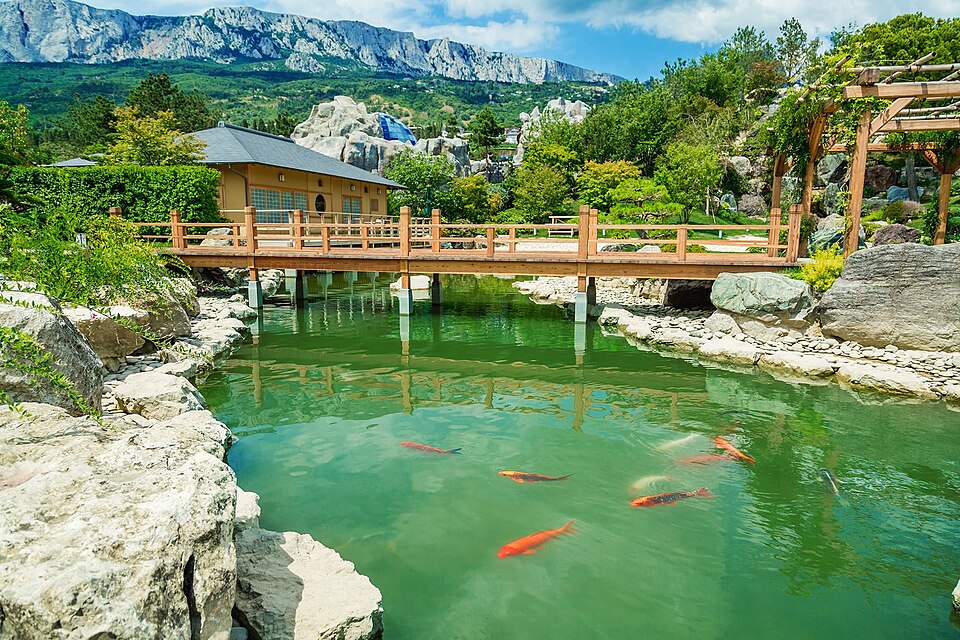
According to OATA, some aquatic plants can become invasive if they get into streams, rivers or lakes. According to OATA, aquarium plants such as Egeria densa should only be sold for aquariums; aquarium plants shouldn't be used in garden ponds, because some can tolerate cooler water. That's also the message of the "Be Plant Wise" campaign OATA supports: dispose of unwanted plants, roots and seeds responsibly, and don't let them grow in the wild. Dispose of used substrate and aquarium water in a way that keeps them out of natural waterways, too. If you're setting up a garden pond: fish in a garden pond.
Frequently asked questions
Live plants or artificial plants?
Both give fish shelter. According to RSPCA Australia, artificial plants are as effective as live plants at reducing stress; the added benefit of live plants is that they absorb waste from the water. According to the RSPCA, real plants should be preferred because they also release oxygen into the water. If you use artificial plants, RSPCA Australia says to buy them from an aquarium store.
Do I have to buy a CO2 system for my plants?
No. According to OATA, plants grow well in many simple setups without CO2; some species can struggle without it. When you're starting out, ask your retailer which plants grow well without CO2.
Can I put extra plants from my aquarium in my garden pond?
OATA advises against it: aquarium plants shouldn't be used in ponds, because some can tolerate cooler water and may become invasive if they reach natural waters. Dispose of extra plants responsibly, in a way that keeps them out of the wild.

Keep track of your pet's care in TüylümLog vet visits, vaccine and medication dates, and we'll remind you when it's time. Share it all with your family in Home.
Sources
- OATA · How to set up a planted aquarium
- OATA · Aquatic plants (Be Plant Wise)
- RSPCA Australia · How should I care for my tropical fish?
- RSPCA · Understanding pet fish behaviour
- OATA · How to look after goldfish in an aquarium / fish tank
- UF/IFAS Extension · The Ornamental Fish Trade (FA124)
By Tüylüm · Published and last checked: October 26, 2026. Spotted a mistake? Write to [email protected] and we'll fix it right away. Photos are from Wikimedia Commons, used under the license shown below each photo.