How does an aquarium filter work? Three types of filtration, filter types and a maintenance schedule
Most of the time we hardly notice the filter humming quietly in the corner of the tank. Yet much of the life in an aquarium happens inside it: dirt gets trapped there, and fish waste is made harmless there. According to the RSPCA, no fish should be kept without a well set up and well maintained filter. We covered how to swish out a filter sponge step by step in aquarium water changes. In this article we take a step back: what goes on inside the filter, what each type of filter is for, and how often it needs maintenance?
- Three jobs: According to RSPCA Australia, a filter does three types of filtration: mechanical, chemical and biological. The most important is biological.
- Two are a must: According to veterinarians at the University of Florida (UF/IFAS), every aquarium must have biological and mechanical filtration; chemical filtration is optional.
- Never switch it off: Beneficial bacteria need oxygen. According to RSPCA Australia, ammonia and nitrite are converted quickly because water flows through the filter constantly.
- Activated carbon doesn't remove everything: According to UF/IFAS, it doesn't remove nitrogen wastes such as ammonia, nitrite and nitrate, and it needs replacing from time to time.
- Schedule: The Merck Veterinary Manual recommends checking the filter's flow every two weeks; RSPCA Australia recommends lightly rinsing the sponge in tank water when it clogs or once a month.
What happens inside the filter? Three types of filtration
According to RSPCA Australia, there are three types of filtration in aquariums. All of them can happen inside the same filter; some filters do only one or two.
| Type of filtration | What it does | Example media from our sources |
|---|---|---|
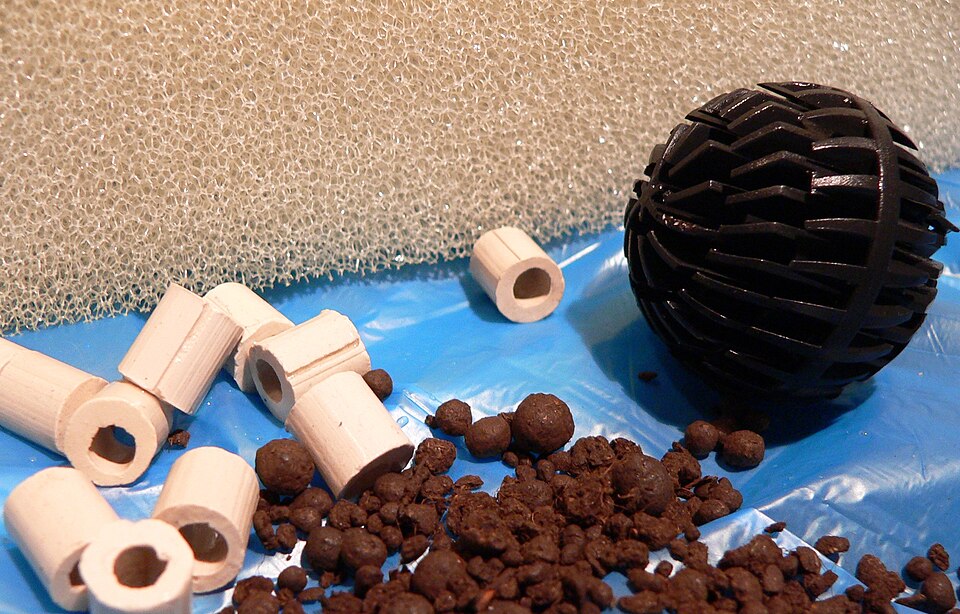
| Mechanical | Traps particles and dirt floating in the water | Sponge, filter floss, gravel |
| Biological | Uses beneficial bacteria to turn ammonia into nitrite, then into nitrate | Filter media with a large surface area, sponge; in an undergravel filter, the gravel itself |
| Chemical | Removes certain substances from the water: color, odor, some chemicals | Activated carbon |
Mechanical filtration is the filter's vacuum cleaner. According to UF/IFAS, the mechanical stage is usually placed in front of the biological stage so large particles don't reach and clog the part where the bacteria live. The same publication says mechanical media must be cleaned or replaced regularly so the filter keeps working properly.
Biological filtration is the heart of it all. According to UF/IFAS, turning ammonia into nitrite and nitrite into nitrate is a process that runs on oxygen. According to RSPCA Australia, the bacteria that do this live on every surface in the aquarium but are concentrated in the filter sponge and filter media. As RSPCA Australia points out, a filter is only as good as the media inside it, which is why it recommends choosing biological media with a large surface area. We explained how this cycle gets established in a new tank in setting up your first aquarium.
Chemical filtration, according to UF/IFAS, is optional in most aquariums. Its most common medium is activated carbon.
Activated carbon: what it does and what it doesn't
According to Merck, many hang-on filters come with activated carbon already inside the cartridge. According to UF/IFAS, its main job is to clear the water: it removes colored and smelly compounds, and it also takes out chlorine, chemical products added to the water (including dyes) and heavy metals. But according to the same publication, it doesn't remove nitrogen wastes and it doesn't soften water. So even if you use carbon, keep testing the water for ammonia and nitrite and keep doing regular water changes.
Carbon wears out. According to UF/IFAS, it needs replacing periodically; the Merck Veterinary Manual's maintenance schedule recommends doing this every 1–3 months.
According to UF/IFAS, activated carbon also removes chemical products added to the water. If your vet recommends adding a product to the aquarium for your fish, tell them there's activated carbon in your filter and follow their instructions.
Types of filters
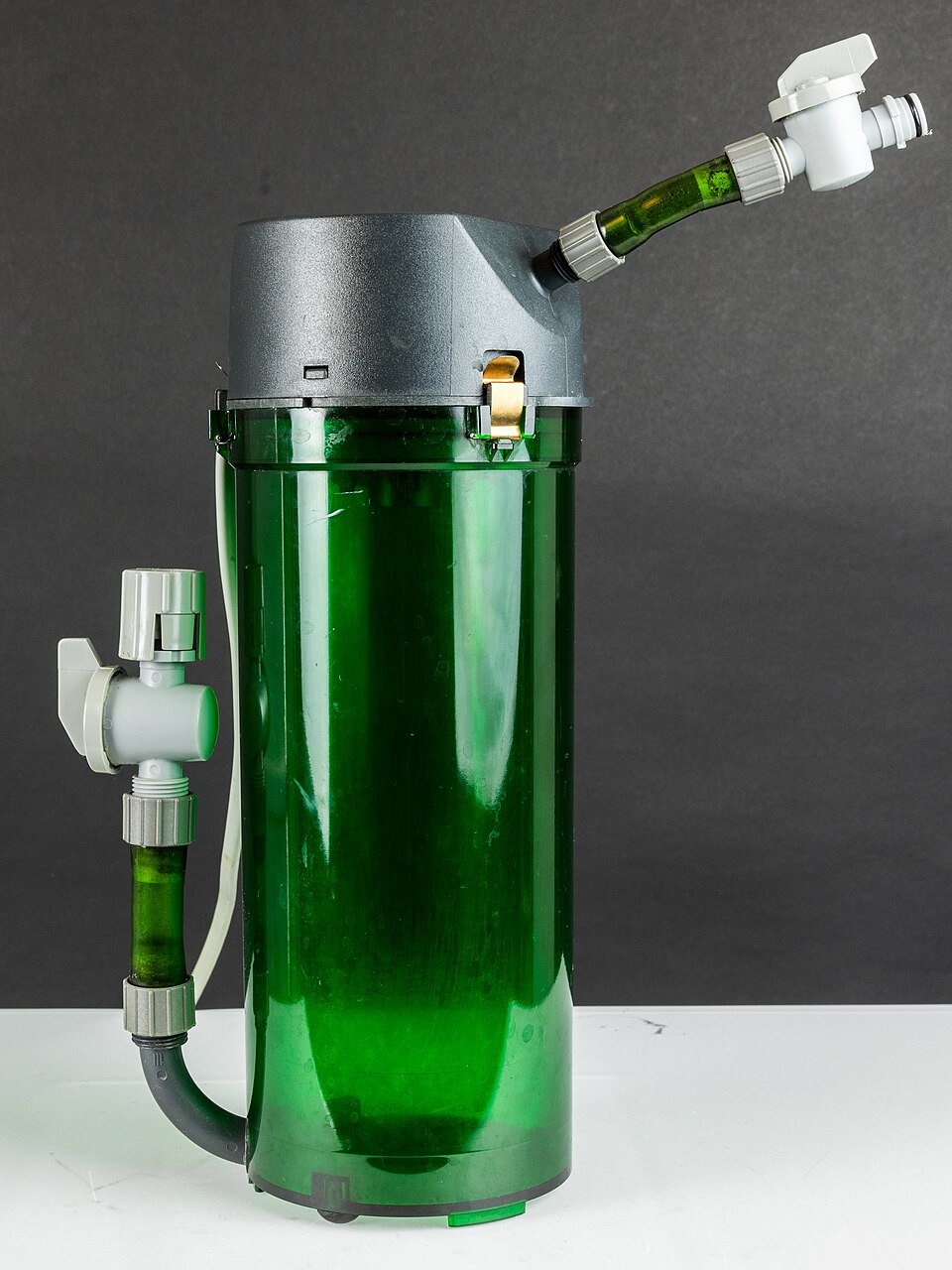
There are many kinds of filters in the store. A table in a UF/IFAS publication on home aquariums (from 2003, now archived) sums up which filter does which job, and the Merck Veterinary Manual explains how the two most common types work.
| Filter | How it works | Typical use according to UF/IFAS |
|---|---|---|
| Sponge filter | Water passes through the sponge; it does mechanical and biological filtration | Quarantine and treatment tanks |
| Box (corner) filter | With floss inside it does mechanical and biological filtration; with activated carbon, chemical filtration | Quarantine, treatment and breeding tanks |
| Hang-on power filter | According to Merck, a small pump draws water up an intake tube; the water passes through a cartridge containing floss and activated carbon. Many also have separate media for bacteria | Raising fry and quarantine |
| Undergravel filter | According to Merck, a grate sits under the gravel, water is drawn up through tubes and the gravel itself becomes the filter medium | Main display tanks |
| Canister filter | Different media can be stacked inside a closed container; what it does depends on the media you choose | Heavily stocked tanks |
Choosing the right filter
According to RSPCA Australia, a filter should be efficient and the right size for the aquarium, both to maintain water quality and to aerate the water. When choosing one, think about:
- Tank volume: The filter should be the right size for your aquarium. Ask your retailer which one fits, telling them how many liters your tank holds and which fish will live in it.
- Number of fish: UF/IFAS lists canister filters for heavily stocked tanks. According to Merck, adding too many fish at once overwhelms the available bacteria, and toxins build up quickly. For adding fish gradually: adding new fish to your aquarium.
- Your fish's flow preference: We explained in betta fish care how some long-finned fish struggle in strong currents. Find out what kind of flow your species needs before you buy.
- Setup order: According to Merck, filters, pumps, heaters and lights shouldn't be switched on until the tank is filled with water.
Why you should never switch the filter off
The filter's noise can be annoying at night, and you may wonder, "What harm can a few hours off do?" But the beneficial bacteria in the filter need oxygen. According to UF/IFAS, breaking down waste is a process that runs on oxygen; and according to RSPCA Australia, ammonia and nitrite are made harmless quickly because water flows through the filter constantly. Don't switch the filter off, day or night.
If the filter stopped because of a breakdown or a power cut, test the water after you get it running again. If the test shows ammonia or nitrite, we explained what to do in aquarium water changes.
Maintenance schedule
Filter maintenance is a balance between two extremes. Too little clogs the filter; too much wipes out the bacteria. The intervals our sources recommend:
| When? | What to do | Source |
|---|---|---|
| Every day | Take a quick look at the fish, the water temperature and the equipment, including the filter | Merck |
| Every two weeks | Check the filter's flow; clean it if needed | Merck |
| When it clogs, or once a month | Lightly swish the sponge and media in tank water you removed during a water change | RSPCA Australia |
| Every 1–3 months | Replace the activated carbon; clean the filter tubing; service the power filter and air pump | Merck |
| During cleaning | Keep the impeller and the other parts clean too | RSPCA |
Cartridge filters: According to Merck, replaceable cartridges should be changed once a month, or more often if the floss clogs with waste or the carbon stops working. When you change a cartridge, keep this in mind: according to RSPCA Australia, a new filter doesn't have enough beneficial bacteria to remove all the toxins right away, and the bacteria are concentrated in the filter media. According to Merck, many hang-on filters also contain media for the bacteria separate from the cartridge. In the days after you replace what's inside your filter, test for ammonia and nitrite more often.
According to RSPCA Australia, over-cleaning the filter media wipes out the beneficial bacteria. Don't wash the sponge under the tap, either: according to the RSPCA, washing it under the tap kills the beneficial bacteria; according to RSPCA Australia, that's because of the chlorine or chloramine in tap water. Always swish the sponge in water taken from the aquarium.
In Tüylüm's Today tab there are ready-made tasks for fish: a monthly Filter cleaning and a weekly Water test. When the filter task comes up, the table above reminds you what to check that month. Everyone in your Home sees the same list, so there's no confusion about who cleaned the filter.
Frequently asked questions
My filter is really noisy. Can I switch it off at night?
Don't. The beneficial bacteria in the filter need oxygen; according to RSPCA Australia, ammonia and nitrite are made harmless quickly because water flows through the filter constantly. If the noise bothers you, check the flow and the parts; the RSPCA wants the filter's parts, including the impeller, kept clean so it runs properly. If the problem continues, ask your retailer.
Do I have to use activated carbon?
No. According to UF/IFAS, every aquarium must have biological and mechanical filtration; chemical filtration is optional. If you do use carbon, replace it every 1–3 months following Merck's schedule, and remember it doesn't remove ammonia, nitrite or nitrate.
I'm switching to a new filter. What should I watch out for?
According to RSPCA Australia, a new filter doesn't have enough beneficial bacteria to remove all the toxins right away. Make sure the new filter is the right size for your tank, test the water more often in the days after the switch, and ask an experienced fishkeeper about anything you're unsure of. We explained how a new aquarium is cycled in setting up your first aquarium.

Keep track of your pet's care in TüylümLog vet visits, vaccine and medication dates, and we'll remind you when it's time. Share it all with your family in Home.
Sources
- RSPCA · Choosing an aquarium for pet fish
- RSPCA Australia · Why is water quality important when setting up a fish aquarium?
- RSPCA Australia · How should I care for my tropical fish?
- Merck Veterinary Manual · Providing a Home for Fish
- Merck Veterinary Manual · Routine Health Care of Fish
- UF/IFAS Extension (Francis-Floyd, Riggs and Yanong, 2003, archived) · Aquarium Setup and Maintenance (VM144)
By Tüylüm · Published and last checked: October 28, 2026. Spotted a mistake? Write to [email protected] and we'll fix it right away. Photos are from Wikimedia Commons, used under the license shown below each photo.