Why do shoaling fish live in groups? How many neon tetras, rasboras and barbs do you need?
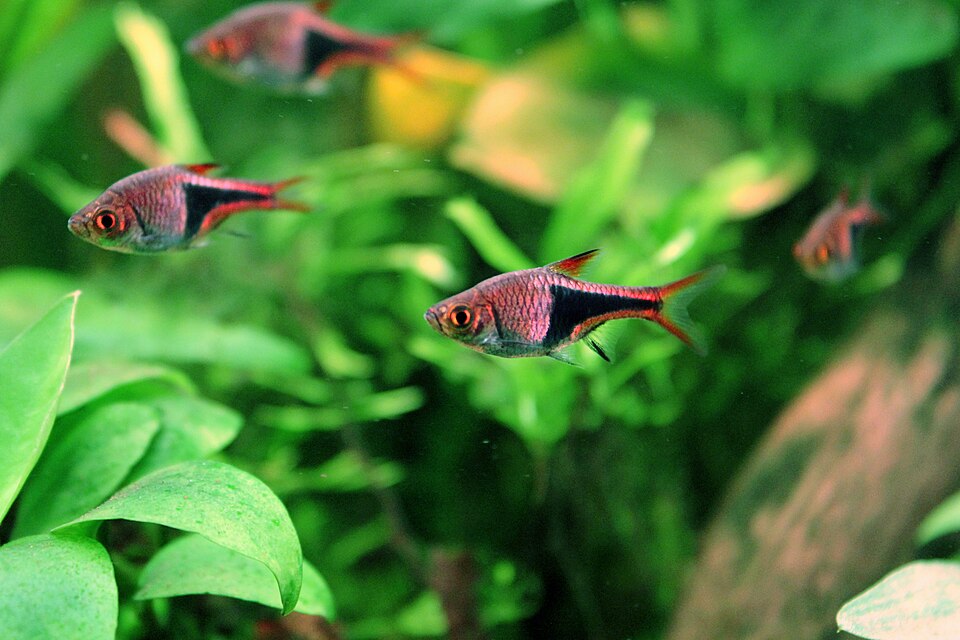
When you see neon tetras at the store, picking up two and taking them home can seem like an easy decision. But tetras are shoaling fish. According to the RSPCA, shoaling fish should be kept in groups of at least six, or they may become stressed. In a larger group, they're more relaxed and come out of hiding more readily. In this article we explain, with sources, why fish live in shoals, how many are enough in an aquarium and how to set up a tank that suits a shoal.
- Who shoals: According to the RSPCA, danios, tetras, rainbowfish, rasboras and many catfish are shoaling fish.
- How many: The RSPCA says six or more; for tetras, rasboras and barbs, OATA says at least five, adding that "more is better."
- Too few: According to OATA, shoaling fish kept alone or in groups that are too small often become stressed.
- A bonus with barbs: According to OATA, keeping barbs in larger groups also reduces their fin nipping.
- Not every fish wants a shoal: According to the RSPCA, livebearers such as guppies, platies, mollies and swordtails don't need a shoal of their own kind.
What does swimming in a shoal do for a fish?
Why do fish swim together? According to a review published in the journal Animals in 2024, the benefits scientists have proposed include: safety in numbers, confusing predators, running into predators less often, keeping watch for predators together, finding mates and food, and using less energy.
According to the same review, especially in open water with few places to hide, fish tend to line up at regular spacing and stay close to one another, which makes them less likely to be attacked by predators. There's also an "oddity effect": individuals that look different from the rest of the group are more likely to be singled out by predators.
How do fish swim so close together without colliding? This is where the lateral line comes in. According to the review, this sense organ running along the fish's body detects water movement within about one to two body lengths, and fish in a school usually swim closer than that to their neighbors. That's what lets them make nearly instant changes in direction and speed together.
How many fish is enough?
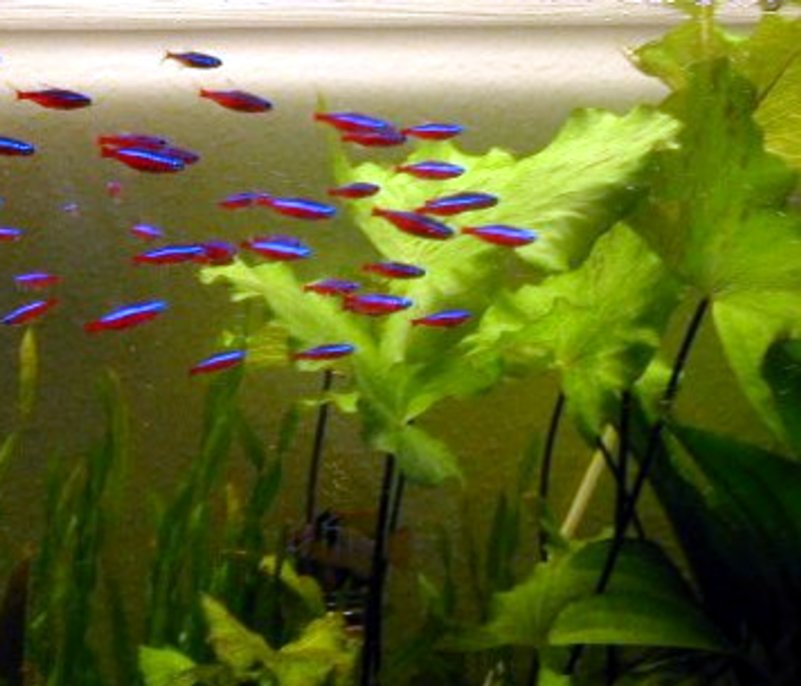
Our sources give similar numbers for shoaling fish, with small differences. The RSPCA recommends six or more; OATA says at least five and adds that "more is better." To meet both recommendations, you can aim for six or more. But the number has to be considered together with the size of the tank:
| Fish group | Smallest group | Smallest tank, according to OATA |
|---|---|---|
| Tetras (including neon tetras) | At least 5 (OATA); 6 or more (RSPCA) | 45 liters (about 12 gallons) for a small shoal of a smaller species; 80 liters (about 21 gallons) for species 5 cm (2 in) and over |
| Rasboras | At least 5 (OATA); 6 or more (RSPCA) | 45 liters (about 12 gallons) for the smallest species; 60 liters (about 16 gallons) for species 5 cm (2 in) and over |
| Barbs | At least 5 (OATA) | 60 liters (about 16 gallons) for a small group of species around 8 cm (3 in); 400 liters (about 106 gallons) for large species such as tinfoil barbs |
| Danios | 6 or more (RSPCA) | Ask your retailer, depending on the species |
OATA recommends asking your retailer, before you buy, whether your tank is suitable for the number of fish you want. To calculate your tank's volume and get a rough guide to stocking: setting up your first aquarium.
What happens when there are too few?
OATA's care sheets for tetras, rasboras and barbs all repeat the same warning: these fish, kept alone or in groups that are too small, often become stressed. The RSPCA describes the other side of the coin: shoaling fish kept in groups are more relaxed and come out of hiding more readily. So in a big enough shoal, you're more likely to see your fish swimming out in the open rather than hiding.
With barbs, the group has another benefit. According to OATA, some barb species are notorious for nipping other fishes' fins, and keeping them in larger groups reduces this behavior. But according to OATA, these barbs still shouldn't share a tank with slow-swimming, timid or long-finned fish, such as guppies. For guppies: guppy care.
OATA recommends that fishkeepers keep an eye out for changes such as hiding more than normal, changes in aggression, or differences in swimming, breathing or appetite. If you notice them, test the water first; if you're still worried, talk to a vet who treats fish without delay.
Not every fish is a shoaling fish
The shoal rule doesn't apply to every fish. Before you buy, find out what kind of company your species needs:
- Livebearers: According to the RSPCA, guppies, swordtails, platies and mollies swim at every depth of the tank and don't need to be kept in shoals of their own kind.
- Fish that fight their own kind: According to the RSPCA, some fish fight with their own kind or with other species; male bettas are an example. More details: betta fish care.
- Goldfish: According to the RSPCA, goldfish don't need company and can be kept alone. But fast single-tailed varieties and slow twin-tailed varieties shouldn't be kept together.
Setting up a tank for a shoal
Shoaling fish want both open swimming space and a corner to hide in. Our sources recommend:
- Swimming space and plants: According to OATA, tetras and rasboras should have a gravel or sand substrate and, ideally, live plants for cover, with plenty of open swimming space as well. To get started with live plants: live plants in the aquarium.
- A gentle current: OATA recommends a gentle current for smaller species.
- Different layers: The RSPCA suggests choosing species that live at different depths of the tank to make the best use of the space. According to the RSPCA, for example, zebra danios live just below the surface, angelfish in mid-water and bronze catfish (corydoras) at the bottom.
- Similar size and temperament: According to OATA, small species such as neon tetras shouldn't be kept with fish large enough to eat them. Tetras mix best with species of a similar size and temperament.
- A few at a time: According to OATA, the number of fish should be increased slowly, because the beneficial bacteria in the filter need time to catch up with the waste from each new fish. Talk to your retailer about the order in which, and how many at a time, you'll build up your shoal. To acclimatize new fish to your tank: adding new fish to your aquarium.
Frequently asked questions
Aren't two neon tetras enough?
No. According to OATA, tetras are shoaling fish and should be kept in groups of at least five; the RSPCA recommends six or more. According to OATA, tetras kept alone or in groups that are too small often become stressed.
Can I add more fish to my shoal later?
You can; but according to OATA you should increase the number of fish slowly, because the bacteria in the filter need time to catch up with the extra waste. Before you add any, make sure ammonia and nitrite are at zero, and let the new fish adjust to the tank's temperature in their bag.
Do guppies need a shoal too?
According to the RSPCA, livebearers like guppies don't need to be kept in shoals of their own kind. That doesn't mean a guppy will be happy alone; we cover how many guppies to keep, and in what male-to-female ratio, in a separate article: guppy care.

Keep track of your pet's care in TüylümLog vet visits, vaccine and medication dates, and we'll remind you when it's time. Share it all with your family in Home.
Sources
- RSPCA · Keeping fish together
- RSPCA · Understanding pet fish behaviour
- OATA · How to look after tetras & pencilfish
- OATA · How to look after rasboras
- OATA · How to look after barbs
- Animals (scientific journal) · Larsson M. (2024) Schooling Fish from a New, Multimodal Sensory Perspective
By Tüylüm · Published and last checked: October 26, 2026. Spotted a mistake? Write to [email protected] and we'll fix it right away. Photos are from Wikimedia Commons, used under the license shown below each photo.