Tree frog care: a tall, humid home for White's tree frog
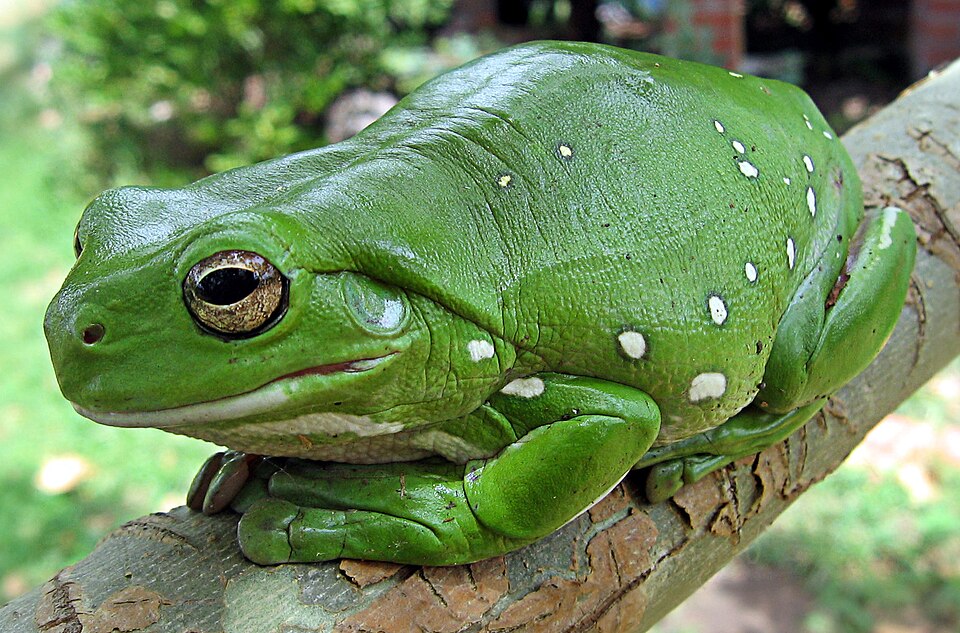
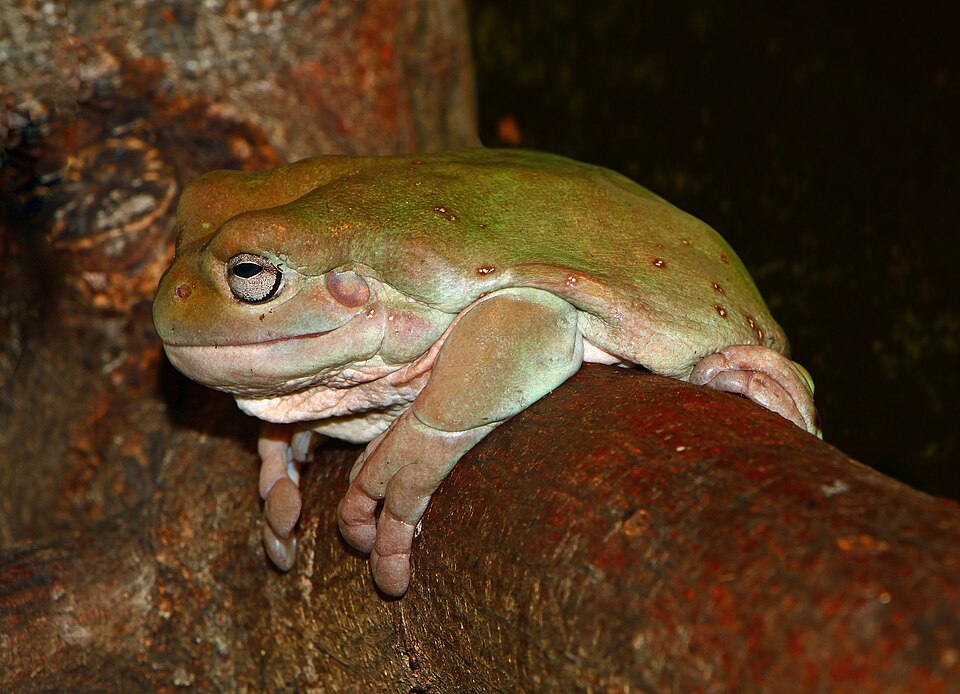
By day it sleeps on a branch, legs tucked underneath, eyes half closed. The curve of its mouth always makes it look as if it's smiling slightly. When evening comes, it wakes up and starts to hunt. According to the Royal Veterinary College (RVC), Litoria caerulea, White's tree frog, is also known as the "dumpy", "green" or "smiling" tree frog. It comes from Australia, Indonesia and New Guinea. According to the RVC, because it's fairly hardy, it's a good choice for people keeping amphibians for the first time; but it isn't always very active, and by nature it's nocturnal. According to the NSW Department of Education, it can live up to 16 years in captivity, so this is a long companionship, too.
- Height and branches: It's a climbing species; NSW recommends at least a 60 cm cube for a single frog.
- A warm corner and a cool corner: According to the RVC, the basking spot should be about 30 °C (86 °F) and the cool end about 25 °C (77 °F); at night it shouldn't drop below 21 °C (70 °F).
- Humidity: According to the RVC, about 60–70%; NSW recommends a light misting every day, not with tap water.
- Lighting: Although it's nocturnal, it benefits from a low-output UVB lamp; the lights are off at night.
- Overfeeding: According to the RVC, this is a common problem in these frogs. An insect shouldn't be bigger than the distance between the frog's eyes.
Getting to know White's tree frog
According to the NSW Department of Education, this is one of Australia's largest frogs and can reach up to 11 cm long. In Australia it lives in a wide range of places, from cities to forests; in some areas it even settles around houses and water tanks. According to NSW, in the wild it's often seen near outdoor lights, hunting the insects drawn to them. The RVC describes it as a medium-to-large green-brown frog; according to NSW, it's easy to recognize by its bright green skin and large body.
The enclosure: tall, secure and easy to clean
The NSW Department of Education recommends a glass terrarium shaped as at least a 60 cm cube for a single tree frog. If 3–4 frogs are kept together, the recommended size is 60 cm long x 100 cm high x 60 cm wide. The RVC considers a wooden or plastic enclosure with sliding glass doors the most suitable setup, because it's easy to clean, insulate and keep secure.
- Climbing: According to NSW, because the tree frog lives in trees, the enclosure should have climbing opportunities and high perches: logs, real or artificial plants with broad leaves, branches and vines.
- Branches of different thicknesses: The RVC recommends branches of different lengths and thicknesses so the frog can climb and bask when it wants to.
- A hiding place: According to the RVC, there should be at least one hiding place: half a log, a ready-made cave, or even an empty box with a hole cut in the side.
- Secure furnishings: According to NSW, all furnishings should be smooth, clean and stable; a falling object could injure the frog. Plastic plant pots and PVC pipes work well because they're easy to clean.
- No escapes: According to NSW, tree frogs are excellent escape artists, thanks to their ability to climb, jump and squeeze through small gaps. A sturdy, metal-framed mesh lid is recommended, both for ventilation and to prevent escapes.
Substrate and water area
According to the RVC, the substrate should be easy to clean and replace, and it shouldn't cause problems if the frog accidentally swallows some. For short-term use, newspaper or damp paper towels are ideal, but they don't hold humidity well; for a more natural setup, substrates such as coconut fiber can be considered. According to NSW, if aquarium gravel is used as a substrate, you should make sure the frog doesn't swallow gravel while feeding.
Water is essential for every amphibian. According to the RVC, the enclosure should hold enough water for the frog to get into comfortably, and water quality is very important. NSW also calls for a water area where the frog can get fully into the water, and a dry area where it can sit, hide, feed and climb.
According to NSW, untreated tap water can harm amphibians because of chemicals in it such as chlorine, fluoride and copper. NSW recommends filtering the water, but warns that reverse osmosis water can be too pure and can lead to the frog's death. If water is provided in a dish, according to NSW it should be changed every day; frogs urinate and defecate in the water. More detail: water quality for amphibians.
Temperature: a warm corner and a cool corner
According to the RVC, amphibians regulate their body temperature using outside sources, so the enclosure needs supplementary heating to create a temperature gradient. The frog should be able to move to the cool side when it gets warm and to the warm side when it gets cold. The values the sources give:
| Source | Recommendation |
|---|---|
| RVC | Basking spot about 30 °C (86 °F) (a light-emitting spot lamp, at least 12 hours a day, off at night); cool end about 25 °C (77 °F); shouldn't drop below 21 °C (70 °F) at night |
| NSW Department of Education | Ambient temperature 20–25 °C (68–77 °F); heat source at one end of the enclosure |
- According to the RVC, heat sources should be connected to a thermostat and measured with a digital min/max thermometer to make sure the enclosure isn't overheating.
- According to the RVC, the area around heat sources should be guarded to prevent burns. NSW also recommends placing heat lamps outside the enclosure; the frog shouldn't be able to touch the heater or a hot surface.
- According to NSW, the temperature should have settled before you put the frog in the enclosure.
Humidity and misting
According to the RVC, humidity should be checked with a hygrometer placed in the middle of the enclosure and should be about 60–70%; this can be achieved by misting the enclosure frequently. According to NSW, the tree frog needs a humid environment, and both the frog and the enclosure should be lightly misted every day. NSW's warning is important: use filtered water for misting, not tap water; the chlorine and other substances in tap water can harm the frog. According to NSW, good ventilation is also a must.
Lighting and night life
According to the RVC, although tree frogs are mostly active at night, they seem to benefit from UVB light. The RVC recommends a low-output UV lamp to imitate the low levels of sunlight they get in the wild; the lamp should be on for about 12 hours a day and placed at the distance the manufacturer recommends. Lamps should be replaced at least as often as the manufacturer says, or their UV output should be checked regularly.
According to NSW, the UV lamp should be one designed specifically for reptiles and amphibians that gives off UV-B. The lights should be on during the day and off at night; NSW recommends 10–12 hours of daylight and advises using a timer for this.
Feeding
According to the RVC, White's tree frog eats mostly insects in the wild; at home, too, it should be given a variety of invertebrates such as crickets, cockroaches and locusts.
| Source | Juveniles | Adults |
|---|---|---|
| RVC | Every day | Every other day |
| NSW Department of Education | 2–3 crickets or cockroaches every day | 2–3 insects, 2–3 times a week |
- Size: According to the RVC, to prevent blockages in the digestive tract, an insect shouldn't be bigger than the distance between the frog's eyes.
- Overfeeding: According to the RVC, overfeeding is a common problem in these frogs; be moderate.
- Feed the insects: The RVC recommends feeding the insects a nutritious diet for 24 hours before giving them to the frog.
- Tongs: NSW recommends offering insects with tongs; that way the insects don't hide, and if there's more than one frog, each one gets its share.
- Remove what's left: According to the RVC, live food that isn't eaten within 30 minutes should be removed from the enclosure.
- No mice: According to NSW, vertebrates such as mice aren't recommended; these high-protein foods can lead to problems such as obesity and high cholesterol.
The RVC and NSW recommend dusting insects with calcium and vitamin powder. Talk to your vet about which product to use and how often.
Cleaning and handling
According to the RVC, the enclosure should be spot-cleaned every day: droppings, dead insects and leftovers should be removed. Once a month, the whole enclosure can be cleaned with a disinfectant that's safe for amphibians.
According to the NSW Department of Education, frogs generally don't respond well to handling, and it causes them stress, so handle them only when necessary, for example when moving them to a temporary container for cleaning. According to NSW, because amphibian skin is sensitive, you should always use rinsed, powder-free, disposable latex or vinyl gloves; gloves keep the frog from touching bare hands that may carry chemicals or germs. More detail: handling amphibians.
In Tüylüm's Today tab there are ready-made tasks for amphibians: Food (every other day), Water / humidity check and Terrarium cleaning. You can also add your own task for daily misting or replacing the UV lamp; everyone in your Home sees the same list.
Our other amphibian articles: Amphibians. For a frog that lives on land: Pacman frog care.
Frequently asked questions
My tree frog sleeps all day. Is that normal?
Yes. According to the RVC, White's tree frog is nocturnal by nature and isn't always very active. But if it has stopped eating or its appearance has changed, talk to your vet.
Can I keep more than one tree frog together?
According to NSW, tree frogs can be kept alone or together, but 3–4 frogs need a larger enclosure, such as 60 x 100 x 60 cm. Offer insects with tongs so each frog gets its share.
Can I feed my tree frog mice?
According to NSW, it isn't recommended; these high-protein foods can lead to obesity and high cholesterol. According to the RVC, these frogs eat insects, and overfeeding is already a common problem.

Keep track of your pet's care in TüylümLog vet visits, vaccine and medication dates, and we'll remind you when it's time. Share it all with your family in Home.
Sources
- Royal Veterinary College (RVC) · White's Tree Frog care (care sheet, PDF, December 2024)
- NSW Department of Education · Green Tree Frog
- NSW Department of Education · Green Tree Frog – enclosure
- NSW Department of Education · Green Tree Frog – environment
- NSW Department of Education · Green Tree Frog – nutrition and water
- NSW Department of Education · Green Tree Frog – handling
By Tüylüm · Published and last checked: October 24, 2026. Spotted a mistake? Write to [email protected] and we'll fix it right away. Photos are from Wikimedia Commons, used under the license shown below each photo.