A safe play area for your rodent: getting a room ready for time out of the cage
When the cage door opens, a whole world opens up for a rat: under the couch, behind the curtain, the gap beside the cupboard. According to Blue Cross, pet rats need to play outside their cage for at least an hour every day; guinea pigs and chinchillas also love a run around outside the cage. But an ordinary room is full of traps for a small animal that explores the world with its teeth. In this article we've gathered ways to make time out of the cage safe, based on advice from Blue Cross, PDSA and the RSPCA.
- Always in sight: According to the RSPCA, a hamster should never be left out of its cage unattended or overnight. PDSA wants rats to be supervised at all times too.
- Room first: Doors and windows closed, gaps in the floor blocked (Blue Cross).
- Cables: Cover them with protective tubing or move them out of reach (Blue Cross, PDSA).
- Plants and other pets: Put houseplants away and take the cat and dog out of the room (Blue Cross).
- A playpen, not a room, for hamsters: A pen with tall sides that it can't escape from; not a hamster ball (Blue Cross).
Which rodent needs which space?
Not every rodent wants the same freedom. The sources' advice varies by species:
| Species | Out-of-cage space the sources recommend |
|---|---|
| Rat | A room that has been made safe, or an exercise pen; at least an hour every day (Blue Cross, PDSA) |
| Guinea pig | Free running indoors under supervision; if they never get outdoor space, an exercise area of at least 6 × 4 ft (about 180 × 120 cm) (Blue Cross) |
| Chinchilla | As much supervised exercise as possible; early evening is a good time (Blue Cross) |
| Hamster | A playpen with tall sides that is fully secure (Blue Cross) |
| Mouse | Supervised tunneling sessions in a cardboard box half filled with compost (Blue Cross) |
Getting the room ready, step by step
The preparation Blue Cross recommends for rats is a good starting point for any rodent that will roam a room. Before you take your pet out of the cage, check the room from its height, looking from the floor.
- Close doors and windows. Blue Cross asks for both with rats, and for closed doors with guinea pigs.
- Block gaps. According to Blue Cross, rats can squeeze through very small gaps; block cracks in the floorboards. There shouldn't be any escape holes in a room where guinea pigs roam either.
- Protect cables. Cover electrical cables with protective tubing so they can't be chewed (Blue Cross). PDSA says rats shouldn't have any access to wires.
- Put houseplants away. According to Blue Cross, some houseplants are poisonous to rats.
- Take other pets out. Blue Cross says cats and dogs should be kept out of the room where guinea pigs roam. PDSA sees the family cat or dog as a possible predator for rats, and the RSPCA wants hamsters kept safe from them too.
- Add hiding places. According to Blue Cross, guinea pigs are shy and always need somewhere to hide if they get scared. Cardboard boxes, tubes and pipes work as both hiding places and toys.
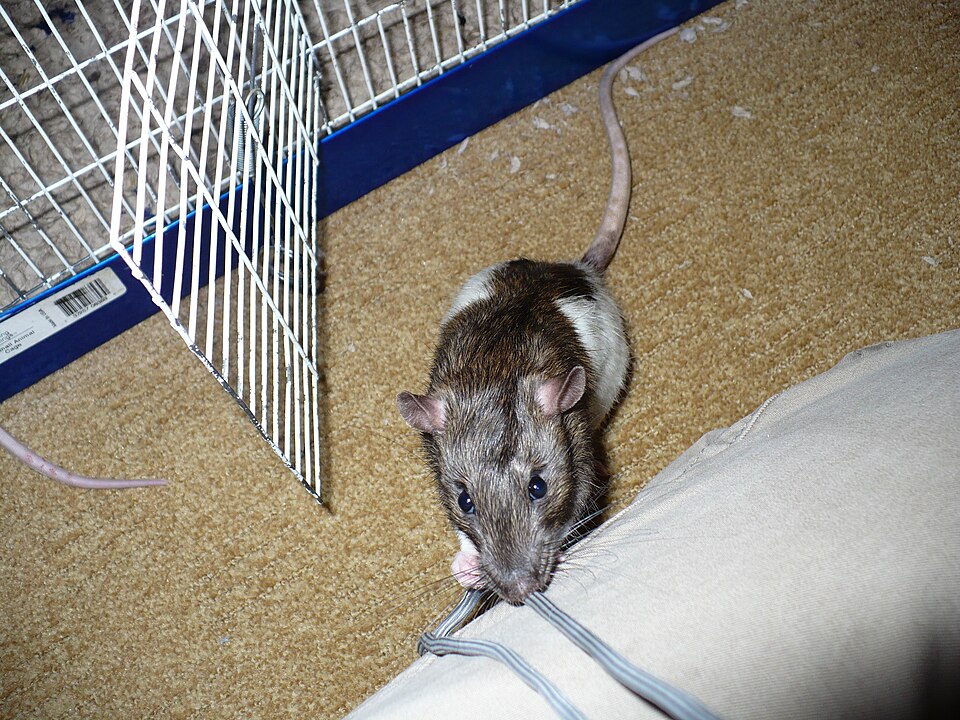
Cables: the sneakiest danger
Rodents explore their surroundings with their mouths. Blue Cross reminds us that chinchillas are natural explorers who love to nibble things, especially electrical wires, so they should always be supervised when they're out of the cage. It gives the same warning for rats: cover cables with protective tubing so they can't be chewed. According to PDSA, rats can play freely in a separate, secure room or an exercise pen, as long as they're supervised at all times and can't get to any wires.
We explain why chewing is a need in why rodents chew. In short, you can't stop chewing, but you can choose what gets chewed: put cardboard boxes and safe chewing materials in the play area, and move cables out of reach.
Hamsters: a playpen, not a room
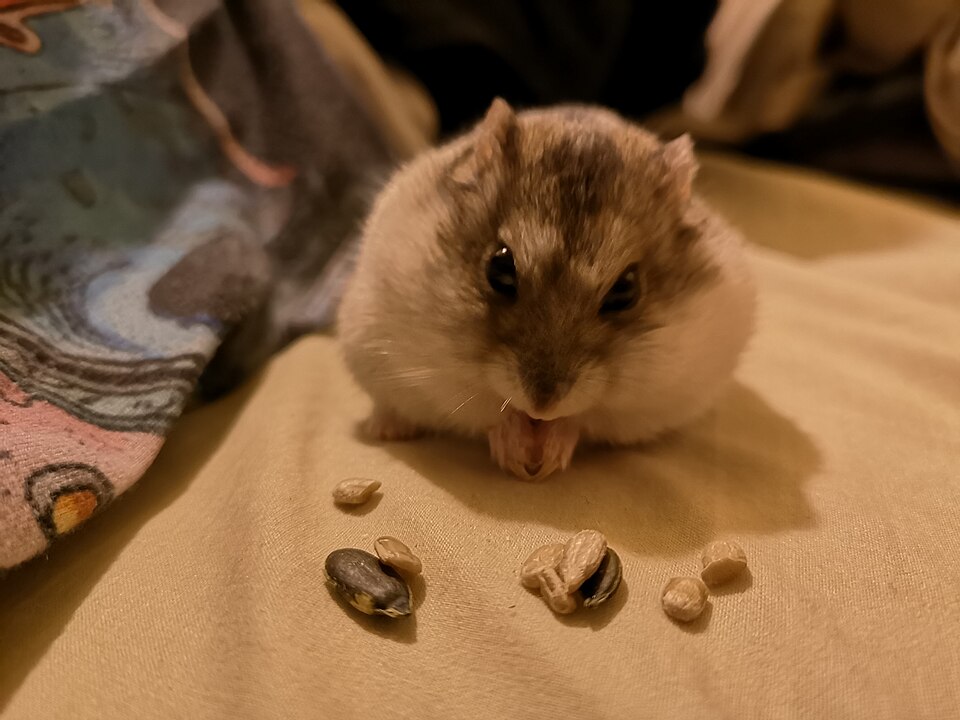
A hamster is small and easily disappears from sight in a room. Blue Cross recommends that when you want to let your hamster out of its cage, you give it a safe, secure place to run around, such as a playpen:
- Tall sides and fully secure: The hamster shouldn't be able to climb out.
- Vertical bars if it's wire: If you use a wire pen, the bars should be vertical so the hamster can't climb them, and close enough together that it can't squeeze through. If you're worried, you can reinforce the sides with sturdy cardboard.
- Small at first: Hamsters are cautious by nature. Start with a small pen and make it bigger over time as your hamster grows in confidence.
- Well stocked: Put in toys, food, water, hides and tunnels. These encourage exploring and help the hamster feel safe.
- Only when awake: Never wake your hamster up to put it in the playpen; only put it in when it's awake.
According to the RSPCA, only let your hamster out of its cage once it's tame, and keep it in sight the whole time. We cover other safe options like the bathtub, and how to tame your hamster step by step, in how to tame a hamster.
According to Blue Cross, hamster balls shouldn't be used: the hamster quickly becomes exhausted and can't get out, the ball isn't well ventilated, and while inside it the hamster can't reach food, water or a hiding place. For a hamster this is more stress than fun. Use a playpen for time out of the cage.
Rats: a room to explore
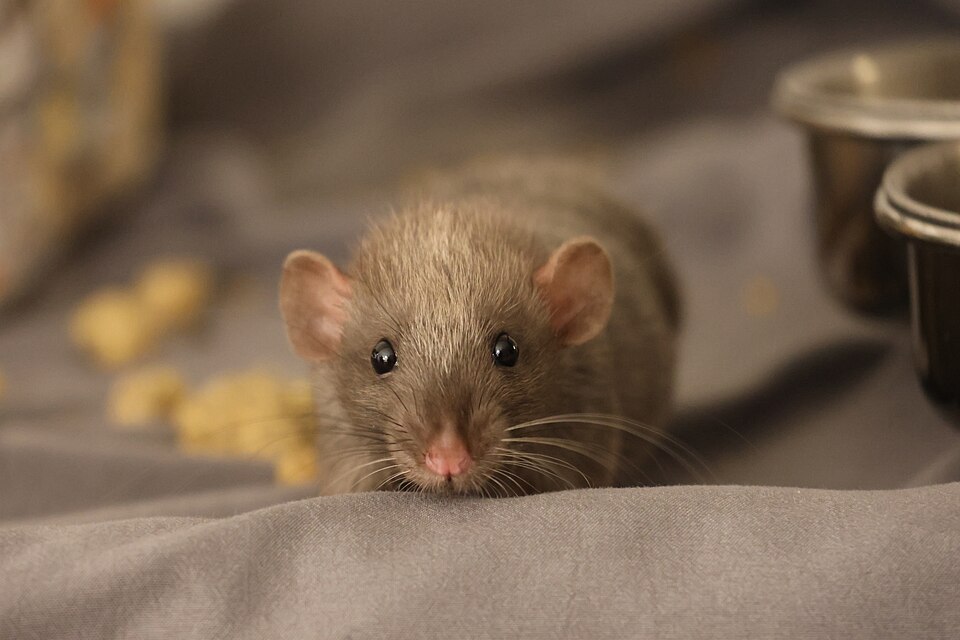
According to Blue Cross, rats need both social time with people and at least an hour of exercise outside the cage every day. They look forward to playtime and are skilled escape artists, so the room has to be made "rat-proof" first.
The good news: a rat play area doesn't need expensive toys. Blue Cross suggests cardboard boxes, PVC pipes, empty plant pots, fruit tree branches and rope; you can turn lots of household objects into toys. For more play and enrichment ideas, see pet rat care.
Guinea pigs: on the floor, with somewhere to hide
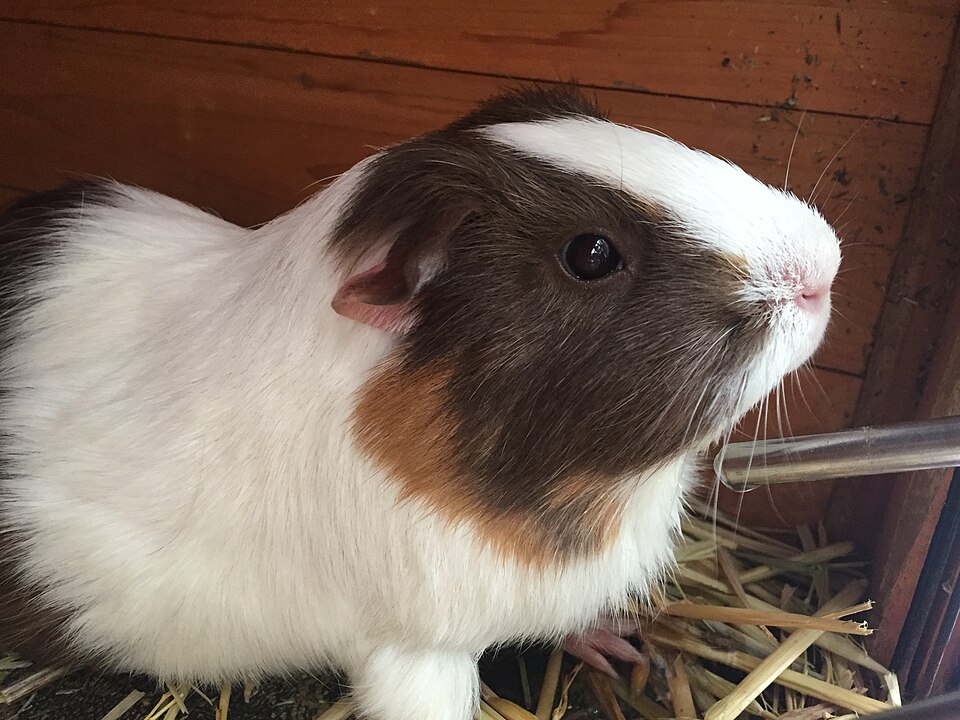
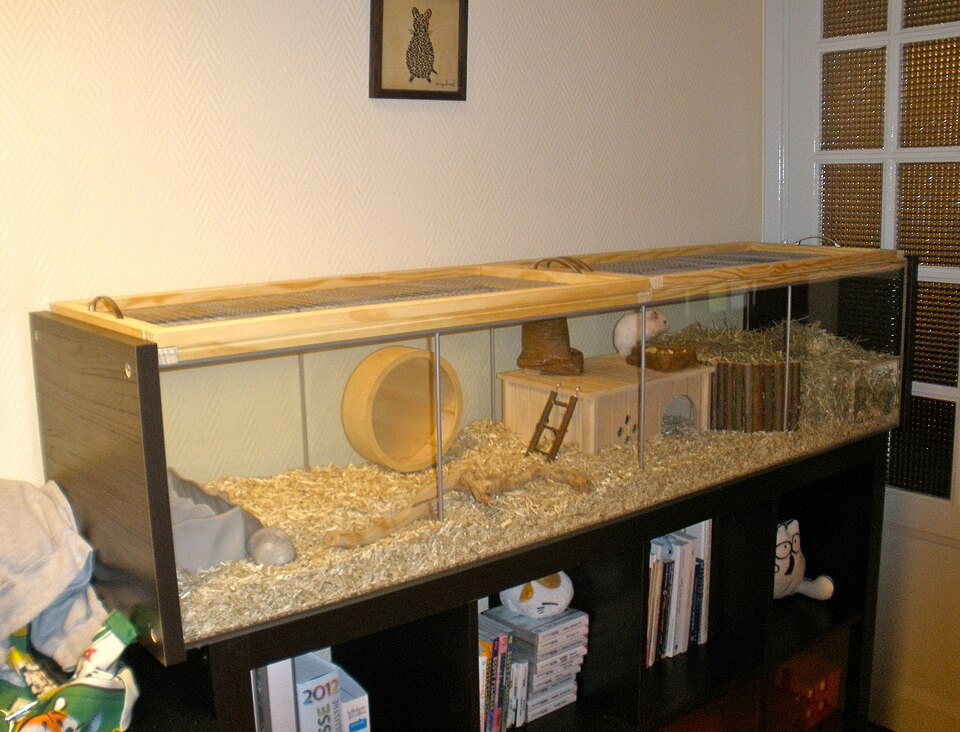
According to Blue Cross, guinea pigs have short legs and most aren't great climbers; their play area is the floor. They can run free indoors under supervision: doors should be closed, there should be no escape holes, and cats and dogs should be kept out of the room. For guinea pigs that never get any outdoor space, Blue Cross recommends an exercise area of at least 6 × 4 ft (about 180 × 120 cm).
According to Blue Cross, guinea pigs are shy, so in an open space they always need somewhere to hide. They aren't big fans of toys, but searching for small amounts of hidden food keeps them busy. We explain how in foraging games for rodents.
Chinchillas: an early-evening run
According to Blue Cross, chinchillas sleep during the day and liven up in the early evening; that's the best time to let them out for a run. Because they're so active, they need plenty of space and as much supervised exercise as possible; they also love shelves at different heights. Since they're natural explorers who like to nibble cables, getting the room ready matters even more with a chinchilla.
We explain a chinchilla's need for a cool room and how to handle one in chinchilla care, and summer precautions in rodents in hot weather.
According to the RSPCA, a hamster should never be left out of its cage unattended or overnight. PDSA wants rats to be supervised at all times when they're out of the cage, and Blue Cross insists on supervision for guinea pigs, chinchillas and hamsters too. If you need to leave the room, even briefly, put your pet back in its cage or playpen first.
You can add out-of-cage playtime as your own task on Tüylüm's Today tab; everyone in your Home sees the same list. If someone else will be looking after your pet for a while, you can pass on rules like "always supervised outside the cage, cables tidied away" in a single message with the Pet sitter note.
More of our rodent articles: rodents.
Frequently asked questions
Can I let my hamster roam free in the room?
The sources recommend a safe playpen instead. Blue Cross recommends a pen with tall sides that the hamster can't escape from, with toys, food, water and hiding places inside. According to the RSPCA, a hamster should never be left out of its cage unattended or overnight.
How long should my rats be out of their cage each day?
According to Blue Cross, rats need at least an hour of playtime outside their cage every day. During that time the room should be made safe, and the rats should be supervised at all times (PDSA).
My cat is calm. Can it stay in the same room?
Blue Cross says cats and dogs should be kept out of the room where guinea pigs roam, and PDSA sees the family cat or dog as a possible predator for rats. However calm your cat is, take it to another room while your rodent is out of the cage.

Keep track of your pet's care in TüylümLog vet visits, vaccine and medication dates, and we'll remind you when it's time. Share it all with your family in Home.
Sources
- Blue Cross · Caring for your pet rat
- Blue Cross · Hamster care
- Blue Cross · Guinea pig care
- Blue Cross · Enrichment for small pets
- PDSA · Rats as pets
- RSPCA · Hamster behaviour
By Tüylüm · Published and last checked: October 28, 2026. Spotted a mistake? Write to [email protected] and we'll fix it right away. Photos are from Wikimedia Commons, used under the license shown below each photo.