Aquatic turtle care: a big tank, a basking island and a friendship that lasts decades
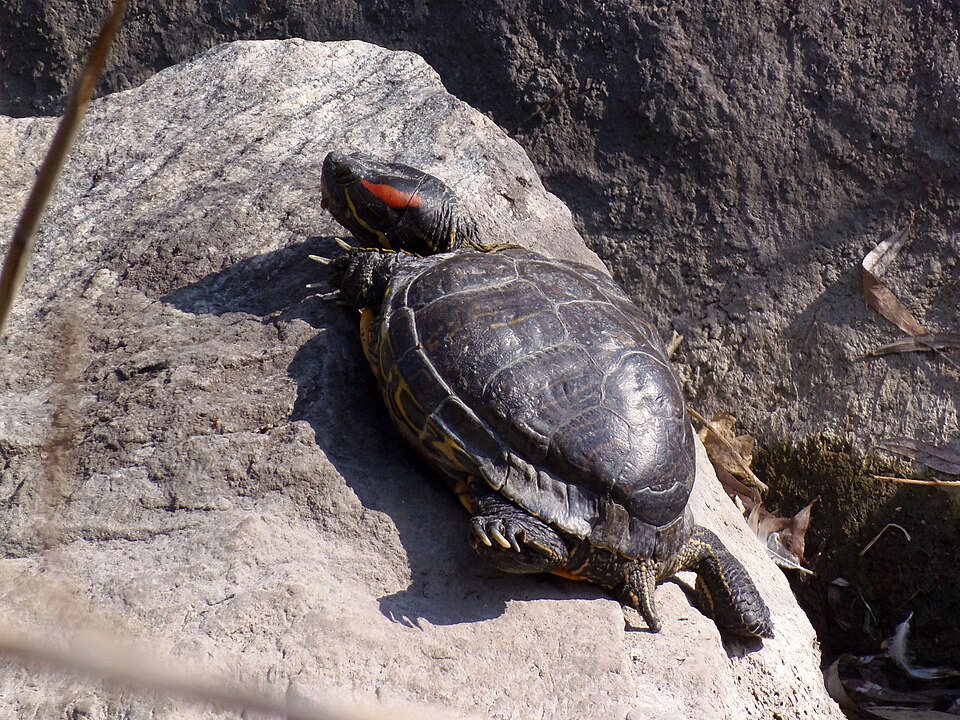
At a market stall, you see a palm-sized baby turtle swimming in a small plastic tub. It looks cute and quiet, and like it won't take up much space. But as the RSPCA warns, these little hatchlings grow quickly to the size of a dinner plate and can live 30–40 years in a home. So what you're really taking on isn't a small tub, but a responsibility that will last for decades. In this article we explain what species such as the red-eared slider need, and why they should never be released into the wild.
- Lifespan and size: According to the RSPCA, they live 30–40 years in a home; females reach about 25 cm and males about 21 cm.
- Water volume: The RSPCA's measure: 80 liters of water for every 5 cm of shell length. For a 25 cm turtle, that's 400 liters.
- A basking island: A dry area where it can get completely out of the water, with a guarded heat lamp above it providing 30–35 °C (86–95 °F).
- UVB lamp: There should be no glass or plastic between the turtle and the lamp.
- Never release it into the wild: This species is on the IUCN's list of 100 of the world's worst invasive species.
Which turtle is this?
This article is about the species covered in the RSPCA's care guide, Trachemys scripta: the red-eared, yellow-bellied and Cumberland subspecies. Other aquatic turtle species may have different needs. According to the European Commission, the species comes from the eastern and central United States. The IUCN's invasive species database describes it as the most popular turtle in the pet trade.
These turtles live both in water and on land. According to the RSPCA, they're active during the day; they bask on land, on rocks or on floating logs, and slip straight into the water when they sense danger. The RSPCA describes them as curious and active animals, and stresses that their care requires a high level of commitment.
The tank: think big from the start
The RSPCA's rule is simple: at least 80 liters of water for every 5 cm of shell length. As the turtle grows, so do its needs; that's why the RSPCA recommends buying a tank suited to its adult size right from the start, and raising the water level as the turtle grows.
| Shell length | Minimum water (by the RSPCA's rule) |
|---|---|
| 5 cm | 80 liters |
| 10 cm | 160 liters |
| 15 cm | 240 liters |
| 20 cm | 320 liters |
| 25 cm | 400 liters |
- Depth: According to the RSPCA, the water should be deep enough for the turtle to swim freely without touching the bottom or sides, and without breaking the surface.
- Lid: The RSPCA recommends a well-ventilated lid, such as wire mesh, that doesn't trap humidity.
- Location: The tank should be away from drafts, direct sunlight and radiators, and out of reach of other pets and children.
- Set it up in advance: The RSPCA recommends setting up and running the tank two weeks before the turtle arrives, so you can test the equipment and wait for the filter to settle in.
The basking island and heat
An aquatic turtle spends part of its day out of the water, warming up. The RSPCA's recommendations:
- A dry island: A dry area under the heat lamp, big enough for the turtle's whole body, reached from the water by a ramp. A second dry platform on the cool side as well.
- Heat lamp: Adjust a downward-facing heat lamp until the basking spot reaches 30–35 °C (86–95 °F).
- Water heater: A guarded aquarium heater with a thermostat, keeping the water at about 25 °C (77 °F) for hatchlings and 22 °C (72 °F) for adults.
- Guards and thermostats: All heaters should be covered with a protective guard and connected to a thermostat.
- Measure every day: Thermostats can fail; check the basking spot and the cool side at least once a day with a digital or infrared thermometer, and the water with a waterproof thermometer.
The UVB lamp: light that stands in for the sun
The RSPCA recommends a 7–12% reptile UVB lamp covering two-thirds of the tank, with a lighting setup that leaves the cool side shadier. The lights should run on a timer, 12 hours on and 12 hours off. According to the Merck Veterinary Manual, light filtered through glass or plastic has almost no ultraviolet left in it; that's why there should be no glass or plastic between the turtle and the lamp.
Even while a UVB lamp is still lit, its output drops over time. The RSPCA recommends replacing the lamp at the interval the manufacturer gives. For details: UVB and heat for reptiles.
According to the RSPCA, a lack of UVB is one of the most common causes of metabolic bone disease, which leads to bone and shell problems. If you see an uneven shell, swelling around the mouth or eyes, or a rubbery, soft shell in a young turtle, see a vet experienced with reptiles right away.
The filter and water changes
Clean water is one of the core tasks of aquatic turtle care. The RSPCA recommends a powerful filter; the beneficial bacteria in a well-running filter break down waste. The RSPCA's weekly routine:
- Once a week: Change about 20% of the water.
- Dechlorinator: Use a dechlorinating product every time you add water.
- Filter sponge: Rinse the sponge in water taken from the tank, not in tap water, so the useful bacteria don't die.
- Water test: Measure ammonia and nitrite. If the levels are high, the RSPCA recommends changing half the water every day until they improve. If the waste doesn't go down, your filter may not be strong enough.
According to the RSPCA, the biggest cause of poor water quality is overfeeding. The RSPCA also recommends a UV-C sterilizer to kill harmful microorganisms.
Feeding
According to the RSPCA, the basic diet is a good-quality dry aquatic turtle food plus freshwater fish that has been fully thawed and brought to room temperature. Alongside these, you can offer safe live plants such as pondweed, and small live invertebrates.
- How often? According to the RSPCA, every other day, as much as the turtle can eat in five minutes. Remove leftovers right away with a net.
- Weigh it: Regular weighing helps you notice excess weight gain and growth that's too fast.
- No live fish: The RSPCA recommends not keeping live fish in the tank; they may be killed, or chased and stressed.
- Supplements: Ask your vet whether a vitamin or mineral supplement is needed.
Never release it into the wild
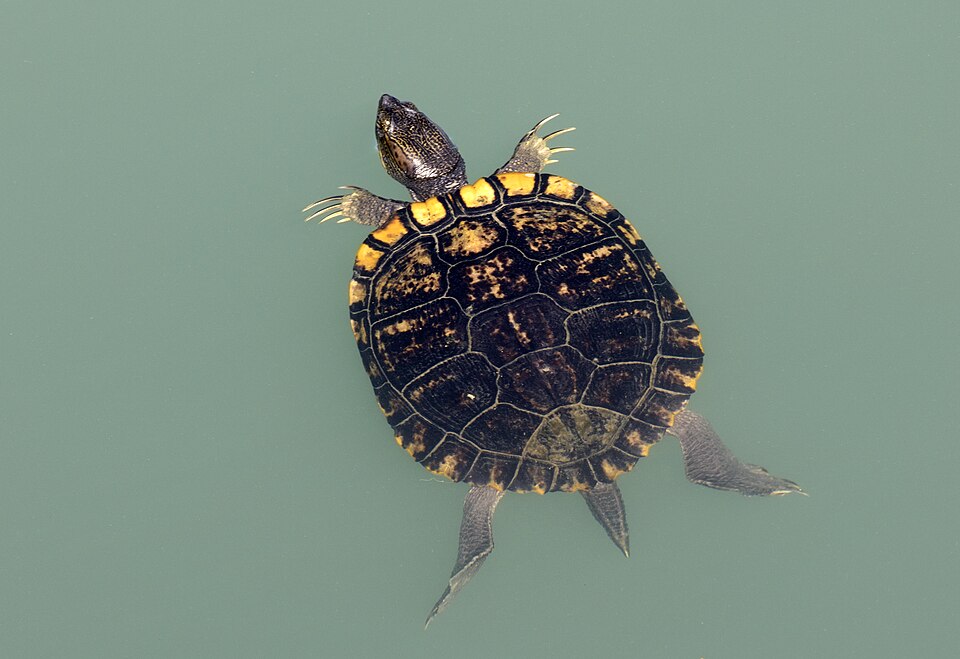
According to the European Commission, more than 50 million of these turtles were brought into Europe for the pet trade; many escaped or were deliberately released into the wild. The IUCN's invasive species database also lists the species among 100 of the world's worst invasive species.
What's the problem? According to the European Commission, this turtle poses a serious threat to native species such as the European pond turtle (Emys orbicularis) by competing with them for basking and egg-laying sites, and its huge appetite damages aquatic habitats. The European pond turtle lives in Turkey too: it's on the list of wild animals published in Turkey's Official Gazette (Resmî Gazete).
The European Union has added the species to its list of invasive species; according to the Commission, keeping, selling and breeding species on this list is restricted. Since Turkey isn't an EU member, this rule doesn't apply there directly; but the reason is the same: every turtle released into the wild moves into the habitat of native species. For the legal status of native tortoises and turtles in Turkey: tortoises and the law.
The CDC recommends not releasing a turtle into the wild, and instead contacting a reptile rescue group, an animal shelter or a pet store. A lake, pond or stream bank isn't "freedom"; it's a risk both for the turtle and for native species.
Health and hygiene
According to the RSPCA, a healthy aquatic turtle has clear, bright eyes, a smooth shell and skin with no blisters. It's normal for the shell plates (scutes) and skin to shed; but to prevent fungal problems, it should always be able to reach a dry area. If you see wounds or constant peeling, see a vet. The RSPCA recommends finding a vet experienced with reptiles before you bring a turtle home.
Turtles aren't animals for petting. According to the RSPCA, they're fragile, especially as hatchlings; if you need to carry one, hold it by both sides of the shell, so it can't bite. According to the CDC, turtles of any size can carry Salmonella in their droppings; don't kiss your turtle, and don't eat or drink around it. More details: reptiles and Salmonella.
Tüylüm's Today tab has ready-made tasks for aquatic turtles: Food, a weekly Water change, Basking / UV and a monthly Filter cleaning. Everyone in your Home sees the same list. You can also follow its growth with Weight tracking.
Our other reptile articles: Reptiles.
Frequently asked questions
My turtle is still very small. Isn't a small tank enough?
It may seem enough for a short while, but these hatchlings grow fast. The RSPCA recommends getting a tank suited to its adult size from the start and raising the water as the turtle grows. That way, you won't have to buy a new tank every few years.
Can I keep my turtle with fish?
The RSPCA doesn't recommend it. Aquatic turtles also eat fish in the wild; live fish in the tank may be killed, or constantly chased and stressed.
I can't care for it anymore. What should I do?
Don't release it into a lake or stream. The CDC recommends contacting a reptile rescue group, an animal shelter or a pet store. A vet experienced with reptiles can also point you in the right direction.

Keep track of your pet's care in TüylümLog vet visits, vaccine and medication dates, and we'll remind you when it's time. Share it all with your family in Home.
Sources
- RSPCA · How to care for a terrapin
- Merck Veterinary Manual · Providing a home for a reptile
- European Commission · Invasive Alien Species of Union Concern (2020, PDF)
- IUCN Global Invasive Species Database · 100 of the World's Worst Invasive Alien Species
- CDC · Salmonella outbreak linked to small turtles (2024)
- Resmî Gazete · Decision on the list of wild animals determined by the Ministry of Agriculture and Forestry (Tarım ve Orman Bakanlığınca Belirlenen Yaban Hayvanları Listesi Kararı), 10 Aug 2022, issue 31919
By Tüylüm · Published and last checked: October 24, 2026. Spotted a mistake? Write to [email protected] and we'll fix it right away. Photos are from Wikimedia Commons, used under the license shown below each photo.