Ferret toys: which are safe, which are dangerous, and how to rotate them
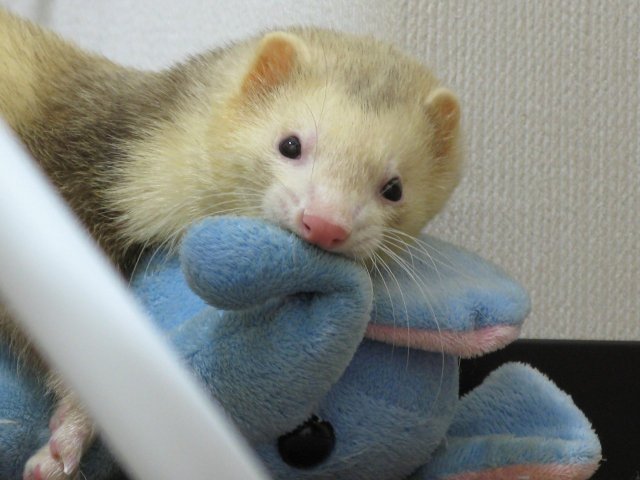
When a ferret picks up a toy, the first thing it usually does is put it in its mouth. According to the RSPCA, ferrets test out most items with their mouths. That's the heart of toy shopping: what will your ferret chew, tear off or swallow? This article focuses on toy safety, checking and rotating; for dig boxes and tunnels, see dig box and tunnels for ferrets, and for play and sleep patterns, see ferret sleep and play. Our sources: the RSPCA's care guide, RSPCA Australia, the American Ferret Association (AFA) and the Merck Veterinary Manual.
- Swallowed-piece risk: The RSPCA, Merck and the AFA say soft or chewable items can cause intestinal blockages.
- Stay away from: Rubber, foam, erasers, balloons, rubber bands and similar items (RSPCA, AFA, Merck).
- Sturdy and big: According to RSPCA Australia, synthetic toys should be tough enough to survive chewing and too big to swallow.
- Check and rotate: Throw out damaged toys (AFA); change toys regularly (AFA, RSPCA Australia).
- More ferrets, more toys: RSPCA Australia says separate toys for each ferret reduce guarding and fights.
Which materials, and what do the sources say?
The sources point the same way, but each stresses a different detail. We've put them in one table.
| Material | What the sources say |
|---|---|
| Rubber toys | The RSPCA says never give ferrets rubber toys; chewed and swallowed pieces can cause intestinal blockages. The AFA lists rubber chew toys and latex among items to keep away from ferrets |
| Foam, packing peanuts | The AFA and Merck name foam and foam packaging pieces. According to Merck, soft or plastic items can cause choking or intestinal blockage, and this can be fatal |
| Erasers, balloons, rubber bands, door stops | Merck lists these, along with tennis shoes, as risky items for ferrets |
| Cotton and natural fibers | RSPCA Australia says these are often eaten and can cause gut obstructions |
| Hard plastic | RSPCA Australia gives solid plastic baby toys (key rings, rattles, stacking cups) and robust cat and parrot toys as examples; the AFA recommends plastic balls, not rubber ones |
| Paper and cardboard | RSPCA Australia lists paper bags (with the handles removed) and cardboard boxes with holes. The AFA says to check beforehand that cardboard has no sharp staples, sticky packing tape or foam peanuts |
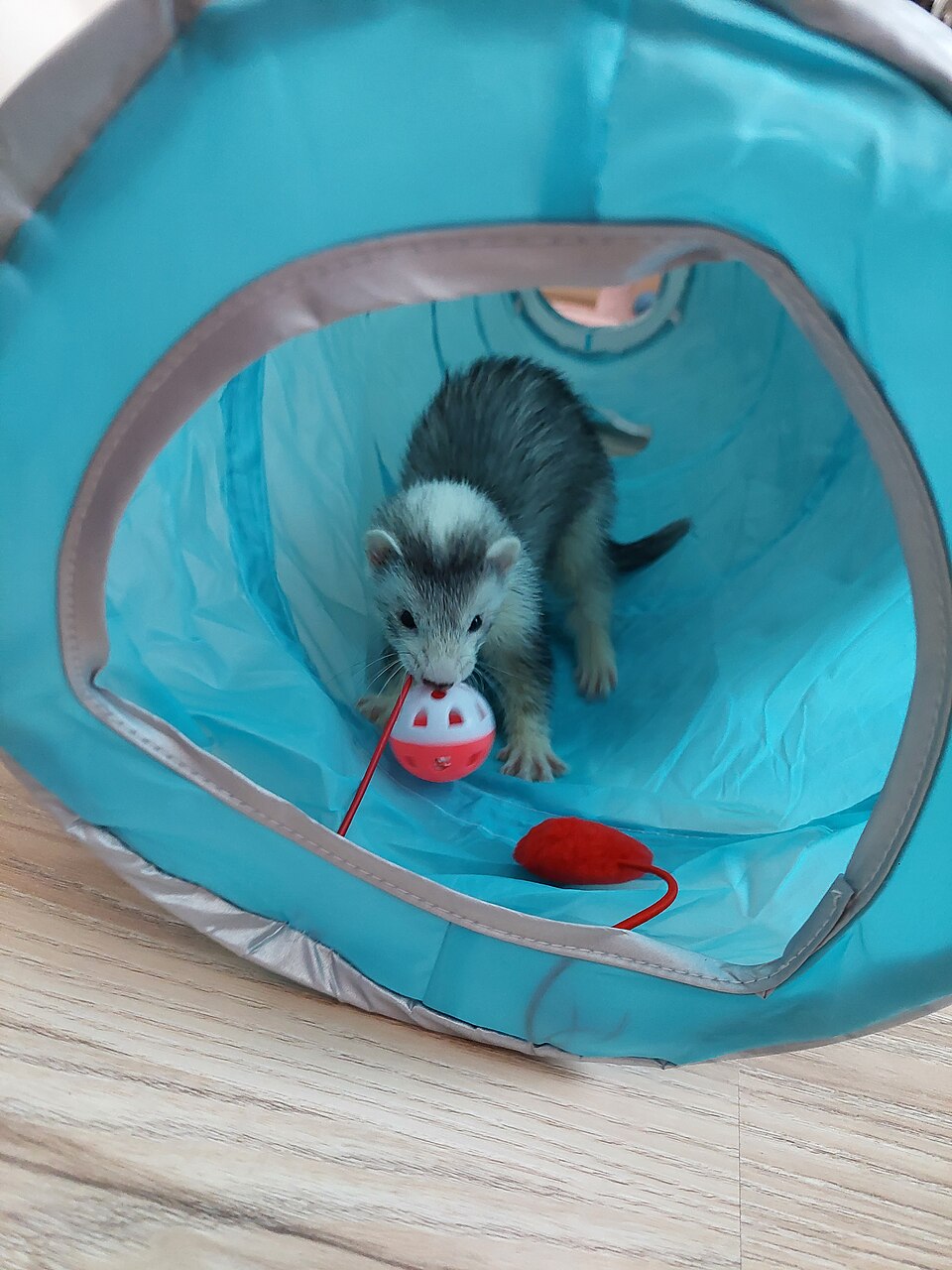
| Tunnels | RSPCA Australia lists plastic and fabric tunnels and wide ceramic pipes; the AFA lists PVC pipe and clothes dryer vent tubing. According to the AFA, larger ferrets can get stuck in a tube where it bends |
| Wooden cotton reels | The RSPCA says ferrets like to chew, chase and drag toys such as wooden cotton reels |
The sources disagree on hard rubber
The RSPCA and the AFA say to avoid rubber toys completely. RSPCA Australia's enrichment page also advises avoiding rubber items, yet the same page lists hard rubber Kong-type toys among suitable toys. The two statements seem to contradict each other. If you want to stay on the safe side, follow the RSPCA and the AFA, and remove the toy the moment your ferret bites off a piece of rubber. You can also ask your veterinarian which toys suit your ferret.
According to Merck, swallowing a soft or plastic item can cause an intestinal blockage in ferrets, and this can be fatal. If you suspect your ferret swallowed a piece, don't wait; call your veterinarian. Don't try to guess the cause or give anything yourself.
Check and rotate
The AFA recommends checking toys and play structures often for wear and safety, throwing out damaged ones and replacing them. A practical routine to make it a habit:
- Look first: Is a seam coming apart, a piece missing, a coating peeling?
- Has a small piece formed? RSPCA Australia wants synthetic toys to be too big for the ferret to swallow; a toy that's been chewed down may no longer meet that rule.
- When in doubt, take it away: The AFA suggests giving a toy you aren't sure about only during play sessions when you're right there.
- Rotate: The AFA and RSPCA Australia recommend changing toys regularly. According to the AFA, routine can get dull and reduce a ferret's desire to play.
- More ferrets, more toys: RSPCA Australia suggests providing multiple items when you keep multiple ferrets, so there is less item guarding and fighting.
According to RSPCA Australia, ferrets will always chew their toys, so they must be robust and safe. RSPCA Australia also says toys are only a small part of enrichment, which should suit what ferrets naturally like to do.
Not just toys: play together
The AFA recommends ferrets get at least 4 hours out of the cage per day, with at least 2 of those hours including human interaction. Spend part of that time with you rather than with a toy:
- Hide-and-seek: Cover and uncover your ferret with a towel (RSPCA Australia).
- Magic carpet rides: Slowly drag a towel across the floor (RSPCA Australia).
- A ball or toy on a string: Chasing a moving toy (RSPCA Australia). RSPCA Australia also says ferrets respond best to high-pitched noises, so squeaky toys can catch their attention.
- Chase: Stalking and chasing around furniture (RSPCA Australia).
- Water play: The AFA suggests an inch or two (about 2.5-5 cm) of water in a small pool with floating toys; the RSPCA also lists a shallow bath as enrichment. Both say never to leave a ferret unsupervised around water.
- Plastic ball pit: The AFA suggests a container of small plastic balls (not rubber) with treats buried in it.
RSPCA Australia says not to play rough with your hands, tug-of-war included, but lists gentle tug-of-war with a strong, tightly braided rope as an option. Veterinarian Teresa Bradley Bays lists avoiding tug-of-war. For more on biting, see why ferrets bite.
Watch which games your ferret enjoys; RSPCA Australia suggests observing what your ferret likes and offering it a choice. For buried treats and digging games, see our dig box article.
In Tüylüm's Today tab there's a ready-made Play / out of cage task for ferrets. Everyone in My home sees the same list, so it's clear who has done today's play session.
Frequently asked questions
Are cat toys suitable for ferrets?
It depends on the toy. Rubber and foam toys aren't recommended by the sources; RSPCA Australia lists robust cat and parrot toys among suitable examples, but they shouldn't have pieces a ferret can chew off and swallow. Give a toy you aren't sure about only when you're there.
Are plush toys safe?
Our sources don't rule on plush toys specifically. RSPCA Australia says synthetic items should be sturdy and too big to swallow, and to avoid cotton and natural-fiber items. Remove a plush toy right away if its seams or stuffing come open.
How often should I change the toys?
The sources don't give a frequency. The AFA and RSPCA Australia just say to change them "regularly" and "often."

Keep track of your pet's care in TüylümLog vet visits, vaccine and medication dates, and we'll remind you when it's time. Share it all with your family in Home.
Sources
- RSPCA · Ferrets: Good practice for housing and care (2011, PDF)
- RSPCA Australia · How can I use environmental enrichment for my ferrets?
- American Ferret Association · Frequently Asked Questions
- American Ferret Association · Ferret Fitness and Enrichment: Be your Ferrets' Personal Trainer (PDF)
- Merck Veterinary Manual · Special Considerations for Ferrets
- RSPCA Australia · How should I care for my ferrets?
This article is for general information only; it is not a diagnosis or treatment advice and does not replace a visit to a veterinarian. Talk to your vet about decisions on your pet's health. By Tüylüm · Published and last checked: November 9, 2026. Spotted a mistake? Write to [email protected] and we'll fix it right away. Photos are from Wikimedia Commons, used under the license shown below each photo.