Tarantula care: a pet that likes being alone and doesn't like being touched
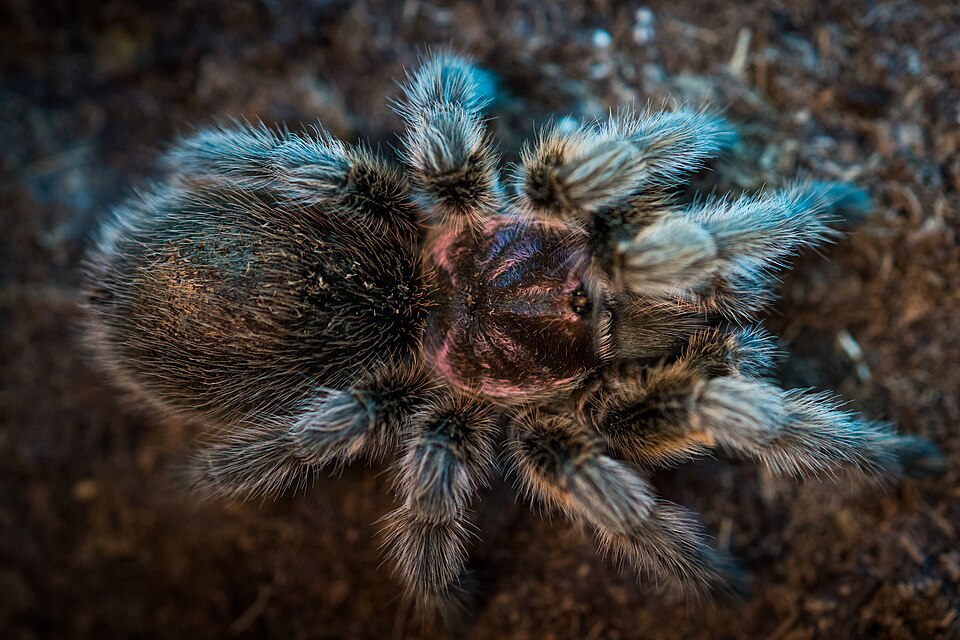
A tarantula can stay almost perfectly still for hours, even days. Then one evening it appears at the mouth of its burrow and tests the soil with its front legs. According to the Royal Veterinary College (RVC), there are more than 800 species of tarantula in the world, and some live for many years: the RVC says tarantulas live between 5 and 20 years, and that females outlive males. So getting a tarantula may mean making a twenty-year commitment. The good news: once you know what it needs, caring for one isn't complicated.
- On its own: According to the RVC, each tarantula should be kept in a tank of its own; tarantulas housed together may eat each other.
- A tank it can't escape from: Glass or plastic, with a secure lid. For ground-dwelling species, the tank should be low, because falls cause injuries.
- A water dish at all times: According to the AES, a tarantula can go weeks without food but dies quickly without water.
- Leave it alone during a molt: When it stops eating, remove any live prey from the tank; if it's lying on its back, don't touch it.
- Handling isn't recommended: Falls, bites and itchy hairs can harm both you and your tarantula.
Is a tarantula right for you?
Cornell University's spider page doesn't mince words: tarantulas aren't animals to cuddle and stroke; they are wild animals. The University of Kentucky also says tarantulas are best enjoyed by watching them in their tanks. In other words, this isn't a pet you hold in your lap, but it's a wonderful pet for someone who enjoys watching.
The University of Kentucky recommends three species for beginners: the Chilean rose tarantula (Grammostola rosea), the Mexican red-knee tarantula (Brachypelma smithi) and the Brazilian black tarantula (Grammostola pulchra). According to the same source, Chilean rose tarantula females can live 15 years or more and females of the other two species up to 20 years, while males live about 4–5 years. Cornell recommends that beginners start with calm species, since some species are both fast and more venomous.
According to the University of Kentucky, spiderlings are cheaper but harder to care for, and they take years to reach full size. That's why beginners are often advised to get an adult; adult females are more expensive but live much longer.
The tank: small, safe and escape-proof
The RVC recommends:
- Escape-proof: A tank it can't escape from is a must. Males in particular try to escape to look for females.
- Glass or plastic: Avoid mesh lids, because its feet can get caught in the mesh.
- Height: Tree-dwelling species need a tall tank they can climb in. Ground-dwelling species, on the other hand, can fall and get hurt if the tank is too tall; ideally, the tank should be about as tall as the spider's body length.
- Hiding place: A wooden tunnel or half a plant pot laid on its side makes a good shelter. Don't put in anything that could hurt it, such as stones or cacti.
The AES recommends a tank of at least about 25 × 20 × 20 cm for a medium-sized tarantula. A bigger tank isn't always better: according to Cornell, tarantulas have poor eyesight and may struggle to find their food in a very large tank.
Substrate
| Substrate | Suitable? | Why? |
|---|---|---|
| Vermiculite | Yes | Safe, cheap and easy to clean, according to the RVC |
| Coconut fiber | Yes | For species that need humidity, according to the RVC |
| Sand | No | Abrasive and can damage the exoskeleton, according to the RVC |
| Gravel | No | Can damage the feet and is dangerous if the spider falls, according to the RVC |
| Wood shavings, bark chips | No | Can lead to mites, and oils from aromatic woods are irritating, according to the RVC |
| Garden soil | No | May contain pesticides, according to the University of Kentucky and Cornell |
The AES says the substrate can be up to 15 cm deep for species that like to burrow, and that a bigger tank may then be needed.
Temperature, humidity and water
The AES recommends 21–24 °C (70–75 °F) for most of the species suggested for beginners. The RVC, meanwhile, stresses that what really matters isn't a single number but avoiding sudden swings in temperature: it recommends keeping your tarantula in a warm room and monitoring the temperature with a minimum/maximum thermometer. Heat lamps can dry out both the substrate and the spider, so the RVC doesn't recommend them, and the AES says red bulbs aren't suitable. If extra heating is needed, it should be on a thermostat. According to the RVC, tarantulas don't like bright light and don't need a UV lamp.
Humidity depends on the species. The RVC recommends around 60–65% for most species; the AES warns that if humidity drops below 50%, a tarantula may die during its next molt. Use an accurate hygrometer. According to the RVC, you can mist the substrate to raise the humidity, but never spray the spider directly. The AES reminds you to check the tank to make sure no mold is forming.
- A shallow water dish: The AES recommends a dish about the size of a small jar lid, filled halfway with water.
- Change the water: The RVC wants it changed twice a week, or more often if the dish gets dirty.
- No wet cotton wool or sponges: According to the RVC, they can harbor bacteria.
Food
The RVC recommends a variety of captive-bred invertebrates: different species of cricket, locusts, flies, fruit flies for young spiders and small amounts of wax moth larvae. Foods such as meat and pinkie mice aren't recommended because of the risk of obesity and other health problems. Mealworms generally aren't a preferred choice, because they have low nutritional value and burrow into the substrate.
According to the AES, a tarantula with a body length of 3–4 cm eats 2–3 crickets a week and won't overeat; uneaten food may mean you're overfeeding or that a molt is coming. The University of Kentucky recommends that prey be no bigger than half the spider's body length, and that prey not eaten within about an hour be removed. For more details: live food safety.
Molting: the most delicate time
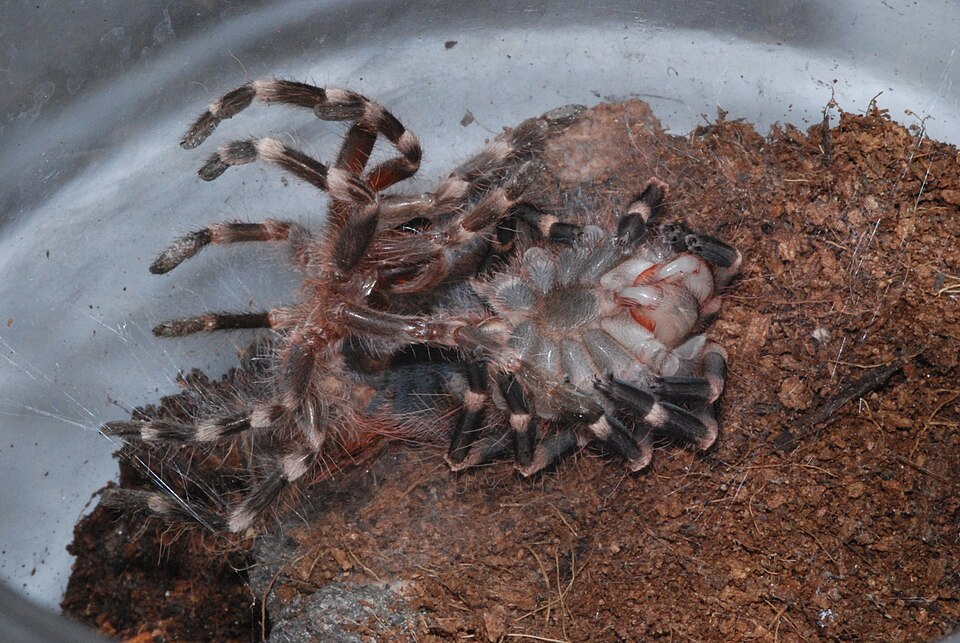
Tarantulas shed their exoskeletons as they grow. According to the AES, a half-grown tarantula does this 2–3 times a year. The signs of an upcoming molt: its color darkens and it stops eating. The tarantula usually turns onto its back and lies motionless for hours; people seeing this for the first time may think it's dead. Cornell points out that molting is a common cause of death, especially in young spiders.
- If it has stopped eating: Remove any live prey from the tank. According to the AES, feeder insects can disturb or even nibble on the defenseless spider; according to Cornell, a cricket left in the tank can kill a molting spider.
- Keep the water dish full and don't mess with the tank.
- If it's lying on its back: Don't touch it, don't turn it over, and don't open the tank and poke around. According to the AES, any interference at this stage can be fatal.
- The old skin: According to Cornell, people most often come into contact with the itchy hairs while collecting old molted skins, so wash your hands afterward.
- Feeding again: The AES recommends waiting about 7–10 days after the molt before feeding again, so the new exoskeleton can harden.
Tüylüm has a Shedding log for spiders: you can record each molt as "Complete" or "Stuck shed." If you notice a problem, note it under Health › Complaint history; how long it has been going on appears at the top of the vet summary.
Why isn't handling recommended?
The University of Kentucky recommends that tarantulas not be picked up, petted or held. The RVC also advises keeping handling to a minimum, and lists the reasons:
- Falls: Dropping your tarantula by accident can injure it. According to Cornell, a fall can be fatal because the exoskeleton covering the abdomen is thin.
- Substances on your hands: According to the RVC, nicotine and other substances on the hands of heavy smokers can poison a tarantula.
- Bites: All tarantulas can bite; even individuals of species known to be calm can behave differently.
- Itchy hairs: Some species flick the hairs on their abdomen to defend themselves. According to the AES, these hairs can make your skin itch, and can cause more serious problems if they get into your eyes.
- Warning signs: According to the AES, raising its front legs, showing its fangs and making a hiss-like sound mean a tarantula feels threatened.
If you really do need to handle your tarantula, the RVC recommends washing your hands thoroughly first and holding it low, just above a surface. Cornell, for its part, describes moving spiders with a catch cup rather than by hand, with the tank on the floor; it also recommends not bringing your face right up to the spider when you open the enclosure.
According to the RVC, some people are sensitive to these hairs and may have serious skin reactions or difficulty breathing. The RVC recommends wearing latex gloves and protective eyewear, and the AES also asks you to be careful when handling a tarantula and cleaning its tank. If a hair gets into your eye or you have trouble breathing, see a doctor right away.
According to the RVC, a bald patch on the abdomen can be a sign that the tarantula has been flicking off too many hairs because of stress. If you see a change like this, ask a vet who works with exotic animals.
Our other invertebrate guides: Invertebrates.
Frequently asked questions
My tarantula is lying on its back. Is it dead?
Most likely it's molting. According to the AES, tarantulas usually molt by turning onto their backs and lying still for hours. Don't touch it or mess with the tank. If it stays motionless for a long time and there are no signs of a molt, ask a vet who works with exotic animals.
Can I keep two tarantulas in the same tank?
No. According to the RVC, tarantulas should be kept separately because they may eat each other; the University of Kentucky also recommends just one tarantula per tank.
My tarantula hasn't eaten for weeks. Should I worry?
According to the AES, a tarantula can go weeks without food, and not eating can be a sign of an upcoming molt. Make sure the water dish is always full and remove any live prey from the tank. If you notice any other changes, ask your vet.

Keep track of your pet's care in TüylümLog vet visits, vaccine and medication dates, and we'll remind you when it's time. Share it all with your family in Home.
Sources
- Royal Veterinary College (RVC) · Tarantula care (PDF, December 2024)
- Royal Veterinary College (RVC) · Invertebrate vet services
- Amateur Entomologists' Society · Tarantula caresheet
- University of Kentucky Department of Entomology · Exotic Bugs: Care and Feeding
- Cornell University (Spiders) · Tarantulas: Terrible or Terrific!
By Tüylüm · Published and last checked: October 24, 2026. Spotted a mistake? Write to [email protected] and we'll fix it right away. Photos are from Wikimedia Commons, used under the license shown below each photo.