Wasps in the garden: pest-eating predators, how they differ from honeybees, and staying calm
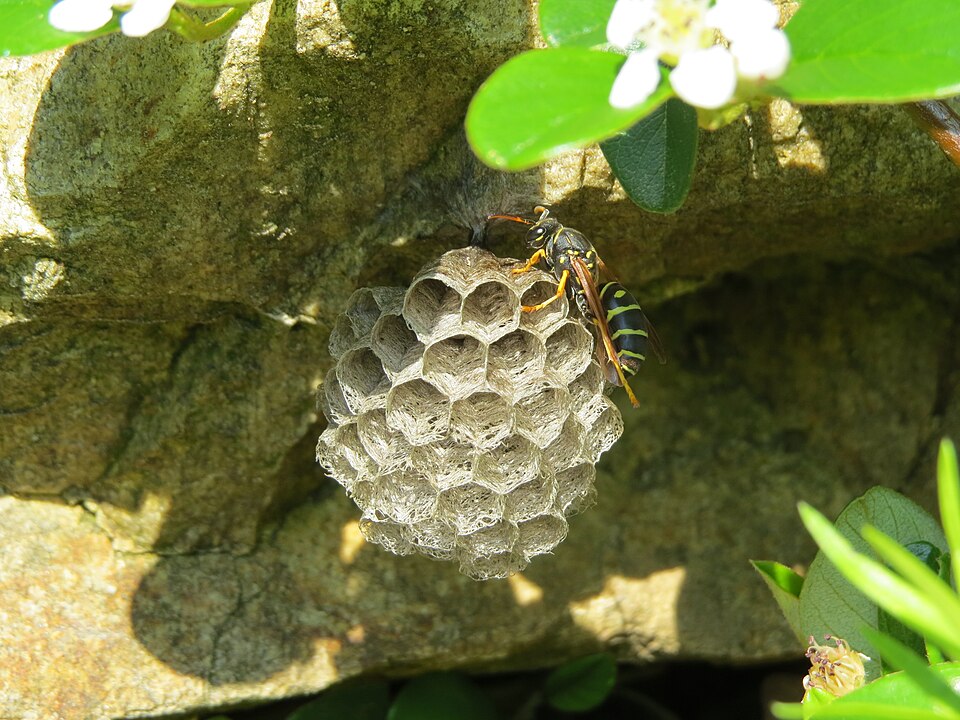
Late in summer, an insect circles under the apple tree, a yellow-and-black visitor lands on an open glass: for most of us the first reaction is to flap and run. Yet wasps are an important part of the garden's balance. This article looks at what the Natural History Museum (NHM), the Royal Horticultural Society (RHS), University of Maryland Extension and Washington State University say about them. The sources name species in English (common wasp, yellowjacket, paper wasp, hornet) and don't say which ones live in Türkiye. For honeybees and other pollinators there's a separate article on balcony planting: bee-friendly balcony.
- Hunters: According to the RHS, worker wasps catch caterpillars and aphids to feed their grubs.
- Pollination: According to the NHM they play a part, but a smaller one than bees.
- Stinging: According to the RHS they mostly sting to defend the nest; if left alone they are generally not aggressive.
- Nests: Leave them alone if you can; according to the RHS and Maryland, a nest is used for only one year and dies out in autumn.
- Help: If a nest is hard to reach or dangerous, Maryland recommends hiring a professional.
What do wasps do?
According to the NHM, the UK has more than 7,000 wasp species, most of them parasitoids, meaning their larvae feed on other insects or spiders. The NHM writes that the social wasps of the UK catch about 14 million kilograms of insect prey each summer. Adult wasps don't eat what they catch; they give it to their young. The adults themselves feed on nectar, aphid honeydew and the sugary liquid the larvae produce.
The RHS likewise says workers catch insects such as caterpillars and aphids to feed their grubs, which can reduce damage in early summer. According to Maryland, wasps also hunt flies and beetle larvae. Washington State University writes that native paper wasp colonies have about 6 to 20 wasps and hunt caterpillars and beetle larvae.
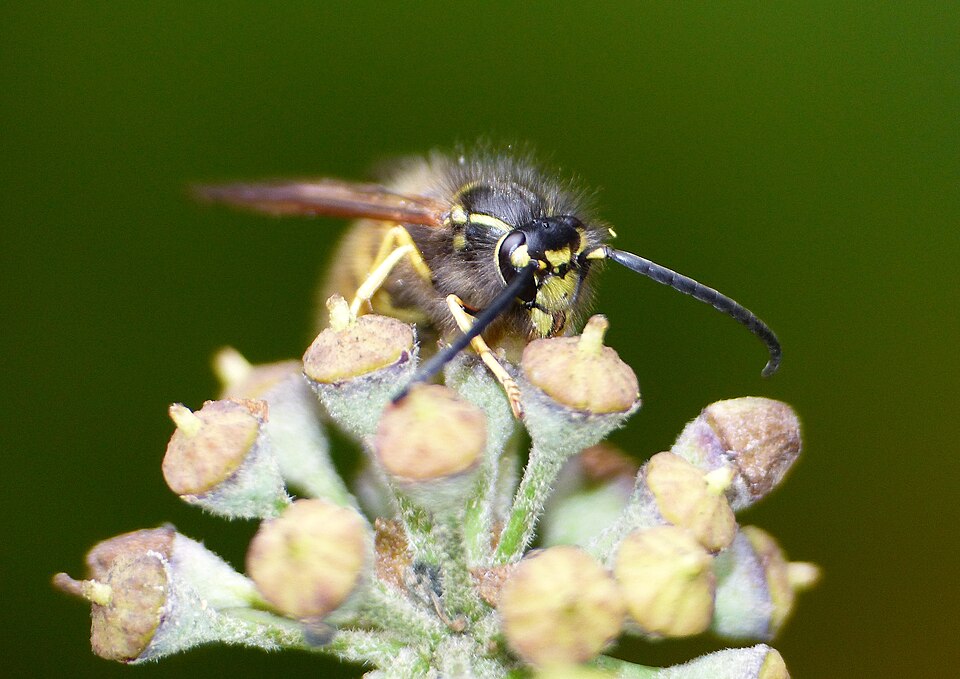
Pollination and the ecosystem
According to the NHM, wasps can help pollinate by carrying pollen between flowers while looking for nectar. But the contribution is smaller than bees', because wasps lack the body hairs and pollen baskets that bees have.
The NHM also mentions an exception: wasps taken to new places without natural enemies, such as New Zealand, can harm local ecosystems, including birds, through their hunting.
How they differ from honeybees
| Topic | Honeybee | Wasp |
|---|---|---|
| Sting | According to the NHM, barbed; stays in the skin and the bee dies | According to the NHM, smooth; can be withdrawn and used more than once |
| Body | According to the NHM, hairy, with pollen baskets | According to the NHM, without body hairs or pollen baskets |
Maryland also notes that, unlike honeybees, wasps can sting more than once. For bees' role in pollination, see our bee-friendly balcony article.
When do they sting?
According to the RHS, wasps mostly sting to defend their nest. Trouble usually starts when a nest is disturbed: emptying a compost bin, trimming a hedge, mowing, or weeding. If left alone, they are generally not aggressive. The NHM adds that wasps sometimes sting people they feel threatened by, even when there's no real threat.
Washington State University says native paper wasps rarely sting people except where a nest is in a busy spot such as a doorway. According to Maryland, yellowjackets become defensive more quickly, while paper wasps are usually less defensive and may bump into an intruder as a warning. The same source says defensiveness increases in late summer and autumn, when colonies are breaking down.
Maryland recommends taking appropriate medical precautions if you react badly to stings or are allergic. If you have a severe reaction after a sting, get emergency medical care.
Staying calm: dos and don'ts
Maryland's safety advice:
- Don't handle, swat or trap: Don't touch a wasp, swat it or trap it. If one is near you, calmly walk away, or gently guide it off with a piece of paper or a long object.
- Keep your distance: Especially late in summer, stay back from the nest and don't poke at a hidden one.
- No vibration near the nest: Things like mowing can trigger a defensive reaction (according to Maryland, in yellowjackets).
- No lights, no reaching: Don't shine lights at the nest entrance or reach into holes you can't see.
Cutting down on attractants helps too (Maryland):
- Cover sweet drinks and food.
- Pick up fallen fruit.
- Keep trash can lids tight.
- Avoid strongly scented products.
To protect fruit, the RHS suggests bagging some fruit clusters in fine mesh such as muslin, and fitting wasp-proof screens on greenhouse vents. The same source says it's unclear whether jam jar traps reduce local wasp numbers.
Dealing with a nest: when, and who?
According to the RHS and Maryland, nests are used for only one year, die out in autumn and are never reused. Maryland says the colony dies at the first hard frost, so if a nest is unavoidable it only needs removing if it poses a risk until then. Washington State University says a nest in a busy spot such as a doorway can cause trouble. If you can, leave it.
If you need to act:
- Keep away first: Look at the nest's location and size from a distance. According to the RHS, by late summer a nest can be bigger than a football and hold 400-500 workers.
- Skip home remedies: Maryland says methods such as flooding or burning a nest are often ineffective and can provoke stinging.
- Call a professional: Maryland recommends hiring a professional if the nest is hard to reach or you're uncomfortable treating it.
- Report suspicious species: For a suspected yellow-legged hornet, the RHS says don't approach the nest and report it.
If you suspect your dog or cat has been stung, ask your veterinarian without waiting.
Frequently asked questions
Are wasps only pests?
No. According to the RHS they hunt caterpillars and aphids in early summer, and according to the NHM they also contribute to pollination. The RHS also writes that they can damage fruit in late summer.
Can I remove a nest myself?
Maryland says home methods such as flooding or burning can be ineffective and can provoke the wasps. If the nest is in a difficult spot, get help from a professional.
When does a nest empty on its own?
According to the RHS, nests die out in late summer or autumn and aren't reused. Maryland says the colony dies at the first hard frost.
If you suspect your pet has been stung, write the date and what you saw in the Complaint log; when you go to the vet, you can show the entry with Show the vet.

Keep track of your pet's care in TüylümLog vet visits, vaccine and medication dates, and we'll remind you when it's time. Share it all with your family in Home.
Sources
- Natural History Museum · What do wasps do?
- Royal Horticultural Society (RHS) · Wasps (including hornets)
- University of Maryland Extension · Social wasps: yellowjackets, hornets and paper wasps
- Washington State University (HortSense) · Stinging wasps: paper wasps
This article is for general information only; it is not a diagnosis or treatment advice and does not replace a visit to a veterinarian. Talk to your vet about decisions on your pet's health. By Tüylüm · Published and last checked: November 9, 2026. Spotted a mistake? Write to [email protected] and we'll fix it right away. Photos are from Wikimedia Commons, used under the license shown below each photo.