 Tüylüm
American Shorthair
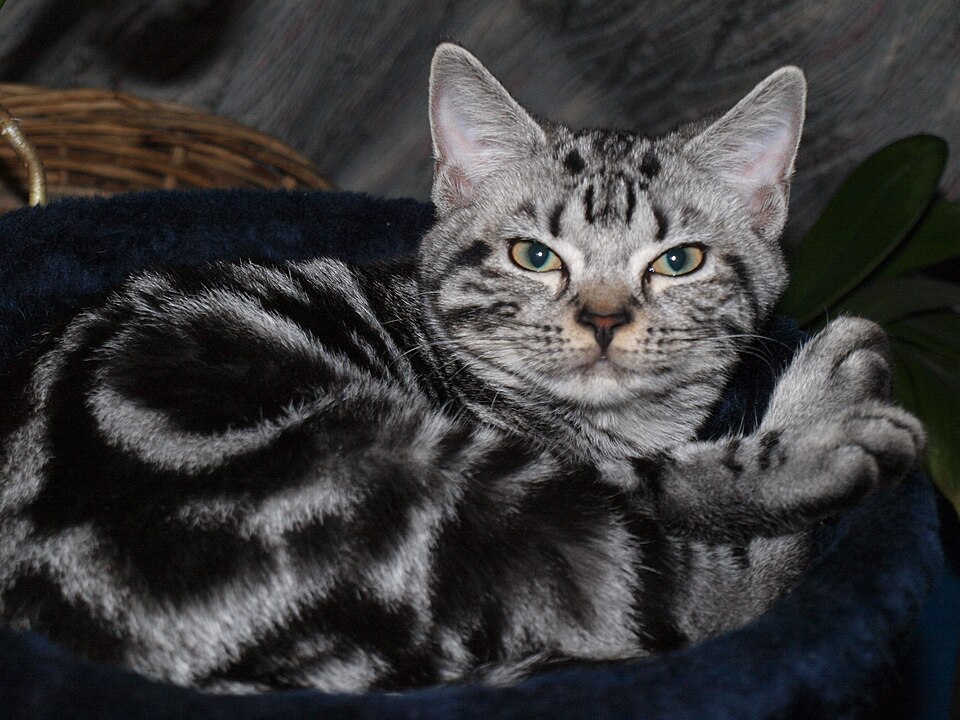
A medium-to-large, muscular, sturdy cat developed from farm cats that came to America on settlers' ships. Calm, adaptable and tolerant of kids and other pets; its best-known look is the silver classic tabby. Screening for the heart disease HCM and a healthy weight matter most.

 LifespanNo breed dataPetMD says 15–20 years; not measured
 Weight6–15 lb (2.7–6.8 kg)per PetMD; males are larger
 OriginUSAfrom mousers on settlers' ships
 CoatShort, dense, hardsheds its undercoat in spring
 EnergyCalm but playfulloves hunting games
 VoiceQuietknown for its "silent meow"
 With kidsVery goodtolerant of small children
 Time aloneCopes wellcan amuse itself
The American Shorthair is a sturdy, muscular cat developed from the cats that came to America on settlers' ships and spent centuries hunting mice on farms. The CFA calls it a "working cat": strong, balanced and durable, with nothing exaggerated about it. On this page we've pulled together its temperament, care needs and the health issues to know about, drawing on breed registry profiles, veterinary resources and scientific studies.
- Temperament: Affectionate but independent; calm, adaptable, clever and playful. It can entertain itself when alone.
- Family cat: According to the CFA, very tolerant of other animals and small children.
- Looks: Medium to large and muscular, with a thick, hard-textured short coat. The silver classic tabby is the best known, but there are more than 100 color combinations.
- Health: No known breed-specific problems; screening for the heart disease HCM, seen in the 1980s and '90s, still matters.
- Weight: For a calm, food-loving indoor cat, keeping an ideal weight is key to a long life.
What to know
 What is the American Shorthair like?
According to the CFA's breed profile, the American Shorthair is an affectionate cat that enjoys human company, yet independent enough to amuse itself while its owners are at work. It leaves the housework to you but "supervises" everything you do with great interest. It's clever and trainable: it can learn to stay off counters, use a scratching post and even retrieve toys. That same intelligence also helps it figure out how to open the cupboard where you keep the treats.
It's easygoing and relatively sedate, but it loves to play, especially hunting games with feather wand toys. If you play at about the same time every day, you may find it waiting eagerly as playtime approaches. It gets its point across without loud meowing; the CFA says the breed is known for its "silent meow," asking for attention with an open mouth but no sound.
Every cat is an individual. Breed traits describe general tendencies; how a cat was raised, how much contact it had with people as a kitten and its health shape its personality as much as its breed.
 Who is it a good fit for?
The American Shorthair is a good choice if you're looking for a calm, adaptable family cat. The CFA describes it as "a perfect family cat," and PetMD's vet-reviewed profile also calls it suitable for first-time cat owners.
| Situation | Good fit? |
|---|---|
| Apartment | Excellent; adapts easily indoors, as long as there's play |
| Family with kids | Excellent; per the CFA, tolerant of small children |
| Other cats and dogs | Excellent; tolerant of other animals |
| Alone during the day | Copes well; toys and enrichment are a must |
| First-time cat owners | Good; easy to groom and even-tempered |
However tolerant it is, children still need to learn not to hold the cat against its will or disturb it while it sleeps. Because its hunting instinct is strong, keep small pets like hamsters or birds safely separated from the cat.
Where does it come from?
According to the CFA, short-haired cats arrived in North America with the early settlers, on ships that kept cats aboard to control rodents. As pioneers moved west, the cats went with them and earned their keep by protecting farms and homes from rats and mice. That's how the breed was born.
American Shorthairs were part of the first cat show held in the US in 1895 and were among the first five breeds recognized when the CFA was founded in 1906. Originally shown as "Domestic Shorthairs," the breed got its current name in 1965. According to the CFA, it's popular in the US, Europe and Asia and consistently ranks among the top 20 breeds registered by the CFA. It was also used to develop other breeds, such as the Bombay.
 Appearance and colors
According to the CFA standard, the American Shorthair is a medium-to-large, strong and well-balanced cat, slightly longer than it is tall. No feature should be so exaggerated that it causes weakness. The head is large, with full cheeks, slightly longer than it is wide, and a powerful jaw. The top line of the eye is gently oval and the lower line more rounded.
- Coat: Short, thick and hard-textured; according to the CFA, built to stand up to brambles, bushes and bad weather.
- Colors: Silver and brown classic tabbies are the most popular, but the breed comes in more than 100 color combinations.
- Weight: According to PetMD's vet-reviewed profile, 6 to 15 pounds (about 2.7–6.8 kg), with males at the heavier end. The CFA standard notes that females may be less massive in every respect.
The silver tabby pattern is common in mixed-breed cats too; the pattern alone doesn't make a cat an American Shorthair.
Daily care
The short coat is low-maintenance, but the CFA notes that the breed sheds its undercoat in spring and has a lighter shed of the outer coat in fall. To keep shedding under control, the CFA recommends frequent brushing, even a quick daily session; a wire slicker brush or grooming mitt is usually all you need. Baths usually aren't necessary.
- Play: Its hunting instinct is strong, and the CFA recommends satisfying it regularly with interactive toys. A few short hunting games a day keep both its weight and its mood in good shape.
- Teeth: PetMD lists dental disease among the things to watch in this breed; home dental care and a yearly mouth exam matter.
- Claws: A scratching post is a must; the CFA notes this breed can easily be taught to use one.
- Enrichment: A window perch, cardboard boxes and hide-the-food games keep it busy when it's alone during the day.
For more ideas, see our articles on cat grooming and playing with an indoor cat.
 Diet and weight
American Shorthairs don't need a special food; a complete, balanced cat food that suits their age and lifestyle is enough. The real issue is how much: a calm, large-framed indoor cat can gain weight easily. In a 2024 UK study, cats whose weight was further from the median for their breed and sex had shorter lives.
- Measure food instead of eyeballing it; decide the daily amount with your vet based on your cat's ideal weight.
- Count treats as part of the daily food.
- Being able to feel the ribs under a thin layer of fat, and seeing a waist when you look from above, are good signs.
- Needs may drop after spaying or neutering; weigh your cat once a month.
- Always have fresh water available.
 Health issues to know about
The CFA says the American Shorthair isn't currently known for any breed-specific health problems. Still, there are a few things to know. The information below is for awareness only; ask your vet about diagnosis and treatment.
Hypertrophic cardiomyopathy (HCM)
HCM is the most common heart disease in cats: the wall of the heart muscle becomes abnormally thick. According to the CFA, it was seen in some American Shorthairs in the 1980s and '90s but has largely disappeared from the breed thanks to preventive testing and selective breeding. On the other hand, a 2021 veterinary review lists the American Shorthair among the breeds in which HCM is common and likely inherited, and PetMD also recommends screening. Many cats show no signs for a long time; fast breathing or sudden weakness in the hind legs is an emergency. Ask the breeder for the parents' heart screening (echocardiography) results.
Polycystic kidney disease (PKD)
An inherited disease that forms fluid-filled sacs in the kidneys that grow over time. According to International Cat Care, it can be detected with a DNA test, and in countries where testing became widespread its frequency has dropped dramatically. A 2025 study in Japan that followed 300 cats carrying the PKD gene included 26 American Shorthairs. That's why it makes sense to ask the breeder about the parents' PKD test.
Dental disease
PetMD also mentions dental disease as a common problem in this breed. If you notice bad breath, drooling or difficulty eating, see your vet.
- Fast or open-mouth breathing
- Sudden weakness, limping or pain in the hind legs
- Drinking a lot, urinating a lot or weight loss
- Loss of appetite and hiding (cats hide pain)
How long does it live?
We couldn't find a breed-specific life expectancy for the American Shorthair calculated from a large data source like VetCompass. PetMD's vet-reviewed profile gives a range of 15 to 20 years; that's a general range, not measured data.
The things that help cats live longer in general apply to this breed too: in the 2024 UK study, neutered cats and cats at their ideal weight lived longer. Regular vet checkups, heart screening and weight tracking are the most concrete steps.
 Before you get one
- Consider a shelter: Purebred cats end up in shelters and rescues too. The CFA itself suggests adopting a "retired" adult instead of waiting for a kitten. This breed's sturdy, easygoing temperament is found in plenty of mixed-breed cats too; see our page on mixed-breed cats.
- If you buy from a breeder: Ask to meet the parents, and ask for heart screening and PKD test results and vaccination records. Find out when the kitten will be ready to go home.
- Red flags: Steer clear of sellers offering "American Shorthairs" without papers, who won't show you the mother, always have kittens available or rush you to "buy now."
- Registration: Rules vary by country; many places require or recommend microchipping. In Türkiye, owned cats must be microchipped and registered in the PETVET system.
- The first days: Prepare a quiet room with a litter box, water and a place to hide. Our guide to the first week with a new cat walks you through it step by step.
Frequently asked questions
Is every silver tabby an American Shorthair?
No. Silver and brown tabby patterns are common in mixed-breed and street cats too. The American Shorthair is a breed with pedigreed parents and a set standard.
What's the difference between the American Shorthair and the British Shorthair?
Both are short-coated, sturdy, calm cats, but they were developed in different countries from different cats. According to the CFA standard, the American Shorthair's head is slightly longer than it is wide and its coat is hard-textured. See our British Shorthair page for more on that breed.
Do American Shorthairs shed?
Yes, especially their undercoat in spring, with a lighter shed in fall. The CFA recommends frequent brushing to keep shedding under control.
Can they be left home alone?
According to the CFA, they're independent enough to amuse themselves while their owners are at work, and PetMD says they can be left alone for a day with toys and enrichment. They still need daily play and attention; for longer trips, someone you trust should visit every day.
Are American Shorthairs lap cats?
They're affectionate and enjoy human company, but the CFA also stresses their independent side. How much a cat likes laps varies from cat to cat; letting it come to you is always best.
Sources
- CFA (Cat Fanciers' Association) · American Shorthair ırk tanıtımı ve standardı
- Kittleson ve Côté · The Feline Cardiomyopathies: 2. Hypertrophic cardiomyopathy, Journal of Feline Medicine and Surgery (2021)
- Enomoto ve ark. · Life table analysis of feline polycystic kidney disease in Japan, Journal of Veterinary Medical Science (2025)
- International Cat Care · Inherited disorders in cats
- Teng ve ark. · Life tables of annual life expectancy and risk factors for mortality in cats in the UK, Journal of Feline Medicine and Surgery (2024)
- PetMD (veteriner hekim onaylı) · American Shorthair
- CFA (Cat Fanciers' Association) · Bombay ırk tanıtımı
- Resmî Gazete · Kedi, Köpek ve Gelinciklerin Kimliklendirilmesi ve Kayıt Altına Alınmasına Dair Yönetmelik (26 Şubat 2018)
By Tüylüm · Last checked: November 3, 2026. Compiled from the sources above and written in our own words. Spotted a mistake? Write to [email protected] and we'll fix it right away. Photo from Wikimedia Commons, used under the license shown below it.