 Tüylüm
Bombay
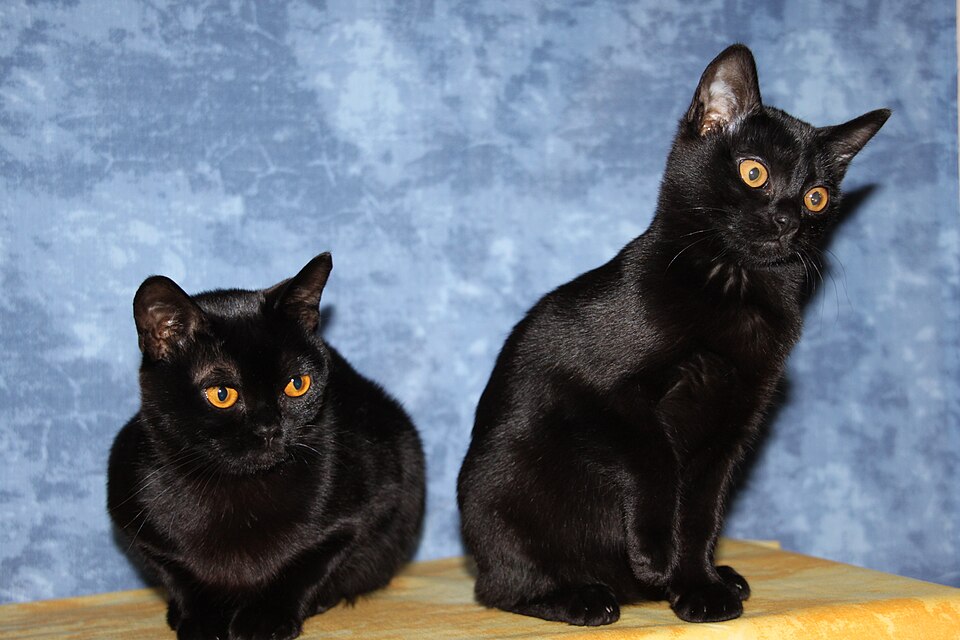
A medium-sized, muscular cat that looks like a small panther, with a gleaming black coat and copper eyes. Developed from the Burmese and the American Shorthair, it's affectionate, playful and adaptable. Heart screening, teary eyes and a DNA test for inherited low potassium are the things to know.

 Lifespan≈ 9–15 yearsper PetMD; no study data
 Weight7–12 lb (3.2–5.4 kg)per PetMD; males are larger
 OriginUSA (1960s)from Burmese and black American Shorthair
 CoatShort, very glossyrubber brush 2–3 times a month
 EnergyBalancedneither hyper nor sluggish
 Eye colorGold to copperper the CFA standard
 With kidsVery goodwhen introduced properly
 With other petsGoodbonds quickly with dogs
The Bombay is a medium-sized, muscular cat nicknamed the "parlor panther" for its patent-leather black coat and copper eyes. Despite the exotic name, it's an entirely domestic breed: it was developed in the US in the 1960s by crossing the Burmese with a black American Shorthair. On this page we've pulled together its temperament, care needs, the difference between the American and British types and the health issues to know about, drawing on breed registry profiles, animal welfare resources and scientific studies.
- Temperament: People-oriented, playful and adaptable; it combines the easygoing nature of the American Shorthair with the Burmese love of laps.
- Looks: Black only; a short, glossy coat and eyes ranging from gold to copper.
- Easy care: A rubber brush a few times a month is usually enough.
- Health: According to the CFA, the heart disease HCM has been found in this breed and some cats have very teary eyes; a DNA test exists for the inherited low potassium that can come from its Burmese roots.
- Not every black cat is a Bombay: The Bombay is a pedigreed breed; black coats are common in mixed-breed cats too.
What to know
 What is the Bombay like?
According to the CFA's breed profile, the Bombay strikes a balance between the relaxed temperament of the American Shorthair and the curious, lap-loving personality of the Burmese. It's clever, crazy about toys and a little mischievous: it can claim a grocery bag or an empty box and entertain itself for hours. It's neither hyperactive nor sluggish; it keeps you busy without getting under your feet.
It's very affectionate: it loves head-butting, snuggling up to your face and curling up next to you at night. It believes every visitor has come to see the cat and enjoys being the center of attention. The CFA also notes that it adapts very well to different environments. Fans sometimes describe it as part cat, part dog and part clown.
Every cat is an individual. Breed traits describe general tendencies; how a cat was raised, how much contact it had with people as a kitten and its health shape its personality as much as its breed.
 Who is it a good fit for?
The Bombay suits families who want a close bond with their cat and have time for play and attention. Thanks to its adaptable nature, it can settle into apartment life or a busy household.
| Situation | Good fit? |
|---|---|
| Apartment | Excellent; adapts easily to indoor life |
| Family with kids | Excellent; per the CFA, children love this kind of devotion |
| Other cats and dogs | Good; bonds quickly with dogs when introduced properly |
| Long hours alone | Use caution; per PetMD, it needs a lot of company |
| First-time cat owners | Good; easy to groom and even-tempered |
PetMD's vet-reviewed profile notes that a Bombay left alone for long periods can develop separation anxiety. If no one is home during the day, consider a second cat; our guide to introducing two cats step by step makes it easier.
Where does it come from?
According to the CFA, the breed dates back to 1966, when Kentucky breeder Nikki Horner bred a black American Shorthair male to a Burmese female. Her goal was a small "parlor panther" that drew on both breeds but was distinct enough to be a breed of its own. Careful breeding over the following years set today's type. The CFA began registering the Bombay in 1970, and the breed reached championship status in 1976. Its name was inspired by the black leopards of India and the city of Bombay (today's Mumbai).
Things are a little different in the UK. In the GCCF, "Bombay" is the name of the black variety within the Asian group, a group of breeds related to the Burmese. So even though they share a name, the American and British Bombays are two similar-looking types developed along different paths.
 Appearance and colors
According to the CFA standard, the Bombay is a medium-sized, muscular cat that is "heavier than it looks"; its body is neither compact nor long and lanky. The head is round with a short, broad muzzle, and the ears are medium-sized and set well apart. The large, round eyes range from gold to deep copper.
- Color: Black only. The CFA describes the coat as having a "patent-leather" sheen.
- Coat: Short, fine, satin-textured and close-lying.
- Weight: According to PetMD's vet-reviewed profile, 7 to 12 pounds (about 3.2–5.4 kg); the CFA standard notes that males can be larger. For the Asian group in the UK, the GCCF gives 5–7 kg (11–15 lb) for males and 3.5–5.5 kg (8–12 lb) for females.
- Two parent breeds: The CFA still allows outcrosses to black American Shorthairs and sable Burmese in Bombay breeding.
Daily care
The Bombay is one of the easiest breeds to groom. The CFA says shedding is minimal to moderate and that a rubber brush two or three times a month is usually enough. If it gets dirty, it usually takes a quick bath well; ask your vet or breeder about a cat-safe shampoo.
- Eyes: According to the CFA, some Bombays have very teary eyes that need regular wiping. Gently wipe around the eyes with clean, damp cotton; if you notice redness, swelling or colored discharge, see your vet.
- Play: This breed loves toys; a few hunting games a day and simple toys like cardboard boxes and paper bags keep it happy. Don't leave plastic bags lying around, as they're a suffocation risk.
- Claws: A scratching post is a must; if the claws grow long, trim them the way your vet shows you.
- Teeth: PetMD lists gum and dental disease among common problems in this breed; ask for a mouth exam at the yearly checkup.
For play ideas, see our article on playing with an indoor cat.
 Diet and weight
Bombays don't need a special food; a complete, balanced cat food that suits their age is enough. PetMD lists obesity among common problems in this breed. Its muscular, "heavier than it looks" build can make extra weight easy to miss.
- Measure food; decide the daily amount with your vet based on your cat's ideal weight.
- Count treats as part of the daily food.
- Being able to feel the ribs lightly and seeing a waist from above are good signs.
- Weigh your cat once a month; needs may drop after spaying or neutering.
- Always have fresh water available.
 Health issues to know about
The CFA considers the Bombay generally healthy thanks to its hybrid background, but some issues have been reported. The information below is for awareness only; ask your vet about diagnosis and treatment.
Hypertrophic cardiomyopathy (HCM)
HCM is the most common heart disease in cats: the wall of the heart muscle thickens. The CFA notes that HCM has been found in Bombays and that responsible breeders screen their cats before breeding. A 2021 veterinary review also lists the American Shorthair, one of the Bombay's parent breeds, among the breeds in which HCM is common. Many cats show no signs for a long time; fast breathing or sudden weakness in the hind legs is an emergency.
Inherited low potassium (hypokalemia)
An inherited disease seen in Burmese cats that causes muscle weakness. International Cat Care lists the Bombay among the Burmese-related breeds in which it can occur. According to the GCCF, it's the only inherited condition found so far in the UK Asian group, and since 2018 testing has been mandatory for Asians intended for breeding. In a 2012 genetic study, the change wasn't found in US Bombays. Wherever you get your cat, ask for the parents' DNA test results.
Head malformation
According to a 2016 study, the ALX1 change that causes a fatal head and face malformation in contemporary-type American Burmese is found in cats related to that Burmese line. Because Burmese cats were used to develop the American Bombay and outcrosses are still allowed, it makes sense to ask the breeder whether the parents have been tested for it.
Teary eyes
The CFA notes that some Bombays have very watery eyes. Mild, clear tearing can usually be managed by wiping, but if your cat is squinting or the discharge is yellow or green, see your vet.
- Fast or open-mouth breathing
- Sudden weakness or pain in the hind legs
- Inability to lift the head or a drooping neck
- Squinting, swelling or colored eye discharge
How long does it live?
We couldn't find a breed-specific life expectancy for the Bombay calculated from a large data source like VetCompass. PetMD's vet-reviewed profile says Bombays usually live 9 to 15 years and that some reach 20. That's a general range, not measured data.
The things that help cats live longer in general apply to this breed too: in a 2024 UK study, neutered cats and cats at their ideal weight lived longer. Regular vet checkups, heart screening and weight tracking are the most concrete steps.
 Before you get one
- Consider a shelter: Purebred cats end up in shelters and rescues too, and many black mixed-breed cats are waiting for homes. If you're set on a breed, follow breed groups and adoption listings.
- If you buy from a breeder: Ask to meet the parents, and ask for heart screening (echocardiography), hypokalemia DNA test results and, if relevant, the head malformation test. Ask for pedigree papers and vaccination records.
- Red flags: Steer clear of sellers offering black kittens as "Bombays" without papers, who won't show you the mother or who rush you to "buy now."
- Registration: Rules vary by country; many places require or recommend microchipping. In Türkiye, owned cats must be microchipped and registered in the PETVET system.
- The first days: Prepare a quiet room with a litter box, water and a place to hide. Our guide to the first week with a new cat walks you through it step by step.
Frequently asked questions
Is every black cat a Bombay?
No. The Bombay is a breed with pedigreed parents and a set standard. Black coats are also common in mixed-breed and street cats, and those cats can be just as loving. See our page on mixed-breed cats for more.
Do Bombays shed?
Minimally to moderately. According to the CFA, a rubber brush two or three times a month is usually enough.
Is the Bombay the same as the Burmese?
No, but they're related. The American Bombay was developed from the Burmese and the black American Shorthair; the British Bombay is the black variety of the Asian group, which is related to the Burmese. That's why it's important to ask about tests for inherited diseases that can come from the Burmese. See our Burmese page for more.
Are Bombays lap cats?
Most Bombays love close contact; the CFA says they enjoy head-butting, snuggling and sleeping next to their people at night. Every cat is different, though, and letting the cat come to you is always best.
Can a Bombay be left home alone?
Short stretches are fine, but according to PetMD it needs a lot of company and can develop separation anxiety if left alone for long periods. If you're out for long hours, a second cat and an enriching home will help.
Sources
- CFA (Cat Fanciers' Association) · Bombay ırk tanıtımı ve standardı
- GCCF (Governing Council of the Cat Fancy) · Asian ırk grubu tanıtımı (Bombay dahil)
- International Cat Care · Hypokalaemia in cats
- Malik ve ark. · Periodic hypokalaemic polymyopathy in Burmese and closely related cats: a review including the latest genetic data, Journal of Feline Medicine and Surgery (2015)
- Gandolfi ve ark. · First WNK4-hypokalemia animal model identified by genome-wide association in Burmese cats, PLoS ONE (2012)
- Lyons ve ark. · Aristaless-Like Homeobox protein 1 (ALX1) variant associated with craniofacial structure and frontonasal dysplasia in Burmese cats, Developmental Biology (2016)
- Kittleson ve Côté · The Feline Cardiomyopathies: 2. Hypertrophic cardiomyopathy, Journal of Feline Medicine and Surgery (2021)
- Teng ve ark. · Life tables of annual life expectancy and risk factors for mortality in cats in the UK, Journal of Feline Medicine and Surgery (2024)
- PetMD (veteriner hekim onaylı) · Bombay
- Resmî Gazete · Kedi, Köpek ve Gelinciklerin Kimliklendirilmesi ve Kayıt Altına Alınmasına Dair Yönetmelik (26 Şubat 2018)
By Tüylüm · Last checked: November 3, 2026. Compiled from the sources above and written in our own words. Spotted a mistake? Write to [email protected] and we'll fix it right away. Photo from Wikimedia Commons, used under the license shown below it.