Your aquarium while you're on vacation: keeping fish safe while you're away
The suitcase is packed and the tickets are booked. You've made a plan to leave the cat with a friend and the dog at a boarding kennel. But what about the aquarium? Fish are quiet and seem to manage on their own; it's easy to say, "I'll just drop some food in for a few days and go." But an aquarium is really a small, electrically powered habitat: the filter, the heater and the light have to do their jobs every day, and someone needs to see that everything is going smoothly. According to the RSPCA, when you go on vacation you should find a responsible person who will check on the fish and the equipment every day. In this article we've gathered what you need to leave for that person and what to do before you go.
- Someone should check every day: According to the RSPCA, a responsible person should look in on the fish and the equipment every day.
- Tropical fish need feeding every day: According to the RSPCA, tropical fish need food every day.
- Instructions and ready meals: Write down how to feed, and prepare the meals in advance; overfeeding is the biggest danger.
- Even an automatic feeder needs checking: According to the RSPCA, it should be checked every day to make sure it's working.
- No vacation food blocks: According to the RSPCA, these blocks release too much food into the water in a short time, and most of it can rot.
A short trip or a long vacation?
The sources we read don't give a safe length of time that fish can be left on their own. The RSPCA's advice doesn't depend on how long the vacation is: if you're going away, someone should check on the fish and the equipment every day. There are several reasons for this:
- Equipment can fail: According to the RSPCA, like any electrical device, heaters and thermostats can break down, so the temperature needs to be checked every day with a digital thermometer.
- The filter mustn't stop: According to the RSPCA, the filter is vital for removing waste from the water; no fish should be kept without a working filter.
- Tropical fish need feeding every day.
- The season: Overheating in summer and a faltering heater in winter are both risks.
| Situation | What to do |
|---|---|
| A trip of a few days | Still have someone check every day; portion out the meals in advance |
| A long vacation | Written instructions, prepared meals, an automatic feeder if needed, and a daily check |
| Summer | Keep the tank out of the sun; have the temperature checked regularly |
| Winter | Have someone check that the heater is working and the tank isn't in a draft |
Before you go: a preparation checklist
- Do the routine maintenance early. Schedule the weekly partial water change and water test for just before your trip, so your sitter only has to do the checks. How to do it: aquarium water changes.
- Check the filter. According to OATA, filters should be checked for blockages and built-up waste.
- Check the heater and thermometer. According to the RSPCA, heaters and thermostats can fail; make sure the thermometer is working properly and that your sitter can read it easily.
- Prepare the meals in advance. The RSPCA recommends preparing some meals in advance; if you set aside each day's food separately, your sitter won't give too much.
- Set up the lighting routine. According to the RSPCA, 8–10 hours of light a day is enough for most species, and the light should be off at night; RSPCA Australia recommends no more than 10 hours of light and at least 8 hours of darkness. An easy way to keep this routine while you're away is to connect the light to a timer, so your sitter doesn't have to switch it on and off.
- Don't add new fish. According to OATA, new fish should be watched closely for the first week, so don't add new fish just before a trip. More detail: adding new fish to your aquarium.
Instructions to leave for your sitter
According to the RSPCA, you should leave your sitter instructions explaining how to feed the fish and how to avoid overfeeding. A written note should include:
- Food: Which food, how much, and at what time of day. According to the RSPCA, feeding too little is better than feeding too much, because fish are more sensitive to poor water quality than to a lack of food.
- Special meals: According to the RSPCA, species that become active at night, such as some catfish, should be fed last thing in the evening; bottom-dwelling species need sinking food.
- Temperature: The range they should see on the thermometer. The RSPCA wants the temperature checked every day.
- Equipment: Are the filter, air stone and heater working? They shouldn't switch any of them off.
- Signs to watch for: According to OATA: hanging at the surface, lying still on the bottom or swimming erratically, color changes, unusual aggression or frequent hiding, gills moving faster or slower than normal, white spots or cotton-like growths, and loss of appetite.
- Cleaning: According to RSPCA Australia, soap or detergent should never be used in the aquarium.
- Emergencies: Who to call if something goes wrong: your number, an experienced fishkeeper and a vet who treats fish. According to RSPCA Australia, moving fish in an unexpected situation, such as a leaking tank, takes special preparation, so it's a good idea to make a plan for this in advance.
The Pet sitter note on Tüylüm's Today screen brings together daily tasks, medications and vet details in one message when you leave your pet with someone; you can share it via WhatsApp. You can use this note to pass on all your feeding, water and checking instructions for your fish to your sitter in one go.
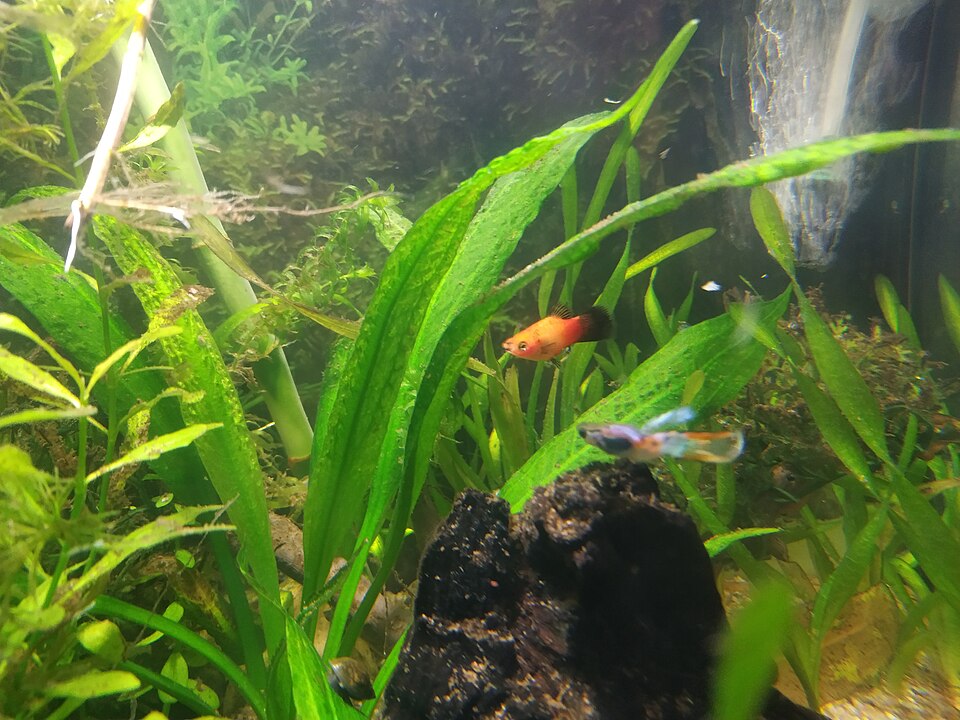
Automatic feeders and vacation blocks
According to the RSPCA, automatic feeders release a measured amount of food every day. But they're machines too: according to the RSPCA, they still need to be checked every day to make sure they're working properly. In other words, an automatic feeder doesn't replace a sitter; it just makes the sitter's job easier.
The RSPCA doesn't recommend the vacation food blocks that are dropped into the water. These blocks release too much food into the water in a short time, and much of the food can rot. Rotting food increases the waste in the water and spoils the water quality. We explained what too much food does to an aquarium here: overfeeding fish.
Summer and winter vacations
Summer vacations usually fall at the hottest time of year at home. The RSPCA's summer recommendations:
- No sun: The tank shouldn't get direct sunlight. According to the RSPCA, the water in a tank in front of a window can heat up to dangerous levels.
- Temperature checks: The tank's temperature should be checked regularly.
- Water changes: According to the RSPCA, water changes may be needed to prevent overheating. If your sitter will be doing this, write down how to prepare the new water too.
In winter, according to the RSPCA, you should make sure the heater is working properly and check the temperature regularly with a reliable thermometer. The RSPCA recommends keeping the tank away from windows, doors and radiators and watching out for drafts in the room; if you're going to turn the heating off while you're away, take that into account too.
When you get back
When you get home, watch your fish for a while: are their swimming, color and appetite the same as usual? According to OATA, noticing changes like these early lets you catch problems before they grow. Test the water and go back to your normal care routine. If you're worried about anything, according to OATA, test the water first, then talk to a vet who treats fish.
Frequently asked questions
Can my fish go without food over a weekend?
The sources we read don't give a safe number of days. According to the RSPCA, tropical fish should be fed every day, and while you're on vacation someone should check on the fish every day. If you're not sure what to do for your particular species, ask an experienced fishkeeper or a vet who treats fish.
What happens if my sitter overfeeds the fish?
Uneaten food rots and pollutes the water. According to the RSPCA, feeding too little is better than feeding too much. That's why you should portion out the meals in advance and write a note telling your sitter to give only the amount you've prepared.
Can I turn off the filter or heater while I'm on vacation?
No. According to the RSPCA, no fish should be kept without a working filter, and a heater is a must in a tropical tank. The light, on the other hand, should be on during the day and off at night; you can use a timer for this.

Keep track of your pet's care in TüylümLog vet visits, vaccine and medication dates, and we'll remind you when it's time. Share it all with your family in Home.
Sources
- RSPCA · What to feed your pet fish (Holiday care for your fish)
- RSPCA · Choosing an aquarium for pet fish
- RSPCA · Help exotic pets stay cool in summer
- RSPCA · Caring for pet fish in winter
- OATA · How to set up and look after a freshwater tank / aquarium
- RSPCA Australia · How should I care for my tropical fish?
By Tüylüm · Published and last checked: October 24, 2026. Spotted a mistake? Write to [email protected] and we'll fix it right away. Photos are from Wikimedia Commons, used under the license shown below each photo.