Warm and cool ends in the vivarium: how to set up a temperature gradient and how to measure it
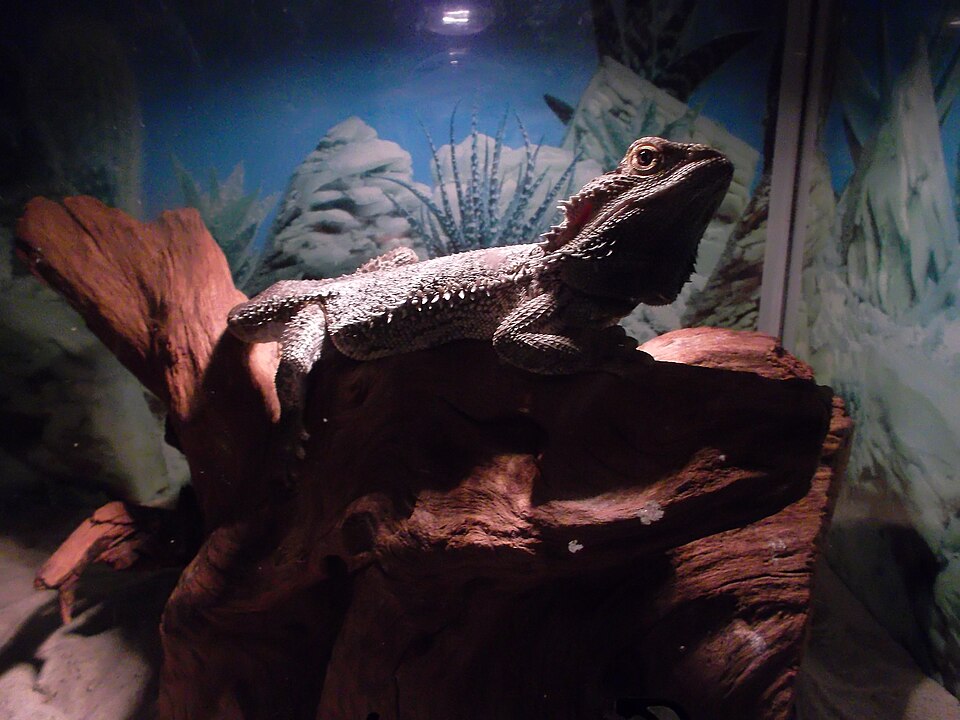
In the wild, a lizard climbs onto a rock in the morning sun, then retreats into the shade or a burrow when the midday heat sets in. It goes on like this all day: warm up a little, cool down a little. In a vivarium, you're the one who offers that choice. That's why the most important feature of a vivarium isn't a single temperature but temperatures that change from one end to the other. In this article, we explain why this gradient is essential, how to set it up and how to measure it. We have a separate article on lamps and UVB light: UVB and heat for reptiles.
- Not "cold-blooded" but ectothermic: According to RSPCA Australia, reptiles control their body temperature very precisely by moving between warm and cool spots.
- Not one temperature but a range: According to the Merck Veterinary Manual, the temperature should vary from one end of the enclosure to the other.
- A thermostat is a must: According to the RSPCA, every heater should be connected to a thermostat.
- Two thermometers: According to Merck, use at least two thermometers, one at the warm end and one at the cool end. Measure where the animal actually sits.
- Overheating is dangerous: According to Merck, going just 10 °F (about 5.5 °C) above the upper limit can be deadly for some species.
- Don't cut back to save money: The RSPCA asks you not to turn down heat or lighting, even when bills go up.
Why do reptiles need warm and cool ends?
Reptiles are often called "cold-blooded." According to RSPCA Australia, that's a common misconception: reptiles are ectotherms, meaning their body heat comes from outside heat sources rather than from inside; but most of them can control it very precisely. Here's how they do it:
- By moving around: Going back and forth between sun or warm ground and shade, water or a burrow.
- By changing posture: Adjusting the shape, direction or position of their body.
- With their bodies: Some species change color, adjust their circulation, or hold their mouth open to cool down.
According to RSPCA Australia, a reptile's body temperature doesn't need to stay constant, and keeping it constant can even be harmful; body temperature varies with species, size, season, feeding and breeding. Since the exact temperature at which each animal works best can't be calculated outside a laboratory, the goal is to offer a temperature gradient that includes the range that species prefers. According to Merck, the gradient also supports digestion and immune health.
According to RSPCA Australia, a reptile's metabolic rate can be as low as one-seventh that of a mammal of similar size. Because they use so little energy, they need less food.
Every species has its own range
According to the RSPCA's species guides, here are the recommended temperatures for three common species:
| Species | Basking spot | Cool end | Night |
|---|---|---|---|
| Leopard gecko | 28–30 °C (82–86 °F) | 24–26 °C (75–79 °F) | Heat off; extra heat if the room drops below 18 °C (64 °F) |
| Corn snake | 28–30 °C (82–86 °F) | 20–24 °C (68–75 °F) | Heat off; can drop to 16–20 °C (61–68 °F) |
| Royal (ball) python | 30–32 °C (86–90 °F) | 24–26 °C (75–79 °F) | A heater that gives off no light, on a thermostat |
As you can see, the same vivarium setup doesn't suit every species. For your own pet's species, talk to a vet experienced with reptiles. Details by species: leopard gecko, corn snake, ball python, bearded dragon.
Put the heater at one end
Setting up a temperature gradient is simple: place the heat source at one end of the vivarium. The other end stays cool on its own. According to RSPCA Australia, which heater is suitable depends on the animal's lifestyle:
- Heat from above (a lamp): Suits species that are active during the day or live in trees.
- Heat from below (a heat mat): May suit species that are active at night and live mostly on the ground.
According to Merck, heat mats can be used for lizards and snakes; but they shouldn't cover more than 30% of the floor and should be made for reptile enclosures. For leopard geckos, the RSPCA recommends putting the heat mat on one side wall of a wooden vivarium, or under half of the base of a glass one. That way, the other half stays cool.
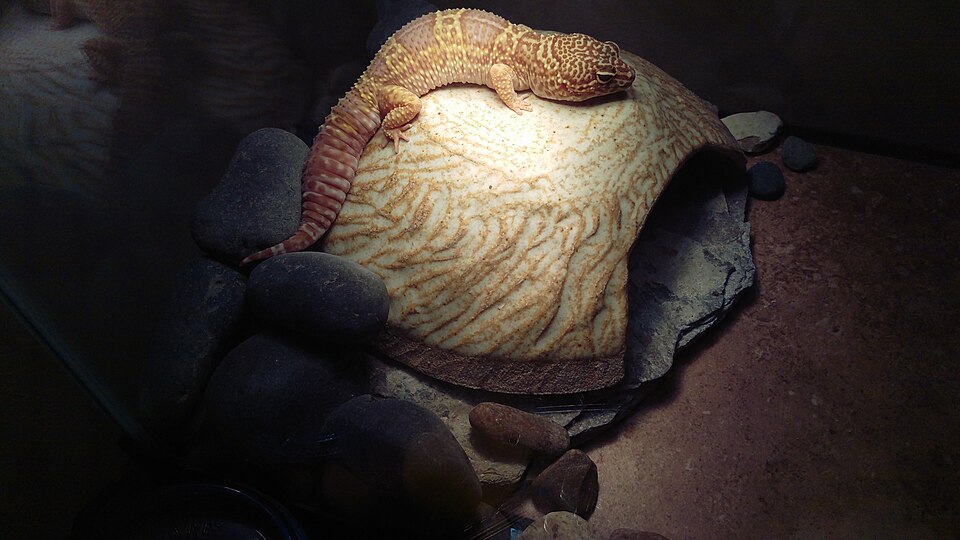
Heat alone isn't enough; the animal needs to feel safe at every temperature. For leopard geckos, the RSPCA recommends several hides at both ends of the vivarium, so the gecko can choose its temperature without having to give up feeling secure. The RSPCA recommends hides at both ends for royal pythons, too. RSPCA Australia also says that heat sources combined with shelters create the temperature gradient, and it recommends a daily temperature cycle with shade and basking spots.
Where the vivarium stands matters too. According to the RSPCA, keep it away from drafts, radiators and direct sunlight; these throw off the temperature inside.
The thermostat: your heater's brakes
A heater doesn't know when to stop on its own. A thermostat switches it on and off automatically when the temperature moves out of the range you want. According to the RSPCA, every heat source should be connected to a thermostat.
- For a heat lamp: For leopard geckos, the RSPCA recommends a dimming thermostat. According to its corn snake guide, the thermostat probe should sit just above the substrate, at the level where the animal sits.
- For a heat mat: The RSPCA recommends an on/off thermostat, with the probe directly over the mat or at the warm end, set to 30 °C (86 °F).
- Programmable models: According to Merck, heat sources should be connected to programmable thermostats that switch the heat on and off automatically when the temperature moves out of range.
Thermometers: measure both ends every day
Having a thermostat doesn't mean the temperature is right. According to the RSPCA, thermostats aren't always accurate, so you should also measure the temperature every day.
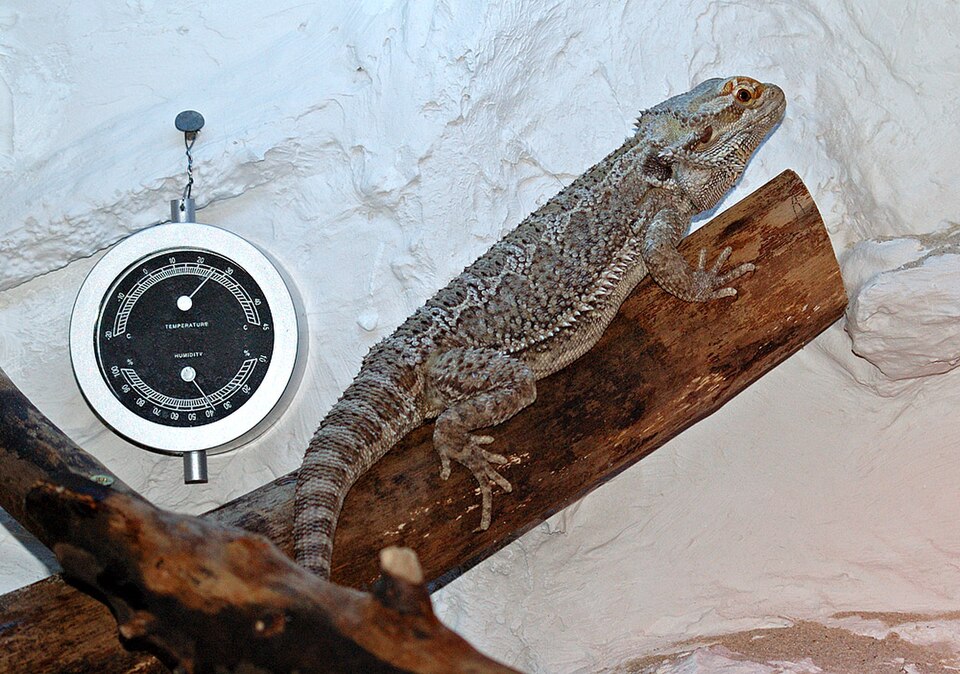
- At least two thermometers: According to Merck, one near the heat source (the warm end) and one away from it (the cool end).
- At the animal's level: According to Merck, measure the temperature not only next to the bulb but where the animal sits, just above the substrate. The RSPCA also recommends placing the thermometer at the level where a royal python sits.
- Digital or infrared: The RSPCA recommends a digital thermometer; an infrared one works too.
- Write it down: In its corn snake guide, the RSPCA recommends recording the temperature at both ends every day. When you keep a record, you notice quickly if something changes.
What happens at night?
Nights are cooler in the wild, too. According to the RSPCA, the heat can be turned off at night for many species; but how cool it can get depends on the species (see the table above). If the room gets very cold:
- Heat without light: If extra heat is needed at night, the RSPCA recommends a source that gives off no light, such as a ceramic heater or a reptile radiator; it should also be on a thermostat.
- Heat mats: According to Merck, heat mats can also be used for nighttime heat.
- Lights off: The RSPCA recommends running lights on a timer, 12 hours on and 12 hours off, with all lights off at night.
- No sudden changes: Merck advises avoiding extreme or rapid temperature changes; ask your vet what to do in each season.
Guarding against overheating and burns
Too much heat is as dangerous as too little. According to Merck, temperatures just 10 °F (about 5.5 °C) above a species' upper limit can be deadly for some species, and overheating is common with heat lamps.
- Guard: According to Merck, heat sources should be protected so the reptile can't touch them directly. The RSPCA recommends a guard for heat lamps.
- No "hot rocks": According to Merck, heated rocks give off uneven heat and can cause burns.
- A cool escape route: The whole point of a gradient is that the animal can cool down. Make sure the cool end really stays cool.
- Don't cut back on bills: The RSPCA asks you not to turn down heat or lighting for exotic pets, even during a cost-of-living squeeze; doing so can cause serious health problems.
On Tüylüm's Today tab, you can add Temperature check and Humidity check tasks for reptiles; if you've added a heat lamp, Heat & UV lamp check appears as a ready-made task. With My home (family sharing), whoever checks the thermometer ticks it off, and everyone in your Home sees the same list.
All of them: Reptiles.
Frequently asked questions
Can't I just keep the whole vivarium at the same temperature?
No. According to RSPCA Australia, a reptile's body temperature doesn't need to stay constant, and keeping it constant can even be harmful. Merck also recommends that the temperature vary from one end of the enclosure to the other; the animal chooses its own temperature within that range.
I have a thermostat. Do I still need a thermometer?
Yes. According to the RSPCA, thermostats aren't always accurate. Measure the warm and cool ends every day with a thermometer, at the level where the animal sits.
Should I turn the heat off at night?
It depends on the species. According to the RSPCA, the heat can be turned off at night for leopard geckos and corn snakes; if the room gets very cold, an extra heater that gives off no light is needed. For royal pythons, the RSPCA recommends a heater that gives off no light, on a thermostat, at night.

Keep track of your pet's care in TüylümLog vet visits, vaccine and medication dates, and we'll remind you when it's time. Share it all with your family in Home.
Sources
- RSPCA Australia · Are reptiles cold-blooded?
- Merck Veterinary Manual · Providing a home for a reptile
- RSPCA · How to care for a corn snake
- RSPCA · How to care for a leopard gecko
- RSPCA · How to care for a royal python
- RSPCA · Caring for reptiles and other exotic pets
By Tüylüm · Published and last checked: October 26, 2026. Spotted a mistake? Write to [email protected] and we'll fix it right away. Photos are from Wikimedia Commons, used under the license shown below each photo.