Fire-bellied toad care: a half-water, half-land home in a cool spot
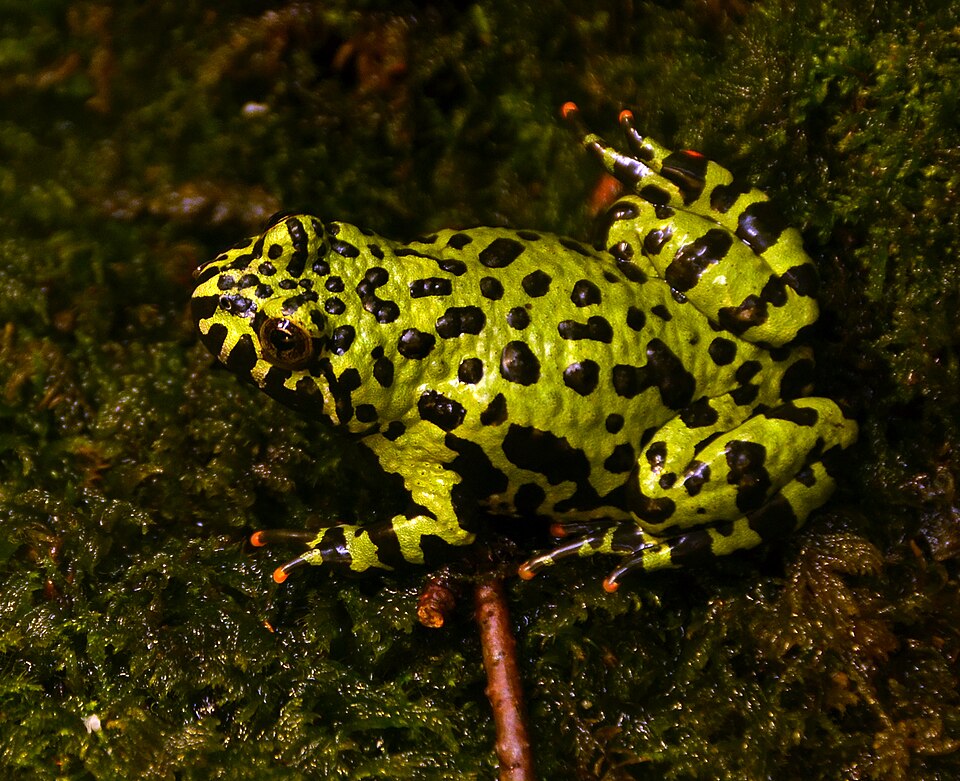
Most frogs hide all day and come out while you're asleep. Not the fire-bellied toad. According to the University of Michigan's Animal Diversity Web (ADW), this small frog is usually active during the day: it swims, climbs onto rocks and lunges at its prey. With its green back and bright red-orange belly, it's a real pleasure to watch. But those colors mean something: the belly is a sign that its skin produces a toxic secretion. In this article, we've gathered what you need to know about the fire-bellied toad's home, its diet and why it shouldn't be handled, using information from the Smithsonian's National Zoo, ADW and a care sheet from Yarmouth Veterinary Center in the US.
- A small frog: According to the Smithsonian, it grows to about 2 inches (6 cm) at most; it comes from northeastern China, Korea and eastern Russia.
- Home: A half-water, half-land tank. According to Yarmouth, at least 10 gallons for 1–2 toads, plus a secure lid.
- Likes it cool: According to Yarmouth, the ideal temperature is 68–75 °F (20–24 °C); it shouldn't go above 78 °F (about 25.5 °C).
- Long life: According to Yarmouth, 10–15 years in captivity; according to the Smithsonian, up to 20 years.
- Watch, don't touch: Its skin is delicate and produces a toxic secretion; watching is better than handling.
Meet the fire-bellied toad
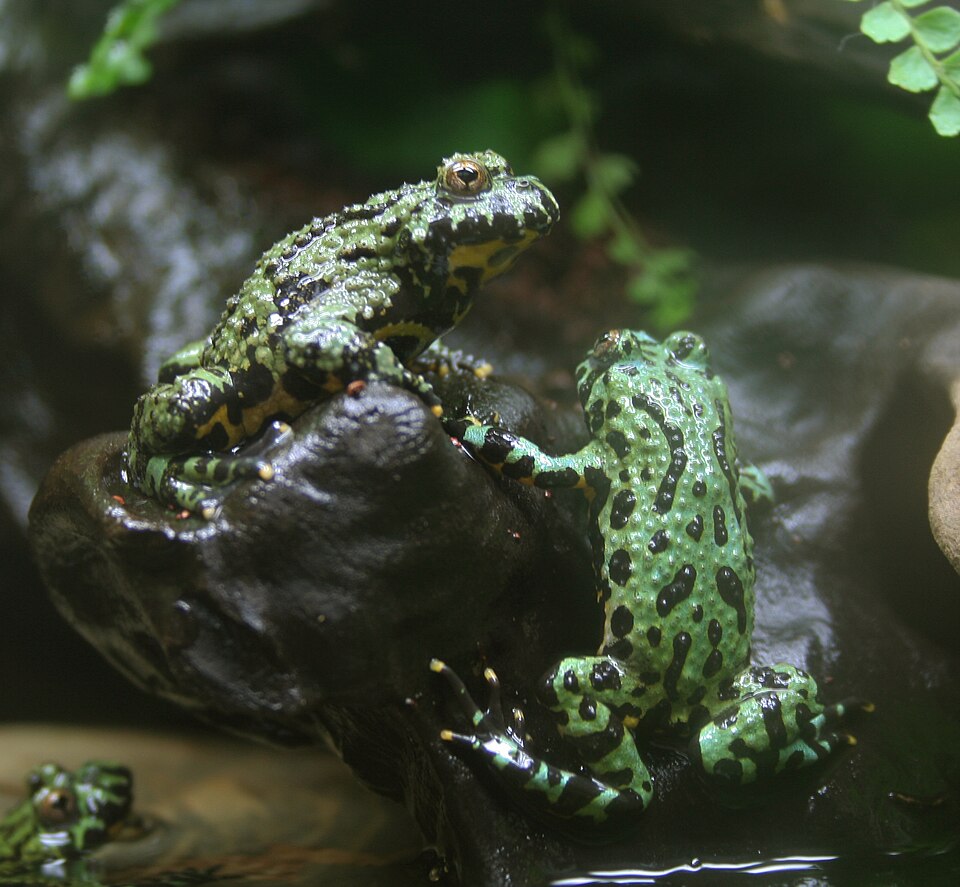
According to the Smithsonian, the Oriental fire-bellied toad (Bombina orientalis) lives in northeastern China, North and South Korea, and the Khabarovsk and Primorye regions of Russia. In the wild it's found mostly in slow-moving streams and ponds, but also in forests, meadows and swampy bushland. Its back is warty, ranging from brown-gray to bright green, and covered with dark spots. Its belly is smooth and marbled, with dark spots on a red, red-orange or yellow background. Unlike most frogs, it has triangular pupils.
According to the Smithsonian, this frog can't stick out its tongue; to catch prey, it leaps forward and grabs it with its mouth. It also makes sounds: males float on the water with their legs spread and call "ting-ting," and unlike most frogs, they do it while breathing in, not breathing out. Yarmouth also notes that pet toads can make quiet barking or chirping sounds.
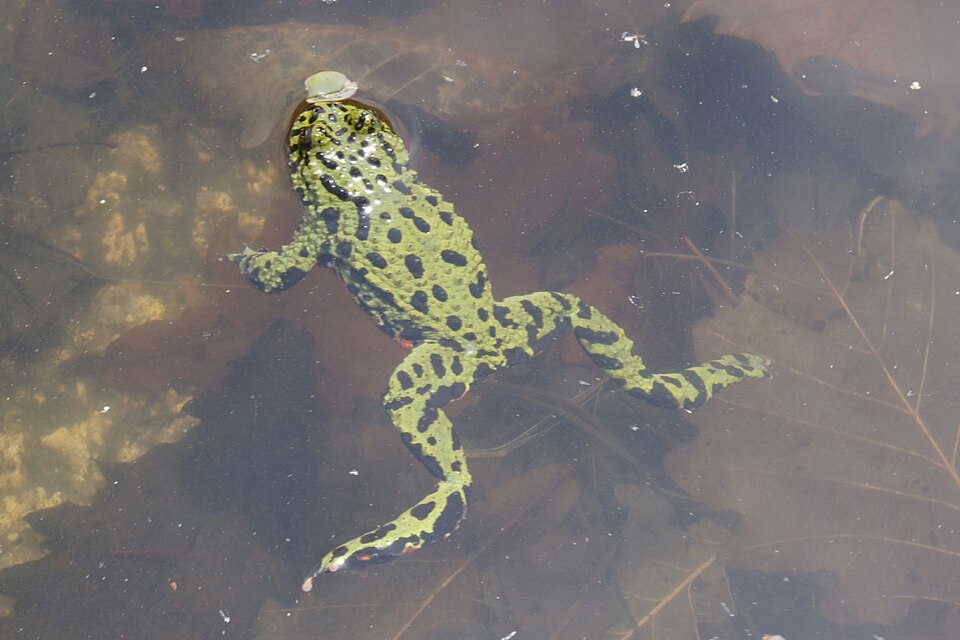
The color on its belly is a warning
According to the Smithsonian, a threatened fire-bellied toad bends its back inward, raises its legs and shows off its bright belly. This posture is called the "Unken reflex." If provoked further, it flips onto its back and releases a milky toxin from pores all over its body.
According to ADW, this toxin doesn't harm intact human skin, but it can be harmful if it gets into the eyes, the mouth or an open wound. It can cause itchy eyes and a runny nose in the person handling the toad. That's why ADW recommends washing your hands before and after touching one.
Home: half water, half land
According to Yarmouth, the fire-bellied toad does best in a semi-aquatic setup where it can both swim and climb out onto land. A tank that's part water and part land (a paludarium) works well.
| Topic | According to Yarmouth Veterinary Center |
|---|---|
| Tank | At least 10 gallons for 1–2 toads; 20 gallons or more for a group |
| Water depth | 2–4 inches (5–10 cm); with a gentle slope or floating platforms to reach land |
| Lid | A secure lid; these toads jump |
| Hiding spots | Driftwood, plants, cork bark or plastic caves |
| Water area substrate | Smooth gravel, large river rocks or a bare bottom |
| Land area substrate | Coconut fiber, moss or smooth river stones |
Yarmouth recommends avoiding small, loose gravel that could be swallowed. The Merck Veterinary Manual also says gravel should be either too large to swallow or small enough to pass through the digestive tract.
Water: chlorine-free and clean
Amphibian skin absorbs water and whatever is in it. Yarmouth recommends always using dechlorinated water, because chlorine and chloramines can cause immediate harm. According to Merck, amphibian water should also be free of chlorine, ammonia, nitrite, pesticides and heavy metals, and distilled water shouldn't be used.
- Every day: According to Yarmouth, remove waste and uneaten food daily.
- Every week: Change part of the water once a week.
- Filter: Use a filter with a gentle flow, or change the water on a regular schedule.
- Measure: Keep a thermometer and a hygrometer in the tank.
For more on water quality: amphibian water quality.
Temperature, humidity and light
According to Yarmouth, fire-bellied toads are cool-climate amphibians; in most homes they don't need extra heat.
- Temperature: The ideal range is 68–75 °F (20–24 °C); it shouldn't go above 78 °F (about 25.5 °C). Yarmouth advises against using heat lamps or heaters unless the room drops below 65 °F (about 18 °C).
- Humidity: 50–70%. Mist lightly as needed, but don't keep the land area wet all the time.
- Light: According to Yarmouth, UVB lighting is optional but may benefit long-term health; it recommends a low-output UVB bulb or LED lighting on a 12-hour timer. The Merck Veterinary Manual, on the other hand, considers UVB lighting necessary for amphibians. As Merck also suggests, ask a vet who knows amphibians which bulb is right.
Feeding
Fire-bellied toads are insectivores; they eat small, live prey. The Smithsonian's National Zoo feeds its toads small crickets three times a week. Yarmouth's advice:
- How often: Adults 3–4 times a week, juveniles every other day.
- How much: As much as they'll eat in 15–20 minutes.
- Prey: Small crickets that have been fed a nutritious diet beforehand (gut-loaded), black soldier fly larvae, flightless fruit flies; bloodworms for feeding in the water. Chopped earthworm now and then.
- Supplements: Yarmouth recommends dusting prey with calcium and vitamin powder. Ask your vet which product to use and how often.
Company: a small group, not a crowd
According to Yarmouth, fire-bellied toads do well in groups of 2–4, as long as there's enough space. But according to ADW, they can be aggressive and territorial in captivity. That's why Yarmouth recommends not overcrowding the tank and watching the toads for aggression during feeding.
Don't put them in a tank with other amphibians or with fish. According to Yarmouth, fire-bellied toads are only compatible with their own kind.
Watch, don't touch
Yarmouth considers the fire-bellied toad an "observational pet": its skin is delicate and produces a mildly toxic secretion. If you really have to handle one, wear powder-free gloves and rinse thoroughly afterward. Always wash your hands after touching the toad or its tank. According to the CDC, children under 5 shouldn't touch amphibians or their habitats. More: handling amphibians.
If you notice any change in your toad's behavior, appetite or skin, talk to a vet experienced with amphibians without delay. Yarmouth recommends a yearly checkup with a reptile and amphibian vet.
You can track feeding days and the weekly water change as daily care tasks on Tüylüm's Today tab. If you save your amphibian vet's clinic details in My vet, you can call them with one tap when you need to, and set an appointment reminder for the yearly checkup.
More articles: Amphibians.
Frequently asked questions
Is the fire-bellied toad poisonous?
Its skin produces a toxic secretion. According to ADW, it doesn't harm intact human skin but can be harmful if it gets into the eyes, the mouth or an open wound. Wash your hands before and after touching the toad, and don't touch your face before washing them.
Can I keep a fire-bellied toad in the same tank as fish?
Yarmouth doesn't recommend it: fire-bellied toads aren't compatible with other amphibians or fish and should be kept only with their own kind.
Does it need a heater?
In most homes, no. According to Yarmouth, these are cool-climate toads and the ideal temperature is 68–75 °F (20–24 °C). If the room doesn't drop below 65 °F (about 18 °C), don't use a heater or heat lamp.

Keep track of your pet's care in TüylümLog vet visits, vaccine and medication dates, and we'll remind you when it's time. Share it all with your family in Home.
Sources
- Smithsonian's National Zoo · Oriental fire-bellied toad
- Yarmouth Veterinary Center (veterinary clinic) · Fire-Bellied Toad Care Sheet (Word document)
- Animal Diversity Web (University of Michigan) · Bombina orientalis
- Merck Veterinary Manual · Housing for Amphibians (pet owner version)
- CDC · Reptiles and Amphibians (Healthy Pets, Healthy People)
By Tüylüm · Published and last checked: October 26, 2026. Spotted a mistake? Write to [email protected] and we'll fix it right away. Photos are from Wikimedia Commons, used under the license shown below each photo.