Salamander care: damp land, a shallow pool and a cool home
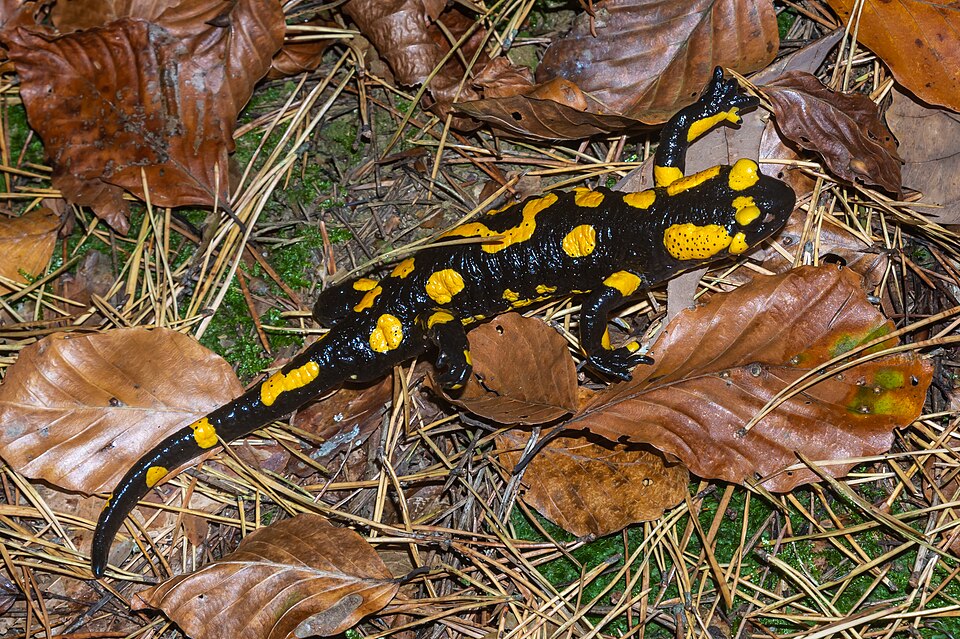
It looks a bit like a lizard, but instead of dry scales, its skin is covered with a moist, slippery layer. Salamanders are the tailed relatives of frogs. According to the Merck Veterinary Manual, there are about 500 species of salamanders, newts and sirens in the world. Some spend their whole lives in water; most start life in the water and move onto land as they grow. According to the Royal Veterinary College (RVC) in London, the most commonly kept species are the tiger salamander, the fire salamander and the axolotl. In this article, we explain how to care for salamanders other than the axolotl, based on the RVC's care sheet. We have a separate article for axolotls: axolotl care.
- Long life: According to the RVC, 10–20 years, depending on the species.
- Semi-aquatic home: A planted land area and a shallow pool 2–5 cm (about 1–2 in) deep; at least 90 x 45 x 45 cm (about 35 x 18 x 18 in) for one salamander.
- Humid and cool: At least 70% humidity; about 18–24 °C (64–75 °F) by day and about 10–15 °C (50–59 °F) at night.
- Lives alone: According to the RVC, most species are territorial; kept together, the bigger one may eat the smaller one.
- Not from the wild: According to Merck, salamanders should never be taken from the wild; the CDC also advises against catching wild amphibians as pets.
Meet the salamander
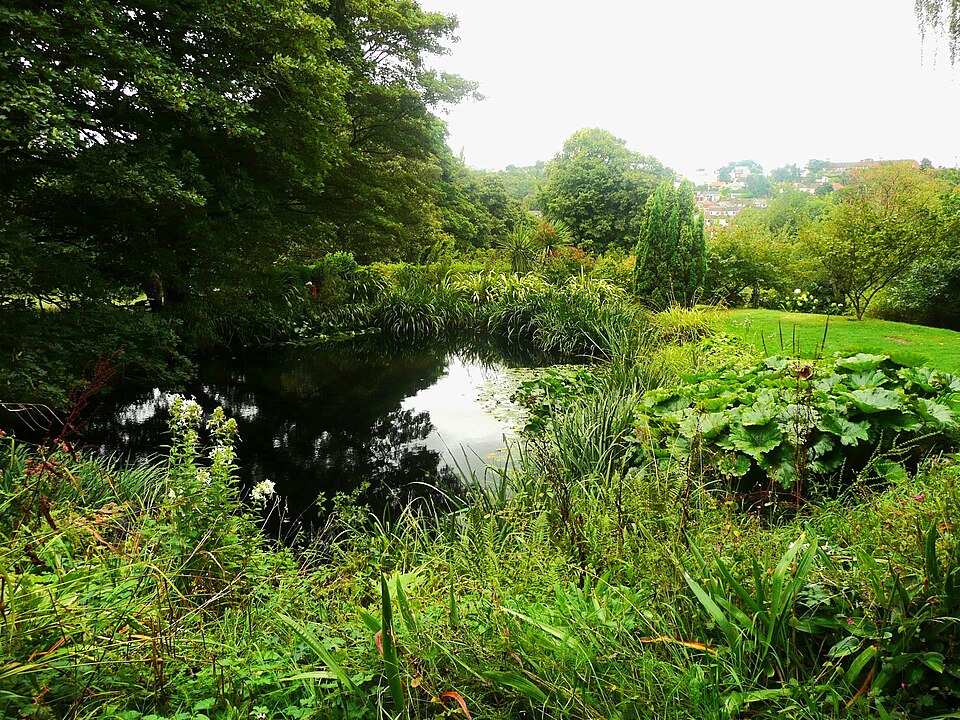
According to the RVC, salamanders and newts live in many different habitats, such as forests, grasslands and marshy areas. They stay close to ponds and other water for breeding, and to soil they can burrow into. Most species kept as pets start life as aquatic larvae with gills; as adults they lose their gills and move onto land. According to Merck, the axolotl, by contrast, stays fully aquatic all its life.
According to Merck, most amphibians have skin coated with a moist mucus layer, and adults breathe through both their lungs and their skin; the skin must stay moist for oxygen exchange. That's where the two basic rules of salamander care come from: humidity and clean water.
One of the salamanders most often kept at home is the tiger salamander; another, according to Merck, is the fire-bellied newt, which comes from China and Japan and is usually 8–13 cm (3–5 in) long.
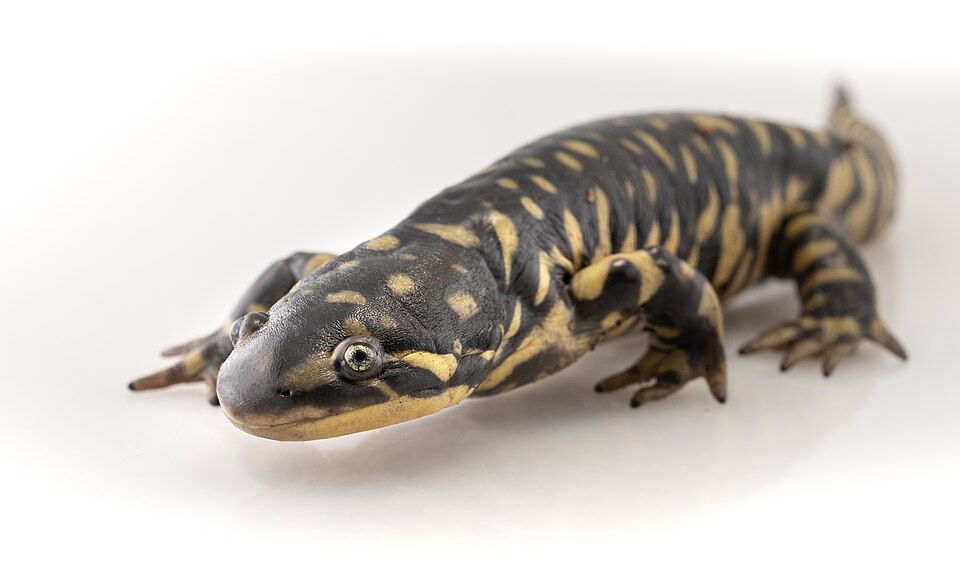
The enclosure: damp land and a shallow pool
According to the RVC, adult salamanders should be kept in a semi-aquatic setup with a plant-enriched land area and a shallow pool of water for bathing.
| Topic | According to the RVC |
|---|---|
| Size | At least 90 x 45 x 45 cm for one salamander; larger for a pair |
| Base layer | 5 cm of pea gravel or worn slate |
| Top layer | 7–10 cm of substrate that can be burrowed into and holds humidity: sterile potting soil, coconut husk or sphagnum moss |
| Pool | 2–5 cm deep, with a ramp so it can climb out safely |
| Hiding spots | Tall plants, rocks and bark |
According to the RVC, salamanders like their bodies to be touching, or nearly touching, an object. That's why hiding spots aren't decoration for them; they're a need.
Merck's general rules matter too. The top of the enclosure should be secure and ventilated; according to Merck, drying out is a common problem in amphibians that escape. Soil should be free of additives. Don't use cedar or pine shavings, because they contain toxic oils. The RVC lists sphagnum moss among suitable substrates, but according to Merck, some species may be irritated by the low pH of peat or sphagnum moss. Ask a vet or an experienced breeder what's right for your species.
Humidity, temperature and light
- Humidity: According to the RVC, at least 70%, because salamanders absorb water through their skin. Mist the enclosure several times a day and monitor humidity with a hygrometer. But humidity needs to be balanced with fresh air.
- Temperature: About 18–24 °C (64–75 °F) by day and about 10–15 °C (50–59 °F) at night. The RVC recommends checking this range for your particular species.
- Heating: If needed, use an under-tank heater to avoid the risk of burns. Place it at one end only, so there are warm and cool areas, and control the temperature with a thermostat.
- Light: Salamanders are usually active at night, but the RVC recommends full-spectrum light during the day, with the day length kept as it would be in their natural habitat.
- Winter: According to the RVC, some species hibernate in winter; find out what your species does.
- Water: According to Merck, amphibian water should be free of chlorine, ammonia and nitrite. The RVC recommends closely monitoring the pool's water quality and changing the water regularly. More: amphibian water quality.
Feeding
According to the RVC, salamanders are naturally carnivorous and prefer live invertebrates.
- What: Crickets, beetles, earthworms, wax worms and small millipedes. According to the RVC, larger salamanders can occasionally be given pre-killed pinkie mice.
- How often: Every other day, as much as it will eat in one sitting.
- When: Ideally in the evening, since they're active at night.
- Preparation: Feed the insects beforehand; according to Merck, with a calcium-rich diet 48 hours before offering them to the amphibian. The RVC recommends dusting food with a calcium supplement; ask your vet which product to use and how often.
- Don't overdo it: According to the RVC, obesity is common in salamanders; don't overfeed.
Why should it live alone?
According to the RVC, most salamander species do best on their own. They are very territorial, and especially if a large salamander is kept with a smaller one, it may eat it. For those who want to breed them, a pair can be kept together only around mating time; water must then be provided, because the larvae are fully aquatic.
Handling
According to the RVC, you should avoid touching salamanders directly: oils in human skin can disrupt their sensitive mucus layer, and many species have toxic secretions. If you need to handle one, wear moistened powder-free latex gloves. Merck recommends moistening gloves with water from the animal's enclosure or with chlorine-free water. Wash your hands afterward. More: handling amphibians.
A wild salamander belongs in the wild
On a walk in the woods, a fire salamander may come out from under a rock, or you may spot a newt at the edge of a pond. Don't take it home.
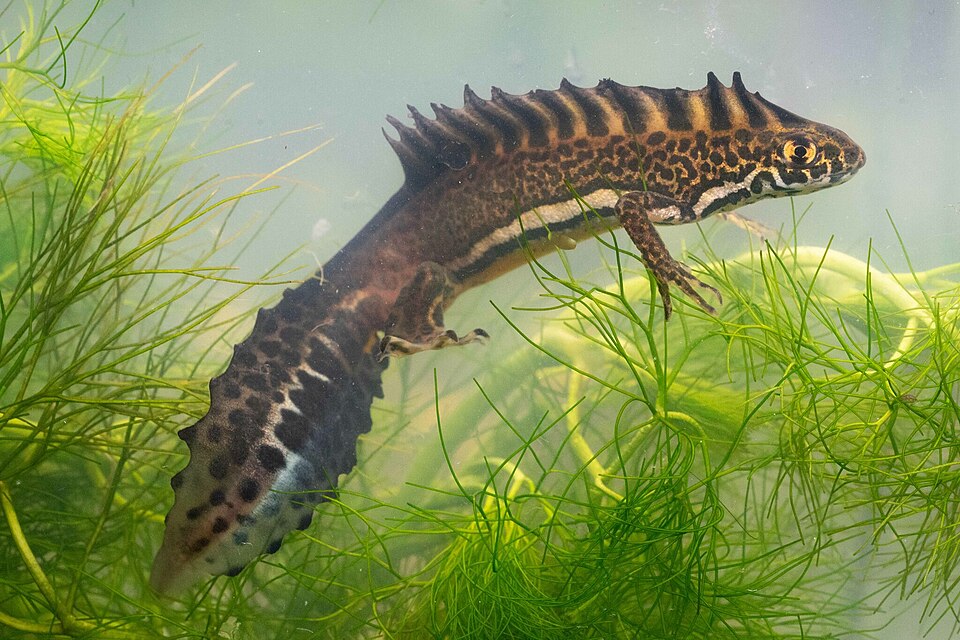
- According to Merck, salamanders should never be taken from the wild; some species are illegal in some US states.
- The CDC advises against catching wild amphibians as pets.
- According to Freshwater Habitats Trust, a chytrid fungus called Bsal can infect and kill many species of salamanders and newts. It has become established in some wild amphibian populations in parts of Europe and is thought to be spread internationally by the amphibian trade.
- According to the same organization, some animals can carry disease without showing any signs. That's why all amphibians should be treated as if they're carrying disease.
If you keep salamanders, Freshwater Habitats Trust's advice is simple: never release them into the wild; don't keep them in outdoor enclosures, where they may come into contact with wild amphibians; and don't pour enclosure water out into nature. Keep a newly arrived animal apart from the others for a while, and talk to your vet about screening for chytrid.
If you're getting a new salamander, the CDC advises buying from a trusted source and avoiding roadside or temporary vendors. What to think about before you get one: before getting an amphibian.
According to the RVC, obesity is common in salamanders, so Tüylüm's Weight tracking comes in handy: you can weigh your salamander regularly and see how its weight changes. You can also track every-other-day feeding and pool water changes as daily care tasks on the Today tab.
If you notice any change in your salamander's behavior, appetite or skin, talk to a vet experienced with amphibians without delay.
More articles: Amphibians.
Frequently asked questions
Are salamanders and newts the same thing?
According to Merck, both belong to the group of tailed amphibians, which includes salamanders, newts and sirens. The RVC's care sheet covers salamanders and newts together, but temperature, humidity and water needs vary from species to species. Find out your species and set up its home accordingly.
Can I keep two salamanders in the same enclosure?
According to the RVC, most species do best alone: they're territorial, and the bigger one may eat the smaller one. A pair can be kept together only around mating time.
Can I keep a salamander I found in my yard?
No. Merck says salamanders should never be taken from the wild, and the CDC advises against catching wild amphibians as pets. According to Freshwater Habitats Trust, even healthy-looking animals can carry disease. Leave it where you found it.

Keep track of your pet's care in TüylümLog vet visits, vaccine and medication dates, and we'll remind you when it's time. Share it all with your family in Home.
Sources
- Royal Veterinary College (RVC) · Salamander care (care sheet, PDF, December 2024)
- Merck Veterinary Manual · Introduction to Amphibians (pet owner version)
- Merck Veterinary Manual · Housing for Amphibians (pet owner version)
- Freshwater Habitats Trust · Protecting native amphibians from invasive disease (2015)
- CDC · Reptiles and Amphibians (Healthy Pets, Healthy People)
By Tüylüm · Published and last checked: October 26, 2026. Spotted a mistake? Write to [email protected] and we'll fix it right away. Photos are from Wikimedia Commons, used under the license shown below each photo.