How to hold a ferret: picking it up, getting it used to handling, and biting while held
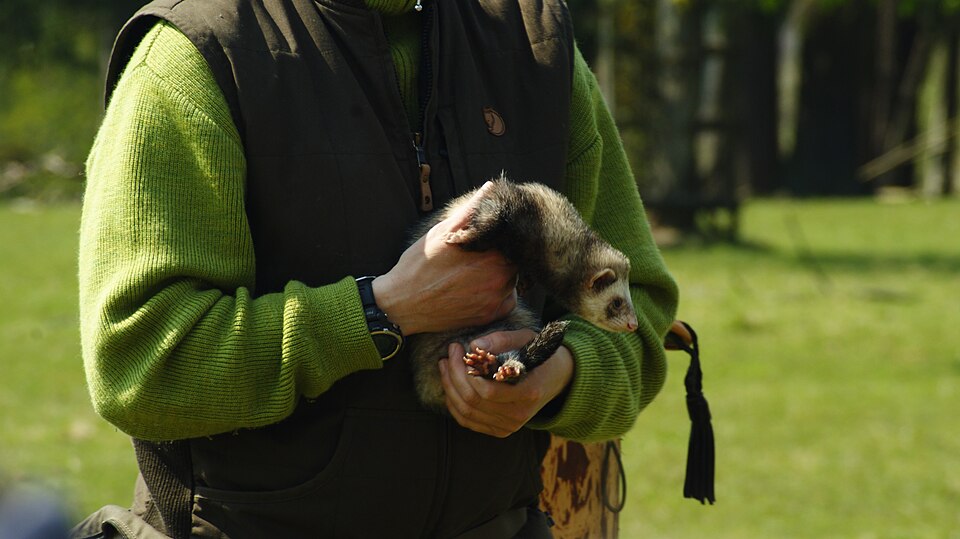
Ferrets usually enjoy being held, but they have to learn it. According to PDSA, ferrets that have been handled regularly from a young age are very laid-back and enjoy human company. A frightened ferret, on the other hand, can bite pretty hard, PDSA says. What makes the difference is usually the way you hold it, and patience. A ferret's long, flexible body needs a different hold than a cat's or a rabbit's.
- Two hands: One hand under or around the chest, the other under the hind legs; then hold your ferret close to your body (PDSA, RSPCA Australia).
- Protect its back: The long back should be protected from excessive twisting and sudden, violent movements (RSPCA Australia).
- Let it play first: A ferret that has burned off some energy is more willing to be picked up.
- No dropping, no jumping down: A ferret isn't dropped to the floor like a cat; it's placed down gently (AFA).
- If it bites, don't punish: Walk away for 2–3 minutes; never yell or hit (RSPCA Australia).
Approach first: let it come to you
The University of Bristol Veterinary School's handling guide for its students recommends approaching the cage calmly and quietly. When you open the cage, make use of your ferret's curiosity and give it a chance to come to you. According to the guide, ferrets have poor eyesight; if you reach into the cage too suddenly, they may bite you by mistake.
RSPCA Australia also points out that ferrets don't see well in the dark and that their eyes can be slow to adjust to bright light. A sudden bright light may trigger fear and the aggression that comes with it. So don't suddenly pull a ferret out of a dark hammock where it's sleeping.
- If it's frightened, wait: According to the Merck Veterinary Manual, talk quietly to a frightened ferret, and don't try to pick it up unless it's necessary for its safety.
- It's the ferret's choice: According to RSPCA Australia, ferrets should be able to choose if, when and how they interact.
- Play comes first: According to PDSA and RSPCA Australia, let your ferret run around, play and explore first. A ferret that has burned off some energy is more willing to be picked up.
The right hold, step by step
- One hand on the chest: Place one hand under or around your ferret's chest (PDSA, RSPCA Australia).
- The other hand under the hind legs: Use your other hand to lift and support the hind legs from below. According to the Bristol guide, ferrets can be very wriggly; supporting the hindquarters well keeps the long body from twisting and getting hurt.
- Hold it close to your body: Bring your ferret in toward you; according to PDSA, this makes it feel secure.
- Protect its back: According to RSPCA Australia, a ferret's long back should be protected from excessive twisting and sudden, violent movements.
- Put it down gently: According to the AFA, ferrets can't be dropped to the floor the way people often do with cats; they need to be placed down gently.
According to the AFA, children often think of ferrets as small cats: they encourage them to jump from their hands to the floor, or let go thinking they'll land on their feet like a cat. Ferrets aren't made to be handled like cats. Always hold your ferret with two hands and put it down gently. If you're on a high surface like a table, follow the Bristol guide's advice: keep one hand on your ferret at all times so it doesn't fall.
Getting it used to being held
According to PDSA, getting ferrets used to being picked up from a young age is really important. RSPCA Australia recommends starting handling early and keeping it regular, positive and enjoyable, so your ferret builds a bond with you. Treats and strokes can be used as rewards.
According to the Bristol guide, well-handled ferrets don't usually bite unless they're stressed or in pain. Ferrets that aren't used to handling, however, may bite and hold on. That's why the training is worth the effort.
According to RSPCA Australia, new experiences should also be introduced gradually: a harness and leash, grooming, body checks, a carrier and travel. Don't move on to the next step until your ferret is comfortable with the current one. We have separate articles on these:
- Nail and ear care: ferret smell and cleaning
- Carriers and travel: traveling with a ferret
- Harnesses: taking your ferret outside
If it bites while you're holding it
According to PDSA, ferrets can bite, but it usually isn't meant to be aggressive; it comes from fear, being upset or getting overexcited during play. An occasional nip is normal; they don't usually bite hard unless they feel threatened. According to RSPCA Australia, a ferret may nip or bite:
- When it's frightened or accidentally hurt,
- When it's young or teething,
- When it's nursing kits,
- When it isn't used to being handled,
- When your hand smells of food,
- While licking you (licking can turn into a bite),
- When play gets rough.
- Walk away: RSPCA Australia recommends walking away for 2–3 minutes after a bite.
- Never punish: Yelling, hitting or throwing your ferret is never okay (RSPCA Australia).
- Don't let it lick you: According to RSPCA Australia, licking can progress to a bite.
- Don't make your hands into toys: RSPCA Australia advises against rough play with your hands, including tug-of-war.
- Wash the wound: If a bite breaks your skin, wash the wound thoroughly with soap and water and contact a doctor (RSPCA Australia).
For ways to reduce biting during play: ferret sleep and play.
Children and ferrets
According to the AFA, a child should first learn how to hold a ferret by watching the adults in the household, and then practice it many times. According to RSPCA Australia, ferrets should be picked up by adults and older children; children should be closely supervised and learn to be gentle and calm with the ferret.
- Start on the floor: PDSA and RSPCA Australia recommend that a young child sit on the floor or a low seat with a treat in their lap and wait for the ferret to come to them.
- Stroke gently: According to PDSA, the ferret will most likely climb into the child's lap and take the treat. Teach the child to stroke it gently.
- Don't reach for its face: According to the AFA, running up to touch a ferret's face or sticking out fingers for it to sniff can startle ferrets, especially young ones, and lead to a bite. Hold the ferret facing away from the child, so the child can stroke its back.
- Picking it up comes last: According to PDSA, once the ferret is comfortable with the child's touch, the child can try picking it up.
- Always be there: Every family the AFA interviewed said supervision is essential, especially in the first few weeks.
If you want your ferret to get a little handling practice every day, you can add it as your own task on Tüylüm's Today tab. With Home, everyone in your household sees the same list, so it's clear who did today's practice.
Frequently asked questions
Is it okay to hold a ferret by the scruff?
For everyday holding, PDSA and RSPCA Australia recommend the two-handed hold: one hand on the chest, the other under the hind legs. RSPCA Australia mentions scruffing only for when your ferret has bitten and you need to move it (or yourself), and only if it's done gently.
My ferret won't stay in my arms. What should I do?
Let it play first; according to PDSA, a ferret that has burned off some energy is more willing to be held. According to RSPCA Australia, a ferret should be able to choose when and how it interacts. Don't force it; keep the practice regular, positive and enjoyable.
My ferret bit me and broke the skin. What should I do?
RSPCA Australia recommends washing the wound thoroughly with soap and water and contacting a doctor. Don't punish your ferret; walk away for 2–3 minutes. Think about why it bit: fear, a hand that smelled of food or play that got too rough could be the reason.

Keep track of your pet's care in TüylümLog vet visits, vaccine and medication dates, and we'll remind you when it's time. Share it all with your family in Home.
Sources
- PDSA · How to hold a ferret safely
- RSPCA Australia · How should I handle my ferrets?
- University of Bristol Veterinary School · Clinical Skills: Ferret Handling (PDF)
- American Ferret Association · Sharing Your Home with Both Children and Ferrets (PDF)
- Merck Veterinary Manual · Providing a Home for a Ferret
- RSPCA Australia · How can I use environmental enrichment for my ferrets?
By Tüylüm · Published and last checked: October 26, 2026. Spotted a mistake? Write to [email protected] and we'll fix it right away. Photos are from Wikimedia Commons, used under the license shown below each photo.