Traveling with a ferret: carriers, car trips and leaving it with a sitter
When ferret owners plan a vacation, the first question is always the same: "Should I take it with me or leave it at home?" According to the RSPCA, the best option for ferrets is usually to be cared for in the home they're used to. Still, there are times a ferret has to travel, for a vet visit, a move or some other reason. In this article, we cover both: hitting the road and staying behind.
- Usually, let it stay home: According to the RSPCA, care in your ferret's familiar home is usually best.
- A carrier is a must: For vet checkups and emergencies; sized for the number of ferrets you'll carry at once (AFA).
- Get it used to travel first: Introduce the carrier and travel gradually; start with short trips (RSPCA Australia, RSPCA).
- Cool hours, water and breaks: Set off at the coolest time of day; never leave your ferret in the car (RSPCA).
- A detailed note for the sitter: Food, water, litter box, medications, play areas, hiding spots and vet details (AFA).
Take it along or leave it at home?
According to the RSPCA, if you're going away, arrange for someone to care for your ferrets; care in their familiar home is usually best. The RSPCA's general vacation guide also says cats, rabbits and small animals that aren't used to travel shouldn't be taken on vacation.
If you do have to take your ferret along, the RSPCA's rule is clear: transport it safely and comfortably. Wherever your ferrets are, including in a vehicle, they should have enough space and a comfortable temperature.
The carrier
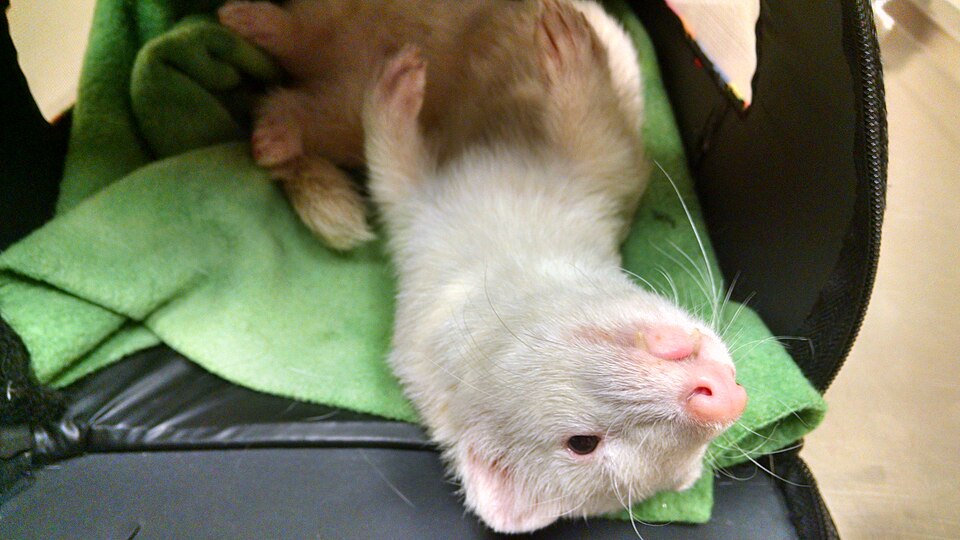
According to the AFA, you'll need a carrier to take your ferret to the vet for checkups, or to get it to safety right away in an emergency. Choose a carrier sized for the number of ferrets you'll be carrying at one time.
- Hang a hammock inside: According to the AFA, a hammock tied to the carrier's wire window cuts down on your ferret sliding around on the road and during sudden stops.
- Line the bottom with paper: For any potty accidents (AFA).
- Attach bowls for long trips: According to the AFA, on longer trips you can attach food and water bowls to the carrier door.
- Familiar smells: The RSPCA recommends putting familiar-smelling items, such as toys, in the carrier and in the new place.
- Check the fasteners: According to the AFA, many carriers come apart in two halves held together by wing nuts. These can loosen over time, and your ferret could fall out. Check them before every trip.
- Together with a friend: The RSPCA's advice for small animals is to transport them with their familiar companions.
Getting it used to the carrier and travel
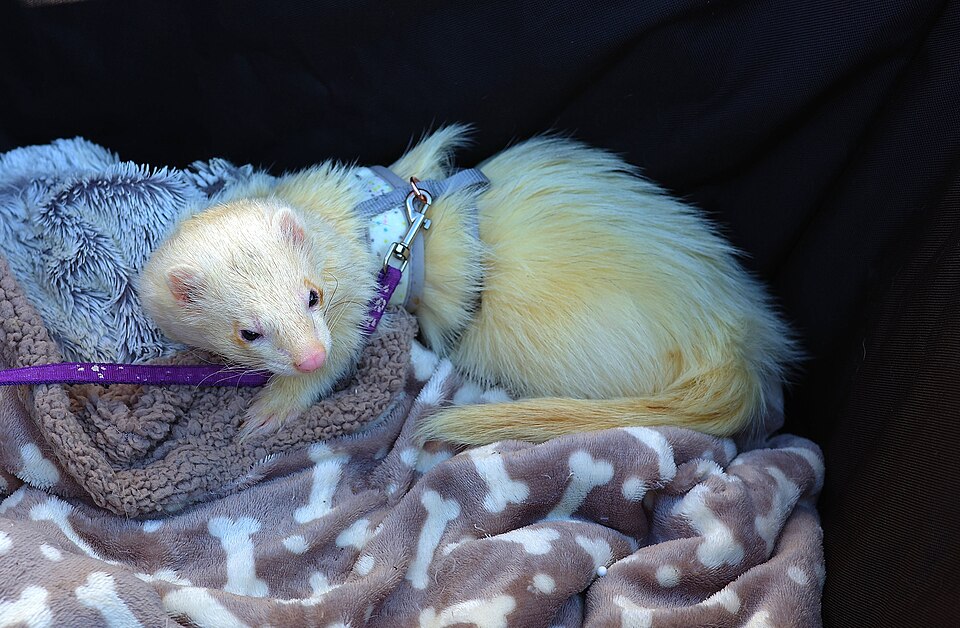
RSPCA Australia recommends introducing new experiences such as a carrier and travel gradually: don't move on to the next step until your ferret is comfortable with the current one. Treats and strokes can be used as rewards. The RSPCA also recommends getting an animal used to the road with a few short local trips before the real journey. Getting your ferret used to being picked up and held makes this easier, too: how to hold a ferret.
On the road
The RSPCA's travel tips:
- Is it fit to travel? Animals should not be transported in a way that is likely to cause injury or unnecessary suffering. If you're not sure your ferret is fit to travel, talk to your vet.
- Cool hours, short route: Choose the most direct route and travel at the coolest time of day. According to the RSPCA, that's usually overnight, early in the morning or late in the evening.
- Water: Provide water throughout the trip.
- Breaks and a litter box: Take regular breaks. According to the RSPCA, small animals need a litter box with them.
- Quiet and apart: For small animals, the RSPCA recommends keeping the noise down and keeping them away from cats and dogs.
According to the RSPCA, animals should never be left in a car on a warm day, not even for a short time. When it's 22 °C (72 °F) outside, the inside of a car can quickly reach 47 °C (117 °F), which can be deadly. Ferrets are very sensitive to heat: ferrets in hot weather.
Research your destination ahead of time, too. The RSPCA recommends checking whether your accommodation has what your pet needs, and whether there's an emergency vet and an out-of-hours service nearby. If you're traveling abroad, for the paperwork you'll need: PETVET registration and microchips.
Leaving it with a sitter
The AFA's guide recommends planning ahead so your ferrets get everything they need, even when you're not there. The first step: have your sitter call your vet to say who they are and how long they'll be caring for your ferrets. That way, your vet knows it's okay to talk to them about your ferret.
According to the AFA, write down your ferret's daily needs and routine. Keep a printed copy in an easy-to-find place where your ferrets live. Add a photo of each ferret: to many people, all brown ferrets look alike. Update the photos after coat changes. Also write down exactly where the food, litter, medications and treats are.
| Put on the list | Details |
|---|---|
| Where your ferrets are and aren't allowed | Doors and gates; how the cage door latches. Ferrets will try every way to escape. |
| Food and water | Where they're kept, how much and when to give them; how the water bottle hangs |
| Litter box and accidents | Your ferrets' potty routines and cleanup. Cleaning products should never be sprayed near the ferrets. |
| Medications and vaccine schedule | Your vet's directions, spelled out clearly; where medications are stored and where to get refills |
| Treats | Which ones and how often; ferrets are obligate carnivores |
| Play, handling and typical behaviors | Seeing one ferret drag another off to stash it can alarm a sitter; also note any ferret that tends to bite |
| Hiding and sleeping spots | Even after years, ferrets can find a new hiding spot |
| Misbehavior | Time-outs and positive reinforcement; ferrets don't understand being smacked or flicked |
| Getting help | Other ferret owners; your vet's name, phone number and directions, and the nearest ferret-friendly emergency clinic |
The AFA also recommends planning ahead for who will care for your ferrets if something happens to you. Talk it over with that person ahead of time and make sure they're truly willing. According to the AFA, it isn't right to assume that someone who loves you will simply take your ferrets.
The Pet sitter note on Tüylüm's Today page gathers daily tasks, medications and vet details into a single message that you can share on WhatsApp. The ready-made Food, Water, Play / out of cage and Toilet cleaning tasks for ferrets also help you remind your sitter what to do. If you've saved your clinic in the My vet section, its details are always at hand.
Frequently asked questions
Can I leave my ferret home alone while I'm on vacation?
According to the RSPCA, if you're going away, you should arrange for someone to care for your ferrets. The RSPCA wants food and water bowls and toilet areas cleaned daily, so your sitter needs to come every day. Care in your ferret's familiar home is usually best.
What should I put in the carrier?
The AFA recommends a hammock tied to the carrier's window, paper on the bottom and, on long trips, food and water bowls attached to the door. The RSPCA also recommends putting familiar-smelling items, such as toys, in the carrier.
Can I take my ferret on a plane?
According to the RSPCA's vacation guide, pets fly in the hold, and you need to check the airline's pet policy. Rules vary from airline to airline; ask ahead of time. If you're traveling abroad, for the paperwork: PETVET registration and microchips.

Keep track of your pet's care in TüylümLog vet visits, vaccine and medication dates, and we'll remind you when it's time. Share it all with your family in Home.
Sources
- RSPCA · Creating a good home for your ferrets
- RSPCA · Taking your pet on holiday
- RSPCA · Animal welfare advice for summer
- American Ferret Association · Your Ferret's Cage (carrier section, PDF)
- American Ferret Association · Planning for Your Ferrets' Care When You Are Not There (PDF)
- RSPCA Australia · How should I handle my ferrets?
By Tüylüm · Published and last checked: October 26, 2026. Spotted a mistake? Write to [email protected] and we'll fix it right away. Photos are from Wikimedia Commons, used under the license shown below each photo.