Reward-based training for ferrets: learning its name, coming when called and first tricks
The American Ferret Association's (AFA) training guide opens with a familiar scene: an owner calls their ferret twice, with no response. Looking down the hall, they find the ferret frantically digging at the carpet outside a closet door. The ferret briefly looks up on hearing its name, then goes back to digging as if nothing happened. According to the AFA, this scene is all too common; but a ferret's behavior can be managed with patience and consistent training. The Merck Veterinary Manual also says ferrets are quick learners and can even be trained to do tricks.
- They can learn: According to the AFA, ferrets recognize their names, respond to verbal and visual commands, and can learn tricks too.
- Rewards and praise: The AFA recommends teaching the behaviors you want with praise or appropriate treats. No punishment (RSPCA Australia).
- Short and frequent: Keep sessions short, frequent and positive, in a quiet, familiar place (RSPCA Australia).
- Small, high-protein treats: Small pieces that are high in protein and low in carbohydrates (PDSA); count them in the daily food allowance (RSPCA Australia).
- No rush: According to the AFA, you won't see change overnight; but training is also a way to bond with your ferret.
Why does training work?
According to the AFA, training doesn't just reduce annoying behaviors. It becomes quality time you spend together and an activity that works your ferret's mind, and these often reduce unwanted behaviors on their own. According to the AFA, negative behaviors often result from boredom. RSPCA Australia also says reward-based training helps build a good relationship and bond between you and your ferret.
The AFA's list is long: proper pottying, "no scratch," "no bite" and the basic commands are all possible. We covered litter training in ferret smell and cleaning and reducing biting in ferret sleep and play. This article focuses on the basics of teaching with rewards and on the "come" command.
Before you start
- Know your ferret: According to the AFA, you decide which methods will work based on your ferret's age, health, past experiences and readiness.
- The right time: According to the AFA, every ferret is different: some are more focused after sleeping, others after burning off a little energy. According to the PDSA, ferrets quickly learn your daily routine and usually play in the mornings and evenings.
- A quiet place: RSPCA Australia recommends training in a quiet, familiar place where the animal feels comfortable.
- Short sessions: According to RSPCA Australia, sessions should be short but frequent, so the animal doesn't get frustrated or tired.
- Everyone uses the same word: RSPCA Australia recommends that everyone who interacts with the animal uses the same cues, routines and expectations.
Treats: what and how much?
According to the PDSA, occasional treats are fine, especially for training. They should be high in protein, low in carbohydrates and low in fiber; as an example, the PDSA gives a piece of boiled egg. Besides food, RSPCA Australia also counts strokes as a reward. For more on ferret treats, see: ferret diet guide.
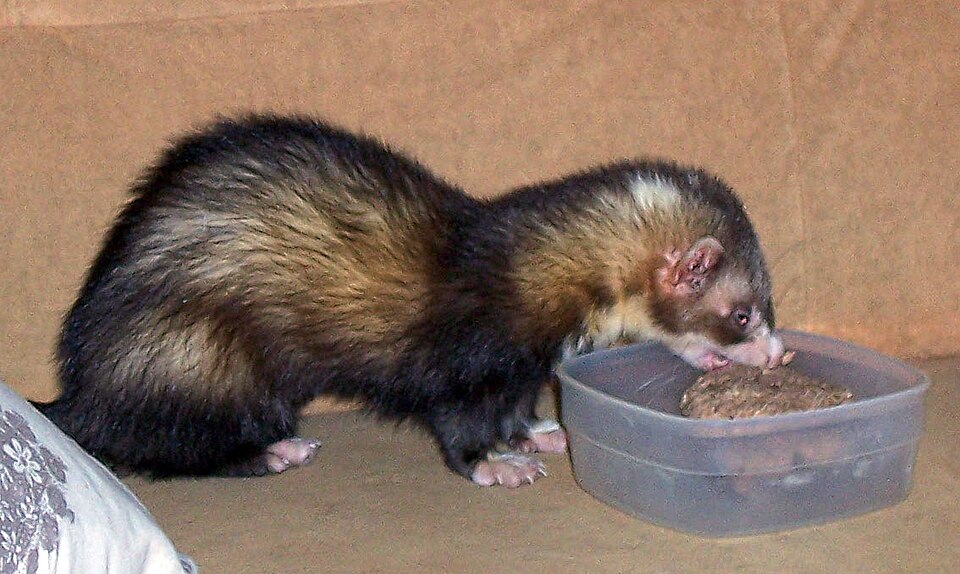
According to RSPCA Australia's general training guide, if you use treats, count them in the animal's daily food requirements; otherwise you'll end up overfeeding. Keep treats small and give them immediately after the behavior you want.
Teaching "come"
RSPCA Australia's reward-based training guide was written for cats, rabbits and rodents; it doesn't mention ferrets specifically. But the principle it rests on is the same one the AFA recommends for ferrets: rewarding the behavior you want. The AFA's training videos also include a lesson on teaching your ferret to come when called. The guide's "come" steps are:
- Pick a short cue: Your ferret's name, or a short word like "come" that always stays the same.
- Start when it's close: While your ferret is already next to you, say the word and immediately give a small treat or praise.
- Add distance little by little: Once your ferret starts linking the word with a reward, call it from a short distance away.
- Try different places: Gradually practice in different safe places your ferret uses every day.
- Fade the treats: Reduce the rewards over time; but keep rewarding now and then so the behavior stays reliable.
RSPCA Australia's guide also mentions a clicker: a small device that marks the moment the animal does the desired behavior with a "click." The click shows exactly which behavior is being rewarded, and the reward comes right after it. You can use one if you like; the basic rule stays the same: first the behavior, then the reward right away.
Hand signals work too
According to the AFA, ferrets respond not only to verbal commands but to visual ones as well. The first ferret of the trainer featured in the AFA's training guide was deaf; it still learned several tricks. RSPCA Australia's guide also suggests using a hand signal alongside the verbal cue if you like. Whichever you choose, always use the same one.
First tricks
The AFA's training videos list what Joey the ferret learned: to stand, to roll over, to high-five, to stay and to pick up an object. When you teach a trick, follow these suggestions from RSPCA Australia:
- Break it into small steps: Break a complex behavior into small, achievable steps.
- Don't force it: Don't physically push the animal or force it into a position.
- Don't move on until it's comfortable: According to RSPCA Australia, when your ferret meets something new, reward it at each step and don't move to the next step until it's comfortable.
- Mix it up: Teach a variety of skills and change up the rewards; that keeps your ferret interested and motivated.
Biting and punishment
According to the AFA, a healthy, well-trained ferret should not bite; but like all pets, ferrets need to be taught what acceptable behavior is. According to RSPCA Australia, never punish your ferret by yelling, hitting it or throwing it away from you. We explained what to do when it bites in how to hold a ferret.
When should you take a break?
According to RSPCA Australia, ferrets should be able to choose whether, when and how they interact with a person, and at what pace. According to RSPCA Australia's training guide, if you see any of these signs, stop the session and try again later:
- Hiding,
- Freezing,
- Aggression,
- Rapid breathing,
- Trying to escape.

If your ferret suddenly starts behaving differently from usual, for example hiding or biting often, talk to your vet without delay.
You can add short training sessions as your own task on Tüylüm's Today tab. With Home, everyone in your household sees the same list, so it's clear who did the training. If you're leaving your ferret with a sitter, you can share the words you use in a single message with the Pet sitter note.
Frequently asked questions
Can a ferret really learn tricks?
Yes. According to Merck, ferrets are quick learners and can be trained to do tricks. The AFA's training videos include tricks such as standing, rolling over, high-fiving and staying. Be patient: according to the AFA, change doesn't happen overnight.
My ferret doesn't come when I call. What should I do?
Go back a step. Following RSPCA Australia's guide, start again by saying the word while your ferret is next to you and rewarding it right away, then add distance gradually. Keep sessions short and train in a quiet, familiar place. Never punish your ferret.
What should I use as a treat?
According to the PDSA, small pieces that are high in protein, low in carbohydrates and low in fiber, such as a small piece of boiled egg. RSPCA Australia also counts strokes as a reward. Take treats out of your ferret's daily allowance.

Keep track of your pet's care in TüylümLog vet visits, vaccine and medication dates, and we'll remind you when it's time. Share it all with your family in Home.
Sources
- American Ferret Association · How to Train Your Ferret! (PDF)
- American Ferret Association · Frequently Asked Questions
- Merck Veterinary Manual · Providing a Home for a Ferret
- RSPCA Australia · How should I handle my ferrets?
- RSPCA Australia · How can I train my pet cat, rodent or rabbit at home?
- PDSA · Ferrets as pets
By Tüylüm · Published and last checked: October 28, 2026. Spotted a mistake? Write to [email protected] and we'll fix it right away. Photos are from Wikimedia Commons, used under the license shown below each photo.