 Tüylüm
British Longhair
The semi-longhaired sibling of the British Shorthair: the same round face and calm temperament, but with a soft coat that needs daily combing. Heart screening, a healthy weight and regular grooming are the three things that matter most for this breed.
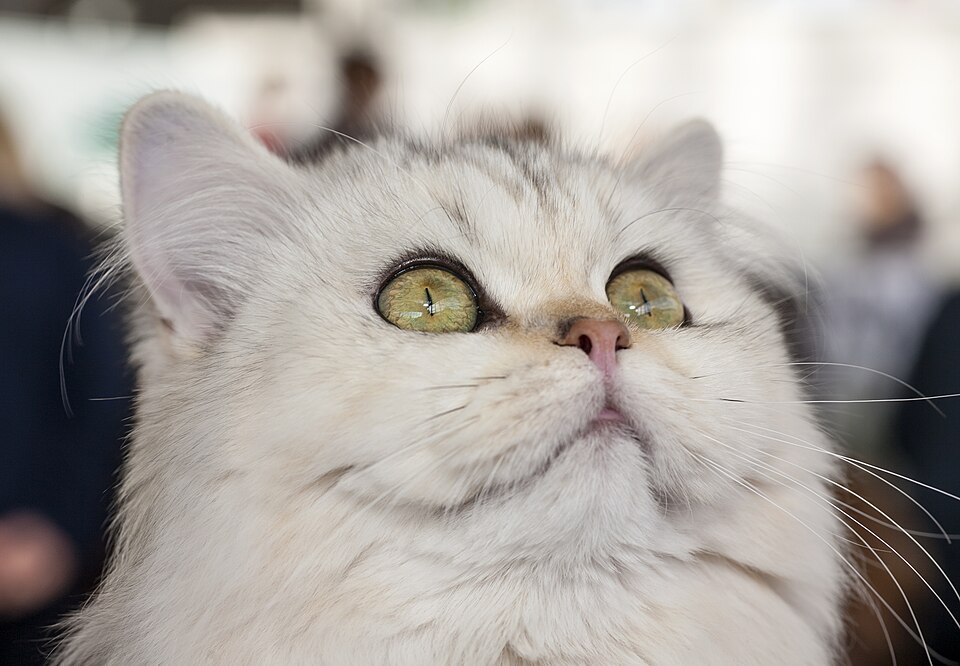

 Lifespan≈ 9.6 yearsUK 2019, British group (incl. longhairs)
 Weight9–17 lb (4.1–7.7 kg)males; females 7–12 lb (3.2–5.4 kg)
 OriginGreat Britain
 CoatSemi-long, densecomb every day
 EnergyCalmenjoys short play sessions
 MaturityUp to 5 yearsvery slow to mature
 With kidsPatientdoesn't love being carried
 Blood typeType B is commonmatters for transfusions and breeding
The British Longhair has the same round face, big eyes and sturdy build as the British Shorthair, but with a semi-long coat. For many years it was seen simply as "the longhaired kitten of a British Shorthair," and only in the last decade has it been recognized as a breed in its own right. On this page we've pulled together its temperament, coat care and health issues from breed registry information, animal welfare resources and scientific studies.
- Temperament: Like the British Shorthair, calm, patient and not very vocal; bonds with the whole family.
- Coat care: According to the GCCF, its semi-long, straight, dense coat should be combed every day, which takes noticeably more work than its shorthaired sibling.
- Watch the weight: A slow metabolism and low activity level mean a healthy weight affects lifespan.
- Health: Ask for the parents' heart screening for HCM and their DNA test results for the kidney disease PKD.
- Lifespan: In UK data from 2019, British cats (including longhairs) had a life expectancy of about 9.6 years; with good care, many live past 15.
What to know
 What is the British Longhair like?
The British Longhair's personality is no different from its shorthaired sibling's; the two breeds share the same lineage. The GCCF describes British cats as patient, tolerant, relaxed and not very talkative, forming strong bonds with their people. They like to supervise the household routine, making sure everything happens properly and on time, and they'll follow you from room to room.
As the GCCF also notes, British cats prefer to keep all four paws on the ground and may not want to be carried around as adults. They're perfectly happy, though, to lie next to you on the sofa or stretch out on your laptop while you work. Kittens are playful and comical; with age they settle into a lazier pace.
They usually get along with dogs and other pets. Because they tend to be trusting, they shouldn't be left outdoors unsupervised; the GCCF says the breed can live happily as an indoor-only cat, as long as it gets mental stimulation and play.
Every cat is an individual. Breed traits describe general tendencies; how a cat was raised, how much contact it had with people as a kitten and its health shape its personality as much as its breed.
 Who is it a good fit for?
The British Longhair suits calm households with people who can set aside a few minutes every day for grooming. If combing sounds like a chore, the shorthaired British Shorthair may be an easier choice.
| Situation | Good fit? |
|---|---|
| Apartment | Excellent; adapts well to indoor life |
| Family with kids | Good; patient, but may not like being carried |
| Other cats and dogs | Usually gets along; introduce them slowly |
| Long hours alone | Copes better than many cats, but still needs play and attention |
| First-time cat owners | Good, as long as you commit to daily combing |
Teach children not to pick the cat up against its will and to comb it gently. Tugging at matted fur hurts the cat and can make it dislike grooming time.
Where does it come from?
The British Longhair's story starts with the British Shorthair. According to the GCCF, British cats became very scarce during the two World Wars. After World War II, breeders outcrossed to breeds such as the Russian Blue, Burmese and Chartreux to keep the lines going, and to Persians to restore type and boning. That's how the longhair gene from the Persian entered the British breed.
The gene still shows up in some British litters today: two shorthaired British cats can occasionally produce a longhaired kitten. The GCCF notes that a DNA test can now show whether a cat carries the longhair gene.
For many years these kittens were sold as pets or kept for breeding under the name "British Shorthair variants," but they couldn't be shown. Enthusiasts who wanted to develop the longhairs as a breed formed a club, and the GCCF officially recognized the name "British Longhair" on February 15, 2017, granting it championship status in November 2021. FIFe also recognizes the British Longhair and treats it as a "sister breed" of the British Shorthair, meaning the two can be bred together without special permission.
 Appearance and colors
The British Longhair has its shorthaired sibling's body: a broad chest, short strong legs, round paws and a tail that is thick at the base with a rounded tip. The head is round with full cheeks, the ears are small and the eyes are large and round. Males are noticeably bigger than females, and mature males develop fuller jowls.
- Weight: According to the GCCF, males weigh 9 to 17 lb (4.1–7.7 kg) and females 7 to 12 lb (3.2–5.4 kg).
- Coat: According to the GCCF, semi-long, straight and dense.
- Colors: The GCCF's British groups include solid colors (white, black, blue, lilac, chocolate, red, cream and others; blue is the best known), colorpointed like the Siamese, tipped, tortoiseshell and bicolor, and four different tabby patterns.
- Maturity: According to the GCCF, British cats can take up to five years to reach full physical maturity, so it's normal for a young cat to look lean in its first years.
Daily care
Grooming is the biggest difference between this breed and its shorthaired sibling. The GCCF says combing during shedding seasons is enough for the British Shorthair but recommends daily grooming for the longhair. The dense undercoat mats easily, especially in the armpits, behind the ears and on the inside of the back legs.
- Claws: A scratching post is a must; long claws can be trimmed the way your vet shows you.
- Eyes and ears: Check them weekly; show your vet any redness, odor or discharge.
- Play: A few short hunting games a day keep both its weight and its mood in good shape.
For ways to help your cat enjoy grooming, see our article on cat grooming.
 Diet and weight
The GCCF stresses that British cats have a slow metabolism and that care is needed so healthy muscle doesn't turn into excess fat. Because they mature slowly, it recommends feeding kitten food for at least the first year. In the 2024 study by Teng and colleagues, cats whose weight was further from the median for their breed and sex had shorter lives.
- Measure food; decide the daily amount with your vet based on your cat's ideal weight.
- A long coat can hide weight gain, so track it on the scale once a month rather than by eye.
- You should be able to feel the ribs under a thin layer of fat.
- Count treats as part of the daily food.
- Always have fresh water available; some cats drink more from running water.
 Health issues to know about
Because the British Longhair shares its gene pool with the British Shorthair, the two breeds largely share the same health concerns. The information below is for awareness only; ask your vet about diagnosis and treatment.
Hypertrophic cardiomyopathy (HCM)
HCM is the most common heart disease in cats: the wall of the heart muscle becomes abnormally thick. According to UFAW, British cats are predisposed to it and the condition is thought to be inherited. Many cats show no signs for a long time; the disease can be detected with an ultrasound of the heart (echocardiography). The GCCF notes that there is no DNA test yet for HCM in British cats and that responsible breeders remove affected cats from breeding, so asking about the parents' heart screening results is important.
Polycystic kidney disease (PKD)
An inherited disease in which fluid-filled cysts in the kidneys grow over time. According to the Cornell Feline Health Center, it is most common in Persians and occasionally seen in other breeds such as the British Shorthair. That matters here because Persian ancestry is part of the British line; the GCCF says widespread DNA testing has brought the disease under control in British cats. Ask the breeder for the parents' PKD test results.
Blood type B
According to studies compiled by PawPeds, 40 to 59 percent of British cats have type B blood, far more than in most breeds. This matters for choosing the right donor if a transfusion is ever needed, and for breeding. It's a good idea to ask your vet about your cat's blood type and keep it on record.
Rarer inherited conditions
- Hemophilia B: According to UFAW, a rare clotting disorder reported in British Shorthairs. Signs usually appear before 6 months of age; prolonged bleeding after an injury or surgery and bruising under the skin can occur.
- ALPS: An inherited disease seen in related British Shorthair kittens that disrupts the immune system and causes kittens to die. Its genetic cause was found in 2017, paving the way for a test to detect carriers. Since March 1, 2025, the GCCF has required a negative ALPS test for British Shorthairs imported from another registry to be registered for breeding.
- Fast or open-mouth breathing
- Sudden weakness, limping or pain in the hind legs
- Drinking and peeing a lot, or weight loss
- Bleeding that won't stop, or unexplained bruising
- Loss of appetite and hiding (cats hide pain)
How long does it live?
In a 2024 study using the Royal Veterinary College's VetCompass data, the British Longhair wasn't analyzed separately but as part of a "British cats" group that included British Blue and British Longhair. For 194 British cats that died in the UK in 2019, life expectancy at birth was 9.58 years (confidence interval 8.73–10.43); the longest-lived cat in that group was over 22. In the same study, mixed-breed cats had a life expectancy of 11.89 years.
The GCCF, on the other hand, describes the British Shorthair as a long-lived cat with a life expectancy of 14 to 20 years. The gap between the two figures comes from how they're measured: life expectancy at birth includes cats lost at a young age, which pulls the average down. Many well-cared-for British cats live past 15. The same study shows that neutered cats and cats at their ideal weight live longer.
 Before you get one
- Consider a shelter: Purebred cats end up in shelters and rescues too. If you're set on a breed, follow breed groups and adoption listings.
- If you buy from a breeder: Ask to meet the parents, and ask for heart screening (echocardiography) results, PKD DNA test results, blood types and vaccination records.
- Watch for folded-ear ancestry: Under FIFe rules, kittens descended from a folded-ear (Scottish Fold) cat can't be registered as British, even if their ears are straight. Ask for the pedigree and whether there's a Scottish Fold in the line.
- Red flags: Steer clear of sellers who won't show you the mother, always have kittens available, can't provide paperwork or rush you.
- Registration: Rules vary by country; many places require or recommend microchipping. In Türkiye, owned cats must be microchipped and registered in the PETVET system.
- The first days: Our guide to the first week with a new cat walks you through it step by step.
Frequently asked questions
What's the difference between the British Longhair and the British Shorthair?
Only the coat. The two breeds share the same lineage, body type and temperament. The longhair gene entered the British line through Persian outcrosses after World War II, and FIFe treats the two as sister breeds.
Is the British Longhair the same as a Persian?
No. The British Longhair is bred to the same standard as the British Shorthair; in the CFA's British standard, the nose is medium and broad, not flat like a Persian's. Its coat is also semi-long rather than as long and full as a Persian's.
How often does it need combing?
The GCCF recommends daily grooming. Short, regular sessions prevent mats; once a mat forms, it can be hard to remove and painful for the cat.
Does it shed, and is it good for people with allergies?
It sheds, and its dense undercoat comes out heavily during seasonal changes. Allergies aren't caused by the hair itself but by proteins in a cat's saliva, skin and urine; according to a 2024 review, there's no scientific evidence that any cat breed is hypoallergenic.
How big does it get?
According to the GCCF, males weigh 9 to 17 lb (4.1–7.7 kg) and females 7 to 12 lb (3.2–5.4 kg). It can take up to five years to reach full maturity. Work out your own cat's ideal weight with your vet.
Sources
- GCCF (Governing Council of the Cat Fancy) · British Shorthair ve British Longhair ırk sayfası
- FIFe (Fédération Internationale Féline) · Breeding and Registration Rules, 2026 baskısı
- Teng ve ark. · Life tables of annual life expectancy and risk factors for mortality in cats in the UK, Journal of Feline Medicine and Surgery (2024)
- UFAW Genetic Welfare Problems · British Shorthair: Hipertrofik kardiyomiyopati
- UFAW Genetic Welfare Problems · British Shorthair: Hemofili B
- Cornell Feline Health Center · Polycystic kidney disease
- PawPeds · Blood groups in the cat
- Aberdein ve ark. · A FAS-ligand variant associated with autoimmune lymphoproliferative syndrome in cats, Mammalian Genome (2017)
- CFA (Cat Fanciers' Association) · British Shorthair ırk standardı
- Allergologie Select (2024) · Hypoallergenic animals: A promise of hope for allergic patients?
- Resmî Gazete · Kedi, Köpek ve Gelinciklerin Kimliklendirilmesi ve Kayıt Altına Alınmasına Dair Yönetmelik (26 Şubat 2018)
By Tüylüm · Last checked: November 3, 2026. Compiled from the sources above and written in our own words. Spotted a mistake? Write to [email protected] and we'll fix it right away. Photo from Wikimedia Commons, used under the license shown below it.