 Tüylüm
Burmilla
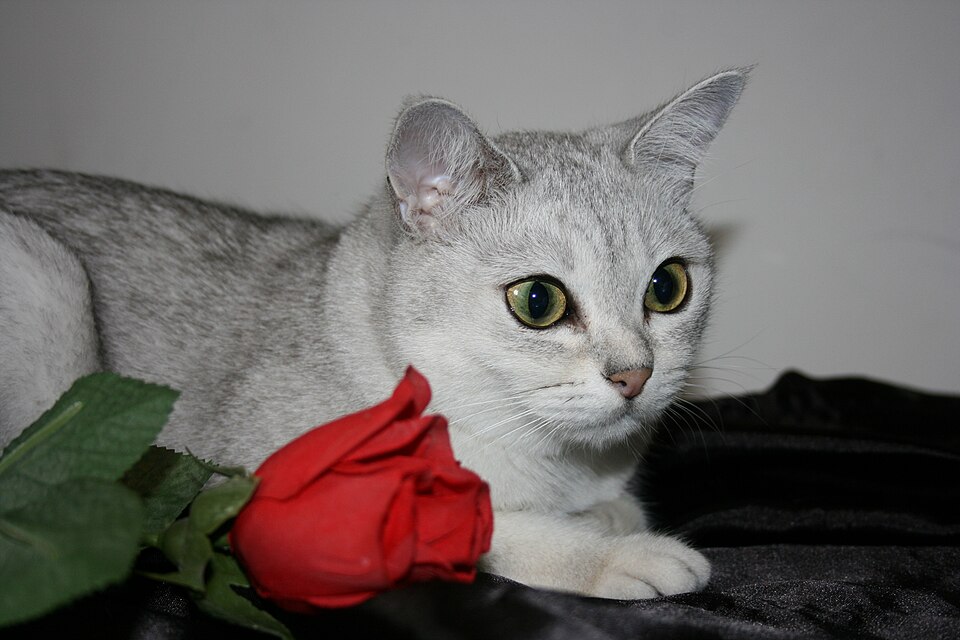
A British breed known for a silver coat shimmering with tipped color, green eyes and dark "make-up" lines around the eyes, which began as an accident in the early 1980s. Friendly and playful, but recognition varies between registries and the gene pool is small.

 Lifespan16–18 yearsGCCF, for the Asian group; not research data
 Weight8–15 lb (3.5–7 kg)GCCF, Asian group: females 3.5–5.5, males 5–7 kg
 OriginUKfrom an unplanned mating in 1981
 CoatShort, silky, tippedweekly combing is enough
 EnergyModerateplayful with a mellow side (CFA)
 SheddingLow to moderateno breed-specific measurement found
 With childrenUsually goodCFA and GCCF: compatible
 Other petsUsually goodcats and dogs; can be pushy about rank
The Burmilla is one of the few breeds that began by accident rather than by plan. A bright silver base, each hair dipped in a shade of color at the tip, and dark lines around the eyes as if drawn with a pencil: that is the breed's signature. This page covers where the breed comes from, its temperament, care, and what is known (and not known) about its health.
- Personality: According to the CFA, friendly, playful and affectionate with a mellow side; usually gets along with children, cats and dogs.
- Looks: Silvery white base, tipped silky coat, green eyes; both shorthaired and semi-longhaired varieties exist.
- Origin: Born in England in 1981 from an unplanned mating between a Chinchilla Persian male and a Burmese female.
- Recognition: The GCCF counts it within its Asian group; the CFA has shown it in championship since 2014; FIFe does not recognize it as a separate breed.
- Health: For the Asian group, the GCCF names low blood potassium (hypokalaemia) as the main health concern; the gene pool is small, so breeder choice matters.
- Registration: In Türkiye, microchipping and PETVET registration are mandatory for cats.
What to know
 What is the Burmilla like?
The CFA describes the Burmilla as friendly, playful and affectionate, with a somewhat mellow streak. It is an intelligent breed that needs toys, high places to climb and attention. According to the CFA, it tolerates being alone during the working day, gets along with dogs, other cats and children, and is not especially vocal or demanding.
The GCCF page on the Asian group paints a slightly different picture: Asian cats are lively, affectionate, sociable and talkative; they generally get along with other cats but can be headstrong about who ranks where. The two sources differ a little, with one saying "not vocal" and the other "talkative." One reason may be that the GCCF describes the Burmilla together with the Bombay, Asian Tabby, Asian Smoke and Tiffanie, so not every sentence is written for the Burmilla alone. The most reliable approach is to meet your kitten in person and look at the temperament of its mother and father.
Every cat is an individual. Breed traits describe general tendencies; meeting people and household sounds as a kitten shapes character at least as much as breed does.
 Who is it a good fit for?
It suits households that can play with a cat, offer climbing spaces, and want a mellow but curious companion. If you are not looking for a very high-energy cat and do not enjoy a noisy home, it can be a balanced choice.
| Situation | A good fit? |
|---|---|
| Apartment | Yes, but climbing spaces and play are essential |
| Family with children | Usually compatible (CFA, GCCF); introduce them slowly |
| Other cats and dogs | Usually compatible; may be headstrong about rank with other cats |
| Alone during the day | The CFA says it can manage working hours; still provide play and attention |
| First-time cat owners | Can be a fit; choose the breeder carefully |
Where does it come from?
The story begins in England in 1981. According to the GCCF, two cats belonging to Baroness Miranda von Kirchberg, a Chinchilla Persian male named Sanquist and a Lilac Burmese female named Faberge, mated unexpectedly. The four female kittens that were born looked clearly different from Burmese cats; the CFA describes them as black shaded silver shorthairs. The Baroness decided to develop this look into a new breed.
Recognition has gone like this:
- GCCF: Therese Clarke founded the Burmilla Cat Club in 1984. The GCCF gave the Burmilla preliminary championship status in 1990, and by 2003 all five varieties of the Asian group had full championship status.
- CFA: It accepted both the longhaired and shorthaired varieties for registration in 2011 and granted championship status in 2014. To widen the gene pool, the CFA allows breeding to certain Persians, Exotics and European Burmese until December 31, 2028.
- FIFe: It does not recognize the Burmilla as a separate breed. A note in FIFe's rules says the group that includes Asian Tabby, Burmilla and Bombay is recognized only by the GCCF.
 Appearance and colors
According to the CFA, the Burmilla is medium-sized with a muscular, elegant build. The head looks sculpted, there is a slight dip in the nose profile, and the face is a balanced wedge. The eyes are large and green; dark "make-up" lines appear around the nose, lips and eyes.
- Coat: The coat is silky, pale at the root and tipped with a darker color, which gives it a shimmering look. The shorthaired coat is short, smooth and slightly lifted; the semi-longhaired coat is fine and medium in length, with no woolly undercoat.
- Base and pattern: The base color is silvery white. In the "chinchilla" pattern about one eighth of each hair is colored; in the "shaded" pattern about one third is. Recognized colors include black, seal sepia, blue, chocolate, lilac, cream and red, plus tortoiseshell combinations; golden versions also exist.
- Size: According to the CFA, mature males often weigh 10 lb (about 4.5 kg) or more and females are usually smaller. For the Asian group, the GCCF gives about 11–15 lb (5–7 kg) for males and about 8–12 lb (3.5–5.5 kg) for females.
Daily care
Coat care is simple: the CFA suggests combing at least weekly with a stainless-steel comb or a small slicker brush, for either coat length. Baths are occasional, not routine. Nails, ears and teeth need regular care; do these the way your veterinarian shows you. Turning combing into a game while the cat is young makes it easier; for more, see cat grooming.
- Mind and movement: This is an intelligent breed; puzzle feeders, a climbing tree and daily hunting-style play help.
- Spay and neuter: The GCCF notes that Asian cats mature sexually early and suggests talking with your vet about early spaying or neutering.
- A new cat: If you plan to add a second cat, the step-by-step guide to introducing two cats will help.
 Diet and weight
We found no breed-specific diet advice for the Burmilla. A balanced, complete cat food suited to age and lifestyle is enough. Measure the food, subtract treats from the daily amount, set the daily amount with your veterinarian, and weigh your cat monthly. A 2024 UK study found that a non-ideal body weight was linked to a shorter lifespan, so tracking weight helps both health and longevity.
 Health issues to know about
The following is for information only; ask your veterinarian for diagnosis and treatment.
The GCCF points to hypokalaemia, meaning low blood potassium, as the main health concern in the Asian group. A reliable DNA test exists, and the GCCF has required it for Asian cats used for breeding since January 1, 2018. The GCCF also says polycystic kidney disease (PKD) and progressive retinal atrophy (PRA), which occur in ancestral breeds, have not been found in Asian cats so far.
The CFA says Burmillas are generally healthy but can inherit problems from their parent breeds. Because the gene pool is small, breeders add new, unrelated lines and cats from abroad. So ask the breeder:
- Whether the breeding cats were DNA tested, for example for hypokalaemia.
- How diverse the pedigree is, and whether there is close inbreeding.
- Whether the kitten has had a veterinary check.
As with any cat, regular veterinary checks of the heart, kidneys and teeth are a good starting point.
- Sudden weakness in the legs, a drooping neck or wobbly walking
- Fast or open-mouth breathing
- Drinking or urinating a lot, loss of appetite or weight loss
- Hiding and reacting when touched (cats hide pain)
How long does it live?
We found no breed-specific lifespan study for the Burmilla. The GCCF gives an average lifespan of 16–18 years for the Asian group; that is a registry's general range, not research data. The 2024 UK study (VetCompass, 12 breeds) did not include the Burmilla; in it, the Burmese had a life expectancy at birth of 14.42 years and crossbred cats 11.89 years. The Burmese is among the Burmilla's ancestors, but that does not let us draw a conclusion about the Burmilla's lifespan. Lifespan is most affected by an ideal weight, regular veterinary checks, spaying or neutering, and a safe home. Ask your veterinarian which checks they recommend as your cat ages.
 Before you get one
- Think about shelters too: Silver-coated, green-eyed shorthaired cats also turn up in shelters; they may not look like a Burmilla, but a loving companion could be waiting there.
- If you buy from a breeder: Ask to see the mother and father; ask about DNA test results, the pedigree and vaccination records. Stay away from sellers who label every silver shorthaired cat a "Burmilla." The shaded, pencil-lined look depends on a detailed standard.
- Red flags: Sellers who will not show the mother, who always have kittens for sale, who offer no paperwork, or who rush you to "buy now."
- Legal registration: In Türkiye, microchipping and PETVET registration are mandatory for cats. Details are in our article on PETVET registration and microchips.
- The first days: International Cat Care recommends starting a new cat in a single room, leaving a place to hide, and waiting for the cat to come out on its own rather than forcing it. Our first week with a new cat article walks through it step by step.
Frequently asked questions
Is the Burmilla the same as the Burmese?
No. The Burmilla was developed from the kittens of a Burmese female and a Chinchilla Persian male. The Burmese has its own page: Burmese.
What colors does the Burmilla come in?
According to the CFA the base is silvery white; the color on top can be black, seal sepia, blue, chocolate, lilac, cream, red or tortoiseshell mixes. The pattern is "chinchilla" (lightly tipped) or "shaded" (more color).
Is there a longhaired Burmilla?
Yes. The CFA recognizes both shorthaired and longhaired varieties; the longhaired coat is fine and medium in length with no woolly undercoat. The GCCF also mentions the semi-longhaired Tiffanie within the group.
Can it be left alone at home?
The CFA says it tolerates being alone during working hours. Even so, play, attention and an enriched environment are essential.
Does it get along with children and other pets?
According to the CFA and GCCF, usually yes. Keep introductions supervised and slow.
How much does it weigh?
For the Asian group the GCCF gives about 11–15 lb (5–7 kg) for males and about 8–12 lb (3.5–5.5 kg) for females; the CFA says mature males often weigh 10 lb or more. Work out your own cat's ideal weight with your veterinarian.
Sources
- GCCF (Governing Council of the Cat Fancy) · Asian (Asian group, including the Burmilla)
- CFA (Cat Fanciers' Association) · Burmilla
- FIFe (Fédération Internationale Féline) · Breeding and Registration Rules, 2026 edition (ASH non entry)
- Teng et al. (2024) · Life tables of annual life expectancy and risk factors for mortality in cats in the UK, Journal of Feline Medicine and Surgery
- International Cat Care · Helping your new cat or kitten settle in
- Resmî Gazete (Official Gazette of Türkiye) · Regulation on Identification and Registration of Cats, Dogs and Ferrets (February 26, 2018)
By Tüylüm · Last checked: November 10, 2026. Compiled from the sources above and written in our own words. Spotted a mistake? Write to [email protected] and we'll fix it right away. Photo from Wikimedia Commons, used under the license shown below it.