 Tüylüm
Siamese
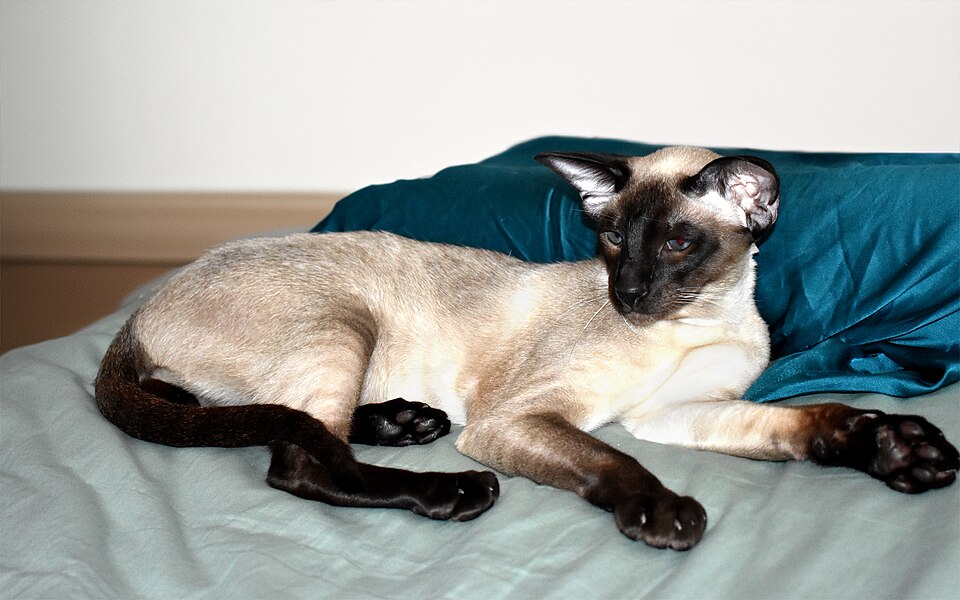
Instantly recognizable by its pale body, dark ears, face, paws and tail, and sapphire-blue eyes, the Siamese is very talkative and deeply attached to its people. It doesn't like being alone; ask for the parents' DNA test for the inherited eye disease PRA.

 Lifespan≈ 11.7 yearslife expectancy, UK 2019 data; some live past 21
 Weight8–15 lb (3.6–6.8 kg)GCCF; females are lighter
 OriginThailand
 CoatShort, fine, glossyyou can groom it with damp hands
 EnergyHighneeds play and attention
 VoiceVery talkativetells you what it wants
 With kidsGoodintroduce slowly
 Home aloneStrugglestwo Siamese may be happier together
With its pale body, dark ears, face, paws and tail, and bright blue eyes, the Siamese is one of the most recognizable cats in the world. It isn't shy about using its voice, follows you from room to room and really dislikes being ignored. On this page we've pulled together its temperament, why its color darkens on the cooler parts of the body, its care needs and the health issues to know about, drawing on breed registry standards, veterinary resources and scientific studies.
- Temperament: Very talkative, smart and closely bonded to its people; it wants to be near you, or even on you.
- Being alone: Spending whole days alone is hard for it; it may be happier in a busy home or with a second cat.
- The color secret: The dark ears, face, paws and tail come from a temperature-sensitive color gene; kittens are born almost white.
- Health: There's a DNA test for the inherited eye disease PRA (rdAc); liver amyloidosis and asthma-like bronchial disease are also reported.
- Lifespan: In UK data from 2019, life expectancy was about 11.7 years; some cats live past 21.
What to know
 What is the Siamese like?
When it comes to communicating with people, the Siamese may be the most determined breed of all. According to the CFA's breed profile, it makes its wishes clear through body language or a wide range of vocalizations, and it is often considered one of the most intelligent cats. Breakfast, a closed door or an evening without attention will all get a loud "conversation."
A Siamese wants closeness. The CFA says Siamese gravitate to the warmest spot in the house, which is often your lap, but that their need for closeness goes far deeper than seeking heat: a Siamese wants to be by your side, ideally in your lap, and part of everything you do. Expect loud protests when you need some space. The GCCF also notes that Siamese are fiercely loyal to their chosen person and may not tolerate rivals for their affection.
Because it is smart and curious, it needs stimulation; according to the GCCF, it can even learn to fetch toys. A bored Siamese will find its own entertainment, and it won't always be the kind you'd choose.
Every cat is an individual. Breed traits describe general tendencies; how a cat was raised, how much contact it had with people as a kitten and its health shape its personality as much as its breed.
 Who is it a good fit for?
The Siamese suits people who spend a lot of time at home, enjoy talking and playing with their cat, and don't expect a quiet house.
| Situation | Good fit? |
|---|---|
| Apartment | Good, though the neighbors may hear it |
| Family with kids | Good; PetMD says it gets along with children and dogs, but introduce slowly |
| Other cats and dogs | Usually good; the CFA says its best companion is a person or another Siamese |
| Long hours alone | Hard; the GCCF says it may not suit people who are out all day |
| First-time cat owners | Possible, if you've thought about the attention and noise it brings |
If you're out all day, the GCCF's suggestion is worth considering: two Siamese feel less lonely together. If you're thinking about adding a cat, our guide to introducing two cats walks you through it step by step.
Where does it come from?
The Siamese takes its name from Siam, the old name of Thailand; the country was renamed in 1939. Cats with this pattern are described in "Tamra Maew," a book of cat poems written during Thailand's Ayutthaya period (1350–1767). According to the GCCF, the breed is linked to Thailand's old "Wichien Maat" cat.
The first Siamese arrived in Britain in 1884, and the GCCF says most of today's Siamese descend from about eleven early imports. According to the CFA, the first Siamese in the United States arrived in 1878 as a gift from the American consul in Bangkok to President Rutherford B. Hayes. When the CFA was founded in 1906, the Siamese was among the first breeds it recognized. At first only the dark brown "seal point" existed; blue point was recognized in 1934, chocolate in 1952 and lilac in 1955.
According to the CFA, when demand soared in the 1950s, cats with rounder heads, heavier bones and paler eyes were also bred, while the long, slender Siamese of the show standard never changed. That's why the word "Siamese" today can bring to mind both very fine-boned show cats and rounder-faced cats.
 Appearance and colors
Under the CFA standard, the Siamese is a medium-sized, slender, long-lined and muscular cat. The head is a long wedge with a flat profile, and the ears are very large and broad at the base. The eyes are almond-shaped and bright blue. The neck, body, legs and tail are all long, while the coat is short and fine.
- Weight: According to the GCCF, males weigh 10–15 pounds (about 4.5–6.8 kg) and females 8–12 pounds (about 3.6–5.4 kg).
- Point colors: Seal (dark brown), blue, chocolate and lilac are the four classic colors. The GCCF now recognizes 32 colors and patterns, including red, cream, tabby and tortoiseshell points.
- Eyes: Always blue. According to the GCCF, crossed eyes and kinked tails were present in early Siamese and are now considered serious faults in the show ring.
Why are the ears, face, paws and tail darker?
The Siamese color comes from a temperature-sensitive gene change. As Langford Vets explains, the Siamese form of the coat-color enzyme, called "cs," depends on temperature, and a cat needs two copies of this gene to show the pointed pattern. According to a 2026 genetics review, the enzyme stops working at normal body temperature, which keeps the body pale. On cooler areas like the ears, face, paws and tail, the enzyme works and the coat darkens.
This has a few consequences:
- Kittens are born almost white. Everything is evenly warm in the womb, so no color forms; according to the GCCF, the points start to appear within the first week or two.
- Bodies can be darker in cold climates. The GCCF notes that Siamese living in colder places tend to have darker bodies than those in warm climates.
- The blue eyes come from the same gene. According to the review, the pointed pattern always comes with blue eyes. An LSU review also notes that blue eyes caused by the Siamese gene aren't linked to deafness the way they are in white cats.
This pattern isn't limited to purebred Siamese: any cat carrying two copies of the cs gene can be pointed.
Daily care
Its short, fine coat makes grooming very easy. The CFA says you don't even need special tools: just dampen your hands and stroke the coat until your hands are dry, or use a rubber brush if you prefer. It sheds, but lightly, and baths usually aren't needed unless it's being shown.
- Play and challenges: Daily hunting games, food puzzles and teaching simple tricks are good for its busy mind. Our guide to playing with an indoor cat has ideas.
- A warm spot: Siamese love warmth; a sunny window perch or a soft bed will quickly become a favorite place.
- Height: A cat tree and shelves make the home more interesting. See our article on why cats love high places.
- Chewing non-food items: The GCCF notes that some Siamese lines eat non-food items like wool and plastic (pica), and that the cause isn't understood. Don't leave string, rubber bands or plastic bags lying around, and talk to your vet if you notice this habit.
- Eyes, ears and teeth: Check weekly. PetMD recommends seeing your vet if you notice signs of vision loss, such as bumping into things.
 Diet
Siamese don't need a special food; a complete, balanced cat food suited to their age is enough. Although it's a slender, active breed, cats that live indoors or have been spayed or neutered can gain weight.
- Measure food; decide the daily amount with your vet based on your cat's ideal weight.
- Food puzzles keep its mind busy and turn mealtime into a game.
- Count treats as part of the daily food.
- Always have fresh water available.
 Health issues to know about
The CFA says most Siamese are healthy and that breeders are working on two main issues: an inherited retinal disease and amyloidosis. The information below is for awareness only; ask your vet about diagnosis and treatment.
Inherited retinal disease (PRA, rdAc)
PRA is a disease in which the light-sensing layer of the eye (the retina) gradually breaks down, leading to blindness. The type seen in Siamese is caused by a gene change called "rdAc." According to Langford Vets, affected cats are born with normal vision; changes usually show up on an eye exam at 1 to 2 years, and blindness often develops by 3 to 5 years, later in some cats. The disease is recessive: a cat has to inherit one copy from each parent to be affected. According to a scientific review, the frequency of this gene change in the Siamese population was about 33%, and the disease long went unnoticed by owners and veterinarians alike.
The good news: there's a DNA test. Ask the breeder for both parents' rdAc results; breeding two carriers can produce affected kittens.
Amyloidosis (liver)
According to UFAW, in Siamese cats an abnormal protein called amyloid can build up in the liver and impair its function; the disease usually starts between 1 and 5 years of age, and how fast it progresses varies from cat to cat. Signs include lethargy, poor appetite, weight loss, drinking and urinating a lot, and pale or yellowish gums. Amyloid deposits can cause the liver to rupture and bleed internally, which is an emergency. There's no genetic test yet; the CFA suggests asking whether the disease has appeared in your kitten's lines.
Asthma-like chronic bronchial disease
UFAW notes that the most common lower-airway disease in cats is especially common in Siamese, and the GCCF also says Siamese are more prone to chronic coughing (asthma) than many other breeds. Signs include frequent coughing, wheezing, tiring quickly during play and difficulty breathing. Open-mouth breathing is an emergency.
Others
The GCCF reports that some lines are predisposed to lymphoma in the chest and to intestinal tumors. GM1 gangliosidosis, a very rare inherited nervous system disease that starts in kittenhood, has also been described in Siamese; UFAW says it is inherited recessively in the breed.
- Open-mouth breathing, wheezing or difficulty breathing
- Sudden weakness or pale gums (possible signs of internal bleeding)
- Yellowish gums
- Bumping into things or trouble finding the way in dim light
- Loss of appetite and hiding (cats hide pain)
How long does it live?
A 2024 study using the Royal Veterinary College's VetCompass data found a life expectancy at birth of 11.69 years (confidence interval 10.56–12.82) for 88 Siamese cats that died in the UK in 2019; the longest-lived cat in that group was over 21. In the same study, mixed-breed cats had a life expectancy of 11.89 years, so Siamese live about as long as the average cat. An earlier VetCompass study using 2009–2012 data put the median lifespan of Siamese at a little over 14 years.
The GCCF also says Siamese often live into their late teens, and some reach their twenties. Early deaths pull the average down; spaying or neutering, a healthy weight, regular vet checkups and parents with completed genetic tests are the most concrete steps toward a long life.
 Before you get one
- Consider a shelter: Pointed, blue-eyed cats turn up in shelters too; even if they aren't purebred, their need for love is the same. Follow adoption listings and rescue groups.
- If you buy from a breeder: Ask to meet the parents, and ask for PRA (rdAc) DNA results, whether amyloidosis has appeared in the lines and vaccination records.
- Red flags: Steer clear of sellers who won't show you the mother, always have kittens available, can't provide test certificates or rush you to "buy now."
- Registration: Rules vary by country; many places require or recommend microchipping. In Türkiye, owned cats must be microchipped and registered in the PETVET system.
- Think about your time: A Siamese thrives on attention. If you're rarely home, starting with two cats or choosing a more independent breed may be fairer.
Frequently asked questions
Why do Siamese cats meow so much?
Siamese love communicating with people and use their voices to say what they want. That's part of their personality, not a problem. Still, if you notice a sudden change in your cat's voice or behavior, talk to your vet.
Why are Siamese kittens born white?
The color gene is temperature-sensitive. Everything is warm in the womb, so no color forms; after birth, cooler areas like the ears, face, paws and tail start to darken over the first weeks.
Are Siamese cats deaf?
The blue eyes of a Siamese come from its color gene and aren't linked to deafness the way blue eyes in white cats are. As with any cat, if you notice a hearing problem, see your vet.
Can a Siamese be left home alone?
For short periods, yes, but spending whole days alone is hard for it. If you're out for long hours, a second cat, toys and climbing space help.
What's the difference between a Siamese and an Oriental?
The Oriental was developed from the Siamese and has the same slender build, but its color covers the whole body and its eyes are usually green. See our Oriental Shorthair page for details.
Sources
- CFA (Cat Fanciers' Association) · Siamese ırk tanıtımı ve standardı
- GCCF (Governing Council of the Cat Fancy) · Siamese
- Teng ve ark. · Life tables of annual life expectancy and risk factors for mortality in cats in the UK, Journal of Feline Medicine and Surgery (2024)
- Langford Vets (Bristol Üniversitesi) · Progressive Retinal Atrophy (rdAc) genetik testi
- Narfström K. ve ark. · The Domestic Cat as a Large Animal Model for Characterization of Disease and Therapeutic Intervention in Hereditary Retinal Blindness, Journal of Ophthalmology (2011)
- Science for Animal Welfare (UFAW) · Siamese: Amiloidoz
- Science for Animal Welfare (UFAW) · Siamese: Kronik bronş hastalığı
- Science for Animal Welfare (UFAW) · Siamese: GM1 gangliozidoz
- Langford Vets (Bristol Üniversitesi) · Siamese colourpoint genetik testi
- Górska A. ve ark. · Colour Variants in Siberian Cats: A Comprehensive Review of Phenotype, Genetics, and Breed Registry Standards, Genes (2026)
- LSU School of Veterinary Medicine (G. M. Strain) · Cat Breeds With Congenital Deafness
- PetMD (veteriner onaylı) · Siamese
- Resmî Gazete · Kedi, Köpek ve Gelinciklerin Kimliklendirilmesi ve Kayıt Altına Alınmasına Dair Yönetmelik (26 Şubat 2018)
By Tüylüm · Last checked: November 3, 2026. Compiled from the sources above and written in our own words. Spotted a mistake? Write to [email protected] and we'll fix it right away. Photo from Wikimedia Commons, used under the license shown below it.