 Tüylüm
Munchkin
Its short legs come from a form of dwarfism (chondrodysplasia). TICA recognizes the breed; the GCCF and FIFe don't, citing welfare, and Science for Animal Welfare and International Cat Care advise against breeding for it. If you have a Munchkin, watch its joints and weight closely.

 LifespanNo breed dataPetMD says 12–15 years; not measured
 Weight≈ 6–9 lb (2.7–4 kg)per PetMD
 Legs3 in (7–8 cm) shortper PetMD, than a typical cat
 OriginUSA (1983)from a single short-legged female
 CoatShort or longtwo coat types
 EnergyPlayfullimited jumping ability
 CareExtra attentionjoints, weight and home setup
 Breed recognitionDisputedTICA yes; GCCF and FIFe no
The Munchkin is a cat breed with noticeably short legs on all four limbs. This shortness comes from a form of dwarfism called chondrodysplasia, which affects bone and cartilage development; in other words, the breed's defining feature is also an inherited developmental disorder. That's why the breed is controversial: some registries recognize it, while others refuse to on animal welfare grounds. We put this page together not to promote the breed, but to give honest, sourced information to readers who have a Munchkin or are thinking about getting one.
- Why the short legs? A change in a gene called UGDH keeps the leg bones from growing normally; this is a form of dwarfism called chondrodysplasia.
- Where organizations stand: TICA recognizes the breed; the GCCF and FIFe don't, citing welfare concerns. Science for Animal Welfare (formerly UFAW) and International Cat Care advise against breeding for this trait.
- What we know and don't know: Jumping ability is limited, and the risk of joint inflammation (osteoarthritis) is thought to be higher, but there's little scientific data on pain and welfare.
- What owners can do: Ramps and steps, a low-entry litter box, an ideal weight and catching signs of pain early.
- Getting one: Demand drives breeding; if you want a Munchkin, consider one in a shelter or one that needs a new home.
What to know
 What is the Munchkin like?
According to PetMD's vet-reviewed profile, the Munchkin is a playful, affectionate, social and curious cat; it likes attention, can learn new things with rewards and is known for "stealing" and stashing small objects. It isn't described as particularly vocal or anxious.
There's one thing worth knowing: as Science for Animal Welfare points out, there's no evidence that the personality and coat qualities promoted by the breed's advocates are directly linked to the short legs. In other words, if you want a cute, social cat, you can find that in a cat without short legs too.
Every cat is an individual. Breed traits describe general tendencies; how a cat was raised, how much contact it had with people as a kitten and its health shape its personality as much as its breed.
 Who is it a good fit for?
If you're thinking about getting a Munchkin, we'd like you to know first that this breed is at the center of a health and welfare debate. If you already have a Munchkin, or want to adopt one that needs a home, the table below will help you set up your home for it.
| Situation | What to know |
|---|---|
| Apartment | Fine; but it needs ramps and steps to reach high spots |
| Multi-level home with tall furniture | Use caution; add in-between steps where it can't jump |
| Family with kids | Teach children never to pick it up by the back or legs |
| Time for weight checks | Important; extra weight strains the spine and joints |
| Regular vet visits | Essential; to catch changes in joints and movement early |
A short-legged cat may not be able to reach places other cats get to easily. Putting food, water, the litter box and resting spots at a height it can reach makes its life easier.
Where does it come from?
According to a 2020 genetic study, short-legged cats have been reported from time to time since 1944. Today's Munchkin breed, however, began in the US in 1983 with a female cat whose four legs were all short: she was taken in by a breeder and gave birth to a litter in which half the kittens had short legs, and she and one of her short-legged sons became the foundation of the breed.
According to the study, TICA (The International Cat Association) has recognized the Munchkin as a separate breed since 1994. The CFA, as PetMD reports, doesn't recognize it because of the debate over whether the gene poses health risks. A 2025 animal welfare paper notes that the GCCF in the UK and FIFe in Europe also don't recognize the breed, citing welfare concerns.
Appearance and colors
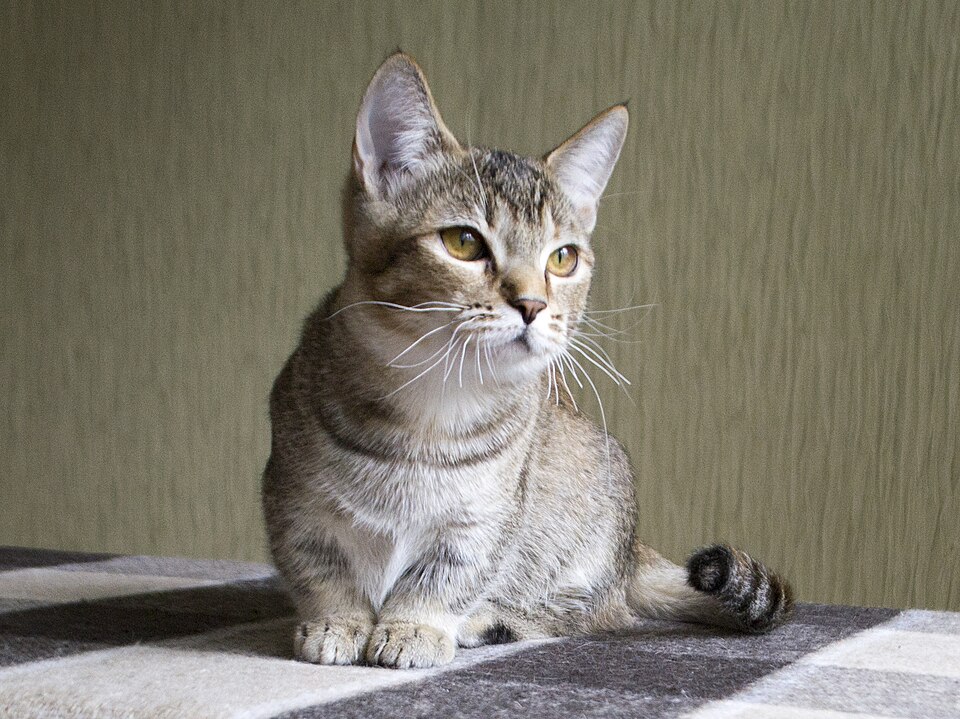
The Munchkin's most obvious feature is that all four legs are short; its body and head look like those of a typical cat. According to PetMD, its legs are about 3 inches (7–8 cm) shorter than a typical cat's, and adults usually weigh 6 to 9 pounds (about 2.7–4 kg).
- Why short? According to Science for Animal Welfare, the long bones of the legs don't grow normally. In a 2021 study, X-rays of five dwarf cats found bone deformities (bowing) in all of their legs.
- Standard and non-standard: Cats that inherit one copy of the short-leg gene have short legs ("standard"). Long-legged kittens that don't carry the gene at all ("non-standard") are born in the same litters.
- Coat: According to Science for Animal Welfare, there are both short-haired and long-haired Munchkins; in both, short legs are the breed's defining feature.
Daily care
Caring for a Munchkin means adjusting your home to it, on top of everything a typical cat needs. Science for Animal Welfare notes that these cats can have difficulty moving normally and behaving like other cats, and that their ability to jump is limited; the 2025 paper also stresses that how much short legs affect natural behaviors like jumping, climbing and grooming hasn't been researched yet.
- Ramps and steps: Add low steps or non-slip ramps so it can reach favorite spots like the sofa, bed and window ledge.
- Low-entry litter box: High-sided boxes can be hard to manage; choose a wide box with a low entry. Our litter box guide can help.
- Vertical space: Instead of a tall cat tree, choose low shelves with wide steps. Our article on why cats love high places has ideas.
- Grooming: Watch whether it struggles to reach parts of its body; if you see matting or soiling on the back or rear, help by combing regularly. This matters even more for longhairs.
- Claws: Provide both horizontal and vertical scratching surfaces; if the claws grow long, trim them the way your vet shows you.
- Safe home: Make sure there are no places it can climb up to but can't get down from; see our cat-safe home checklist.
 Diet and weight
Munchkins don't need a special food; a complete, balanced cat food that suits their age is enough. But weight control really matters in this breed: PetMD notes that extra weight can strain the spine and that weight should be watched closely, especially in cats with arthritis.
- Measure food; decide the daily amount with your vet based on your cat's ideal weight.
- Count treats as part of the daily food.
- Being able to feel the ribs lightly and seeing a waist from above are good signs.
- Weigh your cat once a month; even small gains put extra load on a short-legged cat's joints.
- Always have fresh water available, and keep the bowl at a height it can reach.
 Health issues to know about
The information below is for awareness only; ask your vet about diagnosis and treatment. First, an honest note: there are no large, population-level studies yet on Munchkin health and welfare. Below we lay out both the risks and the unknowns, with sources.
Chondrodysplasia and joints
A 2020 genetic study showed that a structural change in the UGDH gene causes the short legs. According to Science for Animal Welfare, joints that carry abnormal loads are prone to osteoarthritis, and because osteoarthritis is already common in older cats, Munchkins are thought to be at particular risk. The 2025 paper notes that dwarf cats don't appear to share the high risk of spinal disc disease seen in dogs, but that there's no evidence yet on whether the bowing of the leg bones causes pain or joint disease. The GCCF, for its part, cites reported health problems, a risk of suffering as the cats age and possible heart problems as its reasons for not recognizing the breed.
Chest and spine
PetMD lists congenital problems in Munchkins such as a sunken breastbone (pectus excavatum) and an excessive inward curve of the lower spine (lordosis). The 2025 paper, however, notes that the scientific evidence on this is limited to a single case report of a Munchkin cross (a Minuet) with breathing problems caused by a sunken breastbone.
Two copies and kitten loss
The short-leg gene is lethal in two copies. According to Science for Animal Welfare and the 2020 study, kittens that inherit two copies die before birth, very early in pregnancy, and smaller litter sizes have been reported in short-legged Munchkins. On welfare grounds, Science for Animal Welfare recommends that short-legged cats not be used for breeding.
Other reported issues
A 2025 study in Japan that followed 300 cats carrying the gene for inherited polycystic kidney disease (PKD) included 16 Munchkins, so it makes sense to ask the breeder about PKD testing. A 2024 case series described a rare inherited disease that forms stones in the kidneys and urinary tract (xanthinuria) in four related Munchkins; this involves a single family and says nothing about the breed as a whole.
- Limping, stiffness, or avoiding jumping or climbing steps
- Pain when touched, giving up grooming, or eliminating outside the litter box
- Difficulty breathing
- Straining in the litter box, blood in the urine or inability to urinate
Cats hide pain. Small changes in behavior (less play, more hiding, grumpiness) can be the first signs of joint pain; ask your vet for a movement and joint exam at the yearly checkup.
How long does it live?
We couldn't find a breed-specific life expectancy for the Munchkin calculated from a large data source like VetCompass. PetMD's vet-reviewed profile gives a range of 12 to 15 years; that's a general estimate, not measured data.
In this breed, the quality of those years is as important a question as their number. Science for Animal Welfare points out that if osteoarthritis develops, it leads to pain and loss of mobility. An ideal weight, a suitable home setup and catching signs of pain early are what most shape a Munchkin's later years.
 Before you get one
- Don't create demand: International Cat Care reminds us that people who buy cats create a demand that breeding then fills, and it recommends actively discouraging breeding for this kind of trait. If you're drawn to Munchkins, giving a home to one in a shelter or one that has lost its owner doesn't encourage new breeding.
- Consider shelter cats: The playful, affectionate temperament you're looking for is also found in plenty of mixed-breed cats waiting for adoption. See our page on mixed-breed cats.
- If you have a Munchkin: Don't use it for breeding; Science for Animal Welfare recommends that short-legged cats not be bred. Talk to your vet about when to spay or neuter.
- If you still buy from a breeder: Ask to meet the parents, and ask about PKD testing and general health records. Steer clear of sellers who won't show you the mother, always have kittens available or rush you to "buy now."
- Registration: Rules vary by country; many places require or recommend microchipping. In Türkiye, owned cats must be microchipped and registered in the PETVET system.
Frequently asked questions
Do a Munchkin's short legs cause it pain?
There's no definitive answer. Science for Animal Welfare notes that joints carrying abnormal loads may be prone to painful osteoarthritis; the 2025 paper stresses that scientific evidence on pain is lacking and needs research. If your cat avoids jumping, gets stiff or plays less, see your vet.
Can Munchkins jump?
They can, but not as high as a typical cat. Science for Animal Welfare notes that even the breed's advocates acknowledge that their jumping ability is affected. Ramps and steps at home help a lot.
Why don't some organizations recognize the Munchkin?
The GCCF and FIFe don't recognize the breed because of welfare concerns. The GCCF cites reported health problems, a risk of suffering as the cats age and possible heart problems. International Cat Care also recommends discouraging breeding for traits like chondrodystrophy (short-legged dwarfism). These are the positions of organizations; national laws are a separate matter and vary from country to country.
Are there long-legged Munchkins?
Yes. Some kittens born to two short-legged cats don't carry the gene and have normal legs; they're called "non-standard" Munchkins. In the 2020 study, these cats didn't have the short-leg gene change.
Is the Munchkin's problem the same as the Scottish Fold's?
They come from different inherited changes, but they have something in common: in both, the breed's defining look comes from an inherited change that affects bone and cartilage development. See our Scottish Fold page for details.
Sources
- Science for Animal Welfare (eski adıyla UFAW) · Genetic Welfare Problems: Munchkin, bacak gelişim bozukluğu
- International Cat Care · Feline Conformational Health and Welfare in Cat Breeding (tutum bildirisi)
- International Cat Care · Position Statement on the Breeding of Pedigree Cats
- GCCF (Governing Council of the Cat Fancy) · Unrecognised breeds (tanınmayan ırklar)
- Roberts ve ark. · A framework to refocus the conversation around the welfare of UK purebred cats, Animal Welfare (2025)
- Struck ve ark. · A structural UGDH variant associated with standard Munchkin cats, BMC Genetics (2020)
- Anderson ve ark. · Skeletal manifestations of heritable disproportionate dwarfism in cats as determined by radiography and magnetic resonance imaging, Veterinary and Comparative Orthopaedics and Traumatology (2021)
- Enomoto ve ark. · Life table analysis of feline polycystic kidney disease in Japan, Journal of Veterinary Medical Science (2025)
- Pritchard ve ark. · Xanthinuria in a familial group of Munchkin cats and an unrelated domestic shorthair cat, Journal of Feline Medicine and Surgery (2024)
- PetMD (veteriner hekim onaylı) · Munchkin
- Resmî Gazete · Kedi, Köpek ve Gelinciklerin Kimliklendirilmesi ve Kayıt Altına Alınmasına Dair Yönetmelik (26 Şubat 2018)
By Tüylüm · Last checked: November 3, 2026. Compiled from the sources above and written in our own words. Spotted a mistake? Write to [email protected] and we'll fix it right away. Photo from Wikimedia Commons, used under the license shown below it.