 Tüylüm
Ragamuffin
A big, gentle, cuddle-loving longhair developed by breeders who split from the Ragdoll line. Unlike the Ragdoll it comes in every color and pattern; for heart and kidney health, asking for the parents' test results is the most important thing.
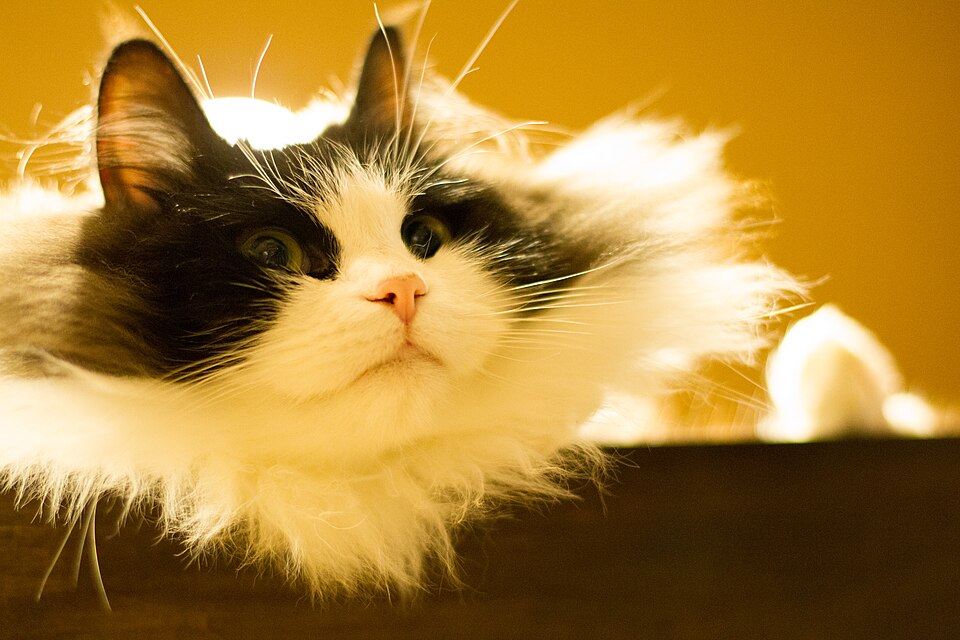

 Lifespan12–16 yearsGCCF's stated expectation; not research data
 Weightup to 15–20 lb (6.8–9 kg)CFA: males ≈ 20 lb, females ≈ 15 lb
 OriginUSAbreeders who left the Ragdoll registry
 CoatMedium-long, silkycombing 1–2 times a week
 EnergyCalmenjoys play, not frantic
 Maturity≈ 4 yearsvery slow to mature
 With kidsTolerantintroductions should be supervised
 Other petsUsually fineintroduce slowly
The Ragamuffin is a big, gentle, cuddle-loving longhaired cat. It is related to the Ragdoll but is a separate breed: it carries the Ragdoll's calm temperament and is far freer in coat color. On this page we cover where the breed came from, how to care for it and what to know about its health, with an honest note on the health topics where sources are thin.
- Temperament: Docile, affectionate, attached to its people; loves being held.
- Size: Heavily built; according to the CFA males can reach about 20 pounds (9 kg) and females 15 pounds (6.8 kg), and may take up to 4 years to reach full size.
- Coat: Silky and resistant to matting; combing once or twice a week is usually enough.
- Health: The CFA says the breed has no breed-specific genetic problems, but heart disease (HCM) and kidney disease (PKD) can occur in any cat; ask for the parents' tests.
- Registration: In Türkiye, microchipping and PETVET registration are mandatory for cats.
What to know
 What is the Ragamuffin like?
According to the CFA, the Ragamuffin is a sweet, docile, affectionate cat that is eager to please. It's known as a lap cat that can curl up with a favorite person for hours. Many learn to wear a harness and walk on a leash, and some learn to fetch. The GCCF also describes the breed as very docile and even-tempered, with a strong desire for human company, intelligent, and prone to going limp when held.
It isn't very vocal. It is generally tolerant of children, other pets and people living alone; the CFA and the GCCF both advise slow, supervised introductions so the Ragamuffin isn't dominated by another animal.
Every cat is an individual. Breed traits describe general tendencies; the home it grows up in and its early contact with people shape its character at least as much as breed does.
 Who is it a good fit for?
It suits families who want a lot of time with their cat, who like to hold it, and who are looking for a calm house cat.
| Situation | A good fit? |
|---|---|
| Apartment | Yes; calm and suited to indoor life |
| Family with children | Yes; tolerant, but kids must be taught to handle it gently |
| Other cats and dogs | Usually fine; take care when introducing it to dominant animals |
| Long hours alone | It's people-loving; long stretches alone may not suit it |
| First-time cat owners | Yes, but ask about health testing |
Because it is a large, heavy cat, support its whole body when you pick it up, and don't let children carry it.
Where does it come from?
The Ragamuffin's story is bound up with the Ragdoll's. According to the GCCF, Ann Baker, who developed the Ragdoll, trademarked the name and from 1971 ran a closed registry called the IRCA. In 1994 a group of breeders left that system, and since they couldn't use the Ragdoll name they called their new breed "RagaMuffin." To improve health and temperament they used limited outcrossing to Domestic Longhairs and later Persians. The CFA tells a similar story: in the early 1990s breeders who left Baker's registry brought in carefully chosen domestic longhairs, and kept the Ragdoll's large frame and mellow nature while creating a breed with a different type and a very different color range. The name nods to its street-cat ancestry.
Recognition dates among registries:
- ACFA: Granted championship status in 2001 (according to the GCCF).
- CFA: Began registering the breed in 2003 and granted championship status in 2011.
- GCCF: Granted championship status on June 17, 2015.
- FIFe: The Ragamuffin doesn't appear as a separate breed in FIFe's rules; FIFe recognizes only the Ragdoll.
 Appearance and colors
According to the CFA, a medium-to-large, heavily boned, muscular cat. Males can reach about 20 pounds and females 15; the GCCF gives a typical weight of 10 to 20 pounds. The breed matures very slowly and may take 4 years to reach full size.
- Head and eyes: The GCCF describes a very broad, rounded head with puffed whisker pads and a gentle expression; the eyes are large and walnut-shaped, may be any solid color, and some cats have two different colors.
- Coat: Medium to medium-long, soft, dense and silky; the CFA compares it to rabbit fur. There is a ruff around the neck and face.
- Colors: The biggest difference from the Ragdoll: every color and pattern is accepted except colorpoint, with or without white. According to the CFA, pointed cats are for breeding only and can't be shown; the GCCF adds that the pointed variety matters to the breed because it produces the Mink pattern.
Daily care
The coat is silky and, according to the CFA, resists matting. Combing once or twice a week with a long-toothed comb is usually enough; an occasional bath is fine. Ask the breeder or your vet which products suit your cat's coat.
- Nails: A scratching post is a must; trim nails the way your vet shows you.
- Play: The CFA says some learn to fetch. Give short daily play sessions and safe high places.
- Space: Being a big cat, it does best with a large litter box, a sturdy cat tree and a comfortable bed.
More in our post on cat grooming.
 Diet and weight
We found no source with a special diet recommendation for the Ragamuffin. A balanced, complete cat food suited to its age and lifestyle is enough. In a big, calm cat the main issue is amount: measure the food rather than eyeballing it, subtract treats from the daily amount, work out the daily amount with your vet and weigh your cat once a month. A thick coat makes weight hard to judge by eye; the scale is the best measure.
 Health issues to know about
The information below is for general awareness; for diagnosis and treatment, talk to your veterinarian.
The CFA says the breed has no breed-specific genetic problems, but that hypertrophic cardiomyopathy (HCM) and polycystic kidney disease (PKD) can occur in any cat; the GCCF says "no reported problems in this breed" at the moment. Because these two diseases matter in cats generally, they're still worth asking the breeder about.
Hypertrophic cardiomyopathy (HCM)
HCM is the most common heart disease in cats: the muscle of the heart's left ventricle thickens. According to the Cornell Feline Health Center, most cats show no signs early on; as it progresses you may see fast or labored breathing, lethargy, loss of appetite, or sudden hind-leg lameness or paralysis. The gold standard for diagnosis is an ultrasound of the heart (echocardiography). In Ragdolls there's a known gene change for HCM (MYBPC3) and UFAW writes that it's very common in that breed; but UFAW's page covers only the Ragdoll, and we found no source on whether the same gene test applies to the Ragamuffin. So ask the breeder for the parents' heart ultrasound results. The GCCF notes that the imported cats UK breeders used tested negative for HCM and PKD.
Polycystic kidney disease (PKD)
PKD is an inherited disease in which cysts form in the kidneys. In a 2026 study in Japan covering 61,968 genetically tested cats from 14 breeds, after genetic testing began (2019 to 2022) the share of Ragamuffins carrying the PKD gene fell by 57.7%; Scottish Folds and Persians also saw clear drops. That shows testing works, but it also shows the change is present in the breed. Ask the breeder for the parents' PKD test results and ultrasound findings.
- Fast or open-mouth breathing
- Sudden weakness, limping or pain in the back legs
- Drinking or urinating a lot, loss of appetite or weight loss
- Hiding and reacting when touched (cats hide pain)
How long does it live?
We found no independent lifespan study for the Ragamuffin. The GCCF gives the breed's lifespan as 12 to 16 years; that's an expectation in the registry's description, not research data. Ideal weight, regular vet checkups, heart and kidney monitoring and a safe home affect lifespan the most.
 Before you get one
- Consider a shelter too: Purebred cats and large longhaired mixes end up in shelters. If you want a Ragamuffin or something like it, follow adoption listings.
- If you buy from a breeder: Ask to see the parents; ask for the heart ultrasound (echocardiography) and PKD test results and vaccination records. Make sure the cat isn't being sold as a "Ragdoll": the name is trademarked, and according to FIFe only the blue-eyed Siamese-pointed pattern is recognized in the Ragdoll.
- Red flags: Sellers who won't show the mother, always have kittens, offer no paperwork or rush you to buy now.
- Legal registration: In Türkiye, microchipping and PETVET registration are mandatory for cats. Details in our PETVET registration and microchip post.
- First days: International Cat Care advises starting a new cat in a single room, leaving a hiding place and letting it come to you rather than forcing contact. If you have another cat at home, see introducing a second cat; our first week with a new cat post walks you through the rest.
Frequently asked questions
Are the Ragamuffin and Ragdoll the same?
No, but they're related. The Ragamuffin is a separate breed developed by breeders who left the Ragdoll registry. The main difference is color: the Ragamuffin accepts every color and pattern except pointed, while in the Ragdoll FIFe recognizes only the blue-eyed Siamese-pointed pattern.
Is it a lap cat?
Yes; the CFA presents them as lap cats that can curl up with a favorite person for hours. Still, every cat is an individual, and some may not like laps.
Does the coat need a lot of care?
No. According to the CFA and the GCCF the coat is silky and resists matting; combing once or twice a week is usually enough.
How big does it get?
According to the CFA males can reach about 20 pounds (9 kg) and females 15 pounds (6.8 kg); the GCCF gives 10 to 20 pounds. It may take up to 4 years to reach full size.
Is it a healthy breed?
The CFA and the GCCF report no breed-specific problems, but diseases like HCM and PKD can occur in any cat. Asking for the parents' tests and keeping up regular vet checkups are the best precautions.
Is it a good fit for a home with children?
Usually tolerant, but because it's a big, heavy cat, don't let children carry it; keep cuddling supervised and on the floor.
Sources
- CFA (Cat Fanciers' Association) · RagaMuffin ırk tanıtımı ve standardı
- GCCF (Governing Council of the Cat Fancy) · RagaMuffin
- BMC Genomics (2026) · Widespread genetic testing controls inherited polycystic kidney disease while avoiding inbreeding in cats
- Science for Animal Welfare (UFAW) · Ragdoll: Hipertrofik kardiyomiyopati
- Cornell Feline Health Center · Cardiomyopathy
- FIFe (Fédération Internationale Féline) · Breeding and Registration Rules, 2026 baskısı (Ragdoll bölümü)
- International Cat Care · Helping your new cat or kitten settle in
- Resmî Gazete · Kedi, Köpek ve Gelinciklerin Kimliklendirilmesi ve Kayıt Altına Alınmasına Dair Yönetmelik (26 Şubat 2018)
By Tüylüm · Last checked: November 10, 2026. Compiled from the sources above and written in our own words. Spotted a mistake? Write to [email protected] and we'll fix it right away. Photo from Wikimedia Commons, used under the license shown below it.