 Tüylüm
Siberian
A strong, sturdy cat with a triple coat built for Russian winters. Calm, curious and people-oriented. Although it's often sold as "hypoallergenic," it produces the Fel d 1 allergen like every cat; if you have allergies, spend time with the cat before you commit.

 Lifespan10–18 yearsPetMD range; no large lifespan study
 Weight12–18 lbmales (5.4–8.2 kg); females 8–12 lb
 OriginRussianative cats of the former USSR
 CoatSemi-long, triplethicker in winter
 EnergyModeratecalm but curious and playful
 Maturity3–5 yearsvery slow to mature
 With kidsGoodCFA: a wonderful companion for kids
 Other petsUsually goodgets along with dogs too
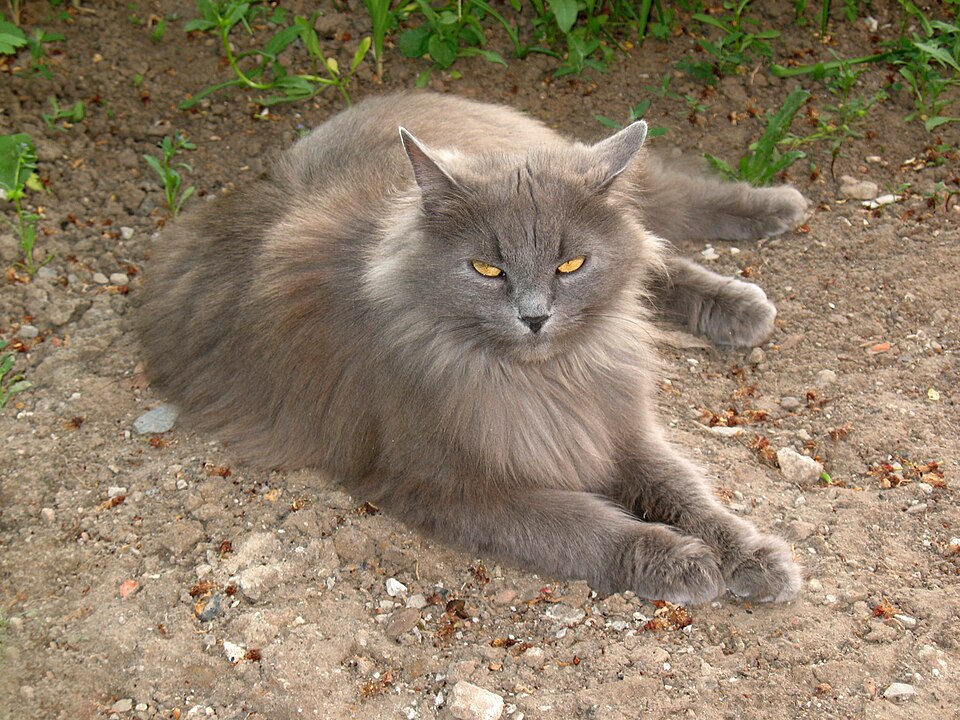
The Siberian is a strong, sturdy forest cat with a triple coat, shaped by Russia's harsh winters. It looks imposing, but its expression is soft; its temperament is calm and its curiosity never runs out. The claim you'll hear most often about this breed is that it "doesn't cause allergies." On this page we've pulled together its temperament, care needs, health issues and what science says about allergies, using breed registry standards and scientific studies.
- Temperament: Calm, sociable and very curious; stays close to its people and loves exploring cabinets and suitcases.
- The allergy facts: There's no scientific evidence that any cat breed is hypoallergenic; Siberians also produce the main cat allergen, Fel d 1.
- Coat: A triple coat that thickens in winter; for most cats, combing once a week is enough, more often in spring and fall.
- Health: According to the CFA, HCM (heart), PKD (kidney) and some recessive inherited diseases can occur in this breed; ask about the parents' tests.
- Slow to grow: Most reach full size at 3 years, and full maturity can take up to 5.
What to know
 What is the Siberian like?
The Siberian is smart and curious. According to the CFA's breed profile, it takes a keen interest in its surroundings and loves to investigate cabinets, drawers and suitcases. That doesn't mean it's restless or pushy; quite the opposite, it has a calm, easygoing temperament. It wants to be near its owners and to know what's going on in the house. The CFA says owners describe their cats as "90% placid and 10% mischief."
Many Siberians enjoy a lap, though this varies from cat to cat. PetMD notes that they don't much like being left alone for long periods. It's a quiet cat that tends to express itself with a loud purr, and some make short chirping sounds. It learns quickly: according to the CFA, it soon understands what "no" means (though it may bend the rule when no one is looking). PetMD says some Siberians even learn to walk on a leash with a harness.
Every cat is an individual. Breed traits describe general tendencies; how a cat was raised, how much contact it had with people as a kitten and its health shape its personality as much as its breed.
 Who is it a good fit for?
The Siberian suits families who want to spend time with their cat and can give it room to climb and explore. For people with allergies, though, it's not a "guaranteed" option (more on that below).
| Situation | Good fit? |
|---|---|
| Apartment | Good, with room to climb and explore |
| Family with kids | Good; according to the CFA, it can be a wonderful companion for children |
| Other cats and dogs | Usually gets along; introduce them slowly |
| Long hours alone | Moderate; likes to stay close to its people |
| Home with allergies | No guarantee; spend time with the cat first and see how you react |
| First-time cat owners | Good; even-tempered, with manageable care |
Teach children not to pick the cat up against its will and to support the hind legs when lifting a big cat. With such a curious cat, it's a good idea to check your home for hazards (open windows, the washing machine, cables); our cat-safe home article has a checklist.
Where does it come from?
The Siberian descends from semi-longhaired cats that lived naturally across the former Soviet Union. According to the CFA, for centuries they were working cats that kept rodents down on farms and in shops, and they appear often in Russian fairy tales. Although old records mention such cats, the official breed is fairly young: according to a 2026 review, the first breed standard was written in the late 1980s by a cat club in Russia, with the aim of setting the breed apart from other semi-longhaired cats like the Maine Coon and the Norwegian Forest Cat.
The first breeding Siberians arrived in the United States in 1990. The CFA accepted the breed for registration in 2000 and granted championship status in 2007. Colorpoint Siberians are called Neva Masquerade, a name that comes from the Neva River in St. Petersburg and the "mask" on the face. According to the same review, FIFe registers them as a separate sister breed, while many organizations, including the CFA, treat them as a color variety of the Siberian.
 Appearance and colors
It's a medium to medium-large, strong, muscular cat; the CFA describes it as having "surprising heft" for its size. Its overall look is round rather than angular: a broad head with soft contours, a full, rounded muzzle and large, almost round eyes. The body is medium in length with a firm, barrel-shaped belly, and the hind legs are slightly longer than the front.
- Weight: According to the CFA, mature males weigh 12 to 18 pounds (about 5.4–8.2 kg) and females 8 to 12 pounds (about 3.6–5.4 kg).
- Coat: A triple coat, moderately long to long. It gets noticeably thicker in winter and shorter and thinner in summer. Adults have a full ruff around the neck.
- Colors: All colors and patterns are accepted, with or without white. Brown tabby used to be the most common; today there are also newer colors such as "bimetallic," with gold and silver in the same coat.
- Eye color: Green, gold, green-gold or copper; blue or odd eyes in white cats and cats with white, and blue in colorpoints.
The breed matures very slowly: according to the CFA, most reach full size at 3 years, and the standard says full maturity can take up to 5.
Daily care
Siberian coats vary enormously from cat to cat. According to the CFA, some need weekly combing to prevent mats, while others can go for weeks without it. The best approach is to feel the belly, tail and "britches" on the hind legs a few times a week, since that's where mats most often form. If you find a tangle, gently pull it apart with your fingers or the tip of a metal comb, then comb through. PetMD also recommends combing once a week and more often during the spring and fall coat change.
- Start grooming early: Even though a kitten's coat needs little care, a habit of short, pleasant combing sessions makes the big shedding seasons in adulthood much easier.
- Climbing: It loves heights, so provide a sturdy cat tree. A Cornell veterinarian quoted by PetMD recommends securing the shelves and furniture it may climb.
- Mental exercise: Food puzzles, hidden treats and short training sessions suit a curious, smart cat.
- Ears, eyes, teeth and claws: Check them weekly; show your vet any redness, odor, discharge or bad breath.
For more ideas, see our articles on cat grooming and why cats love high places.
 Diet and weight
Siberians don't need a special food; a complete, balanced cat food that suits their age and lifestyle is enough. Because they keep growing for years, talk to your vet about when to switch from kitten food to adult food; PetMD points out that kitten food is high in calories, so weight should be watched.
A broad-chested, sturdy build makes extra weight easy to miss, and a full coat hides it too. Being able to feel the ribs under a thin layer of fat is a good sign. In the 2024 study by Teng and colleagues, cats whose weight was further from the median for their breed and sex had shorter lives. Measure food and count treats as part of the daily amount; serving some of the food in puzzle feeders is good for both its weight and its curiosity.
 Health issues to know about
The Siberian is generally considered a robust breed with a large gene pool. The CFA says breeders are careful about genetic testing, but some inherited problems can occur in the breed. The information below is for awareness only; ask your vet about diagnosis and treatment.
Hypertrophic cardiomyopathy (HCM) and polycystic kidney disease (PKD)
The CFA lists HCM, in which the heart muscle thickens, and PKD, in which small sacs grow in the kidneys, among the inherited problems that can occur in Siberians. HCM may show no signs for a long time; PetMD notes that in some cats the only finding is a heart murmur the vet hears during an exam. Ask the breeder for the parents' heart ultrasound and kidney screening results.
Juvenile motor nerve disease (rare)
A 2020 study described a nerve disease in a family of related Siberians that started between 4 and 10 months of age: the young cats had episodes of muscle weakness that resolved within 1 to 4 weeks, but came back in some of them. The researchers think it may be inherited. If you notice weakness or trouble walking in your kitten, see your vet.
Allergies: is there such a thing as a "hypoallergenic cat"?
The main cause of cat allergy is a protein called Fel d 1. According to a 2022 veterinary review, Fel d 1 is produced mostly in the saliva and the oil glands of the skin, spread over the coat as the cat grooms itself, and from there it spreads around the home. The same review states that every cat studied so far produces Fel d 1 and that claims of certain breeds being less allergenic aren't backed by scientific data. A 2024 allergy review reaches the same conclusion: there's no evidence for a hypoallergenic cat breed.
So where does the claim come from? The amount of Fel d 1 varies from cat to cat and in the same cat over time; on average, unneutered males produce more. A 2017 study found some differences in the Fel d 1 genes of Siberian cats, but it isn't known whether these differences actually reduce the amount of allergen. In other words, some individual Siberians may produce less allergen, but that hasn't been proven as a general trait of the breed.
- Fast, labored or open-mouth breathing
- Sudden weakness or paralysis in the hind legs
- Muscle weakness, stumbling or trouble walking in a kitten
- Loss of appetite and hiding (cats hide pain)
How long does it live?
There's no large scientific study on the Siberian's lifespan. The Siberian wasn't among the 12 breeds analyzed separately in the 2024 VetCompass study using UK data from 2019. PetMD's vet-reviewed page gives a lifespan range of 10 to 18 years for the breed; that's a general range, not a measured average.
The same 2024 study shows that neutered cats and cats at their ideal weight live longer, and that mixed-breed cats had a longer life expectancy (11.89 years) than purebreds. Regular vet checkups, weight tracking and choosing a kitten from screened parents are the most concrete ways to extend its life.
 Before you get one
- If you have allergies, test first: Before adopting, spend several long visits with that particular cat (not just the breed) and see how you react; talk to an allergy doctor. Having to give a cat up later because of allergies is very hard on both you and the cat.
- Be wary of "hypoallergenic" promises: Be cautious with sellers who guarantee the cat won't cause allergies; science can't back up a guarantee like that.
- Consider a shelter: Purebred cats end up in shelters and rescues too. A calm, longhaired mixed-breed cat can make a similar companion.
- If you buy from a breeder: Ask to meet the parents, and ask for heart ultrasound results for HCM, PKD and other genetic test results, plus vaccination records.
- Registration: Rules vary by country; many places require or recommend microchipping. In Türkiye, owned cats must be microchipped and registered in the PETVET system.
Frequently asked questions
Do Siberian cats cause allergies?
They can. According to scientific reviews, every cat studied produces the main cat allergen, Fel d 1, and there's no evidence for a hypoallergenic breed. Because allergen levels vary from cat to cat, some people with allergies may react less to a particular cat; the only way to find out is to spend time with that cat.
How do you tell a Siberian from a Norwegian Forest Cat?
Both are big and longhaired, but the Siberian's overall look is round: a head with rounded contours, almost round eyes and a full muzzle. The Norwegian Forest Cat's head is shaped like an equilateral triangle, with a straight profile and almond-shaped eyes. See our Norwegian Forest Cat page for details.
Is the Neva Masquerade a separate breed?
It's the name for colorpoint, blue-eyed Siberians. Genetically they share the same gene pool; FIFe registers them as a separate sister breed, while many organizations, including the CFA, consider them a color of the Siberian.
Do they shed a lot?
Yes, especially in spring and fall when they change their undercoat. Combing more often during these seasons cuts down both the hair around your home and the hair your cat swallows. Note: even if shedding goes down, allergies don't go away, because the allergen also spreads from saliva and skin.
How big do they get?
According to the CFA, mature males weigh about 12 to 18 pounds (5.4–8.2 kg) and females 8 to 12 pounds (3.6–5.4 kg). Most reach full size at 3 years. Work out your own cat's ideal weight with your vet.
Sources
- CFA (Cat Fanciers' Association) · Siberian ırk tanıtımı ve standardı
- Górska ve ark. · Colour Variants in Siberian Cats: A Comprehensive Review of Phenotype, Genetics, and Breed Registry Standards, Genes (2026)
- Sparkes · Human allergy to cats: A review for veterinarians on prevalence, causes, symptoms and control, Journal of Feline Medicine and Surgery (2022)
- Hilger ve ark. · Hypoallergenic animals: A promise of hope for allergic patients?, Allergologie select (2024)
- Sartore ve ark. · Polymorphism Analysis of Ch1 and Ch2 Genes in the Siberian Cat, Veterinary Sciences (2017)
- PetMD (veteriner onaylı) · Siberian Cat
- Crawford ve ark. · Juvenile-onset motor polyneuropathy in Siberian cats, Journal of Veterinary Internal Medicine (2020)
- Teng ve ark. · Life tables of annual life expectancy and risk factors for mortality in cats in the UK, Journal of Feline Medicine and Surgery (2024)
- Resmî Gazete · Kedi, Köpek ve Gelinciklerin Kimliklendirilmesi ve Kayıt Altına Alınmasına Dair Yönetmelik (26 Şubat 2018)
By Tüylüm · Last checked: November 3, 2026. Compiled from the sources above and written in our own words. Spotted a mistake? Write to [email protected] and we'll fix it right away. Photo from Wikimedia Commons, used under the license shown below it.