Aquarium lighting: a day-night routine, a timer, and keeping the tank out of the sun
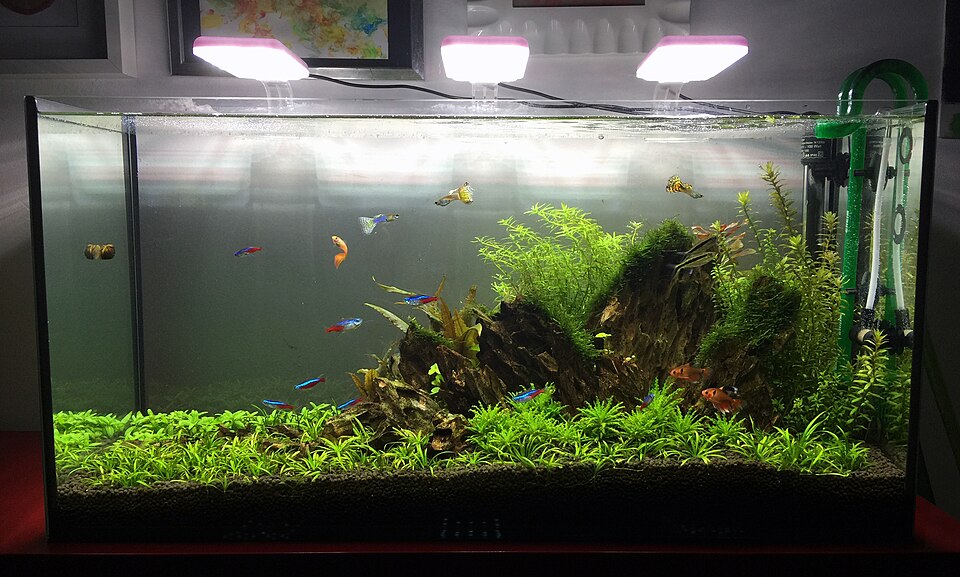
For most of us, aquarium lighting is about looks: we switch the lamp on so the fish and plants look good. According to the RSPCA, the Merck Veterinary Manual, RSPCA Australia and the OATA (the Ornamental Aquatic Trade Association), though, the light's real job is to give fish a steady day and night. This article covers how long the light should be on, the timer, where the tank goes, and what to do with the light when you bring home new fish. We cover algae separately in algae in the aquarium, and plants' light needs in live plants in the aquarium.
- Routine: Merck says fish need a day-night cycle for good health; leaving the light on 24 hours a day stresses them and leaves them more open to disease.
- Length: The RSPCA suggests a light cycle of 8 to 10 hours a day with the lamp off at night; RSPCA Australia says no more than 10 hours of light and at least 8 hours of darkness.
- Timer: The OATA recommends putting the light of a planted aquarium on a timer.
- Location: Keep the tank out of direct sunlight and away from windows.
- New fish: The RSPCA, OATA and Merck suggest switching the light off when you release them.
Light sets the fish's day
The RSPCA recommends using artificial light during the day so fish have a steady light cycle, as they would in the wild. Merck points the same way: it says fish need a day-night cycle to stay healthy, and that leaving the lights on 24 hours a day, seven days a week stresses fish and makes them more susceptible to disease. The OATA's care sheets for tetras and catfish also recommend overhead lighting to keep a proper day-night cycle.
So the lamp isn't decoration; it's part of the fish's daily rhythm. If the aquarium lamp is still on, it hasn't become night for the fish even when you've turned off the room light. That's why RSPCA Australia asks that every light and lamp in the area where the aquarium sits be turned off at night.
How many hours a day?
The sources are close, but not identical:
| Source | What it says |
|---|---|
| RSPCA | A light cycle of 8 to 10 hours a day suits most species, off at night |
| RSPCA Australia | On for a maximum of 10 hours a day; fish need at least 8 hours of darkness |
| OATA (planted aquarium) | At least 6 to 8 hours for plants; up to 10 to 12 hours if the light is ramped up and down at each end |
| Merck | Gives no number; only says that 24 hours of light stresses fish |
The OATA's 10 to 12 hour ceiling applies only to lights that can be ramped up and down (dimmable LEDs), and it is higher than RSPCA Australia's 10-hour ceiling. The range the two RSPCA organizations share is 8 to 10 hours a day. If you're setting up a planted tank, ask your retailer, as the OATA advises, whether the lamp is enough for the plants.
Put it on a timer
The OATA recommends putting the light of a planted aquarium on a timer. A timer switches the lamp on and off at the same time every day, so the light schedule doesn't depend on someone remembering. Dimmable LED lamps let you raise and lower the light slowly in the morning and evening; the OATA says that makes it possible to stretch the total light time to as much as 10 to 12 hours.
- Set the length: Stay within the RSPCA's 8 to 10 hours a day or RSPCA Australia's 10-hour ceiling.
- Put the lamp on a timer: The OATA recommends running the light of a planted aquarium on a timer.
- Darken the night: Switch off the other lamps in the aquarium's area at night too (RSPCA Australia).
- Watch the fish: The OATA says changes in swimming, color, breathing or interest in food are early warnings; if you're worried, test the water and ask your retailer.
Keep it away from sun and windows
The RSPCA, RSPCA Australia and Merck all advise keeping the aquarium out of direct sunlight, and the OATA says the same in its tetra and catfish sheets. The RSPCA specifically says not to put the tank by a window because the water temperature can rise dangerously high. Merck explains why: warmer water holds less oxygen, and if it gets too warm the fish can suffocate. Merck also says direct sunlight encourages algae growth. For more on temperature, see aquarium temperature.
When the lamp should stay off
- With no water in the tank: Merck says not to turn on filters, pumps, heaters and lights until the tank is filled with water; many aquarium devices need water to run and stay cool.
- When new fish arrive: The RSPCA suggests switching the lights off when you release the fish, floating the bag for half an hour, keeping the lights off for the rest of the day, and turning them on the next morning. The OATA also says to switch the aquarium lights off while you take the bag out. Merck adds that once the lights go off, most fish settle into a "rest" mode within a few minutes. We walk through adding new fish in adding new fish to an aquarium.
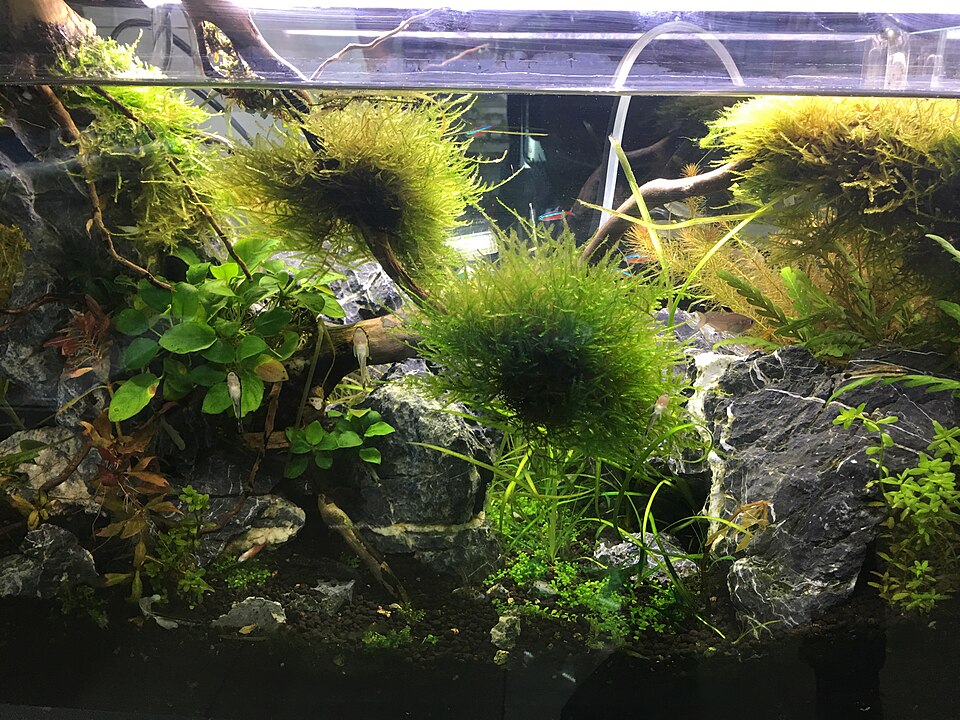
If your fish's swimming, breathing or interest in food changes, don't just fiddle with the light: test the water and, as the OATA suggests, ask your retailer or a veterinarian who treats fish. A lighting routine is not a treatment.
In Tüylüm's Today tab, the suggested tasks for fish include a daily Lights on / off and a weekly Aquarium glass cleaning. Even with a timer, you can keep the task as a prompt to check that the lamp is working; everyone in your My home sees the same list.
Frequently asked questions
Should the light schedule be different in a tank without plants?
The 8 to 10 hour range (RSPCA) and the 10-hour ceiling (RSPCA Australia) are given for fish. The OATA's 6 to 8 hour minimum is for planted aquariums. In a tank without plants, the light is only there for the fish's rhythm.
Should a small night light stay on at night?
The sources don't address this directly. RSPCA Australia says fish need at least 8 hours of darkness and that all lamps in the aquarium's area should be switched off at night.
If algae appear, should I dim the light completely?
Merck says a moderate amount of algae isn't harmful. To reduce algae outbreaks, RSPCA Australia suggests keeping the tank out of direct sunlight and leaving the light on no more than 10 hours a day. The details are in algae in the aquarium.

Keep track of your pet's care in TüylümLog vet visits, vaccine and medication dates, and we'll remind you when it's time. Share it all with your family in Home.
Sources
- RSPCA · Setting up your aquarium (environment)
- RSPCA Australia · How should I care for my tropical fish?
- Merck Veterinary Manual · Providing a Home for Fish
- OATA · How to set up a planted aquarium
- OATA · How to look after tetras & pencilfish
This article is for general information only; it is not a diagnosis or treatment advice and does not replace a visit to a veterinarian. Talk to your vet about decisions on your pet's health. By Tüylüm · Published and last checked: November 9, 2026. Spotted a mistake? Write to [email protected] and we'll fix it right away. Photos are from Wikimedia Commons, used under the license shown below each photo.