Neon tetra care: a shoal, water values, and a matured aquarium
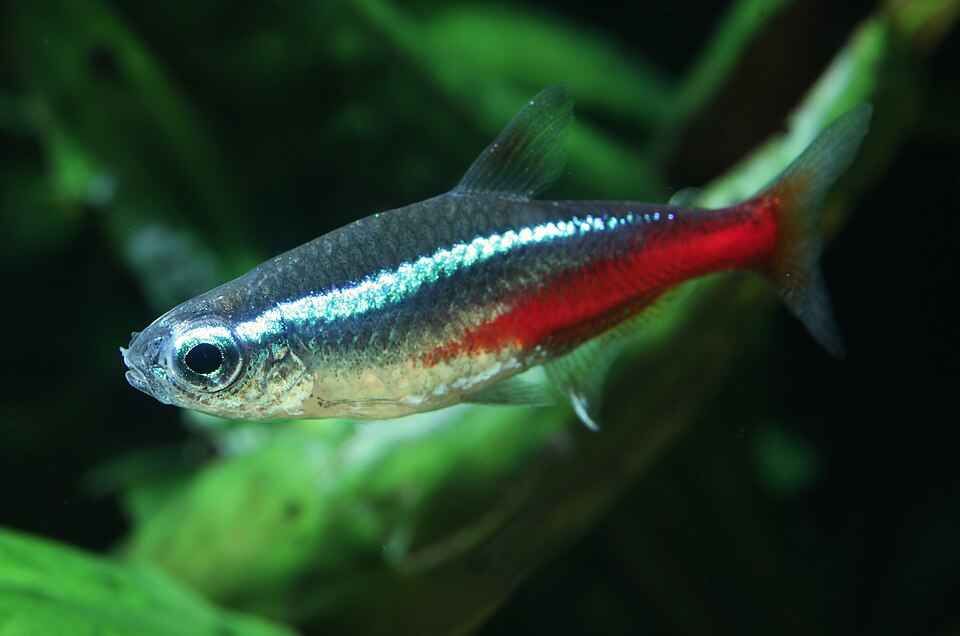
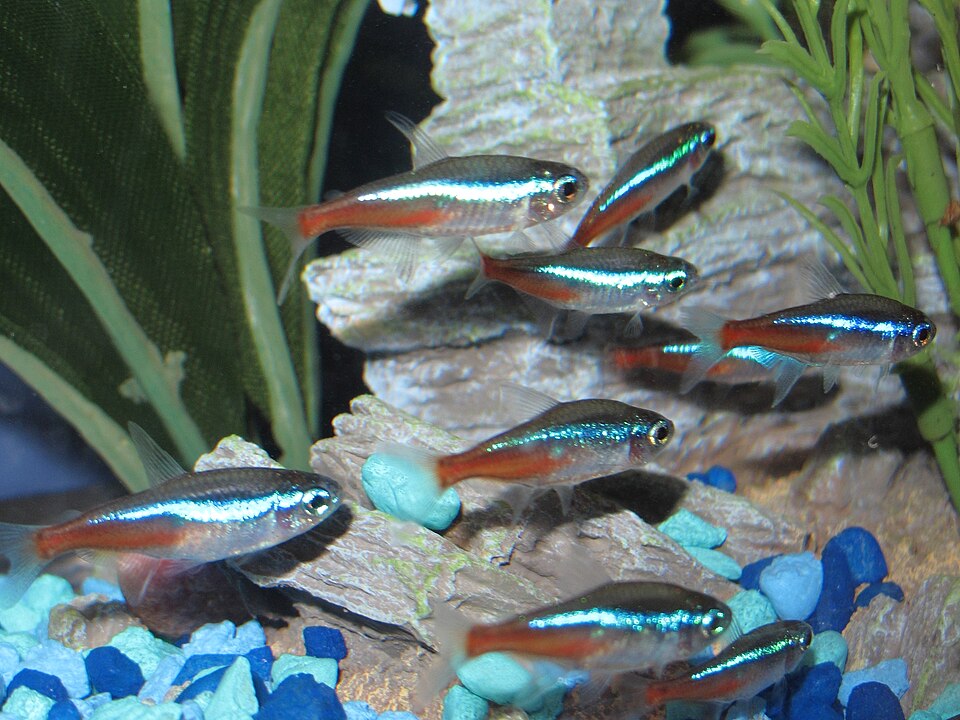
The neon tetra is one of the small fish that catch your eye first in an aquarium shop. But small doesn't mean easy: according to the OATA (the Ornamental Aquatic Trade Association), tetras are small, colorful, peaceful fish and mostly undemanding aquarium inhabitants, yet they still need a shoal, good water quality and a matured aquarium. This article draws on care guidance from the OATA, the RSPCA and the Merck Veterinary Manual. One important note: the OATA's values are a general guide for the tetra and pencilfish group, not a table for the neon tetra specifically. The OATA suggests asking your retailer about species-specific requirements.
- Shoal: The OATA suggests at least five fish and the RSPCA six or more for shoaling fish; the OATA says more is better.
- Water: The OATA's values for the tetra group: temperature 22 to 27 °C (72 to 81 °F), ammonia and nitrite zero, nitrate no more than 20 mg/L above normal tap water.
- Tank: The OATA suggests at least 45 liters (about 12 US gallons) for a small shoal of smaller species.
- Tank mates: Small species like the neon tetra shouldn't be kept with any fish large enough to eat them.
- Food: A good-quality flake or granule, once a day, only what they can eat within a few minutes.
- Matured tank: Add fish slowly; a newly set-up tank carries a risk of "new tank syndrome."
A neon tetra shouldn't live alone
According to the OATA, tetras are shoaling fish and should be kept in groups of at least five, with more being better; tetras kept singly or in too small groups often become stressed. The RSPCA recommends six or more for shoaling fish, which include tetras, and says fish in a group are more relaxed and come out of hiding more readily. The two organizations don't give exactly the same number; six or more fits both. We explain why shoals matter in shoaling fish.
Water values
The general values in the OATA's care sheet for tetras and pencilfish are:
| Topic | According to the OATA's tetra sheet |
|---|---|
| Temperature | 22 to 27 °C (72 to 81 °F) |
| Ammonia and nitrite | Zero |
| Nitrate | Not to exceed 20 mg/L above normal tap water levels |
| General hardness | Soft to medium (4 to 12 °dH) |
| Carbonate hardness | Soft to medium (3 to 10 °dkH) |
The OATA says these are a general guide for the group. For wild-caught tetras, it asks you to check with your retailer about recommended parameters; most tetras in the trade are captive bred. To keep the water in range, see aquarium water changes and aquarium temperature. The OATA says tetras can be stressed by even the smallest amounts of ammonia and nitrite, which is why weekly water testing matters.
What should the tank be like?
The OATA lists the following for tetras:
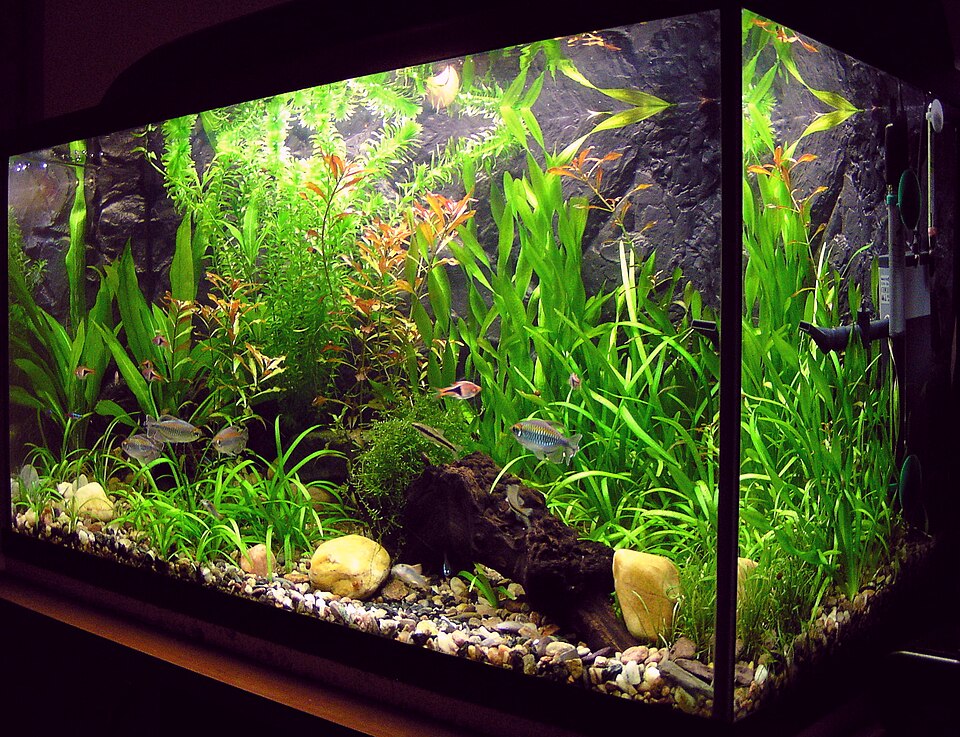
- Size: At least 45 liters for a small shoal of smaller species; at least 80 liters (about 21 US gallons) for species of 5 cm (2 in) and up. A larger tank keeps temperature and water quality more stable.
- Filter and heater: A filter is essential; a heater is needed to hold a suitable temperature all year.
- Swimming space and current: Tetras need room to swim, and the smaller species a gentle current.
- Substrate and plants: Sand or gravel and, ideally, live plants; if you don't use live plants, plastic plants, plant pots or model caves.
- Location: Away from drafts, heat sources, direct sunlight, loud noises and vibrations.
- Light: The OATA recommends overhead aquarium lighting to keep a correct day-night cycle; see aquarium lighting.
What do they eat?
According to the OATA, tetras are omnivorous and will take most food types; they should be fed a good-quality flake or granule. Small live or frozen foods, such as daphnia and small bloodworm, can also benefit them. They should be fed once a day, only what they can eat within a few minutes. Extra food breaks down and releases toxic waste into the water; see overfeeding fish for details.
Who can they live with?
According to the OATA, smaller species such as neon tetras should not be kept with any fish large enough to eat them. Larger or more boisterous species such as the Buenos Aires tetra should not be kept with timid or long-finned fish because they may nip their fins. Tetras mix best with species of a similar size and temperament. To think through which fish can share a tank, use the questions in choosing compatible fish.
A matured aquarium is a must
The OATA recommends that ammonia and nitrite be zero before you add any fish, and that you increase the number of fish slowly, because the population of beneficial bacteria in the filter has to grow with every new fish and feeding increase. Overstocking or stocking too quickly can cause "new tank syndrome": when the bacteria can't keep up, ammonia and nitrite reach unhealthy levels and fish may become ill or die. According to Merck, those beneficial bacteria develop on their own in 4 to 6 weeks; commercial products may speed the process slightly, but they're not necessary for most home aquariums. We cover setup in your first aquarium and how an aquarium filter works.
When you release new fish, the RSPCA suggests switching the lights off, floating the bag for half an hour, and keeping the lights off for the rest of the day. For a step-by-step guide, see adding new fish to an aquarium.
The OATA says changes in swimming behavior, color, breathing, appearance or interest in food can be early warning signs. If you see them in your neon tetras, test the water and ask a veterinarian who treats fish; don't make medication or treatment decisions yourself.
In Tüylüm's Today tab, the suggested tasks for fish include a weekly Water change and Water test and a monthly Filter cleaning. Everyone in your My home can follow the same list.
Frequently asked questions
Are three neon tetras enough?
No; the OATA suggests at least five and the RSPCA six or more for shoaling fish. According to these sources, tetras in small groups can become stressed.
Is there a temperature specific to the neon tetra?
Our sources don't give one for the neon tetra. The OATA gives 22 to 27 °C for the tetra and pencilfish group and suggests asking your retailer about species-specific needs.
Can I put neon tetras in a brand-new tank right away?
The OATA recommends ammonia and nitrite be zero before adding fish, and that you increase the number of fish slowly. Merck says the beneficial bacteria develop on their own in 4 to 6 weeks.

Keep track of your pet's care in TüylümLog vet visits, vaccine and medication dates, and we'll remind you when it's time. Share it all with your family in Home.
Sources
- OATA · How to look after tetras & pencilfish
- RSPCA · Keeping fish together
- RSPCA · Setting up your aquarium (environment)
- Merck Veterinary Manual · Providing a Home for Fish
This article is for general information only; it is not a diagnosis or treatment advice and does not replace a visit to a veterinarian. Talk to your vet about decisions on your pet's health. By Tüylüm · Published and last checked: November 9, 2026. Spotted a mistake? Write to [email protected] and we'll fix it right away. Photos are from Wikimedia Commons, used under the license shown below each photo.