Bring ladybugs to your garden: know the larva, put up with a few aphids, and leave their winter shelter alone
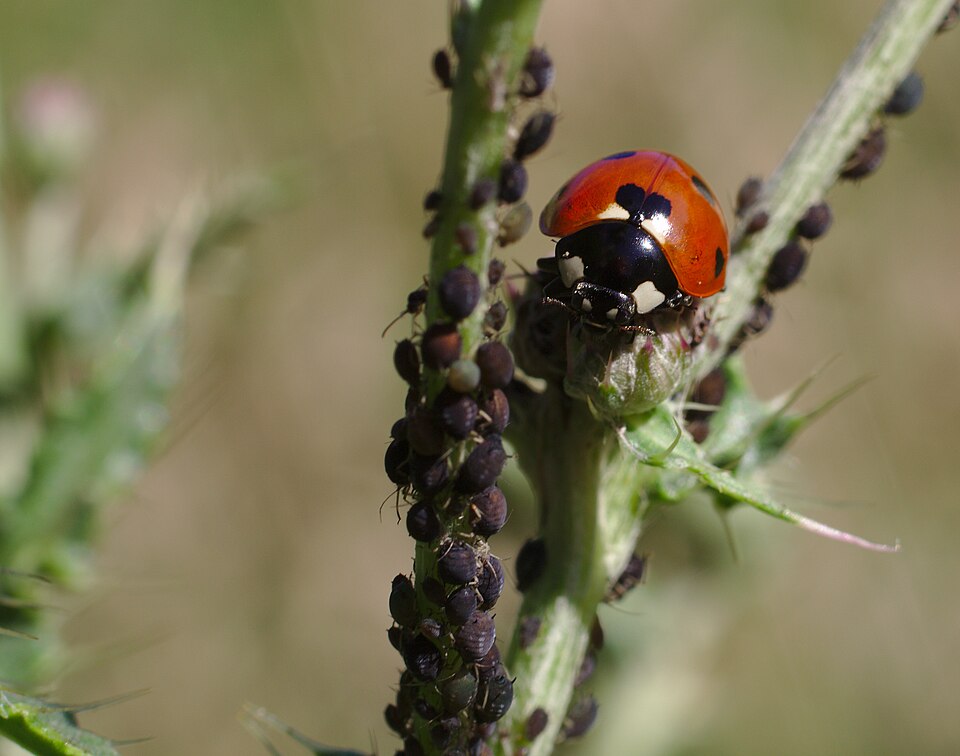
When aphids smother a rose stem, the first thing that comes to mind is reaching for a spray bottle. But the garden's own hunters are about to get to work too. Ladybugs (called ladybirds in the UK) are the best known of them; according to the RHS, their larvae hunt aphids just like the adults do. The trouble is that most of us don't recognize the larva. In this article, we explain how to recognize ladybugs and their larvae, how to make your garden attractive to them and how to protect the places where they spend the winter. The information comes from the RHS, The Wildlife Trusts, London's Natural History Museum and the Wildlife Gardening Forum; species counts are for the UK.
- Know the larva: According to the RHS, it has a long body and three pairs of legs; most are black or dark gray, some have yellow or orange markings, and many are spiny. Don't kill it thinking it's a pest.
- Put up with a few aphids: According to the RHS, between early and midsummer predators often wipe out aphid colonies. Tolerating some aphids and not using pesticides attracts predators.
- No pesticides: According to the Natural History Museum, pesticides kill beneficial insects along with pests.
- Leave their winter shelter alone: According to the Natural History Museum, all ladybug species in the UK spend the winter as adults. Leave dry stems and leaves in place until spring.
- The ones indoors: According to the Natural History Museum, they're harmless; don't kill them, help them find their way out.
Get to know the ladybug
According to the RHS, more than 40 ladybug species live in the UK; about 20 of them are smaller than 3 mm and dark, so they often aren't even recognized as ladybugs. According to The Wildlife Trusts, about 47 of the roughly 4,000 beetle species in the UK are ladybugs; the big, colorful ones we see on plants number about 26. According to the RHS, adults are 1–10 mm long and round or oval; the familiar species have red or yellow wing cases with dark or light spots.
The most familiar is the seven-spot ladybug. According to The Wildlife Trusts, it's 5–8 mm long, with three black spots on each red wing case and one more in the middle, just behind the head. According to The Wildlife Trusts, an adult that has just come out of its pupa only shows its familiar colors and patterns after a few days.
Know the larva and the pupa
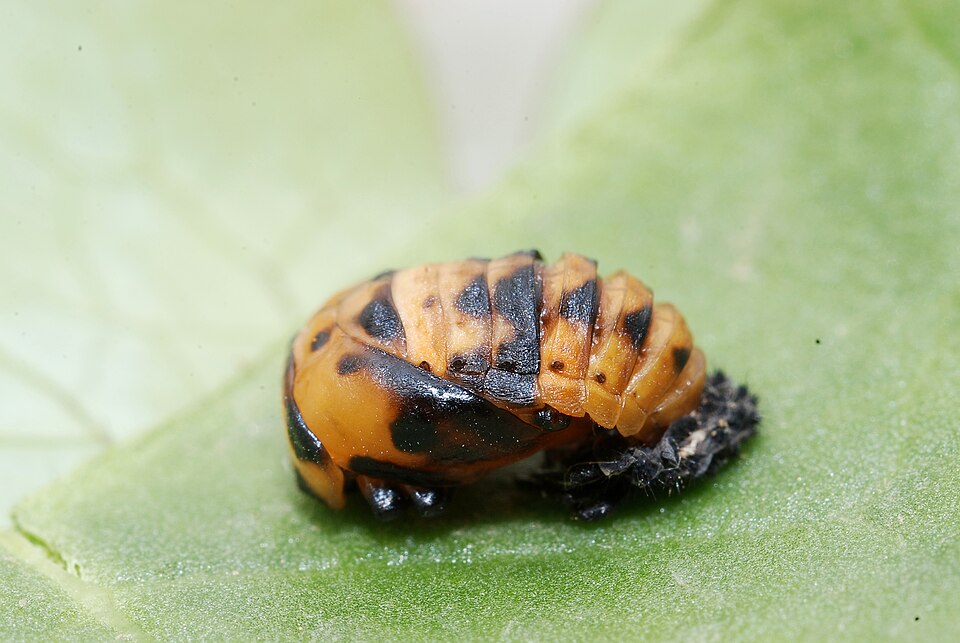
According to The Wildlife Trusts, a ladybug's life goes through four stages: egg, larva, pupa and adult. The larva grows through four stages, shedding its skin each time. A fully grown larva attaches itself to a surface and forms a hardened case; it turns into an adult inside this case.
The stage most often overlooked in the garden is the larva. According to the RHS, a ladybug larva has a long body and three pairs of legs; most are black or dark gray, some have yellow or orange markings, and many are hairy or spiny. They can grow up to 12 mm long. According to the RHS, the seven-spot ladybug's larva is gray with four pairs of orange markings.
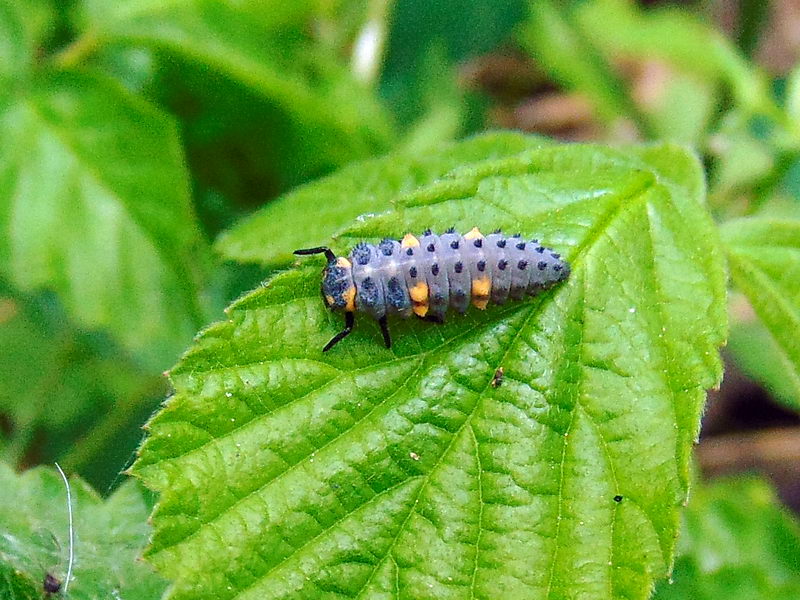
According to the RHS, most larvae, like the adults, hunt aphids and other insects. So if you see this small, spiny creature next to an aphid colony, leave it alone; it may have come to clean up the colony. The pupa, according to The Wildlife Trusts, often looks like a small patterned blob.
What do they eat?
According to the RHS, many ladybug species are predators that eat aphids and scale insects. Some feed on mildews, and a few on plants; according to the RHS, none of them cause serious problems in the garden. According to The Wildlife Trusts, the orange ladybug and the 22-spot ladybug eat mildew, not aphids.
According to the RHS, predatory species lay their eggs next to colonies of aphids or other insects, while the mildew eaters lay theirs on plants affected by mildew. Many species have more than one generation in a summer.
Put up with a few aphids, and skip the pesticides
According to the RHS guide to aphid predators, aphids can multiply quickly early in the season, but between early and midsummer predators often wipe out these colonies. The RHS's advice is to tolerate some aphids and avoid pesticides; this helps attract predators to the garden. In general, the RHS doesn't support the use of insecticides, fungicides, herbicides or molluscicides, and recommends non-chemical methods when control is needed.
The Natural History Museum says the same thing: pesticides kill beneficial insects along with pests. According to the museum, ladybugs and lacewing larvae are predators of sap-sucking pests such as aphids and scale insects.
- Don't reach for the spray right away: According to the RHS, predators often clear up aphid colonies between early and midsummer.
- Protect the larvae: Don't mistake spiny gray or black larvae for pests; according to the RHS, most of them hunt aphids.
- Invite birds too: According to the RHS, blue tits eat aphids, and there is some evidence that aphid numbers are lower where birds are encouraged.
- Plant flowers: The RHS recommends flowering plants for adult hoverflies, whose larvae eat aphids. Choosing flowers for a balcony: a bee-friendly balcony.
Winter shelter: save the cleanup for spring
According to the Natural History Museum, all ladybug species in the UK spend the winter as adults in a resting state called "diapause": their metabolism slows down and their body temperature drops. Some species overwinter alone in gaps in bark, cracks in rock or leaf litter; others gather in large groups. They usually emerge around April to mate and lay eggs. The RHS also says that adults need sheltered places to overwinter.
| Species | Where it spends the winter, according to the Natural History Museum |
|---|---|
| Seven-spot ladybug | In a wide variety of places, including curled-up dead leaves |
| Two-spot ladybug | Often in buildings |
| 14-spot ladybug | Often in leaf litter |
| Pine ladybug | Bark crevices, leaf litter and foliage |
| Harlequin ladybug | In large groups |
What this means for your garden is simple: don't clean everything up in the fall. According to the Wildlife Gardening Forum, leaving the cutting back of perennials until spring is the best thing we can do. Hollow stems are homes for hibernating insects such as ladybugs and lacewings; bamboo canes left outdoors over winter often host earwigs and ladybugs too. Fallen leaves add nutrients to the soil and give insects shelter. If you'd like to build a bigger shelter: a bug hotel.
A little ladybug lodge
The Natural History Museum suggests a small "ladybird lodge" built from pine cones:
- Materials: Pine cones with open scales, small twigs, dry leaves, and two tiles or two flat pieces of wood for the roof.
- Don't take from nature: Don't collect materials from natural piles; they may already be someone's home.
- Build it: Push three pine cones together by interlocking their scales, place them on the ground and add more to make a base. Hold the cones together by pushing a twig between their scales. Fill large gaps with dry leaves and build the layers up into a pyramid.
- Roof: Lean the tiles across the top at an angle. According to the Natural History Museum, pine cones close their scales when they get wet, so the roof keeps the lodge dry.
- Place and timing: Choose a sheltered spot; according to the museum, insects survive cold better where the temperature stays stable rather than freezing and thawing. Set it up before late fall, before ladybugs start looking for winter shelter.
- If no one comes: If no guests arrive over the winter, try a different spot next year.
Ladybugs that come indoors
According to the Natural History Museum, ladybugs usually get into homes through gaps around loose-fitting windows. They're harmless; there's no need to kill them. If you squash them, they leave a slightly smelly yellow fluid that can stain walls. The advice of the museum's beetle curator, Max Barclay, is to help them find their way out. According to the Natural History Museum, indoor heating can wake them too early in winter; a ladybug that wakes up while there's still no food outside may starve.
The Natural History Museum's article on this subject is about the harlequin ladybug (Harmonia axyridis) coming into homes. According to the museum, harlequins spend the winter in large groups; they used to use sheltered places such as caves and hollow trees, and today homes are another option for them. According to the RHS, this species was introduced to the UK, became established in 2004 and is very variable in color. It eats aphids and other insects, sometimes even each other; there is some evidence that it competes with native species for food. Even so, according to the RHS, controlling this species is "not desirable nor necessary": it is easily confused with native species and is mainly an aphid predator. According to the Natural History Museum, the way to tell it apart is to look underneath: the harlequin's underside and legs are usually orange, while those of native species are black.
If you'd like to set aside a corner for butterflies too: a butterfly garden. More of our articles: Invertebrates.
Frequently asked questions
Are ladybug larvae harmful?
No. According to the RHS, most larvae hunt aphids and other insects just like the adults. If you see a spiny larva with a long body and three pairs of legs, black or dark gray with orange or yellow markings, leave it alone.
Should I buy ladybugs for my garden?
According to the RHS, the two-spot ladybug is available from some biological control suppliers, but this method is mainly used in greenhouses. According to the RHS, a healthy garden already supports several ladybug species; tolerating some aphids and not using pesticides helps attract predators.
What should I do with ladybugs I find indoors?
According to the Natural History Museum, they're harmless; don't kill or squash them. Help them find their way out. Indoor heating can wake them too early in winter, and if they can't find food, they may starve.

Keep track of your pet's care in TüylümLog vet visits, vaccine and medication dates, and we'll remind you when it's time. Share it all with your family in Home.
Sources
- RHS · Ladybirds
- RHS · Aphid predators
- The Wildlife Trusts · Lovely ladybirds (Tom Hibbert, April 18, 2024)
- Natural History Museum · How to make a bug hotel: a ladybird lodge
- Natural History Museum · Why harlequin ladybirds are invading our homes
- Wildlife Gardening Forum · Should we tidy our garden for winter?
By Tüylüm · Published and last checked: October 28, 2026. Spotted a mistake? Write to [email protected] and we'll fix it right away. Photos are from Wikimedia Commons, used under the license shown below each photo.