Newts: the quiet residents of the pond, their life cycle, and how to make your pond newt-friendly
Shine a flashlight into a pond on a spring evening and the slim shapes drifting slowly through the water may be newts. Newts, which in Turkish are called "triton" or water salamanders, are the less familiar cousins of frogs. This article describes their year-round life and how to make your pond suitable for them, based on Froglife and Amphibian and Reptile Conservation (ARC). All of these sources are British and describe the three species that live in Britain; species and protection status in Türkiye may differ, so for official information ask your regional DKMP directorate. If you're interested in a pet salamander, see salamander care; this article is about wild animals.
- Eggs: The female lays eggs one at a time and wraps each in the leaf of a water plant.
- Growth: Larvae breathe through external gills, and the front legs appear before the hind legs.
- Land life: Outside the breeding season, newts mostly live on land, under logs and debris.
- Protection: According to ARC, the great crested newt is strictly protected under British and European law; keeping one without a licence may break the law.
- Pond: Don't add fish; Froglife says fish eat eggs and tadpoles.
- Moving them: Don't catch newts or take them to another pond; Froglife says this can spread invasive plants and disease.
Three species, three looks
ARC describes the three native newt species of Britain:
| Species | Size and look | Habitat |
|---|---|---|
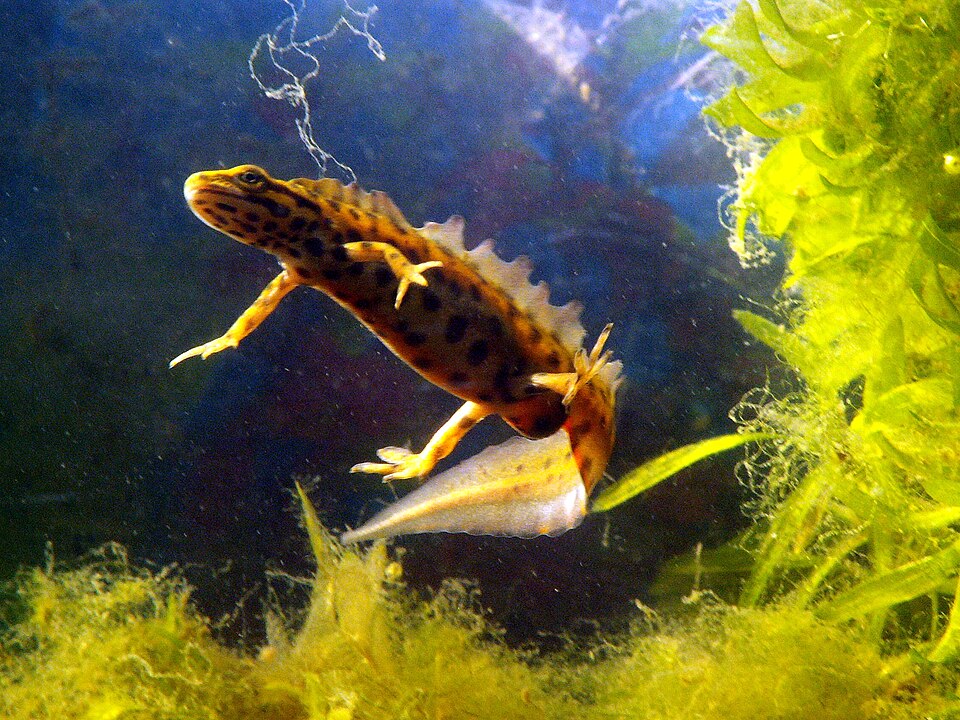
| Smooth newt | Up to 10 cm, brown; breeding males grow a wavy back crest; belly yellow or orange with small black spots | According to ARC, the UK's most widespread newt; may colonize garden ponds |
| Palmate newt | Rarely over 10 cm, brown; breeding males have a tail filament and dark webbing on the hind feet | Shallow ponds on acidic soils; heathland in the south and west, moorland and bogs in the north; tolerates drier conditions than smooth newts |
| Great crested newt | Up to 17 cm, the largest of the three; dark brown or black with rough skin and an orange belly with irregular black marks | Lowland Great Britain, tied to ponds; not found in Ireland |
ARC says breeding male great crested newts grow a jagged back crest and a white stripe along the tail; females are stockier and have no crest.
The year of a newt
Winter. According to Froglife, newts shelter in frost-free spots such as compost heaps, under paving slabs or in muddy pond banks. They don't truly hibernate and may come out on mild days to feed. A newt disturbed in winter should be fine if it is covered up and left alone.
Spring. Froglife says newts breed later than frogs and toads. On a mild evening, a torch shone into the pond can reveal them; males perform a courtship dance, and females lay eggs singly, wrapping each in the leaf of a pond plant. ARC says smooth newts gather in ponds from February to June, while the great crested newt breeds from about March to June and a female lays around 200 eggs. Adults may linger in the pond, sometimes eating frogspawn and tadpoles.
Summer. Froglife says larvae hatch at different times depending on when the eggs were laid. After their feathery gills are absorbed, juveniles called efts leave the water. ARC says newt larvae grow front legs before back legs, unlike frog and toad tadpoles, and breathe through external gills; juveniles leave the water in late summer. Adults spend most of the summer on land, especially in damp places during hot weather.
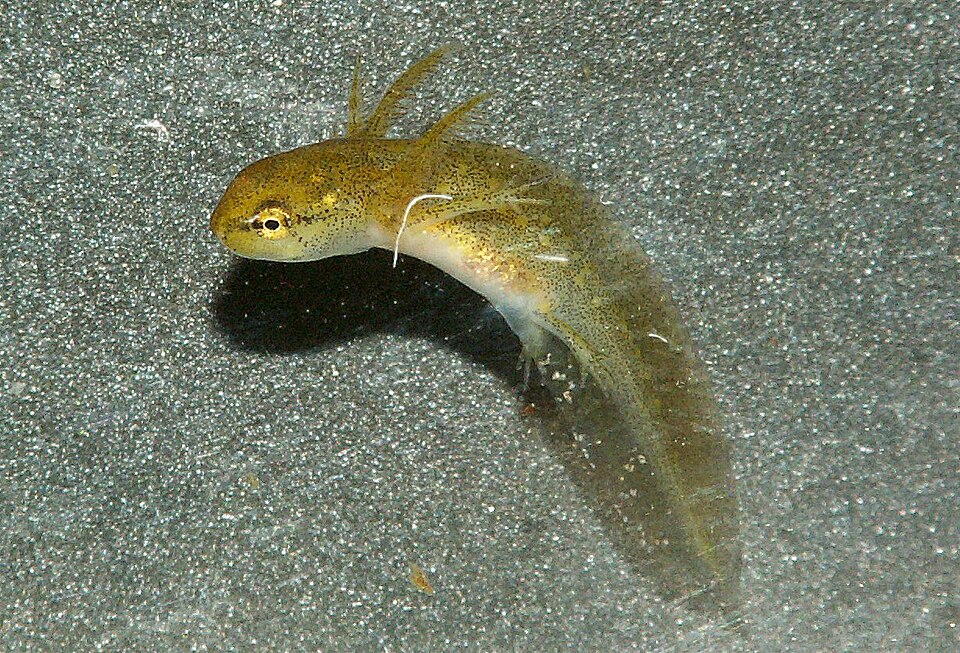
Autumn. According to Froglife, this is a quiet period: juveniles have usually left the pond, and newts feed on insects, slugs and spiders to build up for winter. Late larvae may overwinter in the water and finish developing the following spring.
Protection status
ARC says the great crested newt is strictly protected under both British and European law because of steep losses over the last century. It is illegal to harm, capture or disturb the newts, to damage their habitat, or to possess, sell or trade them, and this covers every life stage, including eggs. The main cause of the decline across Europe is the loss or degradation of ponds. Froglife also reminds readers that handling this species without a licence can break the law.
For smooth and palmate newts, ARC says Great Britain protects them against sale and trade. This information is about Britain; for the status of species in Türkiye, consult the official source (DKMP).
Making your pond newt-friendly
Highlights from Froglife's pond guide and newt page:
- No fish: According to Froglife, fish eat spawn and tadpoles, and even small fish compete with tadpoles for food. If you want fish, think about a separate pond.
- Size and depth: For breeding amphibians Froglife suggests ideally at least 2 m x 2 m, with a deeper section of at least 60 cm. Even tiny ponds can attract local wildlife.
- Sloping edges: Make it easy for animals to get in and out; Froglife advises keeping paving slabs away from the water's edge because young amphibians can stick to them and die in hot weather.
- The right plants: Froglife recommends combining native emergent, submerged and floating plants; water forget-me-not and starwort give newts places to lay eggs. Avoid invasive plants such as New Zealand pygmyweed.
- Winter shelter: Froglife lists log piles, compost heaps and rockeries as good winter shelter.
- Rainwater: If you must top up the pond, Froglife suggests rainwater rather than tap water.
For month-by-month detail, see caring for a wildlife pond.
Do newts eat tadpoles?
Yes. According to Froglife, newts are natural predators of tadpoles, and Froglife advises against removing them. The same source says this predation often creates a boom-bust cycle with frogs, but some tadpoles usually survive. Adding rocks, pebbles or aquatic planters gives tadpoles hiding places and may improve their survival. To follow tadpole development, see from tadpole to frog.
Froglife says moving newts can spread invasive plants and disease, and ARC advises against moving amphibians or their eggs from pond to pond. Keeping a protected species such as the great crested newt without a licence may break the law. If you find an injured or sick newt, don't take it home to care for it; ask your regional Nature Conservation and National Parks (DKMP) directorate or a veterinarian.
If you keep a salamander or another amphibian at home, Tüylüm's Today tab lists ready-made daily care tasks for your pet's type, and with Show the vet you can give your veterinarian a health summary as a PDF.
Frequently asked questions
I saw a newt in my pond. What should I do?
Froglife advises leaving them alone and not catching them: a newt disturbed in winter should be fine if it is covered up and left alone. With a protected species like the great crested newt, handling may break the law.
Can newts and frogs share a pond?
Froglife says newts prey on frog tadpoles, creating a boom-bust cycle with frogs, but some tadpoles usually survive. Froglife suggests adding rocks, pebbles or planters so tadpoles have places to hide.
Will newts come to my garden pond on their own?
According to ARC, smooth newts may colonize garden ponds, as common frogs do. ARC also advises against moving amphibians or their eggs from pond to pond.

Keep track of your pet's care in TüylümLog vet visits, vaccine and medication dates, and we'll remind you when it's time. Share it all with your family in Home.
Sources
- Froglife · Newts (FAQs)
- Froglife · Creating or improving ponds (FAQs)
- Amphibian and Reptile Conservation (ARC) · Smooth newt
- Amphibian and Reptile Conservation (ARC) · Palmate newt
- Amphibian and Reptile Conservation (ARC) · Great crested newt
- Amphibian and Reptile Conservation (ARC) · Frogs and toads FAQs
This article is for general information only; it is not a diagnosis or treatment advice and does not replace a visit to a veterinarian. Talk to your vet about decisions on your pet's health. By Tüylüm · Published and last checked: November 9, 2026. Spotted a mistake? Write to [email protected] and we'll fix it right away. Photos are from Wikimedia Commons, used under the license shown below each photo.