From tadpole to frog: spawn, tadpoles and metamorphosis in a garden pond
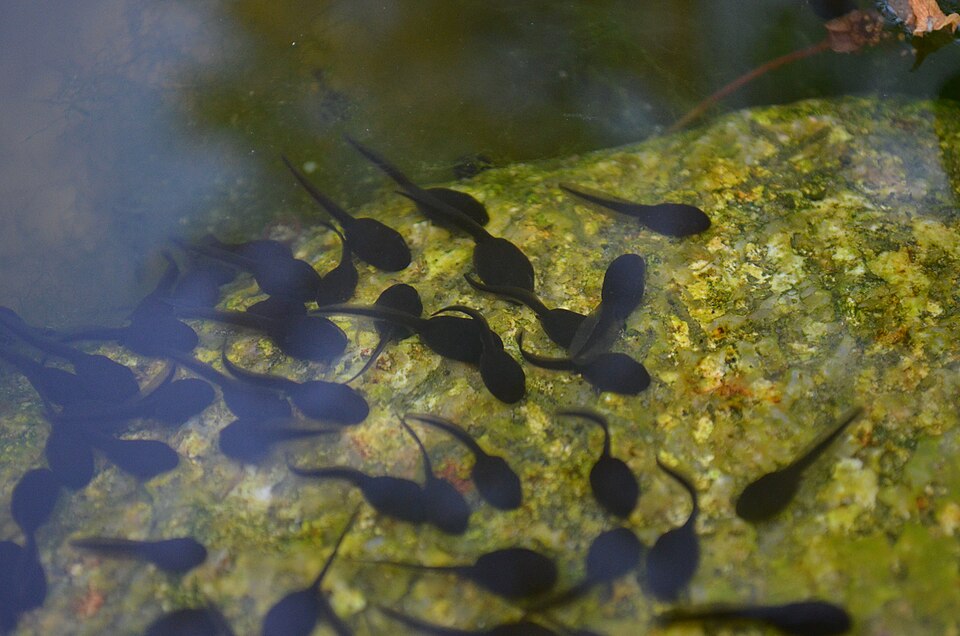
One morning you look at your pond and see a jelly-like clump at the water's edge. Inside it, hundreds of black dots. In a few weeks those dots will turn into wriggling tadpoles, and a few months later into tiny frogs hopping through the grass. It's one of the most beautiful shows a garden pond can put on for you. In this article, we walk through those few months step by step. The information comes from Froglife, ARC (Amphibian and Reptile Conservation) and The Wildlife Trusts; all of it describes frog, toad and newt species that live in the UK. Where you live, the species and the timing may be different.
- Three kinds of eggs: According to ARC, frog spawn is laid in clumps in shallow water, toad spawn in strings wrapped around plants in slightly deeper water, and newt eggs one by one on leaves.
- A quick start: According to Froglife, the eggs hatch in 2–4 weeks, depending on the weather.
- A few months: According to The Wildlife Trusts, frog tadpoles turn into froglets about 14 weeks after hatching.
- Crowds are normal: According to Froglife, there's no such thing as "too much spawn" or "too many tadpoles"; numbers balance out on their own over time.
- No moving, no feeding: Don't move spawn or tadpoles to other ponds; unless the pond is very new, you usually don't need to feed them either.
Spring: busy evenings at the pond
According to Froglife, frogs and toads migrate to water in spring, preferring mild, wet evenings; later in the north and east, earlier in the south. According to The Wildlife Trusts, frogs can spawn anywhere from December to April, depending on the weather. According to Froglife, toads usually breed a little later than frogs. According to ARC, newts breed a little later still and arrive at the pond over a longer period; their migration generally starts in early spring, in February–March.
According to ARC, sometimes more than fifty frogs return to a garden pond. That doesn't mean the pond is "overcrowded"; according to ARC, it's completely natural. We describe the sound of these evenings in our article why do frogs croak?
Whose eggs are these?
You can tell who has visited by looking at the eggs in your pond:
| Who? | Eggs | What hatches |
|---|---|---|
| Frog | Jelly-like clumps; according to Froglife, a clump often holds up to 2,000 eggs. According to ARC, it's laid in shallow water. | At first a black mass stuck together; as they grow they become mottled and brownish and don't shoal (ARC). |
| Toad | Long strings; according to Froglife, each string holds a double row of eggs. According to ARC, wrapped around plants in slightly deeper water. | According to ARC, jet black and they stay that way, often swimming in shoals. According to Froglife, the tail is shorter and the head bulkier. |
| Newt | According to Froglife, laid one by one, with each egg wrapped in the leaf of a pond plant. | According to Froglife, feathery external gills around the head; according to ARC, newly hatched larvae can be mistaken for fish fry. |
According to Froglife, each frog egg is a small black dot inside a clear jelly capsule about 1 cm (under half an inch) across. According to The Wildlife Trusts, a single female frog can lay up to 4,000 eggs in one spring.
From egg to tadpole
According to Froglife, frog and toad eggs hatch 2–4 weeks later, depending on the weather. According to ARC, newly hatched tadpoles are herbivores; they eat the algae growing on pond plants and rocks, especially in spots that get sun. In the later stages of their development they become omnivores, feeding on decaying matter in the pond and on tiny creatures such as water fleas (Daphnia).
The first weeks can be cold. According to Froglife, if a layer of ice forms over the spawn, the eggs on top may die, but the ones at the bottom of the clump may survive. Cold weather can also interrupt spawning; once it warms up, a second batch of spawn may appear in the pond. Newt eggs and toad spawn are better protected from frost because they're laid a little later in the year and deeper in the water.
According to ARC, white spawn may be unfertilized and will break down naturally in the water. If the white dots in the center start turning into comma shapes like normal spawn, they may hatch into white or see-through tadpoles.
Back legs, front legs and a vanishing tail
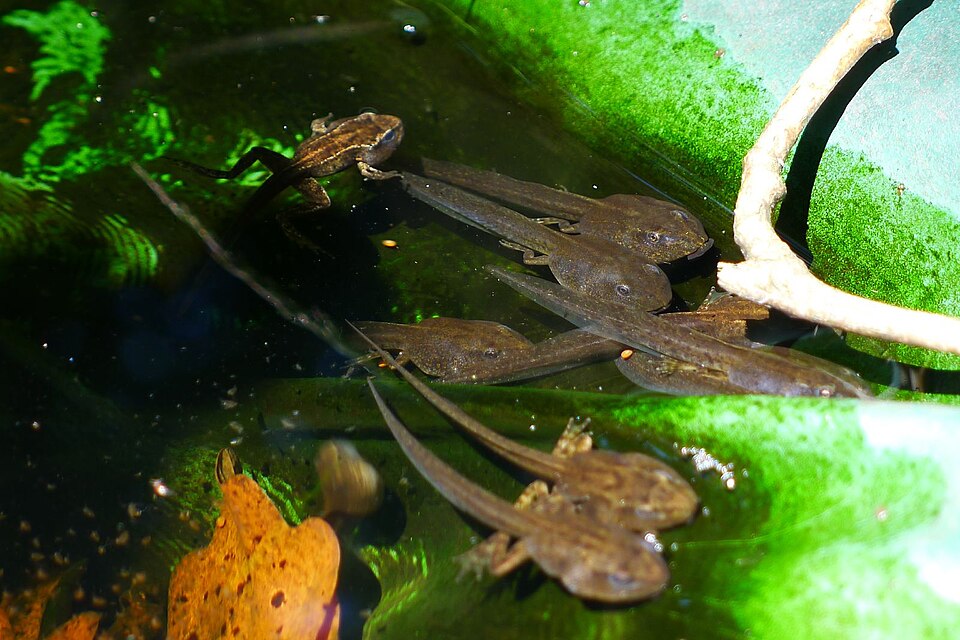
According to ARC, frog tadpoles grow their back legs first. According to Froglife, the front legs follow, and once the tail has been fully absorbed, the tadpoles leave the water as tiny froglets. This usually happens in early summer, but sometimes as late as September. According to Froglife, toadlets usually leave the water after rain.
Newts do it the other way around. According to ARC, newt larvae grow their front legs first. According to Froglife, this happens about two months after they hatch. The larvae reach 30–40 mm (about 1.2–1.6 inches) before metamorphosis; once they've absorbed their gills, they leave the water as young newts.
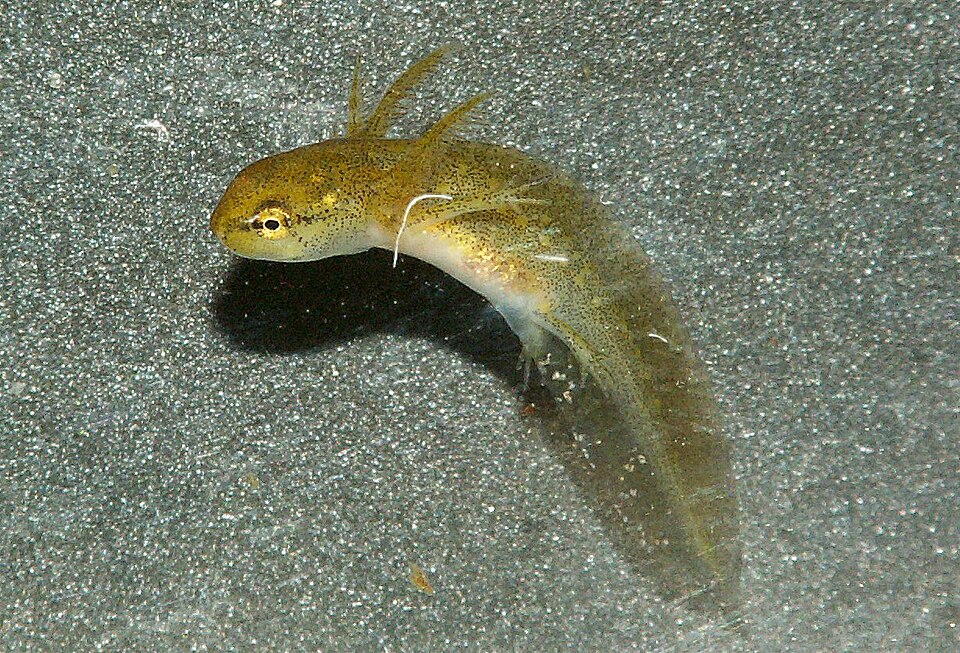
- Still tadpoles in the fall? According to ARC, this can happen: some tadpoles spend the winter in the pond and finish developing the following spring. ARC advises not feeding them and not taking them out of the pond.
- Why do they fall behind? According to ARC, the pond may be so crowded that food is short, or it may be too cold because it's shaded or has steep sides.
- A shady pond: According to ARC, if the pond is in shade, cutting back some of the plants hanging over the water lets more light and warmth reach the surface.
Why so many eggs?
Thousands of eggs don't mean your pond will overflow with froglets. According to Froglife, about one in fifty of the eggs in a pond makes it out as a froglet. The rest are eaten by fish (if there are any), dragonfly larvae and newts; tadpoles competing with each other for food also thins their numbers.
According to ARC, only a handful of the froglets that leave the pond reach adulthood; that can be as low as 1%. Grass snakes, blackbirds, crows, magpies, hedgehogs, foxes and badgers hunt them. According to Froglife, frogs take 2–3 years to reach breeding age.
ARC's advice is simple: don't interfere with these natural events in your pond; enjoy watching them.
How can you help your pond during this time?
- Moving: According to Froglife, moving spawn and tadpoles between ponds is risky and should be avoided, because it can spread disease and invasive plants. Ponds get colonized on their own. For details: frogs in your garden and in the wild.
- Feeding is usually unnecessary: According to ARC, ponds usually provide enough food for tadpoles; according to Froglife, too, feeding usually isn't needed unless the pond is very new. Too much food can pollute the water and lead to unwanted algae blooms.
- Filters and fountains: According to Froglife, it's probably better not to use them while there are tadpoles, if you can; it suggests limiting their use until the tadpoles leave the pond in June–July. A well-balanced pond can keep its water clean without a filter.
- Hiding places: According to ARC, stones, pebbles and aquatic plant baskets give tadpoles places to hide and can improve their chances of survival.
- Skip the pond netting: According to ARC, pond netting can trap animals like grass snakes and hedgehogs, which can die as a result.
- Put off pond work: According to Froglife, leave maintenance jobs until September–October if you can. If a job is urgent, move the spawn and tadpoles into a container of pond water or rainwater; if you've refilled the pond with tap water, let it stand for a day or so or treat it first. Season-by-season care: caring for a wildlife pond.
We explain why you shouldn't touch amphibians in the wild in our article on handling amphibians. Our other articles: Amphibians.
Frequently asked questions
There are lots of tadpoles in my pond. Should I move some of them somewhere else?
No. According to Froglife, there's no such thing as "too many tadpoles"; numbers balance out over time through predators and competition for food. Froglife advises against moving spawn and tadpoles, and against ever releasing them into rivers, canals, reservoirs or nature reserve ponds.
I found frogspawn in a puddle or a bucket in my yard. What should I do?
According to ARC, frogs often lay spawn in puddles, buckets and even watering cans. Because these little "ponds" often have few predators, the strategy can work, as long as the tadpoles can develop and leave before the water dries up. If the water is going to dry up and you want to rescue them, ARC's advice is to move the tadpoles to the nearest pond possible, ideally a garden pond within about 1 mile (1.6 km).
There's no spawn in my pond at all. Is something wrong?
According to Froglife, this may be down to the weather or to lots of predators in the pond; depending on the weather, it may also just be too early. In deep water, spawn can sink below the surface and go unseen. And according to Froglife, it can take two years or more for frogs to discover a new pond; rather than bringing in spawn from somewhere else, be patient.

Keep track of your pet's care in TüylümLog vet visits, vaccine and medication dates, and we'll remind you when it's time. Share it all with your family in Home.
Sources
- Froglife · Spawn & tadpoles: in my garden (FAQ)
- Froglife · Common frog
- Froglife · Common toad
- Froglife · Smooth newt
- Amphibian and Reptile Conservation (ARC) · Spawn & tadpoles FAQs
- The Wildlife Trusts · Common frog
By Tüylüm · Published and last checked: October 28, 2026. Spotted a mistake? Write to [email protected] and we'll fix it right away. Photos are from Wikimedia Commons, used under the license shown below each photo.