Vivarium cleaning: what to do every day, every week and every month
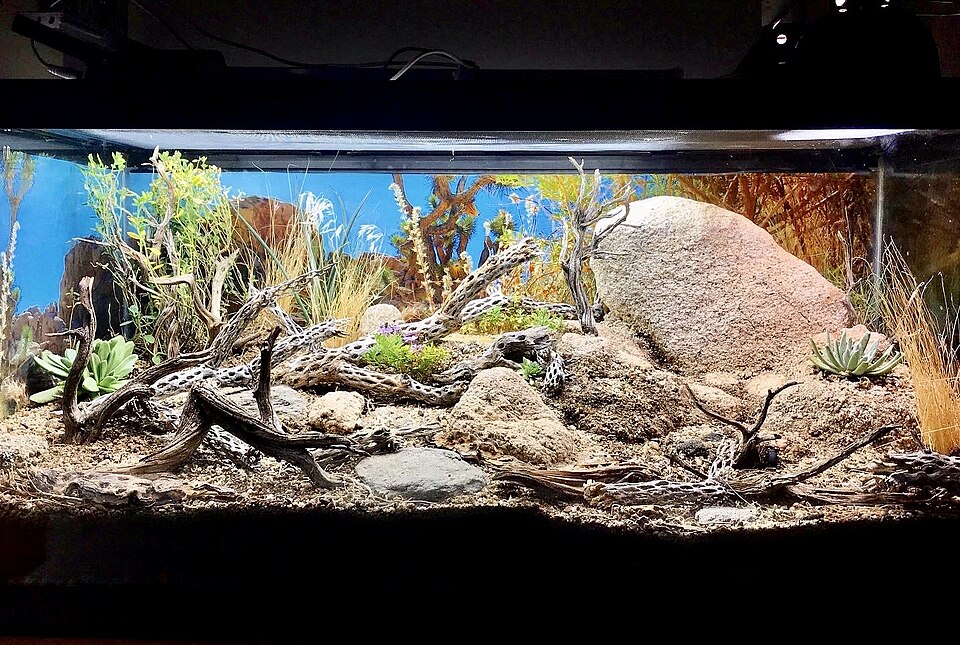
The vivarium is your pet's whole world: where it eats, drinks, sleeps and goes to the toilet is the same small space. According to the RSPCA, a poorly maintained vivarium gets dirty quickly and becomes a health risk for both the reptile and you. The good news: once cleaning becomes a routine, it isn't hard. In this article we explain what to do every day, every week and every month. For protecting yourself while you clean (handwashing, kitchen and bathroom rules), we have a separate article: reptiles and Salmonella.
- Every day: Remove droppings as soon as you see them, pick up leftover food and refresh the water (RSPCA, Merck).
- Water dish: According to the RSPCA, the water is changed every day, and right away if it's soiled. Merck recommends washing the dish thoroughly at least once a week.
- Every month: According to the RSPCA, the whole vivarium and everything in it is cleaned once a month with a reptile-safe disinfectant, then rinsed well and dried.
- Substrate: According to Merck, it's replaced at least once a month, or more often if several animals share the vivarium.
- Cleaner: According to Merck, soap and water are usually enough; phenolic disinfectants are toxic.
- Not in the kitchen: According to the CDC, a vivarium and its supplies are never cleaned in food preparation areas.
Why does cleaning matter so much?
According to the Merck Veterinary Manual, cleanliness is essential for keeping reptiles healthy over the long term. According to Merck, internal parasites are one of the most common health problems in pet reptiles. Many of these parasites need only one host, and their offspring can reinfect the same animal. That's why removing droppings promptly matters. And then there's you: according to the RSPCA, reptiles can carry Salmonella, so a clean vivarium protects your health too.
Every day: spot cleaning
Daily cleaning is called "spot cleaning": instead of taking the whole vivarium apart and washing it, you clean only the spots that are dirty.
- Remove droppings right away: The RSPCA recommends removing droppings as soon as you see them. A guide for schools from the NSW Department of Education in Australia also calls for spot cleaning indoor enclosures every day.
- Along with the substrate underneath: In a video in the same guide, a keeper from Taronga Zoo explains that they pick up droppings together with a chunk of the substrate underneath and throw it away.
- Pick up leftover food: According to Merck, uneaten food should be removed and thrown away every day. The RSPCA also recommends removing uneaten live insects from the vivarium, because they can bite your pet.
- Refresh the water: According to the RSPCA, the water dish should be cleaned and refilled every day, and changed right away if it's soiled.
- Clean the scoop, too: According to Merck, the tools you use to pick up droppings should be disinfected after each use. If you have more than one vivarium, this keeps disease from spreading from one vivarium to another.
The water dish: fresh every day, scrubbed every week
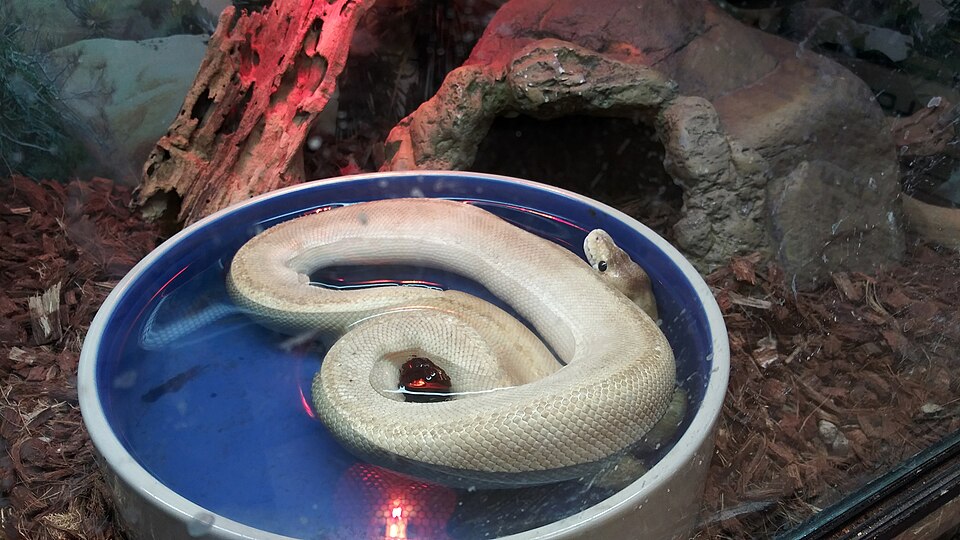
Just refilling the water dish isn't enough. For royal pythons, the RSPCA wants the water dish to be big enough for the snake to get in and bathe; snakes sometimes foul the water, and then it should be changed right away. According to Merck, water dishes should be cleaned thoroughly at least once a week. The NSW schools guide goes further and calls for washing water and food dishes every day.
Every month: the deep clean
Sources give slightly different numbers for how often to do a deep clean:
| Source | Deep clean |
|---|---|
| RSPCA | The whole vivarium and everything in it once a month; a reptile-safe disinfectant, then rinse well and dry |
| Merck | Substrate at least once a month (more often with several animals); the vivarium taken apart and disinfected at least every 3 months |
| NSW schools guide | Every 10 weeks, or every 1–3 months as needed; full substrate change, glass and walls cleaned and disinfected |
In short, a deep clean once a month is a safe habit that covers all of these recommendations. Step by step:
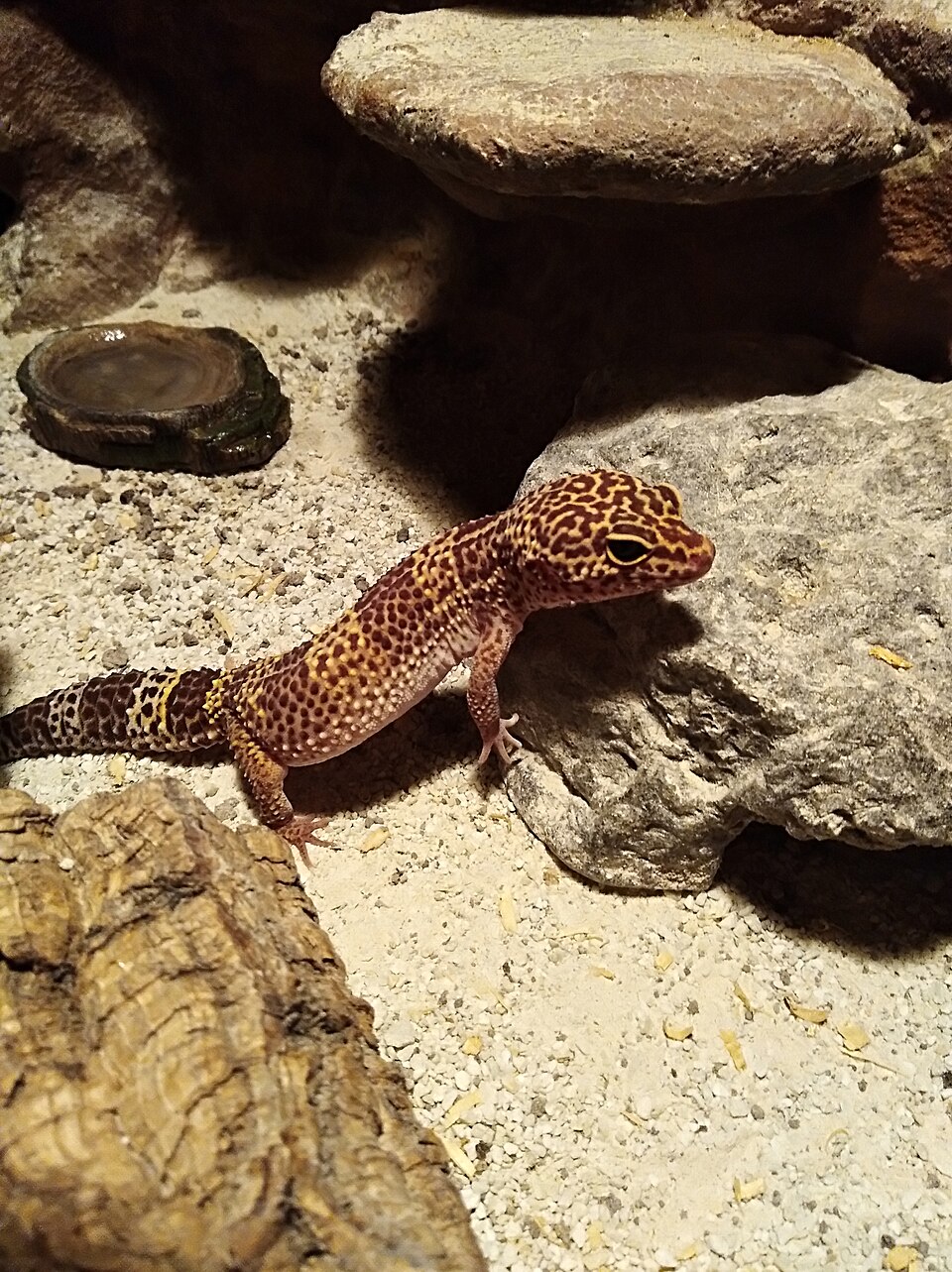
- Move your pet to a safe container: For moving a leopard gecko, the RSPCA recommends a well-ventilated plastic container lined with soft, absorbent paper; the container should stay warm but not overheat, and the time should be kept short. The same rules are useful while you clean.
- Empty it out: According to the NSW guide, a deep clean includes a full substrate change, cleaning the furniture if needed, and cleaning and disinfecting the glass and walls.
- Wash: According to Merck, soap and water are usually enough to clean a vivarium. The RSPCA recommends a reptile-safe disinfectant (see the box below).
- Rinse and dry: The RSPCA recommends rinsing everything well and drying it thoroughly after disinfecting.
- New substrate and natural materials: The RSPCA recommends cleaning branches collected outdoors with boiling water, and cleaning leaves with boiling water and letting them dry. Merck also recommends baking soil, sand and natural leaf litter in the oven before use to sterilize them.
- Measure before putting your pet back: According to the RSPCA, thermostats aren't always accurate. After turning the heaters back on, check the warm and cool ends with a thermometer, then put your pet back.
Which cleaner?
Not every cleaner is safe for reptiles. Think twice before using a product from around the house on the vivarium.
- Avoid phenolic disinfectants: According to Merck, some cleaners, such as phenolic disinfectants, are toxic and shouldn't be used.
- Bleach: According to Merck, it can be used, but only if you rinse very thoroughly.
- Ask your vet: Merck recommends asking your vet which disinfectant to use, how often and at what concentration. The RSPCA also recommends reptile-safe disinfectants sold in pet stores.
- Don't skip rinsing: According to the RSPCA, everything should be rinsed well after disinfecting.
Where to clean, and what to do afterward
According to the CDC, the vivarium, dishes and other supplies should be cleaned outside the home if possible; if you clean outdoors, stay away from gardens and sources of drinking water. If that isn't possible, you can use a laundry sink or a bathtub, but you must clean and disinfect the tub thoroughly before anyone else uses it. The kitchen and food preparation areas should never be used for this job; vivarium water should be poured down the toilet, not the sink.
When you're done, don't forget your hands. The RSPCA recommends washing your hands before and after touching your reptile and its equipment. According to the CDC, you should wash your hands with soap and running water after cleaning the vivarium and after touching things like the cage, rocks, decorations and enrichment items, or the vivarium water. Details: reptiles and Salmonella.
The vivarium of a sick pet or one you've lost
According to the CDC, after a pet gets sick or dies, its vivarium shouldn't be used again until it has been properly cleaned and disinfected. Keep this in mind when you get an old vivarium ready for a new pet, too.
If you notice anything unusual about your pet's droppings, appetite or behavior while cleaning, talk to a vet experienced with reptiles without delay.
Cleaning is also a check-up
A deep clean is also a good chance to take a close look at the vivarium. According to the RSPCA, if mold forms even on soil made for reptiles, humidity may be too high and ventilation not good enough; details are in our article on vivarium humidity. The keeper at Taronga Zoo also explains that they regularly take the logs outside to hose them down or scrub them, and replace them with new ones when needed.
On Tüylüm's Today tab, Terrarium cleaning comes as a ready-made weekly task for reptiles; a Water task, or Water dish for snakes, is on the list too. For the monthly deep clean, you can add your own task with the Once a month frequency. With My home (family sharing), whoever did the cleaning ticks it off, and everyone in your Home sees the same list.
If you keep an amphibian such as a frog or salamander, cleaning needs a gentler touch (their skin absorbs what it touches): cleaning an amphibian enclosure. All of them: Reptiles.
Frequently asked questions
Do I need to wash the whole vivarium every week?
No. According to the RSPCA, droppings are removed as soon as you see them, and the whole vivarium is cleaned once a month. The NSW schools guide recommends a deep clean every 10 weeks, or every 1–3 months as needed. If several animals share the vivarium, Merck recommends changing the substrate more often.
Is washing with soapy water enough?
According to Merck, soap and water are usually enough to clean a vivarium; what matters is rinsing very thoroughly. But don't wash the vivarium in the kitchen sink: according to the CDC, food preparation areas should never be used for this. Ask your vet which disinfectant to use.
Can I put branches I collected outdoors in the vivarium?
The RSPCA recommends cleaning branches collected outdoors with boiling water first, and cleaning leaves with boiling water and letting them dry. Merck also recommends baking soil, sand and natural leaf litter in the oven before use.

Keep track of your pet's care in TüylümLog vet visits, vaccine and medication dates, and we'll remind you when it's time. Share it all with your family in Home.
Sources
- RSPCA · How to care for a leopard gecko
- RSPCA · How to care for a royal python
- Merck Veterinary Manual · Providing a home for a reptile
- Merck Veterinary Manual · Management and husbandry of reptiles
- NSW Department of Education · Inland Bearded Dragon – hygiene
- CDC · Reptiles and amphibians
By Tüylüm · Published and last checked: October 28, 2026. Spotted a mistake? Write to [email protected] and we'll fix it right away. Photos are from Wikimedia Commons, used under the license shown below each photo.