 Tüylüm
American Curl
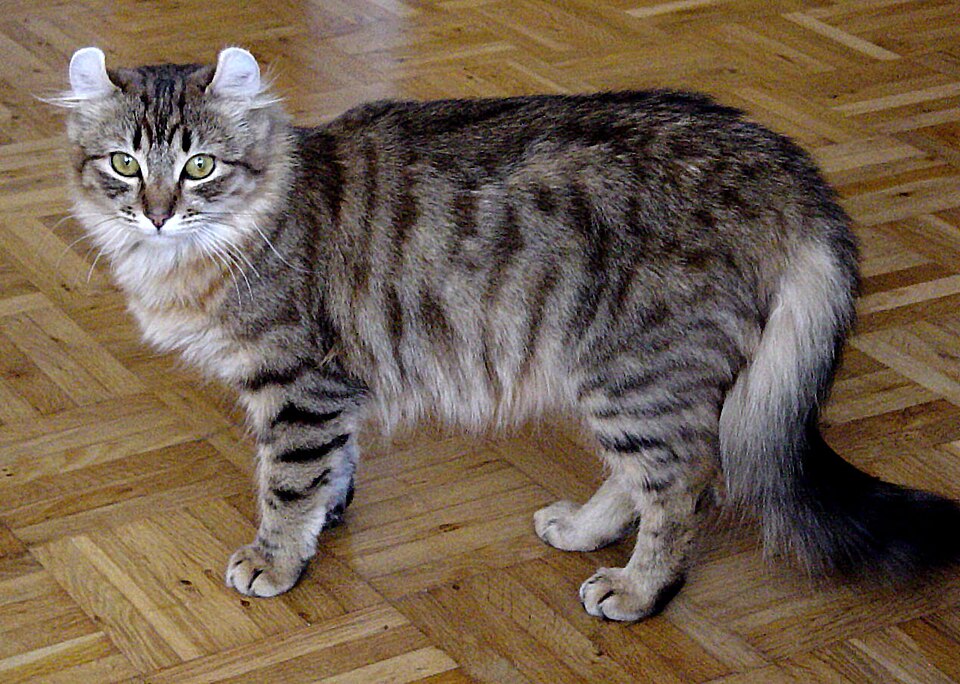
A people-loving, playful, easygoing cat whose ears curl back. The curled ear is a delicate piece of cartilage; no bone problems have been reported in the breed, but the gene linked to the Scottish Fold has been shown to turn up in some Curls.

 LifespanNo datawe found no breed-specific lifespan study
 Weight5–10 lb (2.3–4.5 kg)CFA: female 5–8 lb, male 7–10 lb
 OriginUSA (California)from a stray cat in 1981
 CoatShort or semi-longcombing 2–3 times a month (CFA)
 EnergyPlayfulkitten-like in adulthood
 EarsSet at ≈ 16 weekskittens are born straight-eared
 With kidsUsually goodCFA: gets along well
 Other petsUsually finecats and dogs too (CFA)
The American Curl is known by its ears: the tips curl backward toward the back of the head, giving it an always-alert, cheerful expression. That ear shape comes from a mutation, and the cartilage is delicate. On this page we cover the breed's temperament, ear care and the health questions that have come up in recent years, all based on sources.
- Temperament: Affectionate, attached to its people, playful; stays kitten-like into adulthood (CFA).
- Ears: Kittens are born with straight ears; curling starts around days 3 to 5 and sets by about 16 weeks.
- Ear care: The cartilage is delicate; clean without pulling the ear or bending the curl.
- Health: The CFA reports no breed-specific health problems; a 2026 study showed the gene linked to the Scottish Fold in some Curls, so ask about DNA testing.
- Registration: In Türkiye, microchipping and PETVET registration are mandatory for cats.
What to know
 What is the American Curl like?
According to the CFA, the American Curl is affectionate, people-oriented and energetic without being annoying. It adapts easily to new surroundings and generally gets along with children, dogs, cats and other pets. It stays playful like a kitten into adulthood and enjoys regular play with its people.
Every cat is an individual. Breed traits describe general tendencies; the home it grows up in and its early contact with people shape its character at least as much as breed does.
 Who is it a good fit for?
It suits families who enjoy time with their cat and want a playful but not noisy, easygoing companion.
| Situation | A good fit? |
|---|---|
| Apartment | Yes; adapts easily to new surroundings |
| Family with children | Yes (CFA); teach kids to be gentle with the ears |
| Other cats and dogs | Usually fine |
| Long hours alone | A people-loving cat; long stretches alone may not suit it |
| First-time cat owners | Yes, but ask about the ear and gene testing |
Teach children not to pull the ears, bend the curl or pick the cat up by the ears.
Where does it come from?
According to the CFA the breed began in 1981 with a stray kitten named Shulamith who appeared on a doorstep in California. Her curled ears and alert expression caught the eye of founders Joe and Grace Ruga, who worked with CFA judges to write a standard and bred curl-eared cats to domestic longhairs and shorthairs. The ear curl is passed on by a dominant gene: a single copy is enough to produce a curled ear.
Both coat lengths are common. In FIFe they're registered as ACL (longhair) and ACS (shorthair) and count as sister breeds. According to FIFe, straight-eared Curls are registered separately as an unrecognized variety but can be used in the breed's breeding program.
 Appearance and colors
A medium-sized, gracefully built cat. According to the CFA females run 5 to 8 pounds (2.3 to 3.6 kg) and males 7 to 10 pounds (3.2 to 4.5 kg).
- Ears: Kittens are born with straight ears. According to the CFA the ears start curling back around days 3 to 5 and take their permanent shape at about 16 weeks; that's when breeders can judge whether a kitten is show or pet quality. The curl ranges from almost straight to an arc of 90 to 180 degrees; a 90 to 180 degree curl is the show standard, less curl is pet quality.
- Coat (long): Semi-long, fine, silky and lying flat, with a plumed tail.
- Coat (short): Short, soft and silky; resilient rather than plush.
- Colors: The CFA accepts all colors and patterns in both coat lengths: solids, smokes, tabbies, tortoiseshells, bi-colors and pointed patterns.
Daily care
According to the CFA the minimal undercoat makes grooming easy; combing two or three times a month keeps shedding down.
- Ear care: The CFA recommends cleaning the ears carefully with a cotton swab, working outward from the ear canal, and not pulling the delicate cartilage. International Cat Care says redness, itching, head shaking, discharge or odor means the ear should be seen by a vet; ask your vet for advice on cleaning as well.
- Nails: A scratching post is a must; trim nails the way your vet shows you.
- Play: Adult Curls stay playful; give daily hunting games and safe high places.
More in our posts on cat grooming and play for indoor cats.
 Diet and weight
We found no special diet recommendation for the American Curl. A balanced, complete cat food suited to its age and lifestyle is enough. Measure the food rather than eyeballing it, subtract treats from the daily amount, work out the daily amount with your vet and weigh your cat once a month.
 Health issues to know about
The information below is for general awareness; for diagnosis and treatment, talk to your veterinarian.
The CFA writes that no breed-specific health problems have been identified; many breeders still test for recessive conditions common in cats generally. But the curled ear is a cartilage trait, and there are two things worth knowing.
Curled ears and bone health
A 2025 review in the journal Animal Welfare says skeletal problems related to the ears haven't yet been reported in American Curls, but that this needs further investigation; the same review recommends avoiding breeding for folded or curled ears because of broader welfare concerns. So what we know today points to no bone problems in Curls, but there's no large study either.
The link to the Scottish Fold gene
In a 2026 study in Japan that tested 8,610 cats from 14 breeds, the TRPV4 gene change that causes osteochondrodysplasia in Scottish Folds turned up in 2 of 115 American Curls (1.7%). According to the researchers this points to past crosses with Scottish Folds; an earlier report described Curls with two copies of the gene showing osteochondrodysplasia. So most Curls don't carry the gene, but some lines may. Ask the breeder about the TRPV4 test and whether there's a Scottish Fold in the cat's pedigree. For details on osteochondrodysplasia, see our Scottish Fold page.
Ear health
International Cat Care lists wounds, blood-filled swellings and mites on the outer ear; ear mites, infections and foreign bodies in the ear canal; and infections and polyps in the middle and inner ear. Signs include swelling, redness, pain, itching, head shaking, a head tilt, discharge or odor. If you notice any of them, show your vet.
- Swelling, pain, discharge or a bad smell from an ear
- A head tilt, unsteady walking or walking in circles
- Limping, not using a leg, or obvious struggle when walking
- Loss of appetite, hiding and reacting when touched (cats hide pain)
How long does it live?
We found no breed-specific lifespan study for the American Curl, so we're not giving a number. Ideal weight, regular vet checkups, neutering and a safe home affect lifespan the most. Having no number doesn't mean a cat will live a short or long life; there is simply no reliable figure for the breed. Asking about the parents' ages and health history when you get a kitten fills that gap to some degree. Regular checkups, vaccinations, parasite prevention, dental health and a calm, safe home are the foundation of care; ask your vet which checkups they recommend as your cat ages.
 Before you get one
- Consider a shelter too: Mixes that resemble curled-ear cats, and purebreds, end up in shelters.
- If you buy from a breeder: Since ears set at 16 weeks, it's hard to pick a very young kitten by ear shape; see the parents, ask for the TRPV4 test result and whether there's a Scottish Fold in the pedigree. FIFe registers straight-eared Curls as a separate variety but allows them in breeding, so a kitten whose ears stay straight can also be a healthy cat from the breed's line.
- Red flags: Sellers who won't show the mother, always have kittens, offer no paperwork or rush you to buy now.
- Legal registration: In Türkiye, microchipping and PETVET registration are mandatory for cats. Details in our PETVET registration and microchip post.
- First days: International Cat Care advises starting a new cat in a single room, leaving a hiding place it can retreat to and letting it come to you rather than forcing contact. Our first week with a new cat post walks you through it.
Frequently asked questions
Are American Curls born with curled ears?
No. According to the CFA kittens are born with straight ears; the ears start curling back around days 3 to 5 and take their permanent shape at about 16 weeks.
Are the ears fragile, and how do you clean them?
The cartilage is delicate, so don't pull the ear or bend the curl. The CFA recommends wiping carefully outward with a cotton swab; if there's redness, odor or discharge, show your vet.
Does it carry the same joint-disease risk as the Scottish Fold?
According to the Animal Welfare review, skeletal problems related to the ears haven't yet been reported in Curls, but more research is needed; and a 2026 study showed the Scottish Fold TRPV4 gene in some Curls. Ask the breeder for the test result.
Is the coat hard to care for?
No. According to the CFA there's little undercoat; combing two or three times a month is enough.
Does it get along with children and other pets?
According to the CFA it generally gets along well with children, dogs, cats and other pets.
How big does it get?
According to the CFA females run 5 to 8 pounds (2.3 to 3.6 kg) and males 7 to 10 pounds (3.2 to 4.5 kg).
Sources
- CFA (Cat Fanciers' Association) · American Curl ırk tanıtımı ve standardı
- FIFe (Fédération Internationale Féline) · Breeding and Registration Rules, 2026 baskısı (ACL/ACS bölümü)
- Animal Genetics (2026) · Genetic Evidence of a Recent Decline and Crossbreed Distribution of TRPV4 c.1024G>T Variant in Domestic Cats
- Animal Welfare dergisi (2025) · A framework to refocus the conversation around the welfare of UK purebred cats
- International Cat Care · Ear problems in cats
- International Cat Care · Helping your new cat or kitten settle in
- Resmî Gazete · Kedi, Köpek ve Gelinciklerin Kimliklendirilmesi ve Kayıt Altına Alınmasına Dair Yönetmelik (26 Şubat 2018)
By Tüylüm · Last checked: November 10, 2026. Compiled from the sources above and written in our own words. Spotted a mistake? Write to [email protected] and we'll fix it right away. Photo from Wikimedia Commons, used under the license shown below it.