 Tüylüm
Balinese
The semi-longhaired, silky version of the Siamese: the same pointed colors, the same sapphire-blue eyes and the same love of people, with a slightly softer voice. Easy to groom but dislikes being alone; ask for the DNA test for PRA, an eye disease inherited from the Siamese.

 Lifespan≈ 18 yearsGCCF's estimate; no breed-specific study
 Weight5–8 lb (2.3–3.6 kg)GCCF; males slightly larger
 OriginUSA (Siamese line)
 CoatSemi-long, silkyno undercoat, rarely mats
 EnergyHighplayful and curious
 VoiceChatty but softa little quieter than a Siamese
 With kidsGoodolder kids keep up best
 Home aloneStrugglesdislikes long stretches alone
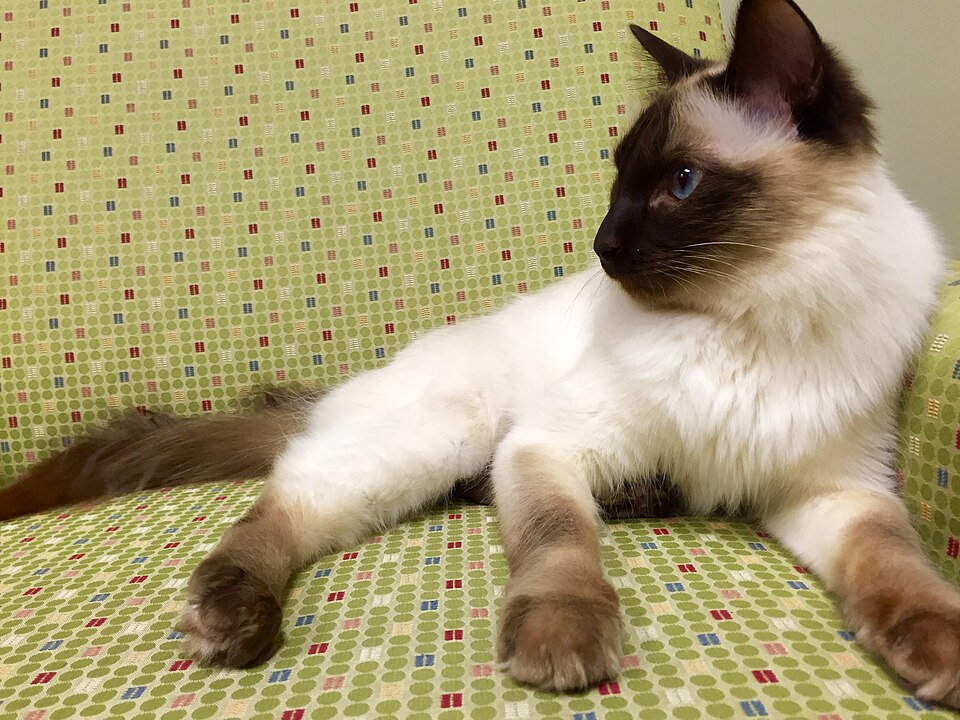
The Balinese is the semi-longhaired, silky version of the Siamese. With its pale body, dark ears, face, paws and tail, bright blue eyes and plumed tail, it has an elegant look, while its personality is much like a Siamese: chatty, playful and devoted to its people. On this page we've pulled together its temperament, coat care and the health issues it inherits from the Siamese line, drawing on breed registry standards, veterinary resources and scientific studies.
- Temperament: Smart, curious and affectionate; as chatty as a Siamese, but with a softer voice.
- Being alone: It doesn't like long stretches on its own; it needs attention and play.
- Easy care: Its silky coat has no undercoat and rarely mats; combing a few times a month is usually enough.
- Health: There's a DNA test for the inherited eye disease PRA (rdAc) from the Siamese line; asthma-like bronchial disease can also occur.
- Allergies: It's often said to cause fewer allergies, but no breed has been shown to be allergen-free.
What to know
 What is the Balinese like?
The Balinese carries the warm, interactive personality of the Siamese. According to the CFA's breed profile, Balinese are a little less talkative than Siamese and have softer voices, but they're never quiet cats: there's always a conversation going, from a contented purr to a protest when they feel neglected. The GCCF describes them as curious, outgoing and intelligent cats with strong communication skills, and adds that they often sense their owner's mood.
According to the CFA, a Balinese wants to join in with everything you do during the day and likes to sleep close to you at night. It learns fetch easily and is clever enough to track down a hidden toy. It has a playful, comic side, but once it has burned off its energy, it knows how to curl up in a lap and rest.
Every cat is an individual. Breed traits describe general tendencies; how a cat was raised, how much contact it had with people as a kitten and its health shape its personality as much as its breed.
 Who is it a good fit for?
The Balinese suits people and families who love the Siamese personality but want a slightly softer-voiced, longhaired cat, and who spend plenty of time at home.
| Situation | Good fit? |
|---|---|
| Apartment | Good; it needs room to climb and jump |
| Family with kids | Good; the CFA says older children keep up with its energy better |
| Other cats and dogs | Good; the GCCF says it also gets along with cat-friendly dogs |
| Long hours alone | Hard; the GCCF says it dislikes being left alone for long |
| First-time cat owners | Possible, if you're ready for its need for attention and play |
If you're out all day, a second cat can ease its loneliness; our guide to introducing two cats walks you through it step by step.
Where does it come from?
Despite its name, the Balinese doesn't come from Indonesia. Because the longhair gene is recessive, longhaired kittens occasionally turned up in Siamese litters; the CFA says this has been known since the early 1900s and that those kittens were placed as pets. The GCCF points to a British magazine that mentioned a longhaired Siamese as early as 1871.
In the United States, two Siamese breeders, Helen Smith and Sylvia Holland, began developing these longhaired cats as a separate breed. The name was chosen to evoke the graceful movements of Balinese dancers. The CFA granted the breed championship status in 1970, at first only in the four classic Siamese colors (seal, chocolate, blue and lilac). Other colors were recognized in 1979 under the name "Javanese," and in 2008 the CFA merged the two into a single breed. The first Balinese reached Britain in the 1970s, and the GCCF granted championship status in 1985.
 Appearance and colors
The Balinese has the same slender, long and muscular build as the Siamese: a long, wedge-shaped head, large ears that are broad at the base, and almond-shaped, sapphire-blue eyes. According to the CFA, the breed's most distinctive feature is its fine, silky coat, which lightly covers the body, flows into a plumed tail and should never look thick.
- Weight: According to the GCCF, males weigh about 6–8 pounds (2.7–3.6 kg) and females 5–7 pounds (2.3–3.2 kg).
- Colors: Seal, blue, chocolate, lilac, red, cream, and tortoiseshell and tabby points of these. The GCCF recognizes 34 colors.
- Eyes: Always blue. The CFA notes that crossed eyes and kinked tails, inherited from Siamese ancestors, can occur.
- A changing type: According to the GCCF, today's Balinese are leaner and have less coat than the heavier, thick-coated cats of the 1970s.
Why are the cooler parts darker?
The Balinese gets its pointed coloring from the same gene as the Siamese. As Langford Vets explains, the Siamese form of the coat-color enzyme is temperature-sensitive, and a cat needs two copies of this gene to show the pointed pattern. According to a 2026 genetics review, the enzyme doesn't work at normal body temperature, but does work on cooler areas like the ears, face, paws and tail, darkening the coat there. Kittens are born almost white because the womb is evenly warm, and the points develop after birth. The same genetics explain the blue eyes.
Daily care
Even though it looks longhaired, the Balinese is easy to groom. The CFA says its single coat, with no undercoat, isn't prone to matting, and recommends combing or brushing a few times a month to manage shedding. The GCCF also says a wide-toothed comb is enough and that the breed sheds very little.
- The occasional bath: According to the CFA, natural oils can make some cats' coats look greasy; a short bath with a gentle shampoo made for cats is enough then. Keep your cat in a warm room until it's dry.
- Play and challenges: Fetch, food puzzles and climbing space are musts for this energetic breed. Our guide to playing with an indoor cat has ideas.
- Jumping and climbing: The GCCF recommends a home with room to jump and climb.
- Ears: The GCCF recommends checking the ears regularly and keeping them clean; ask your vet about any redness, odor or discharge.
To build a grooming habit while your cat is still a kitten, see our cat grooming guide.
 Diet
Balinese don't need a special food; a complete, balanced cat food suited to their age is enough. Although it's an active breed, cats that live indoors or have been spayed or neutered can gain weight, and on a slender, longhaired cat, weight changes are easy to miss.
- Measure food; decide the daily amount with your vet based on your cat's ideal weight.
- Weighing your cat once a month shows changes early.
- Count treats as part of the daily food.
- Always have fresh water available.
 Health issues to know about
The CFA says Balinese are generally healthy but can be predisposed to some problems inherited from their Siamese ancestors, and that most breeders now do genetic screening. The information below is for awareness only; ask your vet about diagnosis and treatment.
Inherited retinal disease (PRA, rdAc)
This disease causes the light-sensing layer of the eye (the retina) to gradually break down, leading to blindness. Langford Vets lists the Balinese and Javanese among breeds at risk of the rdAc gene change. Affected cats are born with normal vision; changes usually show up on an eye exam at 1 to 2 years, and blindness often develops by 3 to 5 years, later in some cats. The disease is recessive, and there's a DNA test. The GCCF also notes that the test is available for Balinese.
Asthma-like bronchial disease
The GCCF says that because of their Siamese ancestry, Balinese can also have problems such as feline asthma. According to UFAW, this chronic bronchial disease, which is especially common in Siamese, can cause frequent coughing, wheezing, tiring quickly during play and difficulty breathing; open-mouth breathing is an emergency.
Sources differ on amyloidosis
The GCCF says Balinese appear free of the liver amyloidosis seen in some Siamese and Oriental lines. PetMD's vet-reviewed profile, however, says the disease can be an issue in Siamese-derived breeds such as the Balinese. According to UFAW, in Siamese the disease usually starts between 1 and 5 years and can cause poor appetite, weight loss, drinking a lot, and pale or yellowish gums. Since the sources disagree, ask whether the disease has appeared in your kitten's lines.
- Open-mouth breathing, wheezing or difficulty breathing
- Sudden weakness, or pale or yellowish gums
- Bumping into things or trouble finding the way in dim light
- Loss of appetite and hiding (cats hide pain)
How long does it live?
We couldn't find a scientific lifespan study specific to the Balinese. The GCCF puts its lifespan at about 18 years, and at 18–22 years in its care section. That's a registry estimate; real population data may paint a lower picture. For example, in UK data from 2019, its closest relative, the Siamese, had a life expectancy at birth of 11.69 years, and the longest-lived cat in that group was over 21.
Scientific life tables include cats lost at a young age, which pulls the average down; that doesn't mean most cats die at that age. Spaying or neutering, a healthy weight, regular vet checkups and parents with completed genetic tests are the most concrete steps toward a long life.
 Before you get one
- Consider a shelter: Purebred cats end up in shelters and rescues too. If you're set on a breed, follow breed groups and adoption listings.
- If you buy from a breeder: Ask to meet the parents, and ask for PRA (rdAc) DNA results, whether asthma or amyloidosis has appeared in the lines and vaccination records.
- Red flags: Steer clear of sellers who won't show you the mother, always have kittens available, can't provide test certificates or rush you to "buy now."
- Registration: Rules vary by country; many places require or recommend microchipping. In Türkiye, owned cats must be microchipped and registered in the PETVET system.
- Think about your time: A Balinese is happiest with attention and play; if you're out for long hours, factor that in.
Frequently asked questions
Are Balinese hypoallergenic?
No. The GCCF says Balinese may produce less of the allergen called Fel d 1 than many cats, but that there's no reliable test for this. A 2026 scientific review lists the Balinese among breeds marketed as causing fewer allergies, but stresses that no breed has been shown to be consistently allergen-free and that differences between individual cats are often larger than differences between breeds. If you have allergies, talk to your doctor and spend time with the cat before adopting.
What's the difference between a Balinese and a Siamese?
The main difference is coat length: the Balinese has a semi-long, silky coat and a plumed tail. According to the CFA, its voice is also a little softer than a Siamese's. See our Siamese page for details.
Does the Balinese come from Bali?
No. The breed was developed in the United States from longhaired kittens born in Siamese litters; it was named after the graceful movements of Balinese dancers.
Does its long coat need a lot of care?
No. With no undercoat, it rarely mats; combing a few times a month is usually enough. If the coat ever looks greasy, an occasional bath may be needed.
What does "Javanese" mean?
For a time, the CFA called Balinese in colors other than the four classic ones "Javanese"; the two breeds were merged in 2008. In some countries, the name is also used for longhaired Orientals.
Sources
- CFA (Cat Fanciers' Association) · Balinese ırk tanıtımı ve standardı
- GCCF (Governing Council of the Cat Fancy) · Balinese
- Langford Vets (Bristol Üniversitesi) · Progressive Retinal Atrophy (rdAc) genetik testi
- Science for Animal Welfare (UFAW) · Siamese: Kronik bronş hastalığı
- Science for Animal Welfare (UFAW) · Siamese: Amiloidoz
- Langford Vets (Bristol Üniversitesi) · Siamese colourpoint genetik testi
- Górska A. ve ark. · Colour Variants in Siberian Cats: A Comprehensive Review of Phenotype, Genetics, and Breed Registry Standards, Genes (2026)
- Guillet C. ve ark. · Taming pet allergens: strategies to make furry cats less allergenic, Frontiers in Allergy (2026)
- Teng ve ark. · Life tables of annual life expectancy and risk factors for mortality in cats in the UK, Journal of Feline Medicine and Surgery (2024)
- PetMD (veteriner onaylı) · Balinese
- Resmî Gazete · Kedi, Köpek ve Gelinciklerin Kimliklendirilmesi ve Kayıt Altına Alınmasına Dair Yönetmelik (26 Şubat 2018)
By Tüylüm · Last checked: November 3, 2026. Compiled from the sources above and written in our own words. Spotted a mistake? Write to [email protected] and we'll fix it right away. Photo from Wikimedia Commons, used under the license shown below it.