 Tüylüm
Oriental Shorthair
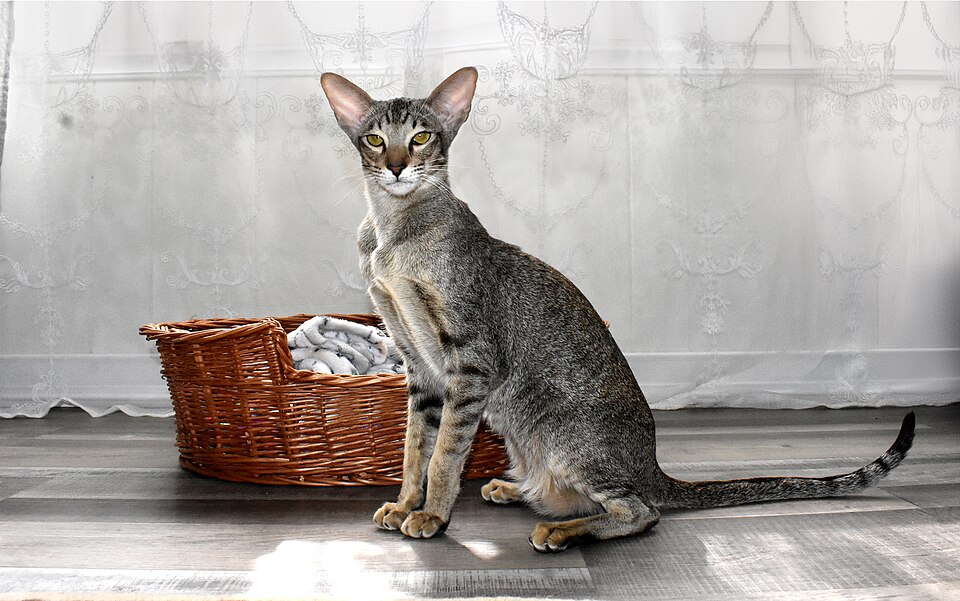
A cat with the Siamese body and the same chatty, people-focused personality, but with color all over its body and usually green eyes. It really doesn't like being alone; the inherited eye disease PRA and liver amyloidosis are the two health issues to know about.

 Lifespan12–15 yearsGCCF's range; no breed-specific study
 Weight8–14 lb (3.6–6.4 kg)GCCF's average range
 OriginUK (Siamese line)
 CoatShort or semi-longtwo coat types, both low-maintenance
 EnergyHighathletic, always up for play
 VoiceChattytells you about its day
 With kidsUsually goodintroduce slowly
 Home aloneStrugglesmay be unhappy as an only cat
The Oriental is a breed with the slender, long, elegant build of the Siamese, but with color that covers the whole body instead of just the ears and face. Its huge ears, almond eyes and hundreds of color options make it stand out, while its personality is just like a Siamese: chatty, playful and devoted to its people. On this page we've pulled together its temperament, care needs and the health issues to know about, drawing on breed registry standards and veterinary resources.
- Temperament: Chatty, smart and people-focused; it can pine if it doesn't get attention.
- Being alone: According to the GCCF, it doesn't do well as an only cat; a second cat or someone at home helps.
- Looks: Siamese build, color all over the body and usually green eyes; it comes in short and semi-long coats.
- Health: There's a DNA test for the inherited eye disease PRA (rdAc); liver amyloidosis is also reported.
- Easy care: Combing once a week is usually enough; it sheds little, but that doesn't make it "hypoallergenic."
What to know
 What is the Oriental Shorthair like?
The Oriental inherited its intelligence and talkativeness from its Siamese ancestors. According to the CFA's breed profile, it is a fairly vocal, attention-loving and thoroughly people-centered breed: whatever you're doing around the house, it's right there, watching every move and getting involved. The moment you sit down to rest, it settles into your lap and purrs.
The CFA says that if you give an Oriental the attention and affection it needs, it will do anything to please you, but if you withdraw that attention, it may pine. The GCCF also describes most Orientals as talkative cats that tell you about their whole day, athletic and playful, and notes that they don't do well as only cats. It can learn to fetch and will invite other pets in the house to join the game.
Every cat is an individual. Breed traits describe general tendencies; how a cat was raised, how much contact it had with people as a kitten and its health shape its personality as much as its breed.
 Who is it a good fit for?
The Oriental suits people or families who spend time at home, enjoy talking and playing with their cat and aren't looking for a quiet companion.
| Situation | Good fit? |
|---|---|
| Apartment | Good; climbing space and play are a must, and it may be heard |
| Family with kids | Usually good; the GCCF says it gets along with children |
| Other cats and dogs | Good; according to the GCCF, it usually does well with cats and dogs |
| Long hours alone | Hard; it may be unhappy as an only cat |
| First-time cat owners | Possible, if you're ready for its need for attention |
If no one is home during the day, consider starting with two cats. Our guide to introducing two cats walks you through it step by step.
Where does it come from?
The Oriental isn't a natural breed; it was developed from the Siamese in Britain from the 1950s on. According to the GCCF, the work began in 1951, when a breeder who wanted a solid chocolate cat of "foreign" type mated a chocolate-point Siamese male with a black, non-pedigree cat. The first recognized colors were Havana (chocolate), lilac and white; the white cats are now shown as a separate breed called the "Foreign White." Russian Blues, British Shorthairs, Abyssinians and domestic shorthairs were later used to add new colors and patterns.
The CFA accepted Oriental Shorthairs for registration in 1974 and granted championship status in 1977. Semi-longhaired cats were accepted in 1988, and the breed's name became simply "Oriental"; the two coat lengths compete in separate divisions. According to the GCCF, the longhaired Oriental was once called the "Angora" and is known as the "Javanese" in some countries. It is not the same cat as Türkiye's Turkish Angora, though the similar name can cause confusion.
 Appearance and colors
According to the CFA, the Oriental has the same elegance as the Siamese: fine bones and a long, tubular body, with surprisingly firm muscles for its refined look. The head is a long wedge with a flat profile, and the ears are very large and broad at the base. The shorthair's tail is long and whippy, while the semi-longhair's is a feathery plume.
- Weight: The GCCF gives the average weight of the Oriental Shorthair as 8–14 pounds (about 3.6–6.4 kg).
- Colors and patterns: According to the CFA, there are more than 600 combinations of color, pattern and coat length: solid colors (black, Havana, lilac, cinnamon, cream and more), smoke and shaded tones, tabby patterns and bicolors.
- Eye color: According to the GCCF, solid, shaded and tabby Orientals have green eyes. White Orientals can have green, blue or odd eyes.
How is it different from a Siamese?
The Siamese's color comes from a temperature-sensitive gene and darkens only on the ears, face, paws and tail. As Langford Vets explains, a cat needs two copies of the Siamese color gene to show this "pointed" pattern; cats with one copy or none are solid-colored. The Oriental is a cat with the Siamese build but with color spread across its whole body. That's why its eyes are usually green rather than blue.
Daily care
Orientals shed little and are easy to groom. The CFA recommends a weekly session with a rubber brush for shorthairs, or a fine-toothed steel comb for semi-longhairs, and says most Orientals love being groomed. According to the GCCF, the shorthair's silky coat doesn't tangle, while semi-longhairs need slightly more regular care.
- Play and challenges: A smart, athletic cat; daily hunting games, food puzzles and learning new tricks are good for it. Our guide to playing with an indoor cat has ideas.
- Climbing: A cat tree, shelves and a high window perch are musts. See our article on why cats love high places.
- Eyes, ears and teeth: Check weekly; ask your vet about any redness, odor or discharge.
 Diet
Orientals don't need a special food; a complete, balanced cat food suited to their age is enough. Weight changes can be easy to miss on a slender cat, and unexplained weight loss matters because it can be one of the signs of diseases like amyloidosis, described below.
- Measure food; decide the daily amount with your vet based on your cat's ideal weight.
- Weighing your cat once a month shows both weight gain and weight loss early.
- Count treats as part of the daily food.
- Always have fresh water available.
 Health issues to know about
The CFA says that thanks to the breed's popularity and broad gene pool, most Orientals are healthy, and that breeders are working on two issues: an inherited retinal disease and amyloidosis. The information below is for awareness only; ask your vet about diagnosis and treatment.
Inherited retinal disease (PRA, rdAc)
This disease causes the light-sensing layer of the eye (the retina) to gradually break down, leading to blindness. Langford Vets lists the Oriental Shorthair among breeds at risk of the gene change called rdAc. Affected cats are born with normal vision; changes usually show up on an eye exam at 1 to 2 years, and blindness often develops by 3 to 5 years, later in some cats. The disease is recessive, and there's a DNA test; ask the breeder for both parents' results.
Amyloidosis (liver)
The CFA and GCCF report liver amyloidosis in Orientals. In the picture UFAW describes for Siamese, an abnormal protein called amyloid builds up in the liver, usually starting between 1 and 5 years of age; signs can include lethargy, poor appetite, weight loss, drinking and urinating a lot, and pale or yellowish gums. Amyloid deposits can cause the liver to rupture and bleed internally. The CFA notes that the disease can be both inherited and acquired, that genetic research is ongoing, and suggests asking whether it has appeared in your kitten's lines.
Others
- Flat-chested kitten syndrome: The GCCF notes that this condition, in which a kitten's rib cage develops flattened, has been seen in Orientals. If you notice a kitten having trouble breathing, take it to the vet right away.
- Hearing in white Orientals: An LSU review lists white Orientals among breeds at risk of congenital deafness linked to the white gene. If you're getting a white, blue-eyed kitten, ask about a hearing test (BAER).
- Sudden weakness or pale gums (possible signs of internal bleeding)
- Yellowish gums, poor appetite and weight loss
- Trouble breathing in a kitten
- Bumping into things or trouble finding the way in dim light
- Hiding and withdrawing from play (cats hide pain)
How long does it live?
We couldn't find a scientific lifespan study specific to the Oriental. The GCCF says Orientals live 12–15 years, and PetMD's vet-reviewed profile gives the same range. These are estimates from a registry and a reference site, not scientific measurements. For comparison, in UK data from 2019, its closest relative, the Siamese, had a life expectancy at birth of 11.69 years, and mixed-breed cats 11.89 years.
Spaying or neutering, a healthy weight, regular vet checkups and parents with completed genetic tests are the most concrete steps you can take toward a long life.
 Before you get one
- Consider a shelter: Purebred cats end up in shelters and rescues too. If you're set on a breed, follow breed groups and adoption listings.
- If you buy from a breeder: Ask to meet the parents, and ask for PRA (rdAc) DNA results, whether amyloidosis has appeared in the lines and vaccination records. For white kittens, ask about a hearing test as well.
- Red flags: Steer clear of sellers who won't show you the mother, always have kittens available, can't provide test certificates or rush you to "buy now."
- Registration: Rules vary by country; many places require or recommend microchipping. In Türkiye, owned cats must be microchipped and registered in the PETVET system.
- Think about your time: An Oriental needs a lot of attention. If you're rarely home, starting with two cats may be fairer.
Frequently asked questions
Is an Oriental a Siamese?
They come from the same line and are built almost identically, but the Oriental is a separate breed. In a Siamese, color appears only on the ears, face, paws and tail, and the eyes are blue; in an Oriental, color covers the whole body and the eyes are usually green. See our Siamese page for details.
Are Orientals hypoallergenic?
No. Shedding less doesn't eliminate allergies. A 2026 scientific review notes that no breed has been shown to be consistently allergen-free, and that differences between individual cats are often larger than differences between breeds. If you have allergies, talk to your doctor and spend time with the cat before adopting.
Do they meow a lot?
Yes, most are chatty and will tell you about their day. That's part of their personality; if you notice a sudden change in voice or behavior, talk to your vet.
Can they be left alone?
For short periods, yes, but long hours alone as an only cat are hard on them. A second cat, toys and climbing space help.
How many colors do they come in?
According to the CFA, there are more than 600 combinations of color, pattern and coat length, from solid black to tabby, smoke and bicolor.
Sources
- CFA (Cat Fanciers' Association) · Oriental ırk tanıtımı ve standardı
- GCCF (Governing Council of the Cat Fancy) · Oriental
- Langford Vets (Bristol Üniversitesi) · Progressive Retinal Atrophy (rdAc) genetik testi
- Science for Animal Welfare (UFAW) · Siamese: Amiloidoz
- Langford Vets (Bristol Üniversitesi) · Siamese colourpoint genetik testi
- LSU School of Veterinary Medicine (G. M. Strain) · Cat Breeds With Congenital Deafness
- Teng ve ark. · Life tables of annual life expectancy and risk factors for mortality in cats in the UK, Journal of Feline Medicine and Surgery (2024)
- Guillet C. ve ark. · Taming pet allergens: strategies to make furry cats less allergenic, Frontiers in Allergy (2026)
- PetMD (veteriner onaylı) · Oriental Shorthair
- Resmî Gazete · Kedi, Köpek ve Gelinciklerin Kimliklendirilmesi ve Kayıt Altına Alınmasına Dair Yönetmelik (26 Şubat 2018)
By Tüylüm · Last checked: November 3, 2026. Compiled from the sources above and written in our own words. Spotted a mistake? Write to [email protected] and we'll fix it right away. Photo from Wikimedia Commons, used under the license shown below it.