 Tüylüm
Chartreux
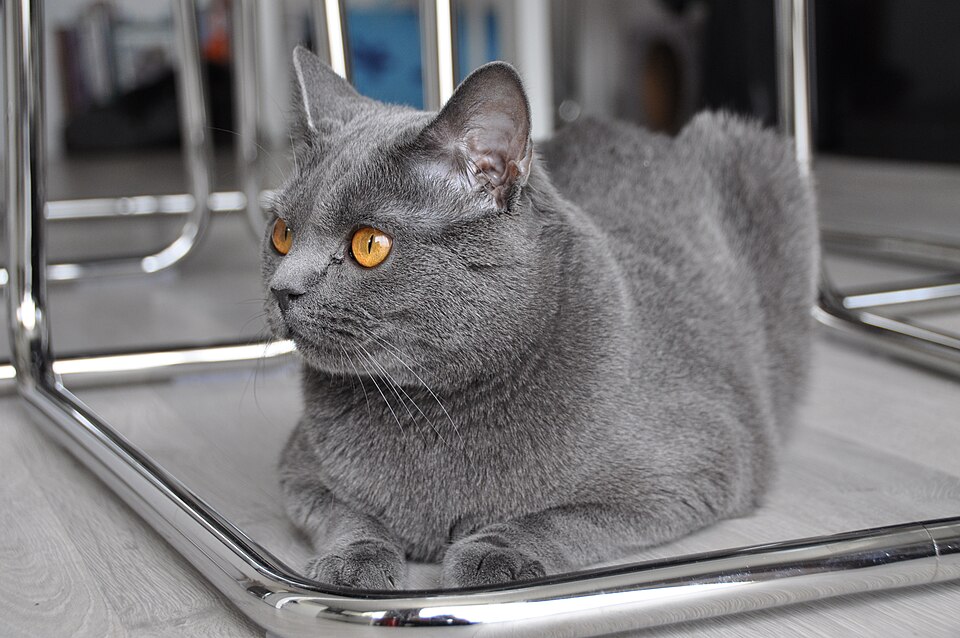
A native French cat known for its woolly blue-gray coat, copper-to-gold eyes and "smiling" face. Very quiet, calm, devoted to its routines and playful. Generally a robust breed; weight and kneecap dislocation are the two things to watch.

 Lifespan12–15 yearsPetMD range; no large lifespan study
 Weightup to 14 lbmales (6.4 kg); females much smaller
 OriginFrancebred as a breed since the 1920s
 CoatShort, woollywater-resistant, dense undercoat
 EnergyModeratecalm, but always up for a game
 VoiceVery quietsome barely meow at all
 With kidsGoodcalm and gentle
 Other petsUsually goodintroduce them slowly
The Chartreux is a native French cat known for its woolly blue-gray coat, copper or gold eyes and a face that seems to be smiling slightly. It looks big and powerful, but it moves with agility and grace. It's very quiet; some barely meow at all. It's a calm, loyal companion that's devoted to its routines. On this page we've pulled together its temperament, care needs and health issues from breed registry standards and veterinary resources.
- Temperament: A calm, affectionate, undemanding cat; it follows you from room to room and sets up its own little routines.
- Quiet: Its voice is tiny and rarely used; it gets its point across with chirps, looks and a touch of the paw.
- Coat: Short but dense, woolly and water-resistant; it sheds heavily in spring and fall.
- Health: Generally a robust breed; weight gain in adulthood and kneecap dislocation can occur, and it's also listed among breeds predisposed to HCM.
- Slow to mature: It reaches full maturity at 3 to 5 years; males are noticeably larger than females.
What to know
 What is the Chartreux like?
The Chartreux is intelligent and has lightning-fast reflexes. According to the CFA's breed profile, it's known for dog-like behavior: some learn to walk on a leash or bring back a thrown toy, and many recognize their names and come when called. It forms a close, affectionate bond with its owner but is polite and undemanding; it doesn't insist on attention.
It's very much a creature of habit. The CFA describes how a Chartreux develops little routines and "rituals" with its family and often follows its owner from room to room. It may tap you gently with a paw when it wants to get into your lap, or bring you a toy when it wants to play.
Its best-known trait is its quietness. Many Chartreux have a tiny voice that they rarely use, and some barely meow at all. Even so, they're good communicators: they make their wishes known with murmurs, short chirps, expressive eyes and body language. If you're curious about how cats communicate, see our article on cat body language.
Being calm doesn't mean it isn't playful. According to the CFA, if you toss a toy toward a Chartreux, you've signed up for a game that will last until its energy runs out. PetMD also notes that it stays playful throughout life and especially enjoys hunting games built around stalking and pouncing.
Every cat is an individual. Breed traits describe general tendencies; how a cat was raised, how much contact it had with people as a kitten and its health shape its personality as much as its breed.
 Who is it a good fit for?
The Chartreux is a great fit for families looking for a calm home life, regular play and a close bond with their cat, but who don't want a cat that's constantly vocal. It isn't a good fit for people with allergies.
| Situation | Good fit? |
|---|---|
| Apartment | Excellent; quiet and adapts well to indoor life |
| Family with kids | Good; according to PetMD, it suits families with children and other pets |
| Other cats and dogs | Usually gets along; introduce them slowly |
| Long hours alone | Moderate; undemanding, but needs daily play and attention |
| People with allergies | Not recommended; according to the CFA, its dense undercoat makes it unsuitable |
| First-time cat owners | Good; easy to care for and even-tempered |
PetMD recommends introducing a Chartreux to new family members and new surroundings slowly and teaching children to treat the cat gently and respectfully. Because it's so attached to its routines, give it time to adjust to changes like a move, a new baby or a new pet.
Where does it come from?
The blue cats of France have been mentioned in writing since the 16th century. A popular legend says they lived in French monasteries and, like the monks, took a "vow of silence"; the CFA calls this a charming myth, while noting that the Chartreux really is quieter than most breeds.
For a long time, the breed's name was thought to come from the Carthusian (Chartreux) monks. According to the CFA and PetMD, it may actually come from a type of Spanish wool, well known to traders, whose woolly texture resembled the cat's coat. Selective breeding of the Chartreux as a breed began in France in the 1920s, using cats chosen from natural colonies of French blue cats with a consistent type. Early breeders praised these cats for their mild temperament and robust health despite harsh conditions. The Chartreux reached North America in 1970 and has stayed largely unchanged since then, thanks to breeders focused on preserving it.
 Appearance and colors
The Chartreux is a broad-shouldered, deep-chested, strong and muscular cat; but its legs are short and fine-boned compared with its body, and its paws can look almost dainty. The head is broad and rounded with a straight nose, and the narrow, small muzzle and whisker pads give it a slightly smiling expression. The medium-sized ears sit high and upright on the head.
- Weight: According to the CFA, mature males can weigh up to 14 pounds (about 6.4 kg); females are noticeably smaller.
- Color: Blue only. Any shade of blue-gray from ash to slate is accepted, with a light silver sheen on the tips of the hair.
- Coat: Medium-short and slightly woolly, made up of a somewhat water-resistant topcoat and a dense, insulating undercoat. According to the CFA, the degree of woolliness depends on age, sex and environment; mature males have the heaviest coats.
- Eye color: Copper to gold; a bright, deep orange is preferred. Green eyes don't meet the standard.
The Chartreux matures late: according to the CFA, it reaches full maturity at 3 to 5 years, and males mature more slowly. Kittens may show faint tabby markings and young cats may have rings on the tail; these fade over time.
Daily care
Its short coat makes it easy to care for, but its dense undercoat means heavy seasonal shedding. The CFA notes that more frequent grooming is needed in spring and fall, when shedding is heaviest, and that occasional combing with a wide-toothed metal comb prevents mats and cuts down on hairballs and hair around the house. PetMD also recommends brushing once a week.
- Bathing: Most Chartreux don't need regular baths. According to the CFA, it's hard to get their water-resistant coat completely wet anyway.
- Claws and teeth: PetMD recommends trimming the claws regularly and brushing the teeth a few times a week with a cat toothpaste.
- Play: Wand toys, balls and food puzzles that satisfy its hunting instinct, plus a cat tree to climb.
- Ears and eyes: Check them weekly; show your vet any redness, odor or discharge.
For more ideas, see our articles on cat grooming and playing with an indoor cat.
 Diet and weight
Chartreux don't need a special food; a complete, balanced cat food that suits their age and lifestyle is enough. The CFA points out that weight gain can be a problem for some adult Chartreux: the breed is naturally solidly built, but it should feel firm and muscular, not fat, to the touch.
- Measure food instead of eyeballing it; decide the daily amount with your vet based on your cat's ideal weight.
- In keeping with its hunter's nature, PetMD suggests splitting food into at least two meals a day, or smaller, more frequent portions, and serving some of it in a food puzzle.
- Count treats as part of the daily food.
- In the 2024 study by Teng and colleagues, cats whose weight was further from the median for their breed and sex had shorter lives; weigh your cat once a month.
- Extra weight also makes joint problems like kneecap dislocation harder to live with.
 Health issues to know about
The CFA considers the Chartreux a generally healthy breed and notes that breeders in the US try to keep the gene pool diverse by exchanging cats with breeders around the world. Still, there are a few things worth knowing. The information below is for awareness only; ask your vet about diagnosis and treatment.
Kneecap dislocation (patellar luxation)
This is when the kneecap sits loosely in its groove and slips out of place from time to time; according to PetMD, it can cause limping. The CFA notes that this inherited problem has been seen in some Chartreux. Kittens and adult cats can be screened by a vet; according to the CFA, cats with a mild form are unlikely to have mobility problems, but they shouldn't be used for breeding. If you notice your cat occasionally holding up a hind leg, skipping or avoiding jumps, see your vet.
Hypertrophic cardiomyopathy (HCM)
HCM, in which the heart muscle thickens, is the most common heart disease in cats. The Cornell Feline Health Center lists the Chartreux among the breeds predisposed to HCM. Many cats show no signs for a long time; according to Cornell, breathing faster than 35 breaths a minute at rest can be a sign of heart failure. Our sources don't mention a DNA test for this breed, so ask the breeder for the parents' heart ultrasound (echocardiography) results.
Allergies
The CFA doesn't recommend the Chartreux for people with allergies because of its dense, woolly undercoat. It's also worth knowing that, according to a 2022 veterinary review, every cat studied produces the main cat allergen, Fel d 1; because the allergen comes from saliva and skin oil glands, no breed is a safe bet for allergies.
- Fast, labored or open-mouth breathing
- Sudden weakness, paralysis or severe pain in the hind legs
- Limping, skipping or avoiding jumps
- Loss of appetite and hiding (cats hide pain)
How long does it live?
There's no large scientific study on the Chartreux's lifespan; because it's a rare breed, it wasn't among the 12 breeds analyzed separately in the 2024 VetCompass study using UK data from 2019. PetMD's vet-reviewed page gives an average lifespan of 12 to 15 years; that's a general range, not a measured average.
The same 2024 study shows that neutered cats and cats at their ideal weight live longer. For this breed, weight control, keeping an eye on the joints and regular vet checkups are the foundations of a long life.
 Before you get one
- Consider a shelter: Purebred cats end up in shelters and rescues too. A calm, gray-blue mixed-breed cat can offer you a similar kind of companionship.
- A rare breed: According to the CFA, the Chartreux is one of the rarer breeds at shows, so finding a suitable breeder can take time. Don't rush.
- If you buy from a breeder: Ask to meet the parents, and ask for kneecap exam and heart screening results, plus vaccination records.
- Red flags: Steer clear of sellers who won't show you the mother, can't provide paperwork or sell every blue cat as a "Chartreux." Not every blue-gray shorthair is a Chartreux; pedigree records matter.
- Registration: Rules vary by country; many places require or recommend microchipping. In Türkiye, owned cats must be microchipped and registered in the PETVET system.
Frequently asked questions
Are the Chartreux, British Shorthair (British Blue) and Russian Blue the same?
No. All three can be blue-gray, but they're separate breeds; the FIFe standard says the Chartreux should be clearly distinguished from the Russian Blue and the British Blue and shouldn't be crossed with them. The Chartreux has copper-to-gold eyes and a woolly coat; the Russian Blue has green eyes and a silky double coat. See our British Shorthair and Russian Blue pages for details.
Is it true that Chartreux never meow?
Many have a tiny voice that they rarely use, and some barely meow at all. Instead, they communicate with chirps, murmurs, looks and a touch of the paw.
Do Chartreux shed?
Yes. Although the coat is short, the dense undercoat means heavy shedding, especially in spring and fall. Combing more often during these seasons cuts down on hair around the house and on hairballs.
Why do Chartreux kittens' names start with the same letter?
According to the CFA, breeders in North America follow a French tradition: kittens born in the same year get names starting with a particular letter. Only 20 letters are used; K, Q, W, X, Y and Z are skipped.
How big do they get?
According to the CFA, mature males can reach about 14 pounds (6.4 kg), while females are noticeably smaller. They reach full maturity at 3 to 5 years. Work out your own cat's ideal weight with your vet.
Sources
- CFA (Cat Fanciers' Association) · Chartreux ırk tanıtımı ve standardı
- FIFe · Chartreux ırk standardı (2026)
- PetMD (veteriner onaylı) · Chartreux
- Cornell Feline Health Center · Cardiomyopathy
- Sparkes · Human allergy to cats: A review for veterinarians on prevalence, causes, symptoms and control, Journal of Feline Medicine and Surgery (2022)
- Teng ve ark. · Life tables of annual life expectancy and risk factors for mortality in cats in the UK, Journal of Feline Medicine and Surgery (2024)
- Resmî Gazete · Kedi, Köpek ve Gelinciklerin Kimliklendirilmesi ve Kayıt Altına Alınmasına Dair Yönetmelik (26 Şubat 2018)
By Tüylüm · Last checked: November 3, 2026. Compiled from the sources above and written in our own words. Spotted a mistake? Write to [email protected] and we'll fix it right away. Photo from Wikimedia Commons, used under the license shown below it.