 Tüylüm
Russian Blue
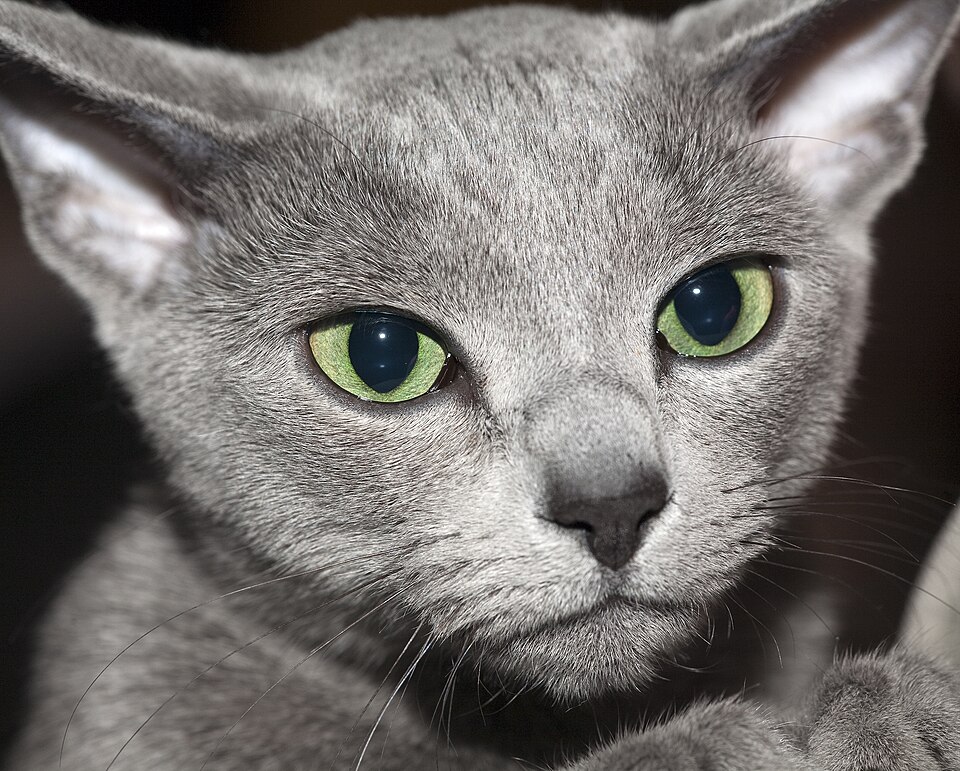
An elegant, medium-sized cat with a plush blue coat that shimmers with silver, emerald-green eyes and a face that seems to smile. Very smart and curious; shy with strangers, loyal to its family. The biggest health issue in this breed is weight gain driven by its love of food.

 Lifespan≈ 9.7 yearsUK 2019 data; based on few cats
 Weightup to 10 lbmales (4.5 kg); females 5–8 lb
 OriginNorthern Russiathought to come from Arkhangelsk
 CoatShort, doublecomb 2–3 times a month
 EnergyModerateloves puzzles and play
 VoiceQuietrarely makes a sound
 With kidsOlder kidsneeds time to warm up
 Alone timeCopes wellstill needs daily play
The Russian Blue is an elegant, medium-sized cat with a plush, silver-tipped blue-gray coat, vivid green eyes and a face that seems to be smiling slightly. It stands out among cat breeds for its intelligence: closed cabinets and drawers are puzzles waiting to be solved. It's shy with strangers but loyal and affectionate with its family. On this page we've pulled together its temperament, care needs and health issues from breed registry standards, veterinary resources and scientific studies.
- Temperament: Very smart, curious and calm; reserved at first, affectionate and playful with its family.
- Easy care: The short, dense double coat needs little attention; according to the CFA, combing two or three times a month is usually enough.
- Watch the weight: It loves to eat, so measured meals and regular play are the most important health issues in this breed.
- Quiet and orderly: It loves its routine, dislikes change and is happiest in calm homes.
- Allergies: The idea that it "sheds little, so it won't cause allergies" isn't true; no cat is completely hypoallergenic.
What to know
 What is the Russian Blue like?
In the CFA's words, the Russian Blue is one of the cleverest of all cat breeds. Its mechanical skills are impressive too: it can manage to open closed cabinets, drawers and even jars. The CFA recommends channeling this curiosity with puzzle toys that work its brain and with interactive games. Once it decides to play with you, it can be very playful; some will bring back a thrown toy again and again.
It's shy at first. According to the CFA, it's typical for a Russian Blue to hide under the sofa when a guest arrives; before long, though, curiosity wins and it comes out to investigate the newcomer. With its family, it's loving: it may settle into your lap or even ride around the house on your shoulder. It's very sensitive to its owner's moods; the CFA describes how it may clown around to cheer you up when you're sad.
PetMD notes that it isn't a clingy cat that always wants to be held; it shows affection on its own terms and in its own way. It loves routine and doesn't like change. It enjoys watching the world from high places. It's a relatively quiet cat.
Every cat is an individual. Breed traits describe general tendencies; how a cat was raised, how much contact it had with people as a kitten and its health shape its personality as much as its breed.
 Who is it a good fit for?
The Russian Blue suits families looking for a calm home life who can feed its intelligence with games and don't expect a cat that's always in their lap. PetMD notes it can also be a good choice for first-time owners who aren't looking for a cuddly lap cat.
| Situation | Good fit? |
|---|---|
| Apartment | Excellent; according to the CFA, it doesn't need a lot of space |
| Family with kids | Good with older kids; give the cat time to warm up |
| Other cats and dogs | Usually gets along; introduce them slowly |
| Long hours alone | Copes better than most cats; according to PetMD, it can be happy as an only cat |
| Busy, noisy home | According to the CFA, it's best suited to calm homes, but many adjust to busier ones |
| First-time cat owners | Good; easy to care for |
The CFA says the Russian Blue makes a good pet for older children who will let it take its time getting comfortable. In a busy household, set aside a quiet room, a high shelf or a hiding spot for it. Because it's so clever, it's a good idea to put child locks on cabinets that hold anything dangerous; our cat-safe home article has a checklist.
Where does it come from?
According to the CFA, the Russian Blue is believed to have come from the area around Arkhangelsk (the "Archangel Isles") in northern Russia, but there's very little written history before the late 1800s. In Russian folk tales, these cats appear as bringers of good luck and healing.
They're thought to have been brought to England by sailors. They took part in the early English cat shows as "Archangel Cats," competing in the same class as all the other solid blue cats. According to the CFA, Scandinavian breeders led the breed's development from the early 20th century until World War II. After the war, US breeders imported cats from Europe and gradually combined the English and Scandinavian lines to create the Russian Blue we know today.
 Appearance and colors
The Russian Blue is a medium-sized, long, fine-boned but muscular and graceful cat. The head is a short wedge, and the ears are large, wide at the base and set far apart; the skin of the ears is thin and almost translucent. The legs are long and slender, and the paws are small. The FIFe standard mentions the breed's "characteristic smile."
- Weight: According to the CFA, males rarely exceed 10 pounds (about 4.5 kg), and females weigh 5 to 8 pounds (about 2.3–3.6 kg).
- Coat: Short, very dense and fine; because it's a double coat, it stands out slightly from the body and feels plush. The CFA describes how running your fingers through it leaves little "footprints."
- Color: Blue only. An even, light-to-medium blue-gray base with silver-tipped guard hairs gives it a shimmering look in the light. Tabby markings are not wanted.
- Eye color: Vivid green. According to PetMD, kittens' eyes start out golden and turn green in adulthood; according to the CFA, the green deepens with age.
Daily care
The Russian Blue is a clean cat and very easy to care for. The CFA says combing two or three times a month is enough to keep shedding under control, and that apart from that you only need to trim the claws and keep the eyes and ears clean. Most shedding happens in spring and fall. The coat can occasionally get oily; in that case a bath may help, so ask your vet which product to use.
- Brain games: Food puzzles, hidden treats and short training sessions are a must for this clever cat. According to PetMD, it can learn to come when called.
- Routine: Regular playtimes keep this routine-loving cat content.
- Height: High shelves and a sturdy cat tree are valuable for a Russian Blue that loves to watch from above.
- Teeth: A Cornell veterinarian quoted by PetMD recommends regular tooth brushing (with a cat toothpaste) for all cats.
For more ideas, see our articles on why cats love high places and playing with an indoor cat.
 Diet and weight
Russian Blues don't need a special food; a complete, balanced cat food that suits their age and lifestyle is enough. The real issue is how much: the CFA notes that Russian Blues have big appetites, are at risk of obesity if they don't get frequent, interactive exercise and need their food intake monitored carefully. The director of the Cornell Feline Health Center, quoted by PetMD, considers excess weight the number one health problem in cats; obesity raises the risk of diabetes and other diseases.
- Measure food instead of eyeballing it; decide the daily amount with your vet based on your cat's ideal weight.
- PetMD recommends measured meals rather than keeping the bowl full all day: three to four a day for kittens, two for adults.
- Serving some of the food in puzzle feeders slows eating down and works its brain.
- Count treats as part of the daily food.
- In the 2024 study by Teng and colleagues, cats whose weight was further from the median for their breed and sex had shorter lives; weigh your cat once a month.
 Health issues to know about
According to the CFA, the Russian Blue is a natural, healthy breed with no known breed-specific genetic problems. The same source notes, however, that some believe its relatively small gene pool may make it more susceptible to certain diseases. The information below is for awareness only; ask your vet about diagnosis and treatment.
Weight
Obesity is the most concrete risk in this breed. Weighing your cat regularly and talking about its body condition with your vet are the best ways to prevent it.
Kidney and eye screening
PetMD writes that polycystic kidney disease (PKD) and progressive retinal atrophy (PRA, a gradual weakening of the eye's retina) can affect Russian Blues and that reputable breeders should screen for them. The same source notes that there's no officially proven link between the breed and these diseases. Knowing what your cat's eyes normally look like helps you notice any change early.
Allergies: is it true that Russian Blues don't cause allergies?
No. PetMD points out that the Russian Blue is a light shedder, but no cat is 100% hypoallergenic. According to a 2022 veterinary review, every cat studied produces the main cat allergen, Fel d 1; because the allergen comes from saliva and skin oil glands, light shedding doesn't make allergies go away. A 2024 allergy review also states that there's no scientific evidence for a hypoallergenic cat breed.
- Fast, labored or open-mouth breathing
- Any change in the eyes or in vision
- Sudden weight loss or loss of appetite
- Hiding and inactivity (cats hide pain)
How long does it live?
A 2024 study using the Royal Veterinary College's VetCompass data found a life expectancy at birth of 9.65 years for "Russian cats" (Russian Blues and Russian cats with no further breed detail) that died in the UK in 2019. However, this figure is based on only 19 cats and has a very wide confidence interval (7.20–12.10 years), so read it with caution. The longest-lived cat in that group was over 19. In the same study, mixed-breed cats had a life expectancy of 11.89 years.
Life expectancy is strongly affected by cats lost at a young age, so this number doesn't mean "a Russian Blue dies at 10." The same study shows that neutered cats and cats at their ideal weight live longer. In a breed with such a big appetite, weight control is the most concrete way to extend its life.
 Before you get one
- Consider a shelter: Purebred cats end up in shelters and rescues too. For those in a hurry, the CFA also suggests asking breeders about "retired" adult cats.
- Not every gray cat is a Russian Blue: Blue-gray shorthaired cats are very common; without pedigree records, you can't say a cat is a Russian Blue. PetMD warns about scams and careless breeders involving this breed.
- If you buy from a breeder: Ask to meet the parents, and ask about vaccination records, health screening and how the kitten has been socialized. According to the CFA, there aren't enough breeders to meet demand, so you may have to wait.
- Red flags: Steer clear of sellers who won't show you the mother, can't provide paperwork, always have kittens ready to go or rush you.
- Registration: Rules vary by country; many places require or recommend microchipping. In Türkiye, owned cats must be microchipped and registered in the PETVET system.
Frequently asked questions
Do Russian Blues cause allergies?
They can. Even though they shed little, they produce the main cat allergen, Fel d 1, like every cat, and there's no scientific evidence for a hypoallergenic breed. If you have allergies, spend time with the cat before adopting to see how you react, and talk to an allergy doctor.
How do you tell a Russian Blue from a Chartreux or a British Shorthair?
All three can be blue, but they're separate breeds. The Russian Blue has green eyes, a slender, long build and a silky, silver-tipped coat. The Chartreux has copper-to-gold eyes and a woolly coat; the British Shorthair is stockier with a round face. See our Chartreux and British Shorthair pages for details.
Why aren't my kitten's eyes green?
According to PetMD, Russian Blue kittens' eyes start out golden and turn vivid green in adulthood; according to the CFA, the green deepens with age.
How big do Russian Blues get?
According to the CFA, males rarely exceed 10 pounds (4.5 kg), and females weigh 5 to 8 pounds (2.3–3.6 kg). Their big appetite makes it easy to go over these numbers; work out your own cat's ideal weight with your vet.
Can they be left home alone?
According to PetMD, they cope with being alone during the day better than most cats and can be happy as an only cat. They still need daily play, mental stimulation and attention.
Sources
- CFA (Cat Fanciers' Association) · Russian Blue ırk tanıtımı ve standardı
- FIFe · Russian Blue ırk standardı (2026)
- PetMD (veteriner onaylı) · Russian Blue
- Teng ve ark. · Life tables of annual life expectancy and risk factors for mortality in cats in the UK, Journal of Feline Medicine and Surgery (2024)
- Sparkes · Human allergy to cats: A review for veterinarians on prevalence, causes, symptoms and control, Journal of Feline Medicine and Surgery (2022)
- Hilger ve ark. · Hypoallergenic animals: A promise of hope for allergic patients?, Allergologie select (2024)
- Resmî Gazete · Kedi, Köpek ve Gelinciklerin Kimliklendirilmesi ve Kayıt Altına Alınmasına Dair Yönetmelik (26 Şubat 2018)
By Tüylüm · Last checked: November 3, 2026. Compiled from the sources above and written in our own words. Spotted a mistake? Write to [email protected] and we'll fix it right away. Photo from Wikimedia Commons, used under the license shown below it.