 Tüylüm
Domestic Pigeon
A calm, soft-voiced bird kept for centuries; Türkiye has a long tradition of keeping pigeons too. Because it is social, it lives in a pair or flock, in a dry, airy and clean loft or a large cage. Cleanliness and regular vet checks are at the center of good care.

 Lifespan≈ 10–20 yearsMerck up to 20; about 6 in the wild
 DifficultyModeratehygiene and housing workload
 OriginEurope, Asia, North Africadomesticated from the rock pigeon
 VoiceSoftcalm, gentle cooing
 Social lifePair or flockat least two birds
 CageLarge cage or loftdry, airy, sheltered
 DietGrain + pellets + greensfinely chopped
 LegalCaptive-bred speciescheck local rules
Pigeons have been seen on streets, rooftops and in keeping lofts in Türkiye for centuries. This page is for anyone who keeps domestic pigeons in a garden or balcony loft, or a single pigeon in a cage; it is written with respect for the tradition but puts the bird's welfare first. It draws on veterinary sources, ecological data and animal welfare organizations.
- Calm and social: Unusual Pet Vets describes them as calm and soft-voiced and says they should live in groups of at least two.
- Devoted mates: In the wild, pairs stay together for life and share the nest (Animal Diversity Web).
- Cleanliness: A dry, airy loft or cage that is cleaned regularly, with food and water kept clear of droppings, is critical for health.
- Health: Infectious diseases, parasites and foot sores are common; regular checks and quarantine for new birds are recommended.
- Lifespan: Merck says up to 20 years, and Animal Diversity Web up to 35 years in captivity.
What to know
 What is the Domestic Pigeon like?
Merck says pigeons are relatively quiet and are often kept in colonies. Unusual Pet Vets describes a calm, soft cooing, more peaceful than louder parrots. Animal Diversity Web says pairs can form at any time of year and stay together for life, that the male builds the nest and that both parents incubate the eggs. During nesting both sexes can be aggressive toward intruders.
Pigeons flock while feeding, sunning and roosting. For companionship, Unusual Pet Vets recommends keeping birds at least in pairs and regular interaction with friendly birds.
Every bird is an individual. Racing, fancy and show pigeons can differ in temperament and needs; ask the breeder or a bird vet about the type you keep.
Who is it a good fit for?
Pigeons suit people who like a quiet, orderly bird and can set aside time for cleaning. You need enough room for a loft or a large cage.
| Situation | Good fit? |
|---|---|
| Apartment | Limited; needs a large cage or a balcony setup, so check building and municipal rules |
| House with a yard | Yes; a sheltered loft can be built |
| Family with kids | Yes, if children are gentle and supervised |
| Home with a cat or dog | Be careful; birds must be protected from predators |
| First-time bird owners | Possible, but don't buy on impulse; hygiene and housing take work |
Where does it come from?
Animal Diversity Web writes that the wild rock pigeon (Columba livia) is native to Europe, North Africa and southwestern Asia. City pigeons are the same species and are now found almost worldwide. The domestic pigeon is a form of that ancestor bred by long selection: racing, fancy and show breeds.
Ecologically, wild pigeons eat seeds and forage on open ground. Wild lifespan is about 6 years, while in captivity it can reach 35 (ADW).
 Appearance and colors
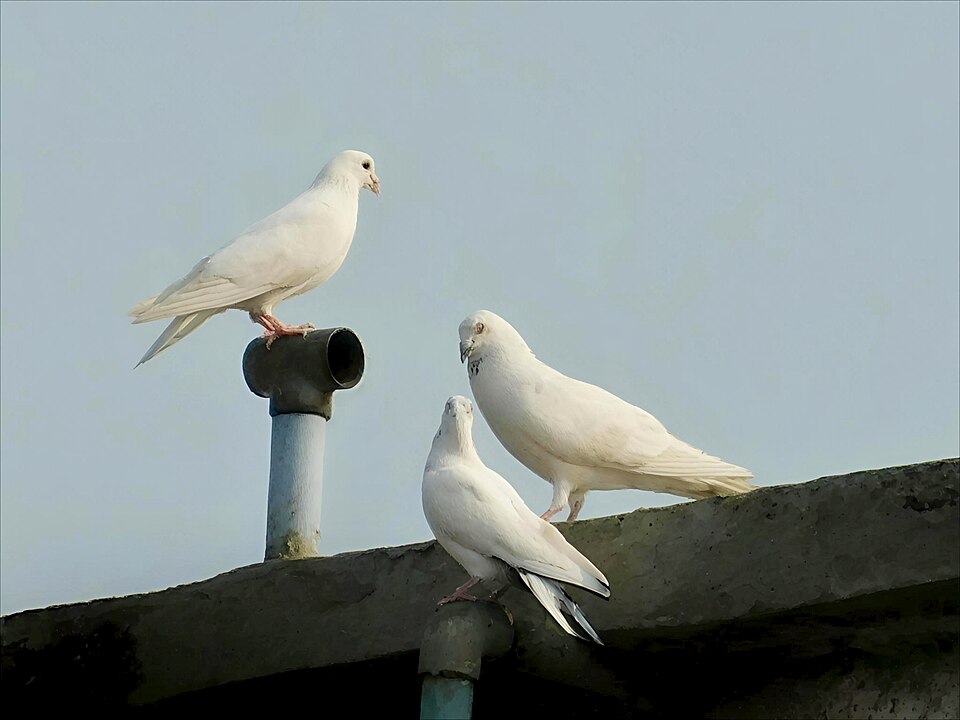
Domestic pigeon breeds are very varied: white, gray, brown, spotted, crested, or with a tail that fans out. The wild type is the gray rock pigeon with a green-purple sheen on the neck. Ask the breeder about your bird's breed and traits.
It's hard to plan care without knowing the breed or type: a racing pigeon and a crested or fantail fancy pigeon may not have the same needs. Ask the breeder you buy from about the breed's traits, parentage and feeding schedule.
 Daily care
- Bathing: Unusual Pet Vets says pigeons enjoy bathing, and a shallow bath and regular misting support healthy grooming. See bird baths.
- Enrichment: You can set up foraging games by hiding food between paper scraps or foliage (Unusual Pet Vets).
- Perches and platforms: Natural perches of varying width and texture help prevent pressure sores on the feet; the bird should be able to wrap its feet around about two-thirds to three-quarters of the perch's circumference (Unusual Pet Vets). Platforms can be offered too.
- Cleaning: Regular cleaning and disinfection and keeping food and water free of droppings (Unusual Pet Vets); see cage cleaning.
 Cage and living space
Unusual Pet Vets says pigeons are social birds that should live in groups of at least two, indoors in a large cage or outdoors in a loft or aviary. Outdoor housing should protect against weather extremes, wild birds, rodents and predators, offer a place to hide, be well ventilated and keep the floor dry. Larger groups need enough room to avoid overcrowding.
RSPCA Australia says birds fly horizontally, so the loft or cage should be long rather than tall, the bird should be able to spread its wings without touching the sides, and birds kept only in a cage need an aviary or safe flying opportunities.
- Materials: Easy to clean and non-toxic; RSPCA recommends strong wire and mesh that keeps wild birds out.
- Hygiene: Food and water dishes where droppings can't fall in; stainless steel is preferred (Unusual Pet Vets).
- Location: Away from foot traffic, noise and predators (RSPCA).
- New birds: Unusual Pet Vets recommends a quarantine of at least 2 weeks (strictly separated from your other birds).
Diet
Unusual Pet Vets says pigeons are mainly fed a quality grain and seed mix, with a commercial pigeon or parrot pellet making up a significant part of the diet. Greens, vegetables and a little fruit should be finely chopped or grated; pigeons can't chew their food. A small amount of fine grit may be offered. Fresh water should always be available, and stainless steel bowls are preferred.
The same source gives a rough breakdown: grain and seed 30 to 50 percent (avoiding mixes with sunflower seeds), pellets 20 to 30 percent, greens and vegetables 20 to 30 percent and fruit 5 to 10 percent. Foods to avoid: avocado, garlic, onions and chives. Work out your bird's diet plan with a vet who treats birds.
 Health issues to know about
Unusual Pet Vets says pigeons are prone to numerous infectious diseases. The information below is for general knowledge; see a vet who treats birds for diagnosis and treatment.
- Infections: Viruses (adenovirus, pox, herpes, paramyxovirus, rotavirus), bacteria (Salmonella, Chlamydia psittaci, E. coli), external parasites (mites, lice) and internal parasites (trichomonas, coccidia, intestinal worms).
- Obesity and foot sores: Obesity and pododermatitis (bumblefoot), an infection on the underside of the feet, are common in captivity.
- Psittacosis (chlamydia): Merck says pigeons resist this infection but can be carriers. The bacteria spread through nasal discharge and droppings and survive for months in dried droppings; it can pass to people. Wear gloves, wash your hands and disinfect cages and dishes daily when handling a sick bird. If you get flu-like symptoms, tell your doctor you keep birds.
- Droppings and dust: ADW notes that histoplasmosis can spread through pigeon droppings; hygiene and ventilation matter when cleaning a loft, and ask your doctor about your own health.
- Regular checks: Unusual Pet Vets recommends a health check every 6 to 12 months, including chlamydia testing.
- Open-mouth or wheezy breathing
- Fluffed feathers while sitting motionless, or refusing food
- A clear change in the color or consistency of droppings
- Swelling or limping in a foot
- Discharge from the nose or eyes
How long does it live?
Merck says pigeons live up to 20 years, and ADW says about 6 years in the wild and up to 35 in captivity. Care, diet, cleanliness and vet checks affect lifespan.
Ask the breeder about your bird's age and health history; an older bird may need more frequent checks. Caring for a long-lived bird is a commitment of many years.
 Before you get one
- Space and legal rules: Rules on keeping pigeons in apartments or housing complexes can vary by place; talk to your building management and municipality. We don't state a nationwide rule here; check the local one with the competent office.
- Buying wildlife: In Türkiye, Article 18 of the Land Hunting Law (No. 4915) restricts the sale and transport of wildlife taken against the rules, and catching and selling native wild birds (such as the goldfinch) is prohibited. The domestic pigeon is a captive-bred species; buy from a breeder whose source is clear.
- Check the seller: RSPCA recommends sellers who share the bird's parentage, history and diet and offer a refund or replacement for health problems.
- Vet check: Have the bird examined by a bird vet after purchase and quarantine new birds.
- Time and cost: RSPCA reminds readers that birds are not low maintenance and that setup and ongoing care can be costly.
Frequently asked questions
Are pigeons quiet?
Merck says pigeons are relatively quiet, and Unusual Pet Vets says they make a calm, soft sound.
Can I keep a single pigeon?
Unusual Pet Vets recommends at least two birds; if you keep one, you must give it regular time.
Do pigeons carry diseases?
Yes, some diseases can pass from birds to people (such as psittacosis). Merck recommends hygiene, gloves and hand washing; if you develop symptoms, tell your doctor you keep birds.
How often should the loft be cleaned?
Unusual Pet Vets recommends regular cleaning, disinfection and keeping food and water free of droppings, without giving a set schedule. For a general bird cage, RSPCA suggests a clean at least weekly, ideally every 1 to 2 days.
Is a fancy pigeon different from a wild pigeon?
It's the same species (Columba livia); domestic forms were developed through selection. Catching a wild or street pigeon and taking it home is not recommended because of the risk of disease; if you've found a sick wild bird, ask a vet or your local wildlife office.
Sources
- Unusual Pet Vets · Pigeon and Dove Care
- Merck Veterinary Manual · Choosing a Pet Bird
- Merck Veterinary Manual · Disorders Affecting Multiple Body Systems of Pet Birds (psittacosis)
- Merck Veterinary Manual · Illness in Pet Birds
- Animal Diversity Web (University of Michigan) · Columba livia
- RSPCA Australia Knowledgebase · What kind of enclosure does my bird need?
- RSPCA Australia Knowledgebase · How should I house my bird?
- RSPCA Australia Knowledgebase · Are birds the right companion animals for me?
- Republic of Türkiye Official Gazette · Land Hunting Law No. 4915 (Article 18, trade in game and wildlife)
By Tüylüm · Last checked: November 10, 2026. Compiled from the sources above and written in our own words. Spotted a mistake? Write to [email protected] and we'll fix it right away. Photo from Wikimedia Commons, used under the license shown below it.