 Tüylüm
Canary
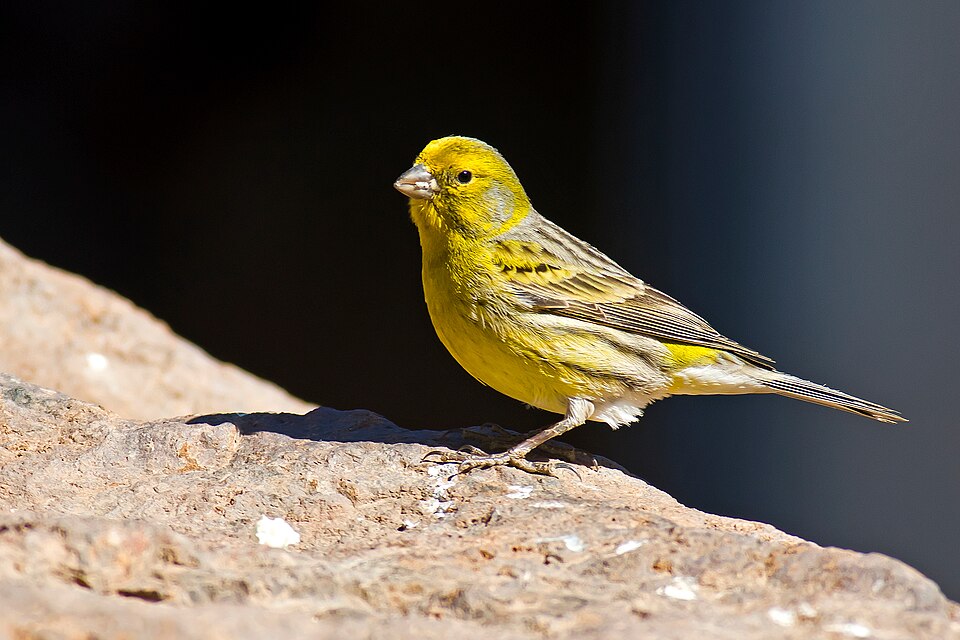
A small songbird known for its song, that doesn't enjoy being handled and gets its exercise by flying. Its care is simple but constant: a long flight cage, a spot away from the kitchen, more than just seed and a home that is very careful about smoke and fumes.

 Lifespan≈ 8–15 yearsMerck up to 15, one care sheet 8–12
 Size≈ 6 in (15 cm)a small finch species
 OriginAtlantic islandsCanary Islands, Madeira, Azores
 VoiceMales singfemales are quieter
 Social lifeSingle or paircage-mates can clash
 CageWide and longexercises by flying
 DietPellets + freshnot seed alone
 LegalCaptive-bred speciescatching native birds is banned
The canary is a bird you listen to: the males' song has made it famous for centuries. But a lovely voice doesn't mean easy care. Canaries get their exercise by flying inside the cage, are very sensitive to polluted air and don't like to be held. On this page we've pulled together diet, cage and health information from veterinary and animal welfare sources.
- Singer: Most males sing and females are quieter; Merck notes that males are known for their song.
- Hands-off: Canaries and finches generally don't enjoy being held; that's the nature of the species, not a failing.
- Flight cage: According to the Oregon Humane Society, cage length matters more than height, and toys should not block the flight path.
- Away from the kitchen: Nonstick pans and cleaning sprays can be deadly for small birds.
- Diet: Pellets and fresh vegetables instead of a seed mix alone; set the proportions with a bird vet.
What to know
 What is the Canary like?
Canaries are generally independent. Merck writes that canaries can be territorial and do best alone or as a mated pair; the Oregon Humane Society adds that most don't want to share a cage with another canary, but a single bird kept alone will be content with care and attention. Both Merck and the Oregon Humane Society say canaries and finches generally don't enjoy being held.
On song: most male canaries are "super singers" and females are quieter (Oregon Humane Society). A 1923 U.S. Department of Agriculture bulletin says that good singers were developed by breeding from males with good voices, and that young birds learn by imitating soft-voiced males. Adult birds usually go silent during the molt (Wetmore).
A canary isn't a bird that will become hand-tame; it's one you watch and listen to, and one whose cage and surroundings you enrich.
Every bird is an individual. Singing, temperament and tameness can vary; the sources describe general tendencies.
Who is it a good fit for?
It suits people who want to listen to and watch their bird and don't expect lap-style contact. A careful air and cleaning routine is essential.
| Situation | Good fit? |
|---|---|
| Apartment | Yes; a male's song may be heard in the morning |
| Family with kids | Yes, but no handling or squeezing, just watching |
| Home with a cat or dog | The cage must be high, secure and out of the animal's reach |
| Someone who wants a cuddly bird | No; a cockatiel or budgie may suit better |
| First-time bird owners | Yes; care is simple but air quality needs attention |
Where does it come from?
The wild canary lives in the Canary Islands (except Fuerteventura and Lanzarote), Madeira and the Azores. The 1923 USDA bulletin says the origin of the canary as a cage bird is "as obscure as the early history of other domesticated animals," that the first caged birds probably came from the Canary Islands, and that the island stock may not be the only ancestor of all of today's canaries. The canary has been considered domesticated for several centuries.
Today's pet canaries vary widely in color, plumage and song type; the wild type is grayer and streaked.
Appearance and colors
The Oregon Humane Society gives an average length of about 6 inches (15 cm). Pet canaries come in a range of yellows, oranges, whites and browns, with or without streaks. Ask the seller, or a bird vet, how to find out your bird's sex.
The 1923 USDA bulletin notes that wild canaries from the Canary Islands, the Azores and Madeira are slightly grayer than their close relatives on the European mainland, with less yellowish green above, a duller yellow rump and a distinctly larger bill. The bright yellow bird at home is the product of centuries of selection; the wild form is plainer and streaked.
 Daily care
- Daily tasks: The Oregon Humane Society recommends changing the cage-floor paper every day, washing the water bottle and bowl daily, and cleaning the whole cage with warm soapy water and disinfectant weekly.
- Bathing: A shallow dish or a spray; Wetmore also writes that captive canaries should be given the chance to bathe daily. See bird baths.
- Toys: Toys must not block flight (Oregon Humane); wooden chew toys work well.
- Air and temperature: A corner spot away from drafts and direct sun.
- Vet: The Oregon Humane Society recommends an annual check-up.
For more detail, see our canary care post.
 Cage and living space
According to the Oregon Humane Society, length matters more than height in a canary cage; it should be at least 18 inches wide, 18 inches deep and 24 inches tall (about 46 × 46 × 61 cm), and you should buy the largest you can afford. Bar spacing should be no more than half an inch (about 1.3 cm). RSPCA Australia says a cage should be wide enough to spread the wings and about two wingbeats long, and that birds need access to a flight aviary or regular safe flying opportunities.
- Perches: Several, at different heights, with one level with the food dishes (Oregon Humane).
- Floor: Plain paper or newspaper.
- Location: Off the floor, in a spot where the household is but away from the kitchen and drafts. See our cage placement guide.
- Living with other birds: Talk to a bird vet or an experienced breeder before housing several males together; RSPCA says compatible individuals should be housed together.
Diet
The Oregon Humane Society recommends keeping high-quality pellets made for the species available at all times, offering a seed mix for variety and giving fresh vegetables and fruit daily (dark leafy greens, carrots, broccoli, apples, pears, melon, kiwi). Avoid avocado, cherry pits, rhubarb, apple seeds and spoiled food.
Merck says diets based on seeds and nuts are low in vitamin A, calcium and many other nutrients and high in fat, and that birds pick out the tasty seeds and leave the pellets. According to Wetmore, too much hemp can fatten birds and make them lethargic enough to stop singing. Ask a bird vet for your bird's diet plan. See foods that are harmful to birds.
 Health issues to know about
Birds hide illness; Merck notes that this makes signs hard to spot and that you need to know your bird's normal behavior. The information below is for general knowledge; see a vet who treats birds for diagnosis and treatment.
- Fume and gas poisoning: Overheated nonstick pans, some sprays and chemical fumes can be fatal to birds very quickly. The Oregon Humane Society stresses keeping the cage away from the kitchen, and Merck says to keep birds far from cooking areas and other fume sources.
- Psittacosis (chlamydia): Merck writes that some birds, including canaries, are less resistant to this infection than parrots and pigeons. It can spread through a bird's nasal discharge and droppings and can pass to people. Gloves, hand washing and daily disinfection are recommended when handling a sick bird. If you get flu-like symptoms, tell your doctor you keep birds.
- Feather and skin changes: If you see feather loss, crusting or constant scratching, have the bird checked by a vet.
- Open-mouth, wheezy or tail-bobbing breathing
- Fluffed feathers while sitting motionless on the cage floor with eyes closed
- A change in the color, consistency or frequency of droppings; weight loss
- Sneezing, coughing, blocked nostrils or a crusty beak or eyes
- Exposure to smoke, sprays or nonstick pan fumes (get the bird into fresh air first, then go to the vet right away)
The Oregon Humane Society recommends watching for these signs and an annual vet check.
How long does it live?
Sources give different ranges: Merck says canaries can live up to 15 years, while the Oregon Humane Society gives an average of 8 to 12. With good care, many birds reach the upper part of that range; diet, air quality, cage space and regular checks matter most.
 Before you get one
- Check rescue groups: Canaries turn up at rescues too.
- Check the seller: RSPCA Australia recommends sellers who share the bird's parentage, history and diet and offer a refund or replacement for health problems. Avoid crowded, dirty places that only offer dry seed.
- Vet check: Have your bird examined by a bird vet soon after purchase.
- No wild-caught birds: The canary is a captive-bred species. In Türkiye, Article 18 of the Land Hunting Law (No. 4915) restricts the sale and transport of wildlife taken against the rules, and catching and selling native wild birds (such as the goldfinch) is prohibited. Buy your canary from a seller whose breeding source is clear.
- For song: The Oregon Humane Society says most males sing; if you want a singer, ask the seller about the bird's sex.
Frequently asked questions
Do female canaries sing?
According to the Oregon Humane Society, most males are "super singers" and females are quieter. So a female isn't entirely silent, but she doesn't sing as much as a male.
Can a canary live alone?
Merck writes that canaries can be territorial and do best alone or as a mated pair. The Oregon Humane Society adds that most don't want to share a cage and that one bird alone will be content with attention and care.
Will a canary sit on my hand?
Usually not; most canaries and finches don't like being held. If you want a hands-on bird, a cockatiel or budgie may suit you better.
Can I put the cage in the kitchen?
No. The Oregon Humane Society says to avoid putting the cage in or near the kitchen "at all costs"; fumes from nonstick pans and cleaners can be fatal to small birds.
Should I give my canary a mirror?
The Oregon Humane Society suggests mirrors with bells as toys for small birds, while Merck says mirror toys can confuse and stress birds. The sources disagree; watch your bird and talk to your vet if it seems stressed.
Sources
- Merck Veterinary Manual · Choosing a Pet Bird
- Merck Veterinary Manual · Disorders Affecting Multiple Body Systems of Pet Birds (psittacosis, fume and gas poisoning)
- Merck Veterinary Manual · Nutritional Disorders of Pet Birds
- Merck Veterinary Manual · Illness in Pet Birds
- Oregon Humane Society · Canary Care Sheet
- U.S. Department of Agriculture · Canaries: Their Care and Management (Farmers' Bulletin 1327, A. Wetmore, 1923)
- RSPCA Australia Knowledgebase · What kind of enclosure does my bird need?
- RSPCA Australia Knowledgebase · How should I house my bird?
- RSPCA Australia Knowledgebase · Where should I get my bird from?
By Tüylüm · Last checked: November 10, 2026. Compiled from the sources above and written in our own words. Spotted a mistake? Write to [email protected] and we'll fix it right away. Photo from Wikimedia Commons, used under the license shown below it.