 Tüylüm
Cockatiel
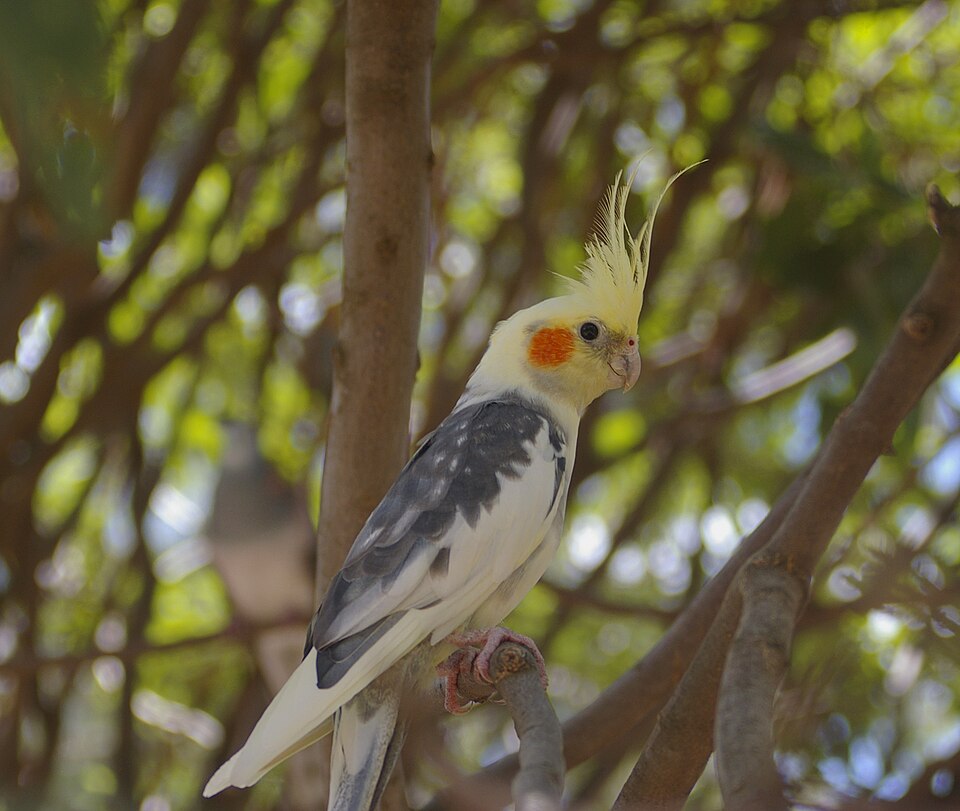
Known for its upright crest and orange cheek patches, the cockatiel is the smallest member of the cockatoo family. It's affectionate and social, and better at imitating whistles and melodies than speech. It's long-lived and needs room: a big cage, safe flying every day and, ideally, a companion.

 Lifespan≈ 10–20 yearsRVC 10–15, Merck up to 20
 DifficultyModeratelong life and a big cage
 OriginAustraliaopen woodland near water
 VoiceModeratewhistles and tunes, less screaming than big parrots
 Social lifeFlock birdideally a companion of its own kind
 CageWide and longdaily out-of-cage flight is a must
 DietMostly pelletsseed as a treat
 LegalCaptive-bred speciesnever wild-caught
At first glance the cockatiel looks like a calm bird: its crest shows its mood, and it keeps you company with whistles. But its nomadic flock heritage and a life span that can reach 15 to 20 years make it a serious responsibility. On this page we've pulled together its needs from veterinary and animal welfare sources.
- Affectionate and social: RVC describes the bird as generally friendly and gentle; ideally it lives with a companion of its own species.
- More whistling than talking: It's better at imitating whistles and other sounds than human words.
- Space: A spacious aviary if possible; if a cage, at least large enough to spread the wings in every direction, plus safe flight every day.
- Delicate lungs: Fumes from nonstick pans, sprays and cigarette smoke can be life-threatening.
- Lifespan: RVC says 10 to 15 years and Merck up to 20; Animal Diversity Web gives 15 to 25 years in captivity.
What to know
 What is the Cockatiel like?
RVC calls the cockatiel "generally friendly and gentle," and says that although its powers of mimicry are good, it is better at imitating whistles and other sounds than human speech. Animal Diversity Web likewise says they can't imitate human speech well but can learn and sing melodies; they use high-pitched chirps to signal stress, and their calls carry over long distances. Merck says they are lively and vocal but quieter than macaws or cockatoos.
Social structure matters: in the wild they form flocks that can number in the thousands, and pairs stay together year-round (ADW). At home you are its flock; if you can't give it enough time, take the idea of a companion seriously.
Every bird is an individual. Talking, hand-tameness and noise level vary from bird to bird.
Who is it a good fit for?
A cockatiel suits people who can spend time with it every day, set aside a safe room for flight and commit to 15 to 20 years. RSPCA Australia reminds readers that birds are not "low maintenance," may need specialized avian veterinary care and require a long-term commitment.
| Situation | Good fit? |
|---|---|
| Apartment | Possibly; its calls are high-pitched and carry, so think of the neighbors |
| Family with kids | Yes; children must be gentle and supervision is essential |
| Home with a cat or dog | Be careful; never leave a bird alone with another pet |
| Long hours alone | Hard; loneliness can lead to distress and behavior problems |
| First-time bird owners | Yes, but be ready for a big cage and a long life |
Where does it come from?
The cockatiel is native to Australia. Animal Diversity Web writes that it lives across the mainland, especially inland, in open woodlands and savannas next to fresh water. Northern populations are nomadic, following water and food, while southern ones migrate with the seasons; flocks can number from hundreds to thousands. Pairs are monogamous and bond early.
RVC says the bird has been domesticated and widely bred since the 1840s. In the wild it eats mostly grass, shrub and acacia seeds, along with fruit, berries and the occasional small insect.
 Appearance and colors
RVC writes that it is the smallest member of the cockatoo family. The wild type has a gray body, yellow face and orange cheek patches, with an upright crest. Pet forms include white, yellow and several patterned varieties.
Telling the sexes apart by sight isn't always easy: RSPCA Australia writes that in many Australian parrots the two sexes look alike and that surgical or DNA sexing may be needed for a valid sexing certificate. If you want to know your bird's sex for sure, ask a bird vet.
 Daily care
- Daily flight: RVC calls free flight an essential requirement; the room must have windows, doors and chimneys blocked off, fans and heaters off and poisonous plants removed.
- Perches: RVC recommends natural branch perches and says sanded perch covers don't shorten nails.
- Toys: RVC suggests rotating toys, choosing sturdy ones and picking zinc-free products.
- Bathing: Water for drinking and bathing in a shallow dish, changed daily (RVC).
- Sleep and light: RVC notes that ultraviolet lighting is important for natural behavior and calcium metabolism, and that bird lamps exist; it suggests mounting the lamp above the cage. See how much do birds sleep for more.
- Bonding: If started young, teaching a bird to step onto a finger and go back to the cage is easy (RVC); see bonding with your bird.
For a fuller guide, see cockatiel care.
 Cage and living space
RVC writes that cockatiels naturally live in large flocks, so they are happiest in a spacious outdoor aviary. A cage should be as large as possible, let the bird stretch its wings in every direction, ideally allow flight, and be used only at night or when the bird is unsupervised.
RSPCA Australia suggests a cage that is long rather than tall (birds fly horizontally), with width for two birds at least three times their combined wingspan and at least two wingbeats between perches. Merck suggests a space at least 1.5 times the wingspan in every direction.
- Materials: RVC recommends zinc-free, non-toxic materials; RSPCA suggests powder-coated or stainless steel.
- Location: Out of direct sun and drafts, and away from the kitchen, smoke and anything that gives off toxic fumes (RVC). See the cage placement guide.
- Cleaning: RVC recommends a full clean at least weekly.
- Companion: RVC recommends at least one companion of the same species. RSPCA says to choose compatible individuals when introducing a new bird.
Diet
RVC writes that in the wild cockatiels mostly eat fruit, berries, grass seed and grain on the ground, and that seed mixes at home often leave nutrient gaps; it recommends a complete formulated pellet diet. RVC describes a mostly pellet diet (with the rest vegetables and a small amount of sprouted seed) and says quality seed should be used as a treat or training reward.
Merck says diets based on seeds and nuts are high in fat and lacking in many vitamins and minerals, that vitamin A deficiency is common and often goes unnoticed and that obesity is widespread. Work out your bird's diet with an avian vet. Water should be fresh every day. See foods that are harmful to birds.
 Health issues to know about
Birds hide illness; Merck writes that they hide sickness so they don't look weak to other animals. The information below is for general knowledge; see a vet who treats birds for diagnosis and treatment.
- Fume and gas poisoning: RVC says nonstick pans (Teflon), air fresheners, deodorants and cigarette smoke can irritate the respiratory tract and sometimes be fatal. Merck notes that overheated nonstick coatings and some heating appliances release gases that can kill birds very quickly.
- Obesity: Linked to seed-heavy diets and inactivity; Merck lists arthritis, fatty liver and heart disease as risks.
- Psittacosis (chlamydia): Merck says species such as budgies and cockatiels resist infection but can be carriers, and that some cockatiels develop eye problems. The bacteria are spread through nasal discharge and droppings of sick, recovering and carrier birds, can survive for months in dried droppings and can spread through dust and feather dander. It can pass to people; when handling a sick bird, wear gloves, wash your hands and disinfect cages and dishes daily. If you get flu-like symptoms, tell your doctor you keep birds.
- Nail and foot problems: Natural branch perches help prevent foot injuries and nail overgrowth (RVC).
- Open-mouth, wheezy or tail-bobbing breathing
- Fluffed feathers while sitting motionless on the cage floor or under the perch
- Loss of balance or weakness
- Loss of appetite, vomiting or a clear change in droppings
- Exposure to smoke, sprays or nonstick pan fumes (get the bird into fresh air first, then go to the vet right away)
RVC recommends an annual health check; problems caught early are easier to manage.
How long does it live?
RVC says 10 to 15 years in captivity, and Merck up to 20. Animal Diversity Web says wild birds typically live 10 to 14 years, captive birds 15 to 25 years, and the oldest recorded bird reached 36. Diet, air quality, out-of-cage flight and regular vet checks matter most.
 Before you get one
- Check rescue groups: Look for bird rescue groups too.
- Check the seller: RSPCA Australia recommends sellers who are honest, share the bird's parentage, history and diet and offer a refund or replacement for health problems.
- Vet check: Have the bird examined by a bird vet right after purchase.
- No wild-caught birds: The cockatiel is a captive-bred species. In Türkiye, Article 18 of the Land Hunting Law (No. 4915) restricts the sale and transport of wildlife taken against the rules, and catching and selling native wild birds (such as the goldfinch) is prohibited.
- Count the cost: RSPCA reminds readers that a bird may be cheap to buy but setup and ongoing care costs can be considerable.
Frequently asked questions
Does a cockatiel talk?
RVC says its mimicry is good but it copies whistles and other sounds better than human words. Animal Diversity Web likewise says they can't imitate human speech well but can sing melodies.
Can it live alone?
RVC ideally recommends a companion of the same species. According to RSPCA, a bird's companion is either a bird or you; if you're the only companion, you must give it enough time.
Should I cover the cage at night?
Merck says covering can stress many birds; RSPCA suggests a separate night cage rather than a cover. Watch your bird, and ask your vet if there's a problem.
How long does it live?
RVC says 10 to 15 years and Merck up to 20. Be prepared for a long commitment.
How often should I take it to the vet?
RVC recommends an annual health check. If you see signs of illness, go without waiting.
Sources
- Royal Veterinary College (RVC) · Cockatiel care (RVC Exotics Service)
- Merck Veterinary Manual · Choosing a Pet Bird
- Merck Veterinary Manual · Disorders Affecting Multiple Body Systems of Pet Birds (psittacosis, fume and gas poisoning)
- Merck Veterinary Manual · Nutritional Disorders of Pet Birds
- Merck Veterinary Manual · Illness in Pet Birds
- Animal Diversity Web (University of Michigan) · Nymphicus hollandicus
- RSPCA Australia Knowledgebase · What kind of enclosure does my bird need?
- RSPCA Australia Knowledgebase · Are birds the right companion animals for me?
- RSPCA Australia Knowledgebase · How should I house my bird?
By Tüylüm · Last checked: November 10, 2026. Compiled from the sources above and written in our own words. Spotted a mistake? Write to [email protected] and we'll fix it right away. Photo from Wikimedia Commons, used under the license shown below it.