 Tüylüm
Havana Brown
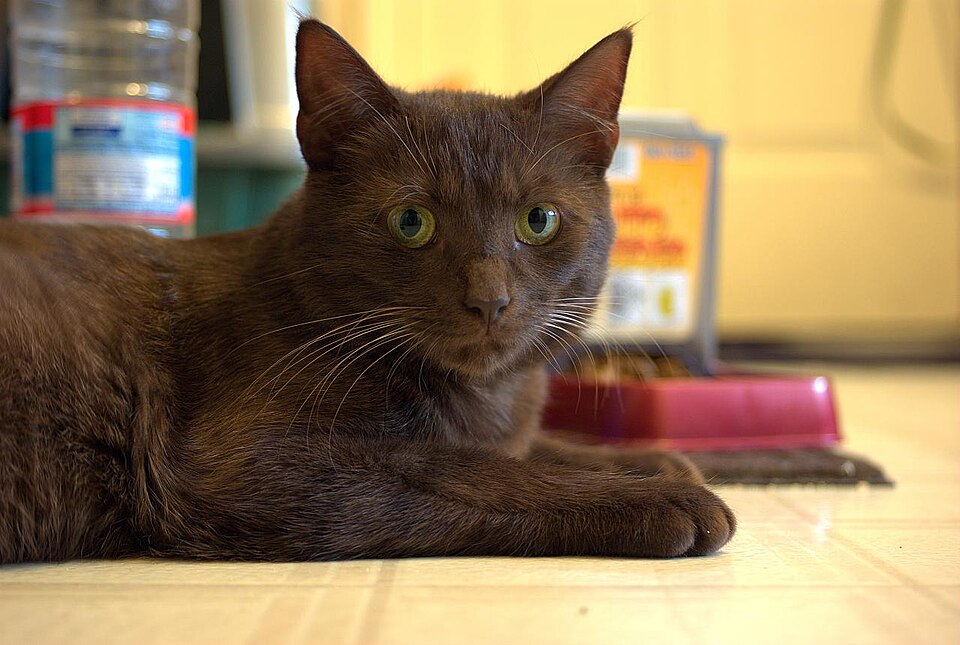
A rare cat of Siamese descent known for a warm chocolate-brown coat from root to tip, vivid green eyes and a corncob-shaped head. Social, curious and attached to its people; it dislikes being alone, and because the breed is small, breeder choice matters.

 Lifespan12–15 yearsGCCF, for the Oriental group; not research data
 Weight8–14 lb (3.6–6.4 kg)GCCF, Oriental group
 OriginUK1950s, from Siamese and black domestic cats
 CoatShort, glossyregular combing with a soft brush
 EnergyModeratecurious and playful, into adulthood
 VoiceCan be talkativeGCCF: for the Oriental group
 With childrenUsually goodat ease in busy homes (GCCF)
 Alone timeDifficultdoes not like being the only cat (GCCF)
The Havana Brown draws the eye even as a single-colored cat: a warm chocolate brown from head to tail, brown whiskers and vivid green eyes. It descends from the Siamese, but it is sturdier and softer in outline. This page covers the breed's history, temperament, care and what we know about its health, and it also explains that the name "Havana" describes different cats depending on the registry.
- Personality: According to the CFA, intelligent, curious, affectionate and social but not pushy; according to the GCCF, it does not like being alone.
- Looks: One even, warm chocolate brown from root to tip, brown whiskers, vivid green eyes; the head is compared to a "corncob."
- Origin: Developed in England after World War II from Siamese and black domestic cats.
- Name confusion: The GCCF treats the Havana as the chocolate Oriental; the CFA recognizes the "Havana Brown" as a separate breed with its own standard.
- Health: Some inherited problems are reported in the Oriental family; we found no breed-specific research.
- Registration: In Türkiye, microchipping and PETVET registration are mandatory for cats.
What to know
 What is the Havana Brown like?
According to the CFA, the Havana is intelligent, curious, affectionate and social, but not the kind that clings to you. It "paws" at people to show affection. Personalities vary: some are shy and bond with one person, others are outgoing. It is moderately active, gets along well with other pets, and often likes to share a bed with a companion. The CFA writes that breeders often suggest getting two cats, or a female if you want only one.
The GCCF's Oriental page paints a similar picture: the Oriental family (Havana included) is lively, intelligent, sociable and playful well into adulthood; most are talkative, enjoy fetch and are very attached to their people. They generally do not do well as only cats and thrive in busy households with children, other cats or dogs. A caution: the GCCF's sentences are about the whole Oriental group, not the Havana alone.
Every cat is an individual. Breed traits describe general tendencies; meeting people and household sounds as a kitten shapes character at least as much as breed does.
 Who is it a good fit for?
It suits households that can give a cat time, play with it and not leave it alone. It can be happier in a busy home, or even with another cat.
| Situation | A good fit? |
|---|---|
| Apartment | Yes, but climbing spaces and play are essential |
| Family with children | Usually compatible; the GCCF considers busy homes with children a good match |
| Other cats and dogs | Usually compatible (CFA); a second cat often helps |
| Long hours alone | Not suitable; does not like being the only cat (GCCF) |
| First-time cat owners | Can be a fit; take its need for attention and play seriously |
Where does it come from?
According to the CFA, solid brown Siamese-type cats existed in England and Europe in the late 1800s but fell out of favor. After World War II, English fanciers began crossing Siamese cats with black domestic shorthairs to breed a solid brown cat, and some were exported to the US. The GCCF says the work began in 1951 when Baroness von Ullman aimed for a solid chocolate cat of "foreign" type. The first matings used a chocolate-pointed Siamese male and a black non-pedigree cat; Mrs A. Hargreaves and Mrs Elsie Fisher later joined, using Siamese and Russian Blues. A self-chocolate male kitten named Elmtower Bronze Idol, born in October 1952, is counted as the first of today's Havanas.
Recognition and the name vary by registry:
- CFA (USA): It accepted the breed in 1959 and granted championship status in 1964. Since 2019 a regulated outcross program has allowed pure Havana Browns to be bred with certain Oriental Shorthairs, chocolate or seal point Siamese, or unregistered black or blue domestic shorthairs; offspring that meet the standard and are bred back to pure Havanas can be registered as Havanas. The CFA requires genetic testing for cats in this program.
- GCCF (UK): It describes the Havana not as a separate breed but as the self-chocolate Oriental. The page does not explain why the name "Havana" was chosen.
So the "Havana" in the UK and the "Havana Brown" at the CFA come from the same lineage but run under different standards and breeding programs. When a breeder says "Havana," ask which registry's standard they mean.
 Appearance and colors
According to the CFA, it is medium in size and structure, with a muscular, moderately long torso that is sturdier than a Siamese's. The legs are straight and the hind legs a little longer than the front. The tail is medium in length, slender and tapering.
- Head: The breed's signature. The head is slightly longer than wide with a rounded muzzle, prominent whisker pads and a distinct break behind them. In profile there is a clear stop at the eyes and a well-developed chin. The breed is often compared to a corncob or a lightbulb.
- Eyes: Oval, medium-sized, set wide apart and expressive. The required color is vivid green, with deeper green preferred.
- Coat and color: The same rich, warm chocolate brown from root to tip; lighter or darker shades are not favored. Faint "ghost tabby" markings can appear in kittens and young adults. The coat is short to medium, smooth and glossy, with no undercoat.
- Whiskers and pads: Whiskers are brown to match the coat, the nose leather is brown with a rosy flush, and the paw pads are rosy.
- Size: The CFA standard gives no weight. For the Oriental group (Havana included), the GCCF says generally 8 to 14 lb (3.6 to 6.4 kg); that is not a Havana-specific figure.
Daily care
Coat care is easy. The CFA says the coat sheds little and recommends daily brushing with a soft boar-bristle brush, plus a soft rubber brush two or three times a month, finished with a chamois or silk cloth for shine. Bathing is usually unnecessary for a cat that is not shown. Do nail, ear and dental care the way your veterinarian shows you. For more, see cat grooming.
- Play and mind: A curious, intelligent cat; give it puzzle feeders, a climbing tree and daily play. The GCCF says the Oriental group enjoys fetch.
- Time alone: Keep alone time short; consider a second cat if needed: introducing two cats step by step.
 Diet and weight
We found no special diet advice for the Havana. A balanced, complete cat food suited to age and lifestyle is enough. Measure the food, subtract treats from the daily amount, set the daily amount with your veterinarian, and weigh your cat monthly. For choosing, placing and cleaning bowls, see our food and water bowl guide; always keep clean, fresh water within reach. If you want to mix wet and dry food or switch foods, talk to your veterinarian and make the change gradually.
 Health issues to know about
The following is for information only; ask your veterinarian for diagnosis and treatment.
The CFA's Havana page does not describe health problems; it only says genetic testing is needed for cats in the regulated outcross program and that it helps keep the breed healthier. The GCCF reports the following in the Oriental family, which is closely related to the Siamese (these come from a group-level description, not a Havana-specific study):
- Flat-chested kitten syndrome: A flattened chest in kittens.
- Progressive retinal atrophy (PRA): An eye disease that leads to blindness over time; reliable DNA tests exist. The GCCF suggests asking breeders whether their cats have been tested.
- Familial hepatic amyloidosis: Deposits of a substance called amyloid in the liver.
Because this is a small breed, the gene pool may be narrow. Ask the breeder about the parents' health checks, DNA test results and the diversity of the pedigree. As with any cat, regular veterinary checks of the heart, kidneys and teeth are a good starting point.
- Fast or open-mouth breathing, or a sunken chest in a kitten
- Poorer night vision, bumping into things or sudden changes in the eyes
- Drinking or urinating a lot, loss of appetite or weight loss
- A swollen belly, jaundice (yellow eyes or gums) or lethargy
- Hiding and reacting when touched (cats hide pain)
How long does it live?
We found no breed-specific lifespan study for the Havana. The GCCF says about 12–15 years for the Oriental group; that is a registry's general range, not research data. Lifespan is most affected by an ideal weight, regular veterinary checks, spaying or neutering, and a safe home. Asking about the parents' age and health history when you get a kitten fills this gap a little. Regular checks, vaccinations, parasite prevention and dental care are the foundation of care; ask your veterinarian which checks they recommend as your cat ages.
 Before you get one
- Think about shelters too: Brown shorthaired cats often turn up in shelters; a loving companion could be waiting there even if it is not a Havana.
- If you buy from a breeder: The breed is rare. Ask to see the mother and father; ask about health checks, DNA test results, the pedigree and vaccination records. Stay away from sellers who sell any brown cat as a "Havana." The standard calls for one even chocolate-brown color, green eyes and a distinct head shape.
- Red flags: Sellers who will not show the mother, who always have kittens for sale, who offer no paperwork, or who rush you to "buy now."
- Legal registration: In Türkiye, microchipping and PETVET registration are mandatory for cats. Details are in our article on PETVET registration and microchips.
- The first days: International Cat Care recommends starting a new cat in a single room, leaving a place to hide, and waiting for the cat to come out on its own rather than forcing it. Our first week with a new cat article walks through it step by step.
Frequently asked questions
Are the Havana and the Havana Brown the same?
They come from the same lineage but are named differently by registry: the GCCF treats the "Havana" as the chocolate Oriental, while the CFA recognizes the "Havana Brown" as a separate breed with its own standard. Ask the breeder which registry's standard they mean.
What color is the coat?
In the CFA standard there is one color: a rich, warm chocolate brown from root to tip, with brown whiskers as well. Kittens may show faint "ghost tabby" markings. The eyes are vivid green.
Can it be left alone?
The GCCF writes that the Oriental family generally does not do well as only cats. The CFA says breeders often recommend two cats.
Does it get along with children and other pets?
The CFA says it gets along well with other pets, and the GCCF says it is happy in busy homes with children, cats and dogs. Keep introductions supervised and slow.
Is grooming hard?
No. The CFA says it sheds little and is easy to care for; regular combing with a soft brush is enough.
How much does it weigh?
The CFA standard gives no weight; the GCCF says generally 8 to 14 lb (3.6 to 6.4 kg) for the Oriental group. Work out your own cat's ideal weight with your veterinarian.
Sources
- CFA (Cat Fanciers' Association) · Havana Brown
- GCCF (Governing Council of the Cat Fancy) · Oriental (Havana, the chocolate Oriental)
- GCCF (Governing Council of the Cat Fancy) · Siamese
- International Cat Care · Helping your new cat or kitten settle in
- Resmî Gazete (Official Gazette of Türkiye) · Regulation on Identification and Registration of Cats, Dogs and Ferrets (February 26, 2018)
By Tüylüm · Last checked: November 10, 2026. Compiled from the sources above and written in our own words. Spotted a mistake? Write to [email protected] and we'll fix it right away. Photo from Wikimedia Commons, used under the license shown below it.