 Tüylüm
Japanese Spitz
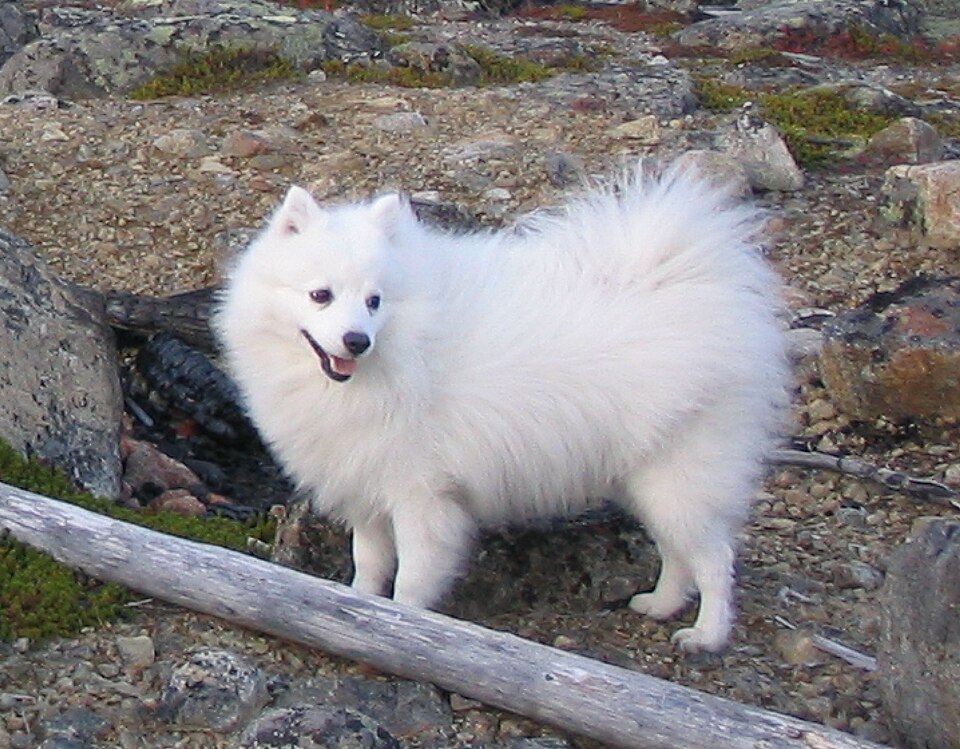
A small companion dog developed in Japan, with a snow-white coat, pointed muzzle and a tail curled over its back. Cheerful, adaptable and relatively easy to train, but it doesn't like being alone and sheds heavily twice a year. Often confused with the larger Samoyed and with the Pomeranian.

 Lifespan≈ 13 yearsmedian, UK 2024 data
 Weight10–25 lb (4.5–11 kg)AKC
 Height12–15 in (30–38 cm)FCI; females slightly smaller
 OriginJapandeveloped from white spitz dogs from the 1920s
 CoatLong, pure whiteblows coat over 2–3 weeks, twice a year
 ExerciseAbout 1 hour a daywalks and play are enough
 With kidsVery goodalways with supervision
 TrainingEasyper the AKC, eager to please and learn
The Japanese Spitz is a relatively new, small companion dog developed from white spitz dogs brought to Japan in the early 20th century. With its abundant snow-white coat, pointed muzzle, erect triangular ears and plumed tail curled over its back, it looks like a small Samoyed. It's cheerful, smart and very attached to its family, and it adapts well to apartment life. We've put this page together from breed registry standards and scientific studies; there is less published health data on this breed than on many others, and we say so clearly.
- Temperament: Per the FCI, intelligent, cheerful and keen; the AKC calls it a "little comedian."
- Companionship: It loves being with its family; according to the AKC, it may develop problem behaviors if left alone for long periods.
- Coat: It sheds its entire undercoat over 2–3 weeks, twice a year, and needs daily brushing during those times.
- Voice: The FCI standard counts noisiness as a fault, though barking still varies from dog to dog.
- Health: Generally a healthy breed; the AKC notes some cases of luxating kneecaps.
- Lifespan: A large 2024 UK study found a median lifespan of 13 years.
What to know
 What is the Japanese Spitz like?
The FCI standard describes the Japanese Spitz as intelligent, cheerful and keen in sense; noisiness is not permitted, so a dog that barks constantly is undesirable for the breed. The AKC introduces it as a loyal, smart companion and a "little comedian" that wants to make its family laugh. It's always game for a hike, a car ride or a trip to the beach, and afterward it's happy to curl up beside you on the sofa.
In the AKC's breed trait chart, the Japanese Spitz is rated at the top of the scale for getting along with children and other dogs, openness to strangers, trainability and adaptability. With ears that move "like radar towers," it's an alert little dog.
- Being alone: According to the AKC, it craves companionship and interaction, and if left alone for long periods it may develop problem behaviors.
- Training: Its intelligence and eagerness to please make it easy to train, but as the AKC warns, without training it will still learn things, just not necessarily what you had in mind.
Every dog is an individual. Breed traits describe general tendencies; how well a puppy was socialized, its training, its daily life and its health shape its personality as much as its breed.
 Who is it a good fit for?
The Japanese Spitz suits families who want to spend time with their dog and are looking for a small but lively and cheerful companion. According to the Royal Kennel Club, a small home and up to an hour of exercise a day are enough, and the AKC says the breed does well both on farms and in apartments.
| Situation | Good fit? |
|---|---|
| Apartment | Excellent; with regular walks and play |
| Family with kids | Good; the AKC rates it highly with children, but gentle play matters with a small dog |
| Other dogs | Usually gets along well |
| Long hours alone | Not a good fit; it needs company |
| First-time dog owners | Good; relatively easy to train and adaptable |
| People who want a non-shedding dog | Not a good fit; it sheds heavily twice a year |
Because it's a small dog, it's important to teach children not to carry it around, not to push it to jump from heights and not to disturb it while it rests.
Where does it come from?
According to the FCI standard, the Japanese Spitz is said to descend from large white German Spitz dogs brought to Japan around 1920 via Siberia and northeastern China. The breed was first shown at a dog show in Tokyo in 1921. In 1925, two pairs of white spitz dogs arrived from Canada, and until around 1936 more dogs came from Canada, the US, Australia and China; their offspring were crossed to shape the breed. The AKC notes that the breed's records were destroyed in World War II, so its full history is unknown.
After the war, in 1948, the Japan Kennel Club published the breed's unified standard. According to the Royal Kennel Club, the breed was recognized in the UK in 1977, and some believe the Samoyed and the white German Spitz influenced its foundation. The Japanese Spitz became known in Europe through dogs exported to Sweden. Today the FCI places the breed in Group 5 among the Asian spitz breeds.
Appearance and colors
According to the FCI, the Japanese Spitz is covered with an abundant pure white coat, with a pointed muzzle, triangular pricked ears and a plumed tail carried over the back. The body is slightly longer than the dog is tall (a ratio of 10 to 11). The eyes are medium-sized, almond-shaped and dark, and the eye rims, nose and lips should be black.
- Height: Per the FCI, males stand 12–15 in (30–38 cm) at the shoulder, and females are slightly smaller. The UKC gives 12–15 in for males and 12–14 in for females.
- Weight: The FCI gives no weight; the AKC lists 10–25 pounds (about 4.5–11 kg).
- Coat: The outer coat is straight and stands off the body; the undercoat is short, soft and dense. The face, ears, fronts of the forelegs and the hind legs below the hocks have short hair, while the neck, shoulders and chest carry a beautiful frill and the tail is richly feathered.
- Color: Pure white only.
- Outside the standard: Drop ears and a tail not carried over the back are disqualifying faults; a tightly curled tail and noisiness are faults.
Daily care
According to the AKC, the Japanese Spitz has a profuse white double coat. It sheds its undercoat twice a year, and each time the entire undercoat comes out in about 2 to 3 weeks; daily brushing is needed then, and hair will inevitably end up on your clothes, furniture and floor. For the rest of the year, the breed is fairly low-maintenance and needs only weekly brushing. The Royal Kennel Club recommends daily grooming.
- Bathing: The AKC says bathing too often can strip the coat's natural oils and irritate the skin, and that once per season is enough. If the dog gets muddy, letting it dry and brushing it out usually does the job; the AKC notes that dirt doesn't stick to the coat much.
- Nails: As with every breed, trim them regularly.
- Eyes and ears: Check weekly; show your vet any redness, discharge or odor.
For tips on building a grooming habit, see our article on dog grooming.
Training and exercise
The Royal Kennel Club recommends up to an hour of exercise a day for the Japanese Spitz. According to the AKC, it needs regular exercise: a free run in a fenced area or a daily walk benefits both body and mind. What it needs most, though, is time with its family; as the AKC stresses, this is a companion dog.
The AKC says the Japanese Spitz is highly trainable thanks to its intelligence and eagerness to please, and recommends early socialization and puppy classes. Short, playful, reward-based sessions suit this cheerful dog perfectly.
- Teach your puppy to be alone in short, gradual steps; our article on separation anxiety shows the way.
- If it barks at the door or window, our article on why dogs bark can help you find the cause.
 Diet and weight
According to the AKC, the Japanese Spitz needs a well-balanced diet; a good-quality food is fine, and feeding twice a day is the most common suggestion. Treats are an important training aid, but too many lead to obesity.
- Set the daily amount with your vet based on your dog's ideal weight, and count treats as part of it.
- A thick coat can hide extra weight, so check the ribs with your hands.
- In a small dog, even a few ounces of gain is a lot in proportion; weighing it once a month shows changes early.
- Clean, fresh water should always be available.
 Health issues to know about
According to the AKC, the Japanese Spitz is generally a healthy, active breed. The Royal Kennel Club's breed page lists no specific health screening for the breed, which sits in Category 1 of its Breed Watch list (no specific points of concern identified). Still, there is little published research specific to this breed, so it's important to ask the breeder about the parents' general health history. The information below is for awareness only; ask your vet about diagnosis and treatment.
Luxating kneecap (patellar luxation)
The AKC notes that some cases of patellar luxation have been found in the breed and that a vet can check for it. It means the kneecap slips out of place. A 2016 UK study by O'Neill and colleagues showed that it's one of the most common orthopedic problems in dogs, that it can lead to lameness, osteoarthritis and pain, and that it's more common in small breeds. Ask for the parents' knee exam results when you look for a puppy.
- Limping or avoiding using a hind leg
- Red, runny or cloudy eyes
- Constant itching, red skin or thinning coat outside of shedding season
- Loss of appetite, low energy or weight loss
How long does it live?
In a 2024 study by McMillan and colleagues that analyzed records of more than 584,000 dogs in the UK, the Japanese Spitz had a median lifespan of 13 years (confidence interval 12.3–13.7); mixed-breed dogs had a median of 12 years. Because this result is based on 117 deaths, its margin of uncertainty is somewhat wide. The Royal Kennel Club lists the lifespan as "over 12 years," and the AKC gives 10–14 years.
A long life means a long commitment. An ideal weight, regular vet checkups and attention to knee health are the most concrete ways to extend this breed's healthy years.
 Before you get one
- Consider a shelter: Purebred dogs end up in shelters and rescues too. Plenty of small, white, spitz-type mixed breeds are also waiting for a home with the same cheerful spirit.
- Know the breed: The Japanese Spitz, Pomeranian and Samoyed are often confused; confirm the breed the seller names by meeting the parents.
- If you buy from a breeder: Ask to meet the parents and ask about knee exams and general health history. Avoid sellers who separate puppies from their mother too early.
- Red flags: Steer clear of sellers who won't show you the mother, always have puppies available, can't provide health paperwork or charge extra for a "mini" below the standard size.
- Registration: Rules vary by country; many places require or recommend microchipping. In Türkiye, owned dogs must be microchipped and registered in the PETVET system. For the first days, see our guide to a new puppy's first week.
Frequently asked questions
What's the difference between the Japanese Spitz, the Pomeranian and the Samoyed?
All three are spitz dogs, but they're different breeds. The Japanese Spitz is a white-only companion dog standing 12–15 in (30–38 cm). The Samoyed is a much larger sled and herding dog, while the Pomeranian is an even smaller toy spitz that comes in many colors. See our Samoyed and Pomeranian pages for details.
Does the Japanese Spitz bark a lot?
The FCI standard counts noisiness as a fault, so the breed ideal is a dog that doesn't bark needlessly. In the AKC's chart, its barking level is moderate. Still, every dog is different, and bored or lonely dogs may bark more.
Does the white coat get dirty all the time?
According to the AKC, dirt doesn't stick to the coat much; even if it gets muddy, brushing once it's dry usually works. The AKC says frequent baths can dry out the skin and that once per season is enough.
Can a Japanese Spitz live in an apartment?
Yes. The AKC says the breed does well in apartments, and the Royal Kennel Club says a small home is enough. What matters is regular walks and plenty of time with its family.
Does it shed?
Yes. For most of the year shedding is light, but twice a year it drops its entire undercoat over 2–3 weeks. Daily brushing is needed during those periods.
Sources
- FCI · Japanese Spitz ırk standardı No. 262
- AKC (American Kennel Club) · Japanese Spitz ırk tanıtımı
- The Royal Kennel Club · Japanese Spitz ırk sayfası
- UKC (United Kennel Club) · Japanese Spitz ırk standardı
- O'Neill ve ark. · The epidemiology of patellar luxation in dogs attending primary-care veterinary practices in England, Canine Genetics and Epidemiology (2016)
- McMillan ve ark. · Longevity of companion dog breeds: those at risk from early death, Scientific Reports (2024)
- Resmî Gazete · Kedi, Köpek ve Gelinciklerin Kimliklendirilmesi ve Kayıt Altına Alınmasına Dair Yönetmelik (26 Şubat 2018)
By Tüylüm · Last checked: November 3, 2026. Compiled from the sources above and written in our own words. Spotted a mistake? Write to [email protected] and we'll fix it right away. Photo from Wikimedia Commons, used under the license shown below it.