 Tüylüm
Shiba Inu
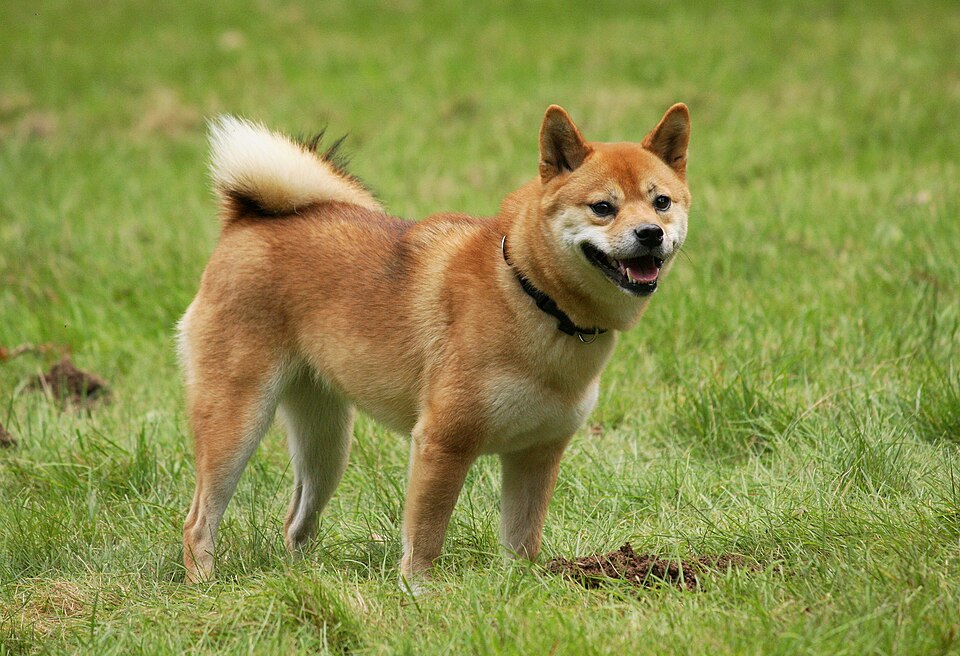
A small spitz and one of Japan's oldest breeds, known for its fox-like face, curled tail and self-assured attitude. Clean, loyal and independent, but it can never be trusted off leash, needs patient training and sheds a lot. One of the longest-lived breeds in UK data.

 Lifespan≈ 14.6 yearsUK 2024; among the longest of 155 breeds
 Weight17–23 lb (7.5–10.5 kg)AKC; males are heavier
 Height14–16 in35–41 cm; FCI: males 39.5, females 36.5 cm
 OriginJapansmall-game hunter of the mountains
 SheddingHeavyblows its coat twice a year
 ExerciseAbout 1 hour a dayloves walks and scent games
 With kidsWith supervisionthe AKC rates it as moderate
 TrainingHardindependent; never trustworthy off leash
The Shiba Inu is a small spitz and one of Japan's oldest breeds, once used to hunt birds and small animals in the country's mountainous regions. Its fox-like face, tail curled over the back and confident stance make it instantly recognizable. It's a clean, loyal and alert dog, but also independent, stubborn and prone to bolting. We've put this page together from breed registry standards, animal welfare resources and scientific studies.
- Temperament: Per the FCI, faithful, with keen senses and high alertness; likes to make its own decisions.
- Leash: The AKC is blunt: a Shiba can never be considered reliable off leash outside a confined area, and no amount of training will change that.
- Cleanliness: According to the AKC, it is practically born housebroken and avoids soiling its sleeping area from a very young age.
- Coat: The short but dense double coat sheds very heavily twice a year.
- Health: According to the AKC, allergies are the most common problem; ask breeders about hip, eye and patella screening and the GM1 DNA test.
- Lifespan: A large 2024 UK study found a median lifespan of 14.6 years, among the longest of the 155 breeds studied.
What to know
 What is the Shiba Inu like?
The FCI standard describes the Shiba's temperament as faithful, with keen senses and high alertness. The AKC introduces it as a bold, confident, spirited and good-natured dog.
In the AKC's breed trait chart, the Shiba is rated at the top of the scale for affection with family and for watchdog instincts, and on the low side for trainability. In other words, expect a loving dog, but not one that jumps at every command.
- Prey drive: Per the FCI, the breed's original job was hunting birds and small animals. Living with cats and small pets takes care and supervision.
- Other dogs: The AKC rates it as moderate with other dogs. Keep introductions slow and controlled.
- Sensitive spots: According to the AKC, Shibas often object to nail trims, which is why getting a puppy used to it early matters.
Every dog is an individual. Breed traits describe general tendencies; how well a puppy was socialized, its training, its daily life and its health shape its personality as much as its breed.
 Who is it a good fit for?
The Shiba suits patient people who respect an independent dog's character and never get careless with doors and leashes. According to the Royal Kennel Club, it can live in a small home and needs up to an hour of exercise a day; the AKC also says the breed is at home in town or country.
| Situation | Good fit? |
|---|---|
| Apartment | Good; with daily walks and mental exercise |
| Family with kids | With supervision; the AKC rates it as moderate with children |
| Other dogs | Depends on the dog; introduce them slowly |
| Cats and small pets | Needs care; it has a hunting background |
| Long hours alone | Most adult Shibas cope, but some can develop separation anxiety |
| First-time dog owners | Can be challenging; an independent temperament takes patience |
| Owners who want off-leash walks | Not a good fit |
According to the AKC, mature Shibas are generally not very destructive when left alone, but some can suffer from separation anxiety. Our article on separation anxiety can help you teach it to be alone step by step.
Where does it come from?
According to the FCI, the Shiba has been native to Japan since ancient times. The word "Shiba" is said to have originally meant "small"; the AKC, on the other hand, says it means "brushwood," referring either to the brush in the mountains or to the dog's reddish color. Shibas hunted birds and small animals in the mountainous areas facing the Sea of Japan. The Royal Kennel Club notes that three regions of Japan developed their own types: Mino, Sanin and Shinshu.
Between 1868 and 1912, English Setters and Pointers arrived and hunting became a sport; Shibas were crossed with these dogs, and pure Shibas became rare. Hunters and fanciers began a serious preservation effort around 1928, and the standard was unified in 1934. According to the FCI, the breed was designated a "natural monument" in 1937 (the Royal Kennel Club gives 1936). The AKC says Shibas were nearly extinct by the end of World War II; today the breed is Japan's most popular companion dog. The first documented Shiba to enter the US arrived with a military family in 1954.
The FCI places the breed in Group 5 among the "Asian Spitz and related breeds," the same section as its larger relative, the Akita.
Appearance and colors
According to the FCI, the Shiba is a small, well-balanced, well-boned and muscular dog whose movement is quick, free and graceful. Its eyes are triangular and dark brown, with slightly upturned outer corners. The ears are small, triangular, firmly pricked and tilted slightly forward. The thick, high-set tail is carried curled over the back or in a sickle shape.
- Height: Per the FCI, males stand 15.5 in (39.5 cm) and females 14.5 in (36.5 cm) at the shoulder, with a tolerance of about half an inch (1.5 cm).
- Weight: The AKC gives about 23 pounds (10.4 kg) for males and 17 pounds (7.7 kg) for females.
- Coat: A harsh, straight outer coat over a soft, dense undercoat; the hair on the tail is slightly longer.
- Colors: Red, black and tan, sesame (a mix of black, red and white hairs), black sesame and red sesame. All must have "urajiro," the whitish coat on the sides of the muzzle, cheeks, under the jaw, chest, belly and insides of the legs. A pinto (patched) color is a fault in the standard.
 Daily care
In the AKC's words, Shibas shed "a lot"; they're said to shed twice a year, but some owners joke that each round lasts six months. Unless a dog is a "long coat," the coat doesn't mat, and brushing or combing during heavy shedding cuts down the hair around the house. The Royal Kennel Club recommends grooming once a week. The AKC adds that blowing the coat out with a strong dryer (not too hot) is a good way to remove loose hair and dandruff.
- Nails: The AKC says Shibas often object to nail trimming. Start in puppyhood, and if it turns into a major struggle, let a professional do it.
- Ears and teeth: Check weekly; show your vet any redness, odor or itching.
- Skin: Allergies are common in this breed, so look for redness and signs of scratching while you groom.
For tips on building a grooming habit, see our article on dog grooming.
Training and exercise
The Royal Kennel Club recommends up to an hour of exercise a day for the Shiba. According to the AKC, most Shibas are fairly energetic and love going for walks; they aren't so hyper that they'll climb the walls without daily exercise, but owners need to be committed to exercising them. Mental work such as scent games also gives that energy a good outlet.
Training takes patience and consistency. Short, reward-based sessions work better than force. Housetraining, on the other hand, is usually easy: according to the AKC, Shiba puppies try to get away from their sleeping area to eliminate by 4 weeks of age and can hold it overnight by 5 weeks, while full bladder control takes a little longer and depends on access to the outdoors.
The AKC's clearest warning: a Shiba can never be considered reliable off leash unless it's in a confined, secure area, and no obedience training will change that. An open door, an unlocked gate or a moment of inattention can be enough for the dog to disappear. Still practice recall (the dog that won't come when called), but don't rely on it and take the leash off.
 Diet and weight
According to the AKC, some Shibas are picky eaters while others will eat anything in sight, and some are prone to weight gain. The AKC's rule of thumb is simple: you should be able to feel the ribs and backbone, but not see them.
- Choose a complete, balanced dog food suited to its age, and set the daily amount with your vet based on its ideal weight.
- Count training treats as part of the daily amount; too many lead to obesity.
- If itching or ear problems keep coming back, make a plan with your vet instead of switching foods often on your own.
- Clean, fresh water should always be available.
 Health issues to know about
According to the AKC, the Shiba is generally a healthy breed, and responsible breeders screen for hip dysplasia, eye disorders and luxating kneecaps. The information below is for awareness only; ask your vet about diagnosis and treatment.
Allergies
The AKC says allergies are the most common health problem in Shibas. In dogs, allergies usually show up as skin irritation and itching and often don't appear until the dog is at least 6 months old. There's no way to test breeding stock for them; the AKC advises against breeding dogs with active allergies.
GM1 gangliosidosis
According to UFAW, this is an inherited, recessive storage disease seen in the Shiba Inu: because an enzyme is missing in the cells, a harmful substance builds up in the brain and nervous system. Signs begin at 5 to 6 months of age and include head tremors, trouble walking and balancing, vision loss and weight loss. The disease is progressive and fatal at around 15 months of age. It's considered rare; about 1% of Shibas in Japan were reported to be carriers. A DNA test can identify carriers. The Royal Kennel Club added GM1 and GM2 tests to the breed's best-practice list from December 2025.
Eyes and joints
The Royal Kennel Club lists an eye exam and gonioscopy as minimum screening for breeding dogs; according to the BVA, gonioscopy means examining the eye's drainage angle with a special lens. Hip screening is also on the recommended list, and the AKC recommends a patella evaluation.
- Head tremors, wobbling, trouble walking or vision loss in a young dog
- Constant scratching, licking, red skin or ear discharge
- Red or cloudy eyes, or squinting
- Limping or avoiding using a hind leg
How long does it live?
In a 2024 study by McMillan and colleagues that analyzed records of more than 584,000 dogs in the UK, the Shiba Inu had a median lifespan of 14.6 years (confidence interval 14.0–15.1). That's one of the four highest values among the 155 breeds in the study; mixed-breed dogs had a median of 12 years. Because the Shiba figure is based on 91 deaths, it carries a wider margin of uncertainty than the larger groups. The AKC gives a range of 13–16 years.
A long life means a long commitment: decide with a friendship of 15 years or more in mind. An ideal weight, regular vet checkups and a careful routine that prevents escapes are the three most important things for this breed.
 Before you get one
- Consider a shelter: Purebred dogs end up in shelters and rescues too. If you're set on a breed, follow breed groups and adoption listings.
- If you buy from a breeder: Ask to meet the parents. Ask for an eye exam (including gonioscopy), hip and patella evaluations and the GM1 DNA test, and find out whether allergies run in the line.
- Red flags: Steer clear of sellers who won't show you the mother, always have puppies available, can't provide health paperwork or sell "mini Shibas."
- Prepare your home: Set up a safe routine for doors, balconies and gates, and never take the ID tag off.
- Registration: Rules vary by country; many places require or recommend microchipping. In Türkiye, owned dogs must be microchipped and registered in the PETVET system. For a breed prone to bolting, a registered microchip also makes it easier to get a lost dog back. For the first days, see our guide to a new puppy's first week.
Frequently asked questions
Can a Shiba Inu live in an apartment?
Usually, yes. The Royal Kennel Club says a small home is enough and recommends up to an hour of exercise a day. What matters most is regular walks, mental exercise and a careful routine that keeps it from slipping out the door.
Can I walk my Shiba off leash?
No. The AKC states plainly that outside a confined area a Shiba can never be considered reliable off leash, and that no training will change that.
Do Shibas shed a lot?
Yes. The coat is short but dense; the AKC says it blows out heavily twice a year, and that some owners say each round lasts almost six months. Frequent brushing during those periods keeps the hair in your home down.
Is the Shiba Inu a small version of the Akita?
No, they are separate Japanese breeds. The Royal Kennel Club notes that the Shiba resembles the Akita in a smaller frame, but their history, size and standards are different. See our Akita page for details.
Is there a "mini" or "toy" Shiba?
There's no such type in the FCI standard, which gives 39.5 cm (15.5 in) for males and 36.5 cm (14.5 in) for females as the ideal height. Be wary of sellers who charge extra for sizes far below the standard.
Sources
- FCI · Shiba ırk standardı No. 257 (2016)
- AKC (American Kennel Club) · Shiba Inu ırk tanıtımı
- The Royal Kennel Club · Japanese Shiba Inu ırk sayfası (egzersiz, sağlık taramaları)
- UFAW Genetic Welfare Problems · Shiba Inu: GM1 gangliosidosis
- BVA · Canine Health Schemes: Eye Scheme (gonioskopi)
- McMillan ve ark. · Longevity of companion dog breeds: those at risk from early death, Scientific Reports (2024)
- Resmî Gazete · Kedi, Köpek ve Gelinciklerin Kimliklendirilmesi ve Kayıt Altına Alınmasına Dair Yönetmelik (26 Şubat 2018)
By Tüylüm · Last checked: November 3, 2026. Compiled from the sources above and written in our own words. Spotted a mistake? Write to [email protected] and we'll fix it right away. Photo from Wikimedia Commons, used under the license shown below it.