 Tüylüm
Samoyed
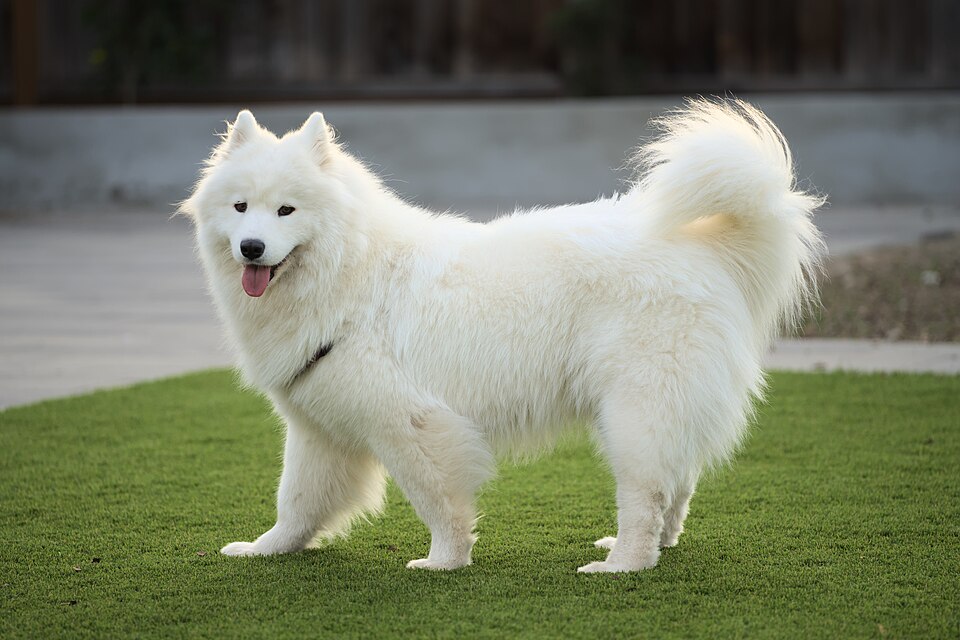
A northern dog known for its snow-white coat and the upturned "Samoyed smile," shaped by centuries of living close to people. Cheerful and very social, but it hates being alone, sheds heavily, loves to bark and needs care in the heat. Its known tendency toward diabetes is worth knowing too.

 Lifespan≈ 13.1 yearsmedian, UK 2024 data; longer than mixed breeds
 Weight35–65 lb (16–29.5 kg)AKC; males are larger
 Height19.5–23.5 in50–60 cm; FCI ideal 57 cm males, 53 cm females
 OriginNorthern Russia, Siberiareindeer herder and sled dog
 SheddingHeavysheds all the time, heavily once or twice a year
 Exercise2+ hours a dayloves to run, pull and play
 With kidsVery goodalways with supervision
 TrainingModeratesmart but makes its own decisions
The Samoyed descends from dogs that herded reindeer, pulled sleds and slept in tents beside the nomadic peoples of Siberia and northern Russia. That close life together lives on today as a cheerful, social temperament that is deeply attached to people. The white coat and "smiling" face make it look irresistible, but the grooming, its inability to cope with being alone and its energy demand real time. We've put this page together from breed registry standards, the national breed club, animal welfare resources and scientific studies.
- Temperament: Friendly, open, lively and very social; per the FCI, it can't be used as a guard dog.
- Loneliness: A Samoyed tied up in the yard and forgotten becomes, in the AKC's words, miserable and destructive.
- Coat: Sheds all the time and very heavily once or twice a year; the Royal Kennel Club recommends daily grooming.
- Exercise: Needs more than 2 hours a day; tends to roam far if it gets loose.
- Health: One of the breeds with the clearest tendency toward diabetes; watch for heavy drinking and frequent urination.
- Lifespan: A large 2024 UK study found a median lifespan of 13.1 years, longer than mixed-breed dogs.
What to know
 What is the Samoyed like?
The FCI standard describes the Samoyed as friendly, open, alert and lively; it should never be shy or aggressive. Because it is so social, it can't be used as a guard dog. The AKC also describes Samoyeds as smart, social and mischievous dogs that demand love and attention.
The Samoyed Club of America (SCA) says the breed's intelligence can be a challenge for owners. In the past, this dog had to make its own decisions to find reindeer, protect the herd from wolves and bring it home, and it still thinks for itself. According to the SCA, a Samoyed trained with love and respect rather than force can be one of the easiest breeds to train, while one handled the wrong way can be among the hardest to control. It is a jealous dog that wants your attention and will try to please you to get it.
- Voice: In the AKC's breed trait chart, vocalizing is rated at the top of the scale. This is a dog that likes to bark; think about your neighbors in an apartment. To understand why, see our article on why dogs bark.
- Chasing: Sources differ here: the FCI standard says the hunting instinct is very slight, while the SCA says the herding instinct is very strong and that a Samoyed may take off after a rabbit even when told to stay. Allow for individual differences, and don't let it off leash in unfenced areas.
Every dog is an individual. Breed traits describe general tendencies; how well a puppy was socialized, its training, its daily life and its health shape its personality as much as its breed.
 Who is it a good fit for?
The Samoyed suits households where someone is usually home, where the dog is at the center of family life, and where there is time for daily grooming and long walks. The AKC rates it highly both with children and with strangers.
| Situation | Good fit? |
|---|---|
| Apartment | Hard; the Royal Kennel Club recommends a large house and yard, and it's a vocal dog |
| Family with kids | Good; the AKC rates it highly with children, but supervision is still a must |
| Other dogs | Mostly good; the AKC rates it as moderate, so introduce them slowly |
| Cats and small pets | Depends on the dog; watch its urge to chase |
| Long hours alone | Not a good fit; very attached to human company |
| First-time dog owners | Possible, but plan ahead for the time grooming, exercise and training take |
| Hot climates | Needs care; shade and cooler hours are a must |
The SCA puts it clearly: a Samoyed that is tied up and ignored becomes a problem dog, while a family that shares its home and life with it is rewarded with love, intelligence and devotion. Our article on separation anxiety can help you teach it to be alone step by step.
Where does it come from?
According to the FCI standard, the breed takes its name from the Samoyed peoples of northern Russia and Siberia. In the southern part of the region, black, white and brown parti-colored dogs herded reindeer, while in the north, pure white dogs with a mild temperament were used for hunting and pulling sleds. The dogs lived close to their owners, slept inside the shelters and were even used as heaters. The Royal Kennel Club also describes the breed as the versatile helper of the nomadic Samoyede and Nenets (Nentsy) peoples, herding and guarding reindeer, pulling loads and hunting.
British zoologist Ernest Kilburn Scott spent three months among the Samoyed peoples in 1889 and brought dogs back with him to England. According to the FCI, these few dogs and those brought back by polar explorers became the foundation of the Western Samoyed, and the first standard was written in England in 1909. According to the AKC, the first Samoyed was registered in the US in 1906, and Samoyeds pulled sleds on polar expeditions of that era. Today the FCI places the breed in Group 5 among the Nordic sled dogs.
Appearance and colors
According to the FCI, the Samoyed is a medium-sized, elegant, white Arctic spitz that gives an impression of power, endurance, charm and self-confidence. The famous "Samoyed smile" comes from the combination of eye shape and the slightly upturned corners of the mouth. The AKC notes that the smile has a function too: the upturned corners keep the dog from drooling, which prevents icicles from forming on its face.
- Height: Per the FCI, the ideal height is 22.5 in (57 cm) for males and 21 in (53 cm) for females, with about 1 in (3 cm) of tolerance either way.
- Weight: The FCI gives no weight; the AKC lists 45–65 pounds (about 20–29.5 kg) for males and 35–50 pounds (about 16–23 kg) for females.
- Eyes: Dark brown and almond-shaped; blue or odd-colored eyes are a disqualifying fault.
- Coat: An abundant "polar coat" with a short, soft, dense undercoat and a longer, harsher, straight outer coat. It forms a ruff around the neck and shoulders, especially in males.
- Colors: Pure white, cream, or white with biscuit markings. It should never give the impression of being pale brown.
 Daily care
The SCA calls it a misrepresentation when new owners are told a Samoyed "never gets dirty, never sheds, never smells and never needs a bath": Samoyeds shed, get dirty and can smell like a wet wool blanket when soaked and soiled. According to the AKC, they shed quite a bit all the time and much more during shedding season, which comes once or twice a year. The Royal Kennel Club recommends daily grooming; mats and tangles can be worked out with a slicker brush or metal comb.
- Bathing: The SCA recommends at least two baths a year, right after the undercoat has been combed out; washing the feet after outdoor play and wiping the body with a damp towel can keep the coat clean for weeks.
- Nails and paw pads: The AKC recommends trimming nails every 3 to 4 weeks. The SCA reminds owners to trim the hair under the paws level with the pads, or the dog may slip.
- Teeth: Brush often with a toothpaste made for dogs.
- Shade: The SCA stresses that the sun can burn the harsh outer coat and turn it brownish, so shade should always be available.
In hot weather
According to PDSA, thick-coated dogs are among the groups most at risk of heatstroke, and nearly three quarters of cases develop during play or exercise. In hot summers, move walks to early morning and evening, provide shade, a cool room and plenty of water, and never leave your dog in a car. See our articles on dogs in hot weather and dog grooming for more.
Training and exercise
The Royal Kennel Club recommends more than 2 hours of exercise a day for the Samoyed. According to the AKC, Samoyeds love being with their people and joining in family activities; they need play in a safely fenced yard or long walks on leash. The AKC warns that the breed has a strong urge to run off and roam, and a loose Samoyed may travel for miles and put itself at risk. Samoyeds excel at activities that use their energy and brains, such as sledding, agility and herding.
For training, the AKC recommends a firm but loving hand: teach expectations early and practice them often. The SCA adds that a Samoyed may find a command pointless, and that turning the task into an enjoyable, clever game works better than a battle of wills.
The SCA explains that fast-growing Samoyed puppies can be vulnerable to overexertion that strains growing joints and bones. Sliding repeatedly on slippery wood or vinyl floors, standing on the hind legs for long periods and jumping off high places are things to avoid in puppies. Talk to your vet about the right amount of exercise.
 Diet and weight
According to the AKC, a Samoyed does well on a high-quality food suited to its life stage (puppy, adult or senior); some are prone to weight gain, so calories and weight should be watched. Weight matters even more in this breed: according to UFAW, overweight dogs are more prone to diabetes.
- Set the daily amount with your vet based on your dog's ideal weight, and count treats as part of it.
- You should be able to feel the ribs under a thin layer of fat. A thick coat can hide extra weight, so check with your hands, not your eyes.
- Pay attention to how much water it drinks: a sudden increase in drinking can be one of the first signs of diabetes.
- Clean, fresh water should always be available.
 Health issues to know about
According to the AKC, the Samoyed is generally a healthy breed, and responsible breeders screen for hip dysplasia and eye and heart problems. The information below is for awareness only; ask your vet about diagnosis and treatment.
Diabetes
This is the most important issue to know about in this breed. According to UFAW, Samoyeds are consistently overrepresented among diabetic dogs in UK and US studies. In a 2025 study of the UK canine diabetes register, the Samoyed was the breed with the highest odds of diabetes compared with mixed-breed dogs. The disease usually starts in middle-aged and older dogs. According to UFAW and PDSA, the first signs are excessive thirst, frequent and heavy urination, weight loss despite a good or increased appetite, and low energy. If it goes unnoticed, it can progress to a severe, life-threatening condition, and cataracts are common in diabetic dogs. UFAW notes that there is currently no genetic test to predict susceptibility and advises against breeding from diabetic dogs or their close relatives.
Eye and kidney diseases
The Royal Kennel Club recommends DNA tests for X-linked progressive retinal atrophy (XL-PRA, a retinal disease that leads to blindness over time) and X-linked hereditary nephropathy (XLHN, an inherited kidney disease), plus an eye exam. The AKC's recommended tests also include a DNA test for retinal dysplasia/oculoskeletal dysplasia (RD/OSD), an eye disease that also affects skeletal development.
Hips, elbows and heart
The Royal Kennel Club recommends hip and elbow screening, and the AKC recommends a hip evaluation and a cardiac exam. Ask for the parents' results when you look for a puppy.
- Suddenly drinking a lot, or urinating often and in large amounts
- Weight loss despite a good appetite, low energy
- Vomiting, not eating or unsteadiness (possible severe diabetes complications)
- Cloudy eyes or bumping into things in dim light
- Nonstop fast panting in the heat, drooling, weakness or collapse
How long does it live?
In a 2024 study by McMillan and colleagues that analyzed records of more than 584,000 dogs in the UK, the Samoyed had a median lifespan of 13.1 years (confidence interval 12.7–13.5). Mixed-breed dogs in the same study had a median of 12 years, which puts the Samoyed among the breeds that live longer than mixed breeds. The AKC gives a range of 12–14 years.
A median is a tendency, not a guarantee. Given the breed's tendency toward diabetes, keeping an ideal weight, regular vet checkups and watching drinking habits, especially from middle age on, are the most concrete ways to support a long, healthy life.
 Before you get one
- Consider a shelter: Purebred dogs end up in shelters and rescues too. If you're set on a breed, follow breed groups and adoption listings.
- If you buy from a breeder: Ask to meet the parents, and ask for hip, elbow and eye screening and DNA tests for XL-PRA and XLHN. Be sure to ask whether diabetes runs in the family line.
- Red flags: Steer clear of sellers who won't show you the mother, always have puppies available, can't provide health paperwork or sell the dog as "non-shedding" or "hypoallergenic."
- Count the time: Daily grooming, long walks and companionship. If there's no room for these, a Samoyed may not be right for you.
- Registration: Rules vary by country; many places require or recommend microchipping. In Türkiye, owned dogs must be microchipped and registered in the PETVET system.
Frequently asked questions
Do Samoyeds shed, and are they good for people with allergies?
They shed, and a lot. The SCA is clear about this. Be careful with the word "hypoallergenic" too: a 2012 study found that breeds marketed as hypoallergenic did not have lower levels of the main dog allergen in their coats, and that there was no evidence for classifying any breed that way. If you have allergies, talk to your doctor and spend time with the dog before deciding.
Do Samoyeds make good guard dogs?
No. According to the FCI standard, the breed is so social that it can't be used as a guard dog. It may announce things with its voice, but it usually greets strangers happily.
Can a Samoyed live in a hot climate?
It can, but summer calls for a special routine: exercise early in the morning and in the evening, always provide shade and plenty of water, and never leave it in a car. If you see fast panting, weakness or vomiting in the heat, cool your dog down right away and call your vet.
When does a Samoyed mature?
According to the SCA, the age of maturity varies with family line and size; it's usually between 2.5 and 3 years and can take up to 4 years. Smaller Samoyeds tend to mature earlier.
Is the Samoyed the same as the Japanese Spitz?
No. They share a similar white spitz look, but the Samoyed is a medium-sized sled and herding dog, while the Japanese Spitz is a much smaller companion dog. See our Japanese Spitz page for details.
Sources
- FCI · Samoyed ırk standardı No. 212 (2019)
- AKC (American Kennel Club) · Samoyed ırk tanıtımı
- The Royal Kennel Club · Samoyed ırk sayfası (egzersiz, sağlık taramaları)
- Samoyed Club of America · About the breed
- Samoyed Club of America · Grooming
- UFAW Genetic Welfare Problems · Samoyed: Diabetes mellitus
- Denyer ve ark. · Epidemiology and clinical management of 1072 dogs with diabetes mellitus in a UK diabetes register, Companion Animal Health and Genetics (2025)
- PDSA · Diabetes in dogs
- PDSA · Heatstroke in dogs
- McMillan ve ark. · Longevity of companion dog breeds: those at risk from early death, Scientific Reports (2024)
- Vredegoor ve ark. · Can f 1 levels in hair and homes of different dog breeds: lack of evidence to describe any dog breed as hypoallergenic, Journal of Allergy and Clinical Immunology (2012)
- Resmî Gazete · Kedi, Köpek ve Gelinciklerin Kimliklendirilmesi ve Kayıt Altına Alınmasına Dair Yönetmelik (26 Şubat 2018)
By Tüylüm · Last checked: November 3, 2026. Compiled from the sources above and written in our own words. Spotted a mistake? Write to [email protected] and we'll fix it right away. Photo from Wikimedia Commons, used under the license shown below it.