 Tüylüm
Nebelung
With its silver-tipped blue coat and green eyes it looks like a misty shadow: a semi-longhaired cat that is shy at first but bonds closely as it gets to know you. Some major registries recognize it, FIFe does not recognize it as a separate breed; since it's a small breed, choosing the breeder matters.

 LifespanNo datawe found no breed-specific lifespan study
 Weight8–13 lb (3.5–6 kg)ACF standard: female 3.5–5, male 4.5–6 kg
 Origin1980sdeveloped by breeder Cora Cobb
 CoatSemi-long, silkyblue, silver-tipped; comb weekly
 EnergyModerate, smartenergetic and bonded (GCCF)
 VoiceSoft-voicedspeaks rarely and softly
 With kidsUsually goodmay be shy at first
 Alone timeDislikes itshouldn't be alone for long
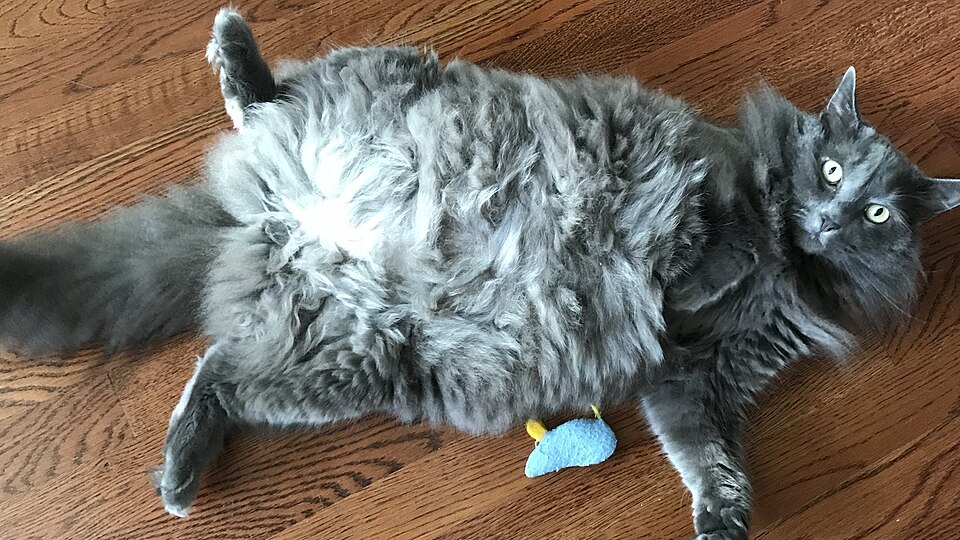
The Nebelung takes its name from the German word Nebel, meaning "mist." It is a medium-sized, long and elegant semi-longhaired cat; the coat is blue with silver tips that glimmer like a dusting of silver, and the eyes are a vivid green. Its close resemblance to the Russian Blue is no accident: according to the GCCF, a geneticist described it as essentially a semi-longhaired Russian Blue. On this page we cover where the breed came from, how organizations treat it and what it's like as a house cat.
- Temperament: Affectionate and bonded, but shy at first; needs quiet, gentle handling.
- Coat: Semi-long and silky; according to the GCCF it needs little brushing, and a weekly steel comb is enough.
- Not a Russian Blue: The GCCF says it's a separate breed; FIFe doesn't recognize the Nebelung as a separate breed.
- Doesn't like being alone: Long stretches by itself may not suit it.
- Registration: In Türkiye, microchipping and PETVET registration are mandatory for cats.
What to know
 What is the Nebelung like?
According to the GCCF the Nebelung is an affectionate, sweet-natured, soft-voiced cat. It is intelligent and energetic, bonds strongly with its family and generally gets along with children and cat-friendly dogs. But it can be shy at first and needs early socialization; it also doesn't enjoy being left alone for long. The ACF standard stresses the shyness too: it needs a quiet, gentle hand.
For a new Nebelung owner, that means not rushing. It may hide when visitors come; give it a high spot and a quiet corner to retreat to and wait for it to come to you rather than forcing it.
Every cat is an individual. Breed traits describe general tendencies; the home it grows up in and its early contact with people shape its character at least as much as breed does.
 Who is it a good fit for?
It suits a calm home, with people who give their cat time and who can be patient while earning the trust of a quiet, reserved cat.
| Situation | A good fit? |
|---|---|
| Apartment | Yes; calm and suited to indoor life |
| Family with children | Usually (GCCF); kids must be gentle |
| Other cats and dogs | Usually fine with cat-friendly dogs; introduce slowly |
| Long hours alone | Not ideal |
| First-time cat owners | Possibly; patience and a quiet home are a must |
Where does it come from?
According to the GCCF the breed's story begins in the early 1980s with breeder Cora Cobb: among the kittens of a shorthaired black female named Elsa, longhaired blue kittens appeared through a recessive gene, and Cobb bred them over several generations. Geneticist Dr. Solveig Pflueger said this cat was essentially a semi-longhaired Russian Blue. The name means "creature of the mist" in German. After Russian Blue breeders objected, the standard was revised to describe a separate breed.
Recognition varies by organization:
- TICA: According to the GCCF, the breed debuted at a TICA show in Paris in 1989 and gained championship status in 1997.
- GCCF: In the UK the breed was first presented in October 2011 at a special exhibition at a Russian Blue show.
- ACF (Australia): Published its standard in 2020, taken from the GCCF's 2019 standard.
- FIFe: Keeps the Nebelung on its list of non-recognized breeds (NEB non). According to FIFe only blue longhaired offspring of blue parents can be registered as Nebelung; longhaired cats of any other color go into the "XLH" register. FIFe lists the Russian Blue as the Nebelung's sister breed.
 Appearance and colors
According to the ACF standard, a long, elegant cat of foreign type with a medium to large build: firm, lithe and muscular but not coarse. Adult males run 4.5 to 6 kg (about 10 to 13 lb) and females 3.5 to 5 kg. The GCCF gives a range of 8 to 16 pounds (3.6 to 7.3 kg), with males clearly heavier than females. Cats may look different before the coat and build are fully set: the adult coat can take up to 2 years to fully develop.
- Head: A slightly modified wedge; high, broad cheekbones, a flat forehead and no bump on the nose.
- Ears: As wide at the base as they are tall, appearing pointed; short, fine hair on the outside and sparse hair inside; ear tufts are desirable.
- Eyes: Large, almond-shaped, set wide apart and as vivid a green as possible in adults; kittens may have yellow eyes.
- Tail: Thick at the base, tapering to a brush; long enough to reach the shoulder blades.
- Coat: Semi-long, made of a fine undercoat covered with thicker guard hairs; dense but soft and silky. Males may have a more developed ruff; breeches and toe tufts are desirable.
- Color: One color only: an even, clear, medium blue. The guard hairs are tipped with silver, giving the look of a light silver dusting; lighter blue feathering behind the ears is expected.
Daily care
Although the coat is semi-long, grooming isn't hard. According to the GCCF it needs little brushing, and a gentle weekly comb with a steel comb is enough to keep the double-layered coat from matting.
- Nails: A scratching post is a must; trim nails the way your vet shows you.
- Ears: Check weekly; redness, odor or discharge means a visit to your vet.
- Play and space: An intelligent, energetic cat; give it high places, a cat tree and hunting games. Because it's shy, a safe place to retreat helps it feel at ease.
For details see cat grooming and why cats love high places.
 Diet and weight
We found no special diet recommendation for the Nebelung. A balanced, complete cat food suited to its age and lifestyle is enough. The GCCF says the breed has a hearty appetite, which can lead to weight gain, so owners should watch for it. Measure the food rather than eyeballing it, subtract treats from the daily amount, work out the daily amount with your vet and weigh your cat once a month; a thick coat can hide weight, so the scale is the most reliable measure.
 Health issues to know about
The information below is for general awareness; for diagnosis and treatment, talk to your veterinarian.
The GCCF describes the Nebelung as a hardy breed with few health problems and no known breed-related disease. That doesn't mean "no problems ever"; the little breed-specific information may also reflect little research. A 2025 review in the journal Animal Welfare points out that heavy inbreeding to establish breeds can lead to small gene pools and a greater tendency to disease; with a small and relatively new breed like the Nebelung, it's worth asking how the breeder handles genetic diversity.
Things to ask the breeder:
- The health checks of the mother and father (including whether any heart screening was done).
- How much diversity there is in the pedigree (is there close inbreeding?).
- Whether the kitten has had a vet check.
Heart, kidney and dental health are monitored with regular vet checkups in every breed.
- Fast or open-mouth breathing
- Sudden weakness, limping or pain in the back legs
- Drinking or urinating a lot, loss of appetite or weight loss
- Hiding and reacting when touched (cats hide pain)
How long does it live?
We found no breed-specific lifespan study for the Nebelung, so we're not giving a number. Ideal weight, regular vet checkups, neutering and a safe home affect lifespan the most. Having no number doesn't mean a cat will live a short or long life; there is simply no reliable figure for the breed. Asking about the parents' ages and health history when you get a kitten fills that gap to some degree. Regular checkups, vaccinations, parasite prevention, dental health and a calm, safe home are the foundation of care; ask your vet which checkups they recommend as your cat ages.
 Before you get one
- Consider a shelter too: Blue-gray, semi-longhaired cats end up in shelters; not every one is a Nebelung, but look-alike, affectionate cats may be waiting there for you.
- If you buy from a breeder: Ask to see the parents; ask about the pedigree (which registry it's in), health checks and vaccination records. Not every blue semi-longhaired cat is a Nebelung: stay away from sellers who call a cat without a pedigree a "Nebelung."
- Red flags: Sellers who won't show the mother, always have kittens, offer no paperwork or rush you to buy now.
- Legal registration: In Türkiye, microchipping and PETVET registration are mandatory for cats. Details in our PETVET registration and microchip post.
- First days: For a shy cat this is the most important period. International Cat Care advises starting a new cat in a single room, leaving a hiding place it can retreat to and letting it come to you rather than forcing contact. Our first week with a new cat post walks you through it.
Frequently asked questions
Are the Nebelung and the Russian Blue the same?
No. The GCCF describes the Nebelung as having been defined as a separate breed after Russian Blue breeders objected; they look very alike, and FIFe lists the Russian Blue as the Nebelung's sister breed. The main difference is coat length: the Russian Blue is short-coated, the Nebelung semi-longhaired. See our Russian Blue page for details.
What colors does it come in?
One color: blue with silver-tipped guard hairs. The ACF standard recognizes only the solid blue pattern. According to FIFe, longhaired kittens in colors other than blue can't be registered as Nebelung.
Is it a shy cat?
Yes, at first. The GCCF and the ACF both stress the shyness and recommend early socialization and a quiet, gentle approach. Once it trusts you, it becomes affectionate and attached to the family.
Does the coat need a lot of care?
No. According to the GCCF it needs little brushing; a weekly steel comb is enough.
How big does it get?
According to the ACF standard males run 4.5 to 6 kg and females 3.5 to 5 kg; the GCCF gives 8 to 16 pounds (3.6 to 7.3 kg). Work out your own cat's ideal weight with your vet.
Can it be left home alone?
The GCCF says they don't like being alone for long. They want play and attention; for long absences, someone you trust should drop in every day.
Sources
- GCCF (Governing Council of the Cat Fancy) · Nebelung
- ACF (Australian Cat Federation) · Nebelung standardı, 2020 (kaynak: GCCF 2019)
- FIFe (Fédération Internationale Féline) · Breeding and Registration Rules, 2026 baskısı (NEB non bölümü)
- Animal Welfare dergisi (2025) · A framework to refocus the conversation around the welfare of UK purebred cats
- International Cat Care · Helping your new cat or kitten settle in
- Resmî Gazete · Kedi, Köpek ve Gelinciklerin Kimliklendirilmesi ve Kayıt Altına Alınmasına Dair Yönetmelik (26 Şubat 2018)
By Tüylüm · Last checked: November 10, 2026. Compiled from the sources above and written in our own words. Spotted a mistake? Write to [email protected] and we'll fix it right away. Photo from Wikimedia Commons, used under the license shown below it.