 Tüylüm
Somali
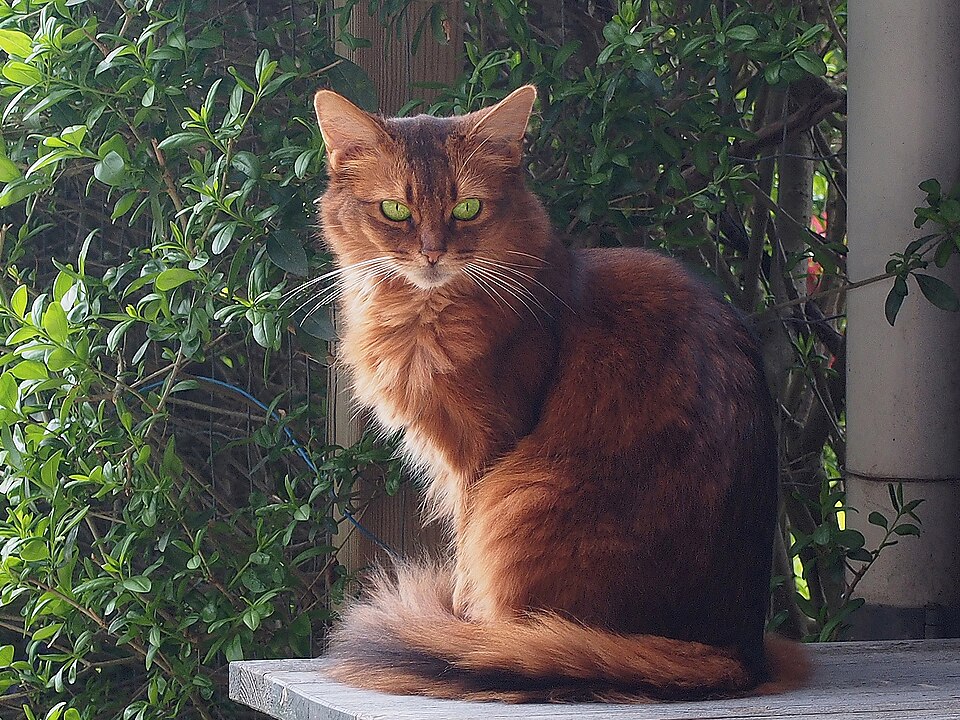
The longhaired version of the Abyssinian: a very active, curious cat with a glowing ticked coat, a full ruff and a bushy, fox-like tail. Its coat resists matting. PK deficiency, an inherited cause of anemia, is especially common in the breed; a DNA test exists.

 Lifespan11–16 yearsrange from vet guides; no large breed study
 Weight6–10 lb (2.7–4.5 kg)medium-sized, muscular
 OriginAbyssinian lineslonghaired Abyssinians, 1960s
 CoatSemi-long, tickedresists matting; comb weekly
 EnergyVery highmakes its own fun when bored
 VoiceQuietuses body language to ask
 With other petsGoodwith proper introductions to cats and dogs
 Time aloneDislikes itgets bored quickly on its own
The Somali carries the Abyssinian's energy and glowing color, then adds a full ruff, a silky medium-length coat and a bushy tail that recalls a fox. The CFA compares its quick, tiptoe walk with its plumed tail held high to a fox chasing prey, though here the prey is usually a feather toy. On this page we've pulled together its temperament, care needs and health issues from breed registries, animal welfare resources and scientific studies.
- Temperament: Very active, curious and bold; it loves to play and follows its people from room to room.
- Easier grooming than it looks: The coat resists matting; combing once a week is usually enough.
- Needs stimulation: A bored Somali finds its own entertainment; climbing space, toys and daily play are a must.
- Health: PK deficiency, which causes anemia, is more common in this breed than in others; a DNA test exists. A form of blindness (rdAc-PRA) and kidney amyloidosis are also known.
- A minority breed: There are few breeders, so you may have to wait for a kitten.
What to know
 What is the Somali like?
The Somali is active, curious and bold. According to the CFA, a closed cupboard door is a challenge to it, and it's smart enough to learn how to open the latch. With plenty of toys it can amuse itself for hours, but it's happiest playing with someone, whether a person or another pet.
Its well-balanced temperament has a very sweet side: it shows affection with head butts, kneading and sometimes by "rearranging" your hair. According to the CFA, it follows its people from room to room and matches their mood: purring at your feet while you work, then bursting with energy when you get moving around the house. It's fascinated by water, and some learn to turn on a faucet to watch it drip.
It communicates well with people, but usually through body language rather than its voice: it makes it very clear when it wants attention, play or food. A veterinarian who keeps Somalis herself, quoted on PetMD, describes them as social "almost annoyingly so."
Every cat is an individual. Breed traits describe general tendencies; how a cat was raised, how much contact it had with people as a kitten and its health shape its personality as much as its breed.
 Who is it a good fit for?
The Somali suits people who spend time at home, enjoy playing with their cat every day and are ready to include it in everything they do. Because it's so active, it may wear you out if you want a calm cat that naps in your lap.
| Situation | Good fit? |
|---|---|
| Apartment | Good; cat trees, shelves and play are a must |
| Other cats and dogs | Usually gets along with proper introductions |
| Long hours alone | Hard; a lonely, bored Somali is an unhappy one |
| Homes with no time for play | Not a good fit; its energy needs an outlet |
| First-time cat owners | Possible; easy to groom, but it needs a lot of attention |
According to PetMD, if you plan to leave a Somali home alone, interactive toys, puzzles, scratching posts and climbing spaces are a must; a bored Somali will find ways to entertain itself, which often means scratching your furniture. In families with children, the usual rules apply: never force the cat to be held, and give it a high spot to escape to.
Where does it come from?
According to the CFA, there's no documentation of exactly how the longhair gene entered Abyssinian lines. Estimates suggest only about a dozen Abyssinians survived World War II; since litters of unknown parentage were registered during that period, the longhair gene may well have been introduced then. Longhaired kittens began to appear in Abyssinian litters. They were usually quietly placed as pets, and most breeders didn't want to admit producing them, but a stubborn few kept working with them.
In the mid-1960s, Evelyn Mague produced "George," one of the first documented longhaired Abyssinians, and named the developing breed "Somali," after Somalia, which borders Abyssinia (now Ethiopia). Acceptance at shows was a long struggle: the CFA began registering Somalis in 1976 and granted championship status in 1979.
 Appearance and colors
A medium-sized, well-proportioned, solid and muscular cat. The head is a gently rounded wedge, the ears are large and flaring, and the almond-shaped eyes are very expressive.
- Weight: According to PetMD, 6–10 pounds (about 2.7–4.5 kg).
- Coat: Medium-length, silky and glowing. As in the Abyssinian, each hair has several bands of color (ticking). The coat is longer around the neck (the ruff), on the belly and on the back of the hind legs, and reaches its full length on the bushy tail.
- Colors: The CFA standard has four colors: "ruddy," a reddish brown, plus cinnamon, blue and fawn.
- Eye color: According to the CFA, anywhere from intense green to rich copper.
Daily care
Despite its longer coat, the Somali isn't hard to groom. According to the CFA, the coat is relatively tangle-free and resists matting; combing once a week is recommended to remove dead hair and control shedding.
- Baths: Usually not needed. But according to the CFA, some cats have oilier coats that can clump, especially at the base of the tail and along the spine; if you notice this, a bath helps. Talk to your vet about a suitable shampoo and method.
- Climbing and play: Cat trees, shelves and several interactive play sessions a day are a must.
- Mental stimulation: Food puzzles and hidden treats keep a smart cat from getting bored.
- Teeth and claws: Regular nail trims and dental care are part of the basic routine recommended by vet-reviewed sources.
- Ears: Check the ears while grooming; show your vet any redness, odor or buildup.
For grooming habits, see our article on cat grooming; for play ideas, see playing with an indoor cat and cats and high places.
 Diet and weight
The Somali doesn't need a special food; a complete, balanced cat food suited to its age is enough. A full coat can hide weight changes, so trust the scale rather than your eyes.
- Decide the daily amount with your vet based on your cat's age, activity and ideal weight.
- Weigh your cat once a month; feeling for the ribs under the coat is another good check.
- Serving part of the food in puzzle feeders keeps it busy and is a safe outlet for hunting instincts.
- Keep an eye on water intake; if your cat starts drinking noticeably more, tell your vet.
 Health issues to know about
Because it shares its lineage with the Abyssinian, the Somali also shares its known inherited diseases. The information below is for awareness only; ask your vet about diagnosis and treatment.
Pyruvate kinase deficiency (PK deficiency)
A recessively inherited disease that makes red blood cells break down early and causes anemia. According to Science for Animal Welfare (formerly UFAW), it's more common in the Somali than in other breeds. Affected cats often show signs of anemia before age 3, but the age of onset and severity vary widely: lethargy, weakness, diarrhea, pale gums, poor appetite, a dull coat, weight loss and jaundice may appear, and some cats start eating things like cat litter. In the 2008 study by Kohn and Fumi, some affected cats never showed signs. In the large 2022 DNA study, the variant was found in 11 of the 78 Somalis tested. Science for Animal Welfare recommends testing every Somali used for breeding, and the CFA notes that testing lets breeders easily remove carriers.
Progressive retinal atrophy (rdAc-PRA)
An inherited eye disease in which the retina slowly degenerates; it starts late and can progress to blindness. It was first described in Abyssinian and Somali cats. The disease appears in cats that carry two copies of the variant. In the 2022 study, the variant was found in 6 of the 47 Somalis tested. A DNA test exists.
Kidney amyloidosis
A disease in which abnormally folded proteins build up in the kidneys and damage kidney function. Science for Animal Welfare notes that it's more common in Abyssinian lines than in other breeds and runs in families, but there's no DNA test. The CFA also advises Somali buyers to ask the breeder about any history of kidney amyloidosis in the line. Drinking and urinating a lot, weight loss and poor appetite are the signs to watch for.
Blood type
Barrs and colleagues write that type B blood is common in Abyssinians and Somalis worldwide. Have your cat's blood type tested before any transfusion or breeding.
- Pale or yellowish gums, marked lethargy
- Eating things that aren't food, like litter or plastic
- Drinking and urinating a lot, weight loss
- Trouble finding its way in the dark, bumping into things
How long does it live?
We couldn't find large lifespan data for the Somali like the UK VetCompass studies. Vet-reviewed sources give a lifespan range of 11–16 years for the breed. That's a general range, not a precise average; well-cared-for cats can go beyond it.
Blood and kidney health are the main issues that can affect lifespan in this breed. A vet checkup at least once a year, blood and urine tests when recommended, a healthy weight and dental care are the most concrete steps.
 Before you get one
- Consider a shelter: Purebred cats end up in shelters and rescues too. Follow breed groups and adoption listings.
- Ask the breeder: Request the parents' PK deficiency and rdAc-PRA DNA tests. For kidney amyloidosis, which has no test, ask openly about any history of kidney disease in the line.
- Be patient: According to the CFA, the Somali is a minority breed with few breeders, so you may have to wait for a kitten. Avoid sellers who rush you, won't show you the mother or can't provide paperwork.
- Registration: Rules vary by country; many places require or recommend microchipping. In Türkiye, owned cats must be microchipped and registered in the PETVET system. See our PETVET and microchip guide for details.
Frequently asked questions
Is the Somali the same breed as the Abyssinian?
They come from the same lineage: the Somali is the longhaired version of the Abyssinian. The CFA registers them as separate breeds. Their personalities and known health issues are very similar; the difference is the coat length and bushy tail. See our Abyssinian page for details.
Is a longhaired cat hard to groom?
Not this one. According to the CFA, the coat resists tangles and matting; combing once a week is usually enough. If the base of the tail gets oily, an occasional bath may be needed.
Do Somalis shed?
Yes, but not heavily. According to PetMD, it isn't considered a heavy shedder, but expect to see some hair around the house.
Why is the Somali called a "fox cat"?
Because of its bushy tail, reddish coat and quick, tiptoe walk. The CFA, too, compares its look to a fox in pursuit of prey.
Can a Somali be left home alone?
For short periods, yes, but a Somali left alone and bored quickly becomes unhappy. If you're out all day, consider toys, climbing spaces and ideally a feline companion.
Sources
- CFA (Cat Fanciers' Association) · Somali breed profile and standard
- Science for Animal Welfare (formerly UFAW) · Genetic welfare problems: Somali, pyruvate kinase deficiency
- Kohn and Fumi · Clinical course of pyruvate kinase deficiency in Abyssinian and Somali cats, Journal of Feline Medicine and Surgery (2008)
- Barrs et al. · Erythrocytic pyruvate kinase deficiency and AB blood types in Australian Abyssinian and Somali cats, Australian Veterinary Journal (2009)
- Menotti-Raymond et al. · Widespread retinal degenerative disease mutation (rdAc) discovered among a large number of popular cat breeds, The Veterinary Journal (2010)
- Anderson et al. · Genetic epidemiology of blood type, disease and trait variants in over 11,000 domestic cats, PLOS Genetics (2022)
- Science for Animal Welfare (formerly UFAW) · Genetic welfare problems: Abyssinian, amyloidosis
- PetMD (vet-reviewed) · Somali cat breed
By Tüylüm · Last checked: November 3, 2026. Compiled from the sources above and written in our own words. Spotted a mistake? Write to [email protected] and we'll fix it right away. Photo from Wikimedia Commons, used under the license shown below it.