Poison dart frog care: non-toxic in captivity, hands-off, and a humid planted terrarium
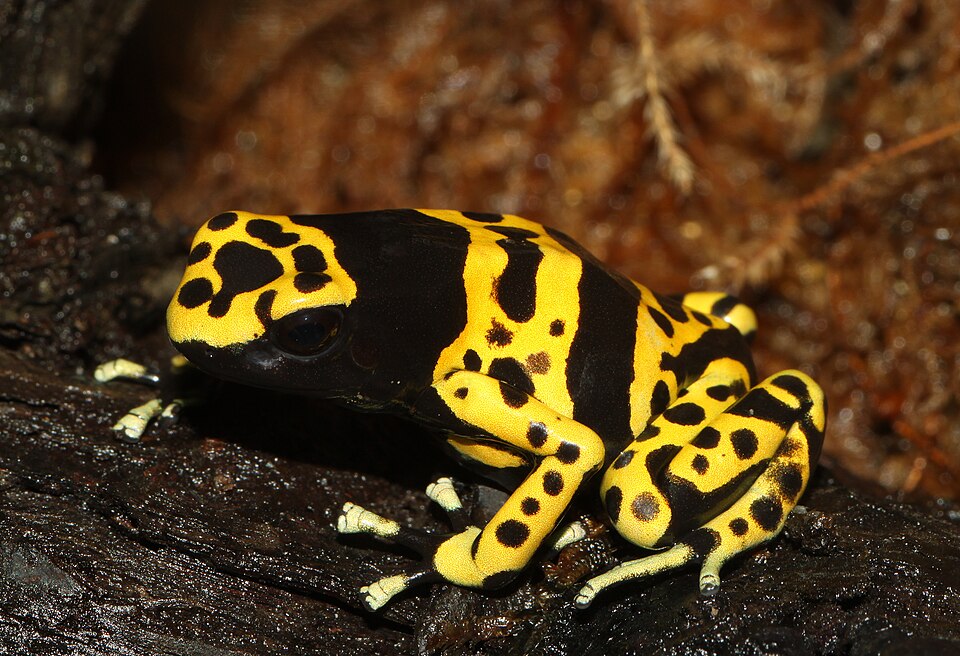
Poison dart frogs, with their bright yellow, blue or red colors, are among the most eye-catching terrarium animals, and their name gives them a dangerous reputation. But is a dart frog raised at home really poisonous? According to the Smithsonian's National Zoo, the San Diego Zoo and the BGSU Herpetarium, frogs raised in zoos and other human care are not. This article draws on those sources to explain why, what a humid planted terrarium for a small dart frog looks like, and why you shouldn't handle them. For other amphibians, see tree frog care.
- Toxins come from food: Frogs don't make the poison themselves; they get it from certain insects they eat in the wild.
- Non-toxic in human care: According to the National Zoo, frogs fed non-poisonous insects don't become poisonous.
- Home: In BGSU's example, a humid, planted, well-drained terrarium with shallow water and daytime temperatures of 75-84 °F (23.5-29 °C).
- Food: Flightless fruit flies and tiny crickets; some are dusted with a vitamin mix.
- Handling: BGSU recommends not handling them because they are very fragile; the CDC warns about Salmonella in amphibians.
- Non-toxic isn't risk-free: Keep washing your hands.
Why are dart frogs called "poisonous"?
According to the San Diego Zoo, dart frogs carry toxins in their skin, which are unpleasant to predators and, for some species, dangerous. The National Zoo says only three species, all in the genus Phyllobates, have been documented as being used on hunting arrows. The poison isn't something the frogs make: per the National Zoo, the toxins come from certain arthropods and other insects eaten in the wild (ants, termites and the like), which likely get the compounds from plants. The toxins pass through the frog's digestive system unchanged and collect in skin glands. The bright colors warn predators.
Human care is different. The National Zoo and San Diego Zoo say frogs in human care aren't poisonous because the crickets and fruit flies they eat don't contain these toxins. The San Diego Zoo adds that frogs on a regular zoo diet gradually lose most of their toxicity and that zoo-hatched frogs aren't poisonous. BGSU Herpetarium likewise says captive-bred frogs are not poisonous. Chester Zoo describes the golden poison frog (Phyllobates terribilis) as the most poisonous frog in the world and lists it as Endangered on the IUCN Red List.
The sources are reassuring about toxins but clear about care: BGSU Herpetarium says these frogs are very fragile and should not be handled. The CDC says amphibians can carry Salmonella in their digestive tracts even when they look healthy.
How big, how long-lived?
The National Zoo says dart frogs are generally about 20 to 40 mm (0.75 to 1.5 inches) long; the San Diego Zoo gives a range of 1 to 6 cm depending on the species. According to the National Zoo, most live over ten years in human care; the San Diego Zoo says 8 to 15 years in zoos. For the yellow-banded dart frog BGSU describes, typical lifespan is 10 to 15 years. A tiny frog is a long commitment.
The terrarium: humid, planted, well-drained
The National Zoo says dart frogs live in wet tropical forests in Central and South America and lay their eggs in dark, moist leaf litter, with some species using bromeliads. The San Diego Zoo says most live in leaf litter on the forest floor.
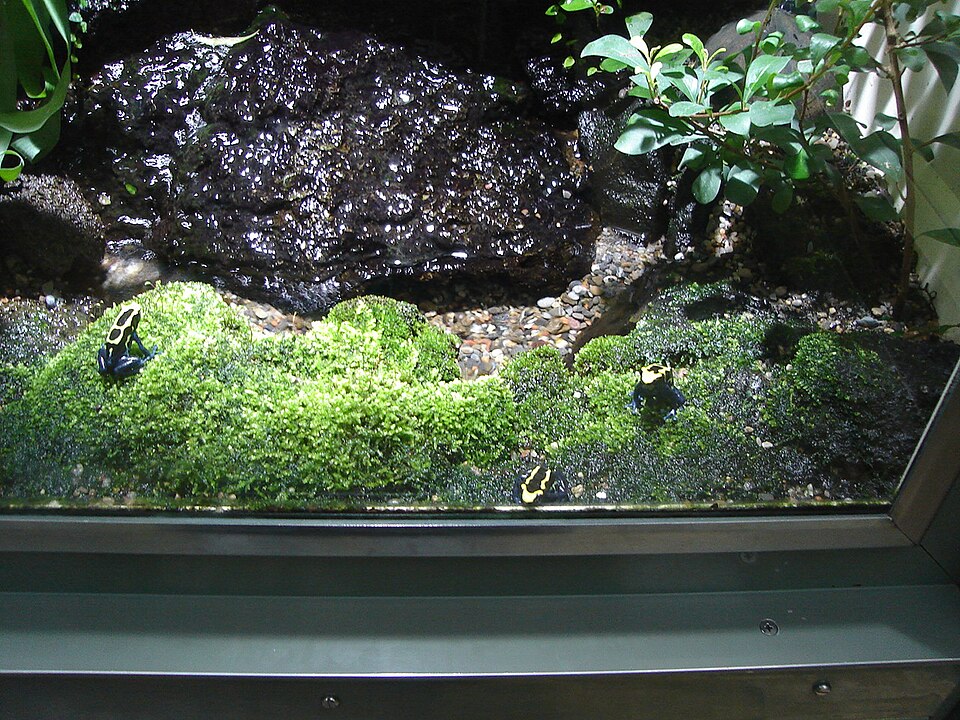
The BGSU Herpetarium's care page for the yellow-banded dart frog (Dendrobates leucomelas) gives a concrete example; other species may need different conditions:
| Topic | BGSU example |
|---|---|
| Enclosure | Well-planted aquarium with good drainage, 10 gallons (about 38 liters) |
| Substrate | Expanded clay pellets topped with sphagnum moss |
| Plants | Pothos and bromeliads |
| Humidity | About 95%, using a hinged glass lid with small ventilation holes |
| Temperature | Daytime 75-84 °F (23.5-29 °C) |
| Water | Shallow; these frogs are weak swimmers and can drown |
| Hiding spot | Half a coconut shell or a flowerpot |
| Lighting | Full-spectrum |
| Group | A breeding pair or a trio |
For cleaning and water quality, see cleaning an amphibian terrarium.
What do they eat?
According to the National Zoo, dart frogs in the wild mainly eat small insects such as ants and termites; the San Diego Zoo's list also includes centipedes and tiny beetles. In human care, the sources give these examples:
- BGSU: Flightless fruit flies or tiny (pinhead) crickets daily, dusted with a calcium-vitamin mix.
- San Diego Zoo: Pinhead crickets, fruit flies and young springtails.
- National Zoo: Small crickets, bean beetles, black worms and fruit flies, occasionally dusted with vitamin powder.
- Amounts: None of the sources gives a feeding schedule for a home; for how many insects and how much supplement, ask a veterinarian who knows amphibians.
No touching, plenty of hand washing
BGSU Herpetarium considers these frogs very fragile and recommends not handling them. If one must be moved, the page describes guiding it into a small plastic container, closing the lid, carrying it, and letting it climb out at the new location.
The CDC's basics for amphibians: wash your hands with soap and running water after feeding, handling their food, cleaning the habitat or touching their waste, and before eating; keep amphibians and their equipment out of kitchens and food areas; and children under 5 shouldn't touch amphibians or their habitats. More in touching amphibians.
If your frog's behavior, appetite or appearance changes, ask a veterinarian who knows amphibians without waiting. This article is a care and information guide; it contains no doses, treatments or diagnoses.
Before you buy
The National Zoo and San Diego Zoo say dart frog populations are declining and that rainforest loss and the illegal pet trade play a part; the San Diego Zoo specifically says blue poison frogs have been smuggled worldwide, causing a rapid decline. The National Zoo recommends researching before adopting an exotic pet. For the rules on keeping these species in Türkiye, ask an official source (the Ministry of Agriculture and Forestry or your regional DKMP directorate); we couldn't verify an official source on this. What to know before getting an amphibian helps with general preparation.
Tüylüm's Today tab lists ready-made daily care tasks for your pet's type. Food & litter supplies reminds you before supplies run out, and you can add a photo of your purchase receipt or paperwork to Documents.
Frequently asked questions
Is my dart frog poisonous?
According to the sources, frogs raised in human care and fed non-poisonous insects are not poisonous; the National Zoo says frogs fed non-poisonous insects don't become poisonous. That doesn't mean handling is fine.
How much should I feed?
The sources give no home feeding schedule; they only list which insects are used. For a feeding plan, ask a veterinarian who knows amphibians.
Can dart frogs live together?
BGSU recommends a breeding pair or a trio for the yellow-banded dart frog. The San Diego Zoo notes that blue poison frog tadpoles eat their siblings, so species-specific information matters.

Keep track of your pet's care in TüylümLog vet visits, vaccine and medication dates, and we'll remind you when it's time. Share it all with your family in Home.
Sources
- Smithsonian's National Zoo · Poison frogs
- Smithsonian's National Zoo · After an insect detox, can once-poisonous frogs get their spice back?
- San Diego Zoo Wildlife Alliance · Poison frog
- BGSU Herpetarium · Yellow and Black Poison Frog (captive care)
- CDC · Reptiles and Amphibians (Healthy Pets, Healthy People)
- Chester Zoo · Golden poison dart frog
This article is for general information only; it is not a diagnosis or treatment advice and does not replace a visit to a veterinarian. Talk to your vet about decisions on your pet's health. By Tüylüm · Published and last checked: November 9, 2026. Spotted a mistake? Write to [email protected] and we'll fix it right away. Photos are from Wikimedia Commons, used under the license shown below each photo.