 Tüylüm
Akita
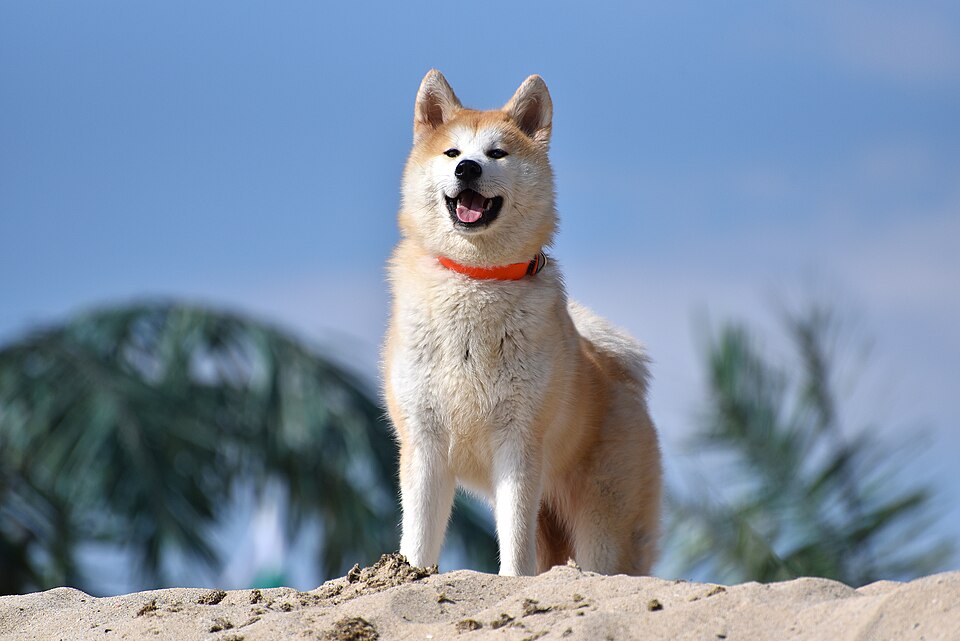
A large spitz from northern Japan, honored there as a "natural monument." Calm, dignified and deeply loyal, but independent, protective and sometimes intolerant of other dogs. This page covers the Japanese type; how it differs from the larger American Akita is explained below.

 Lifespan≈ 11.4 yearsUK 2024; Japanese and American types combined
 Weight55–75 lb (25–34 kg)AKC (Japanese type); males are heavier
 Height23–27.5 in58–70 cm; FCI: males 67, females 61 cm (±3)
 OriginNorthern JapanAkita region; a natural monument since 1931
 CoatDouble, harshsheds very heavily twice a year
 Exercise2+ hours a daymental work is a must too
 With kidsWith supervisionlarge and protective; early socialization is key
 TrainingHardindependent; bores quickly with repetition
The Akita is a large, powerful spitz from the mountainous Akita region of northern Japan. It has been a designated "natural monument" in Japan since 1931 and is known worldwide through the story of Hachikō, who waited at a train station for his owner for years. It's a calm, dignified breed that is deeply devoted to its family, but it can also be independent, protective and intolerant of other dogs. This page covers the Japanese type that the FCI calls simply "Akita" (Akita Inu); we explain how it differs from the American Akita in a separate section. Our sources are breed registry standards, veterinary references and scientific studies.
- Temperament: Per the FCI, composed, faithful, docile and receptive; devoted to family but reserved with strangers.
- Other animals: According to the AKC, it has a high prey drive and may be aggressive toward other dogs; it should be leashed in public.
- Training: Smart but independent; it bores quickly with repetition and needs positive, short sessions.
- Coat: Sheds extremely heavily twice a year; expect hair everywhere during those periods.
- Health: Prone to immune-related skin and eye diseases; catch changes in the skin and eyes early.
- Lifespan: A large 2024 UK study found a median lifespan of 11.4 years for Akitas.
What to know
 What is the Akita like?
The FCI standard describes the Akita's temperament as composed, faithful, docile and receptive, and asks for "high nobility and dignity in modesty." The AKC also describes Akitas as quiet, fastidious dogs that share their affectionate side with family and friends while staying reserved with strangers. In the AKC's breed trait chart, the Japanese Akitainu is rated low for openness to strangers and at the top of the scale for watchdog and protective instincts.
That protectiveness can become a problem without socialization. In its profile of the Akita (the American type), the AKC stresses that Akitas are instinctive guardians and need early, extensive socialization with a wide variety of people so they learn not to see strangers as a threat.
- Other dogs: According to the AKC, the Japanese Akitainu has a high prey drive and may be dog-aggressive. The FCI's American Akita standard also notes that the breed may be highly reactive toward other dogs, particularly of the same sex. Dog parks and off-leash meetings are not a good fit for this breed.
- Small animals: Because of its high prey drive, living with cats and small pets takes real care.
- Independence: The AKC calls the Japanese Akitainu an independent thinker and says it needs a realistic owner committed to handling the challenges of the breed.
Every dog is an individual. Breed traits describe general tendencies; how well a puppy was socialized, its training, its daily life and its health shape its personality as much as its breed.
 Who is it a good fit for?
The Akita suits experienced people who are calm but firm, spend time with their dog every day and can carefully manage encounters with other dogs. It isn't the right choice for a first dog or for someone looking for a dog-park playmate.
| Situation | Good fit? |
|---|---|
| Apartment | Hard; the Royal Kennel Club recommends a large house and a large yard |
| Family with kids | With supervision; a large, protective dog that needs early socialization |
| Other dogs | Risky; problems are especially likely with dogs of the same sex |
| Cats and small pets | Risky; high prey drive |
| Long hours alone | Not recommended; the AKC says Akitas thrive on human companionship |
| First-time dog owners | Not recommended; it takes experience |
| Homes with frequent visitors | Needs care; reserved and protective |
In a home with children, a quiet retreat for the dog and clear rules are essential. The tips in our article on kids and dogs and our guide to dog body language help you spot tension early.
Where does it come from?
According to the FCI standard, native Japanese dogs were originally small to medium in size. From 1603, in the Akita region, medium-sized bear-hunting dogs called Akita Matagi were also used as fighting dogs. After 1868 they were crossed with large fighting and mastiff breeds; they grew bigger but lost some of their spitz features. Dog fighting was banned in 1908, and the breed was preserved and improved as a large Japanese breed. In 1931, nine outstanding examples were designated "natural monuments." According to the AKC, the Akita Dog Preservation Society (AKIHO), founded in Ōdate in 1927, played a major role in preserving the breed.
World War II nearly wiped the breed out: dogs were collected for their fur, and some fanciers crossed their dogs with German Shepherds to save them. By the end of the war, the breed had split into three mixed types: "Matagi," "fighting" and "shepherd" Akitas. Japanese breeders later rebuilt the breed's original spitz look by breeding back to Matagi Akitas.
One of the stories that made the Akita famous worldwide is Hachikō's. According to Nippon.com, Hachikō was born in Ōdate in 1923 and belonged to Professor Ueno of Tokyo Imperial University. After the professor died suddenly in 1925, Hachikō went to Shibuya Station almost every evening for nearly a decade to wait for him; his statue stands outside the station today.
Japanese Akita vs. American Akita
After the war, Akitas of the "Dewa" line, which showed mastiff and German Shepherd influence, were taken to the United States. According to the FCI's American Akita standard, the AKC recognized the breed in 1972, but at the time there was no reciprocal pedigree agreement with Japan, so no new bloodlines came from Japan and the two types developed separately. Today the FCI recognizes them as two separate breeds, and the Royal Kennel Club split them in 2006. The AKC uses the name "Akita" for the American type and recognizes the Japanese type separately as the "Japanese Akitainu."
| Trait | Japanese Akita (Akita Inu) | American Akita |
|---|---|---|
| Look | Lighter build, wedge-shaped spitz head | Heavier bone, broad "blunt triangle" head |
| Height (FCI) | Males 67 cm, females 61 cm (±3) | Males 66–71 cm, females 61–66 cm |
| Weight (AKC) | Males about 65–75 lb (29.5–34 kg) | Males about 100–130 lb (45–59 kg) |
| Colors | Red fawn, sesame, brindle, white; all but white need "urajiro" | Any color, including pinto and brindle |
| Black mask | Disqualifying fault | Accepted |
"Urajiro" refers to the whitish coat on the sides of the muzzle, the cheeks, under the jaw, and on the neck, chest, belly, underside of the tail and insides of the legs.
Appearance and colors
According to the FCI, the Akita is a large, sturdily built, well-balanced dog with plenty of substance, and males and females look clearly different. The forehead is broad; the eyes are relatively small, nearly triangular because the outer corners rise, and dark brown. The ears are small, thick, triangular and pricked, tilting slightly forward. The thick, high-set tail is carried vigorously curled over the back.
- Height: Per the FCI, males stand 26.5 in (67 cm) and females 24 in (61 cm) at the shoulder, with about 1 in (3 cm) of tolerance.
- Weight: The FCI gives no weight; for the Japanese type, the AKC lists 65–75 pounds (about 29.5–34 kg) for males and 55–65 pounds (about 25–29.5 kg) for females.
- Coat: A harsh, straight outer coat over a soft, dense undercoat. A long, shaggy coat is a disqualifying fault.
- Colors: Red fawn, sesame (red fawn hairs with black tips), brindle and white.
Daily care
According to the AKC, the Japanese Akitainu blows its undercoat twice a year, and profusely, so expect tufts of hair everywhere during those periods. The rest of the year, gentle brushing every few days is enough; during shedding, a bath followed by a cool forced-air dryer and a thorough comb-out speeds things along. The Royal Kennel Club recommends grooming more than once a week.
- Nails: Keep them short with clippers or a grinder.
- Teeth and ears: The AKC stresses that regular tooth brushing and clean ears matter for health, not just looks.
- Skin checks: While grooming, check the skin, ear edges, nose and the area around the eyes; in this breed, skin changes can be an important warning sign (see the Health section below).
For tips on building a grooming habit, see our article on dog grooming.
Training and exercise
The Royal Kennel Club recommends more than 2 hours of exercise a day. The AKC says regular walks and mental exercise are very important for this breed and that, with proper training and precautions, Akitas make fine companions for hiking and camping. Thanks to its hunting background, it enjoys activities that use its instincts, such as nose work.
According to the AKC, the Japanese Akitainu responds best to positive training and methods that use its natural intelligence. It bores quickly with repetition, so short, varied sessions work better, and it needs daily mental challenges and enrichment. Because it's a large, powerful dog, training should start in puppyhood and stay consistent.
Because of its high prey drive and possible aggression toward other dogs, the AKC recommends keeping the Japanese Akitainu on leash in public spaces and around other animals and unfamiliar people. Teach loose-leash walking while it's young; our loose-leash walking guide walks you through it step by step.
 Diet and weight
According to the AKC, the Japanese Akitainu's diet should match its activity level and health needs. The breed is prone to allergies, so the ingredients and quality of its food matter. The AKC suggests three meals a day for puppies and two for adults.
- Set the daily amount with your vet based on your dog's ideal weight, and count treats as part of it.
- You should be able to feel the ribs under a thin layer of fat; a thick coat can hide extra weight.
- If itching, ear problems or digestive upsets keep coming back, make a plan with your vet instead of switching foods often on your own.
 Health issues to know about
According to the AKC, this breed is affected by several immune-related conditions for which there are currently no genetic tests: sebaceous adenitis, uveodermatologic syndrome, pemphigus, discoid lupus, and food and environmental allergies. The information below is for awareness only; ask your vet about diagnosis and treatment.
Sebaceous adenitis
According to the MSD Veterinary Manual, the Akita is among the breeds predisposed to this disease, in which the skin's oil glands become inflamed and are gradually destroyed. Signs usually start on the ear flaps, forehead, face, tail and back and can spread: hair loss, scaling, and scale that cements hairs together at the base are typical. A definitive diagnosis requires a skin biopsy.
Uveodermatologic syndrome (VKH-like syndrome)
In this serious disease, the immune system attacks the body's own pigment cells, affecting both the eyes and the skin. According to a 2025 review, about two thirds of reported canine cases have been in Akitas. Eye signs often come before skin signs: redness, discharge, squinting, sensitivity to light and vision loss. In the skin, the hair can turn white and the nose, lips and eyelids can lose color. If treatment is delayed, lasting problems such as glaucoma and cataracts can develop, so don't wait to see a vet when anything changes in the eyes.
Other screening
The Royal Kennel Club recommends a DNA test for an inherited disorder of tooth enamel development (amelogenesis imperfecta), plus hip and elbow screening. According to the AKC, the national breed club requires hip and eye exams and strongly recommends patella, thyroid and enamel screening.
- Red, runny or squinting eyes, sensitivity to light or vision loss
- Loss of color on the nose, lips or eyelids, or hair suddenly turning white
- Scaling, stuck-on flakes and hair loss on the ear edges, forehead or back
How long does it live?
In a 2024 study by McMillan and colleagues that analyzed records of more than 584,000 dogs in the UK, Akitas had a median lifespan of 11.4 years (confidence interval 11.1–11.6). That study grouped American Akitas and Japanese Akitas together, so the figure reflects both types. Mixed-breed dogs in the same study had a median of 12 years. The AKC gives a range of 10–12 years for the Japanese type.
Catching immune-related diseases early, keeping an ideal weight and regular vet checkups are the most concrete ways to extend this breed's healthy years.
 Before you get one
- Which type? When a seller says "Akita," ask whether they mean the Japanese or the American type; their looks, size and standards differ.
- Consider shelters and breed rescues: Purebred dogs end up in shelters too. With an adult Akita, you already know how it gets along with other dogs and people, which is a big advantage for a good match.
- If you buy from a breeder: Ask to meet the parents and observe their temperament. Ask for hip, elbow and eye exams and the enamel DNA test, and find out whether skin or eye disease runs in the line.
- Red flags: Steer clear of sellers who won't show you the mother, always have puppies available, can't provide health paperwork or want to hand over a puppy too early.
- Registration: Rules vary by country; many places require or recommend microchipping. In Türkiye, owned dogs must be microchipped and registered in the PETVET system.
Frequently asked questions
Do Akitas get along with other dogs?
Not always. The AKC says the Japanese Akitainu may be dog-aggressive, and the FCI's American Akita standard notes that the breed may be highly reactive toward other dogs, especially of the same sex. Early socialization helps, but dog parks and off-leash meetings aren't recommended for this breed.
Is the Akita a good family dog?
It's very devoted to its family and usually calm at home. But because it's large, strong and protective, it always needs supervision and clear rules around children, and managing its protectiveness takes time in homes with frequent visitors.
Do Akitas shed a lot?
Yes, especially twice a year. The AKC says the undercoat comes out profusely during those periods, and frequent brushing then makes life easier.
What kind of Akita was Hachikō?
According to Nippon.com, Hachikō was an Akita born in 1923 in Ōdate, in the Akita region; he lived in Japan long before the American type went its own way.
What's the difference between the Akita and the Shiba Inu?
Both are Japanese spitz breeds, but the Akita is large while the Shiba Inu is small. Their independent temperaments may be similar, but their size, strength and daily needs are very different. See our Shiba Inu page for details.
Sources
- FCI · Akita ırk standardı No. 255
- FCI · American Akita ırk standardı No. 344 (2026)
- AKC (American Kennel Club) · Japanese Akitainu ırk tanıtımı
- AKC (American Kennel Club) · Akita (Amerikan tipi) ırk tanıtımı
- The Royal Kennel Club · Japanese Akita Inu ırk sayfası
- MSD Veterinary Manual · Sebaceous adenitis in dogs and cats
- Zubricky ve ark. · Uveodermatological syndrome in dogs: a review of diagnosis, management, and ophthalmic patient needs, Veterinární Medicína (2025)
- McMillan ve ark. · Longevity of companion dog breeds: those at risk from early death, Scientific Reports (2024)
- Nippon.com · Hachikō: The Faithful Dog
- Resmî Gazete · Kedi, Köpek ve Gelinciklerin Kimliklendirilmesi ve Kayıt Altına Alınmasına Dair Yönetmelik (26 Şubat 2018)
By Tüylüm · Last checked: November 3, 2026. Compiled from the sources above and written in our own words. Spotted a mistake? Write to [email protected] and we'll fix it right away. Photo from Wikimedia Commons, used under the license shown below it.